A mathematician at Anthropic says he and Claude have proved the Riemann hypothesis, open since 1859. Not yet verified.
In October Terence Tao guessed 2050 for further progress.
In August @erichorvitz told us maths is asking who gets credit for "discoveries along with humans".
If it holds, a large body of number theory that assumes the hypothesis is proven at a stroke, and the hardest kind of discovery is no longer human-only.
Horvitz's wider claim: AI will shape our civilisation as much "as human language was over centuries".
Leveraging "capability overhang"
Strong & prescient work over the years on GraphRAG. GraphRAG Zero enables AI agents to access rich sources of knowledge, lighting them up with enterprise- and domain-specific knowledge bases.
@MSFTResearch
GraphRAG Zero solves a fundamental challenge that has limited AI agents' ability to reach their full potential. It’s a technology for holistic discovery that reflects years of Microsoft research, transforming graph-based retrieval from an experimental technique into a deployable system. Optimized for real-world applications and agents, it enables organizations to explore connections across vast amounts of their own data, quickly and at low cost.
It’s available now in Foundry IQ and @github’s Repo Mind Light, supporting applications from scientific discovery to repository understanding. https://t.co/ISYptBSTiL
AI is opening new possibilities in medical research. But what will it take to turn scientific breakthroughs into better health outcomes?
In the latest episode of The Shape of Things to Come, Microsoft Research Technical Fellow and CVP @dcburger brings together:
@avapamini, Principal Researcher Manager at Microsoft Research,
@erichorvitz, Chief Scientific Officer at Microsoft, and
Dr. @EricTopol, Executive Vice President, Scripps Research
to explore how AI is reshaping our understanding of biology and medical care and what it could mean for the future of medicine.
From accelerating scientific discovery to the challenges of real-world experimentation and clinical implementation, the group examines both the promise of AI and the work still ahead.
Could these advances help shift medicine toward earlier intervention and prevention? Watch or listen to the podcast:
https://t.co/2Wt7KxJzfM
Streaming intelligence
Always on, always reflecting, always thinking ahead. Lots of headroom to press these principles into service today. The top-level ideas around "streaming Intelligence" are growing in importance. The work aimed at identifying timeless principles of intelligence. Agents that do this well will be the smartest & most productive agents across the ecosystem. Thanks @tomssilver
Paper: https://t.co/TLjGetxwdD
@MSFTResearch@DimitrisPapail@vkontonis@yzeng58
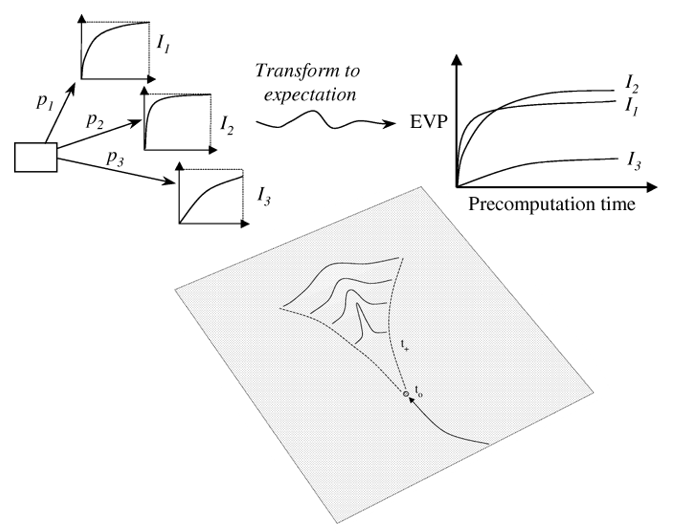
This week's #PaperILike is "Principles and Applications of Continual Computation" (Eric Horvitz [yes, that one!], 2001).
An early work on "sleep time" compute, increasingly relevant for agents (e.g., https://t.co/33xbTaOU8j).
PDF: https://t.co/X3LFy2WMgY
Discovery, study, and coordinated response
The methodology is as important as the finding. We have to stay ahead of potential cybersecurity risks by safely pressing AI models into service to help us better understand & mitigate the gaps and possibilities.
Paper: https://t.co/Zevppy6JPT
Microsoft Research blog: https://t.co/mSGBzKp84U
MSTIC guidance: https://t.co/H1DL2t3uvW
@igortsyg@MarkRussinovich@DimitrisPapail@kptales@blakebullwinkel@ram_ssk@satyanadella
Great leadership on the 2026 Study by Panel chair, @wooldridgemike and team. Thanks also to the ongoing oversight and careful deliberation by the Standing Committee, chaired by @SheilaMcIlraith. Read more on members of the Study Panel & Standing Committee at the AI100 homepage https://t.co/eJXhxJPiOP
We launched AI100 as we reached +5 years after the 2008-2009 Presidential Panel on Long-term AI Futures, that I organized while president of AAAI (the AAAI Asilomar Study), during a presidency I themed "AI in the Open World."
In 2013, it seemed we needed to have another study. But that would always be the case: Why not do such a study on AI every 5 years--forever?
Here a link to on the Asilomar study (2009): https://t.co/yDMpu0SMAQ
Scientists solved about 180,000 protein structures in 60 years. AlphaFold has predicted 200 million+. @Microsoft's chief scientist @erichorvitz says science is changing so fast it's rethinking what integrity and credit even mean.
It feels like only the AI labs and governments know where this is going. @Microsoft's chief scientist @erichorvitz says it's uncomfortable to live through a transformative era, and there's a lot of uncertainty ahead. Even for them.
If we believe AI is one of the most powerful technologies we’ve ever created, we should also recognize that no technology is above the law.
Innovation needs to keep moving forward. But safety needs to keep pace. We need sensible, balanced rules that enable us to do both.
“We don’t say, how can we use an existing tool well? We look at the problem and say, how can we make a new tool that will allow us to answer questions much, much more effectively?” It’s how @KarlDeisseroth and his colleagues developed optogenetics.