📽️ The 12th SS #Panzer Division in action against the Canadians 🇨🇦 near the villages of Buron and Authie at the outskirts of Caen in Normandy. June 7, 1944.
@ManuIntiraymi@TSH3_@Jeffrey91155285 Agree. Both the extreme right and extreme left are crazy. Why we can’t have people who can try and find some common sense and trying and find some type of solutions.
A early wartime picture (possibly 1941) of the Revenge class battleship HMS Ramillies at anchor in Scapa Flow. While on Atlantic escort duties on February 8th 1941 she prevented the two Scharnhorst-class battleships from attacking convoy HX-106, which consisted of 41 ships, which was en route from Halifax, Nova Scotia, Canada to Liverpool. In May 1941 she also joined in the search for the battleship Bismarck.
Rare Footage of a Battle-Damaged B-17 Flying Fortress (1943)
This is actual footage of a B-17 Flying Fortress from the 418th Squadron, 100th Bomb Group during the Schweinfurt-Regensburg Shuttle Mission on August 17, 1943. Flown by Robert Wolff and his crew, the bomber bears visible damage to its vertical stabilizer from a German 20mm cannon shell.
The Schweinfurt-Regensburg Mission became one of the costliest daylight bombing raids of the war, highlighting both the courage of U.S. bomber crews and the heavy price of the strategic air campaign over Europe.
How the Czech Hedgehog Stopped Tanks During WWII
Archival U.S. Army test footage shows an M3 Stuart attempting to breach a line of Czech hedgehog anti-tank obstacles.
Rather than stopping a vehicle through sheer resistance, the obstacle rotated beneath the hull as the tank climbed over it, lifting the chassis off the ground, immobilizing it, and exposing its vulnerable underside.
Cheap to build, effective even on soft or muddy terrain, and capable of stopping German armor, the Czech hedgehog became one of the most successful anti-tank obstacles of World War II.
Born from the brutal lessons of Vietnam, the Bell Cobra gave troops something they had never truly had before: a fast, heavily armed helicopter built for one thing, and one thing only: killing. Here's a vintage newsreel that explains why the Cobra was created and how it changed the battlefield forever. The period footage is an absolute treat. Enjoy, guys! 😀
Domino's has made a statement mocking PlayStation's plans to move their games all from discs to digital.
“Domino's UK will cease production of physical pizzas and shift to production of digital pizzas only.”
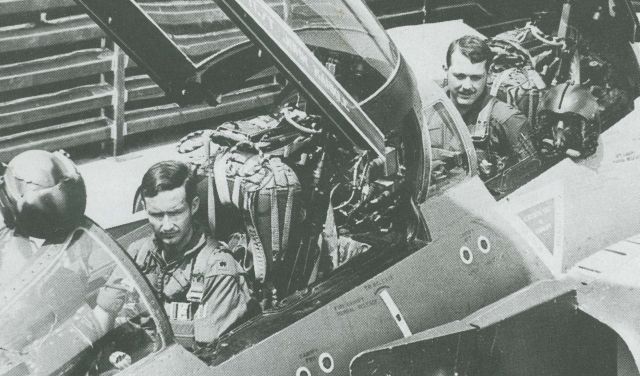
In May 1972, during Operation Linebacker, an F-4D Phantom was on a fighter sweep deep inside North Vietnam when it was jumped by enemy fighters. The aircraft was shot down by a MiG-21 only about 40 miles from Hanoi and near a heavily defended enemy air base. The pilot, Major Robert Lodge, was killed in the crash. The weapons systems officer, Captain Roger Locher, ejected safely but found himself alone in one of the most dangerous areas of the war. Surrounded by North Vietnamese troops, patrols, and heavy air defenses, his chances of survival were extremely low.
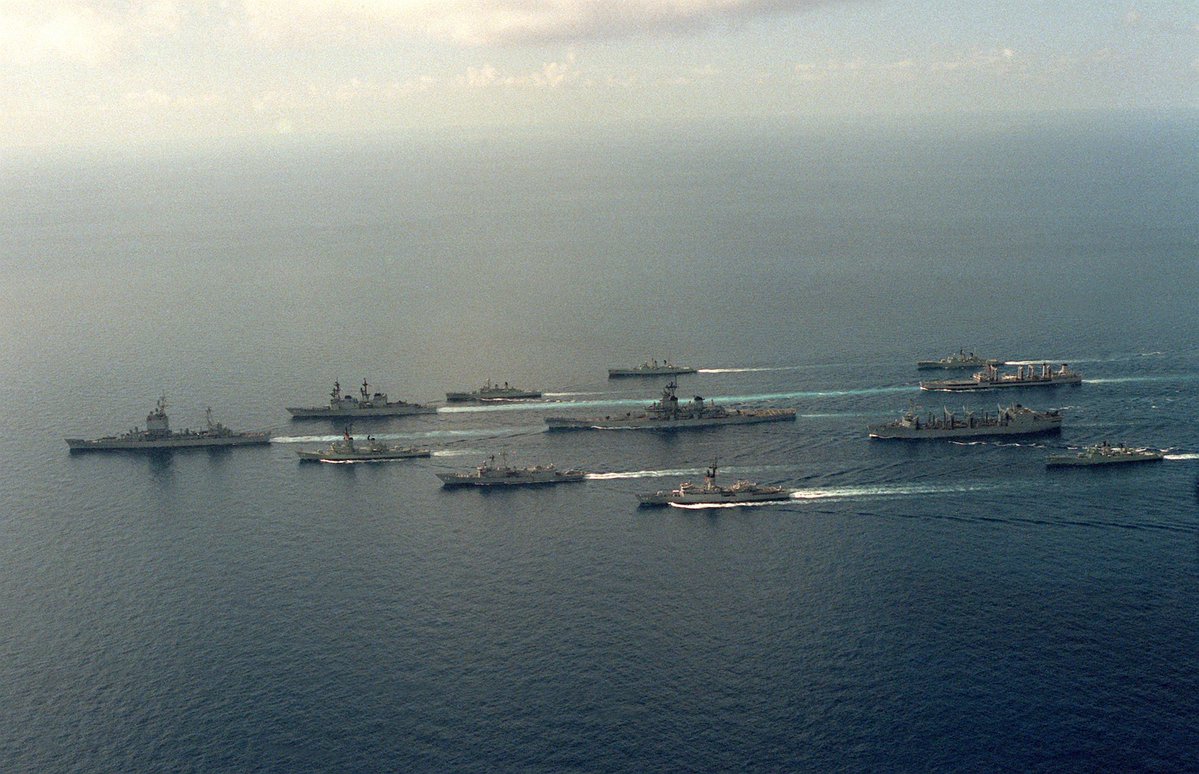
On this day July 1st 1986, Battleship New Jersey operated alongside Australian Navy vessels as part of the first battleship battle group to deploy to the Western Pacific since the Korean War. Today she's preserved in her 1980s configuration, when you visit, you'll get to see her as she looked when this photo was taken.
#otd
Operation Market Garden: Airborne Assault on Arnhem (1944) 🇬🇧🇺🇸🇩🇪
Dramatic footage captures the massive airborne phase of Operation Market Garden as thousands of Allied paratroopers jump from C-47 Skytrains over Arnhem and the surrounding Dutch countryside.
German flak batteries and machine guns opened fire, bringing down Allied aircraft and turning the drop zones into a deadly battlefield.
What began as an ambitious airborne offensive soon became one of the most dramatic and costly operations of World War II.
The Air Assault That Backed the First Wave at Iwo Jima (1945) 🇺🇸🇯🇵
As U.S. Marines fought to establish a foothold on Iwo Jima's black sand beaches, Allied dive bombers hammered Japanese positions with repeated bombing runs across the island's rugged volcanic defenses.
The relentless air strikes helped suppress fortified strongpoints, allowing Marines to continue their advance inland during one of the bloodiest battles of the Pacific War.