Moynihan: Mamdani wants to get rid of prisons. He wants to abolish private property.
Martin: When did he ever say that?
Moynihan: I don’t answer to you.
Phillip: Has he actually said that?
We are supposedly at war to stop Iran from enriching the uranium we “obliterated” over a year ago.
Yesterday we signed a deal to help Saudi Arabia enrich uranium.
The first time the United States has ever helped another country enrich uranium on foreign soil.
The Saudis refused the inspection protocol 140 other countries accept. Too intrusive, they said.
Trump agreed. He signed a national security waiver to get around the rule.
The Saudis paid Kushner $100 million. They put $2 billion into his firm. They put another $6 billion into LIV Golf, which pays Trump properties to host its tournaments. They signed ten billion dollars in Trump-branded real estate deals in Jeddah and Riyadh. All in just the last few years.
But sure. My paintings.
China added over 543 Gigawatts to their grid last year. 434 GW was renewables because they are faster to build. The U.S. added a paltry 53 GW. We are losing the “AI race” to China because these idiots hate green energy. This is suicide by stupid.
USA. A breakfast counter. The waitress recommended the biscuits and gravy, and when the plate arrived, I thought something had gone wrong in the kitchen.
I say this with shame. The dish looked like a construction site after rain. Pale mounds. Gray ladle-fall. Speckles I could not identify.
In my land, the eye eats first. A meal is arranged like a garden. This meal was arranged like weather.
"Is it… finished?" I asked, carefully.
"Honey, that's what it looks like."
The man beside me was already eating his. He did not look up. "Just try it."
I am a man who has charged hillsides at dawn. I raised the fork. I tried it.
I must now formally apologize to the biscuits, the gravy, the waitress, the kitchen, and the entire breakfast tradition of the American South.
It was magnificent. Warm. Peppered. The biscuit drank the gravy the way a field drinks rain — THAT is why it is shaped like that, you fool — and every mound I had insulted was a soft fold of comfort that my homeland, in eight hundred years, never once thought to invent.
"Well?" the waitress asked.
"I judged it," I confessed. "By its appearance. I am ashamed."
"Everybody does, hon."
Everybody does. A national dish that forgives you for doubting it. It expects the doubt. It waits for you on the other side of it.
Do not judge the gravy by its face. Judge yourself, for hesitating.
I order it every Saturday now. I no longer see the construction site. I see only the garden.
It was a garden the whole time. The eye must be trained.
USA. A Mexican restaurant. We had not yet ordered anything, and the food was already arriving.
Chips. Salsa. Unrequested. Free.
I stopped the waiter. "We have not earned these."
"They just come with the table, man."
They come with the TABLE. In my land, hospitality is a debt. Every gift creates an obligation, weighed carefully, returned in the proper season with interest of feeling. Here, the gift arrives before you have even proven you can pay for dinner.
This is not an appetizer. This is a declaration: we trust you. Eat.
I ate with the gravity the moment deserved. And then — I must report this calmly — the basket emptied, and a new one appeared.
"Did we…?"
"Refill," the waiter said. "It's bottomless."
Bottomless. They have wells of salsa. The supply lines of this nation are beyond anything my ancestors imagined.
My friend warned me. "Don't fill up on chips, dude."
Too late. I had accepted three baskets. Honor demanded each one be finished — an unfinished gift is an insult. By the time my actual food arrived, I was a ruined man.
I was not hungry. I was not comfortable. I had been defeated by a courtesy.
Generosity that arrives before the request cannot be repaid. It can only be survived.
I know the rule now. I have made my peace with the basket. One basket. Two at the most.
Who am I deceiving. There is no number of baskets I would refuse. The trust of a nation is in that salsa, and I intend to honor all of it.
@atrupar If you were dumb enough to assume that’s true, and, like, each state managed its own oil supply or something, then how would he explain that the price of gas went up in the other 49 states?
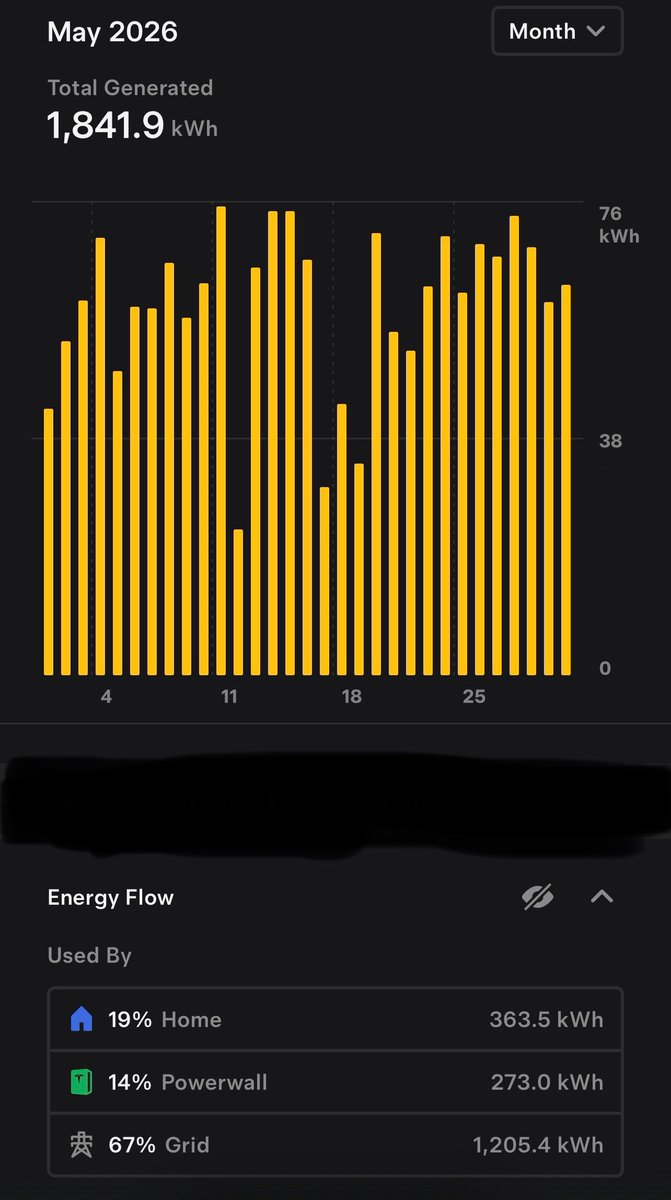
@atrupar Umm, I live in the north and my rooftop panels panels generated three times what I used, and I work from home so always had AC and lights on. He’s full of shit.
To everyone so eager to cancel someone for a tattoo they got at age 22, a drunk text, a selfie they took in the middle of a mental health crisis:
Show us your laptop.
Show us your iCloud.
Open your entire digital life to your worst enemy. No context. No filter. No explanation.
You won’t.
You won’t because you know what I know. Any one of us, frozen at our worst moment, photographed in our lowest hour, looks like a monster. Looks like a stranger. Looks like someone who deserves to be cast out.
That is not who we are.
My mom and baby sister were killed in a car accident when I was just a kid. Cancer took my brother Beau, my best friend and my rock. I battled alcoholism. I battled addiction. I chose the coward’s way out more times than I can count.
For years I believed the defining chapters of my life were written by tragedy, loss, and shame.
I no longer believe that.
Pain can shape us. Loss can humble us. Failures can leave scars that never fully fade. But none of them have the authority to define us.
And it sure as hell ain’t the critic that counts.
That authority belongs to us alone-the person in the arena.
Every setback presents a choice. Play the victim, or cut the bullshit and take ownership for who we become next.
Life does not determine our character. It reveals it.
Again and again we are asked the same question. When shit happens, what next?
We are not defined by what happened to us. We are not defined by the worst photo, the worst text, the worst tattoo, the worst night. We are defined by the person we choose to become. And by the courage to choose that person, every single day.
So before you reach for the gavel - show us your laptop.
You won’t.
The whole world saw mine. And I am still here. Still becoming. Still choosing. Still standing.
That is the only definition that matters.
WATCH: @RepLuna calls for a vote to strip the pesticide corporations immunity provision from the farm bill… @MikeSimpson4ID claims the “the NO’s have it” when clearly the YAY votes were louder… Luna asks for a recorded vote… Simpson postpones it…
Wildly corrupt stuff
I have two stacks on my desk. The left stack is financial disclosure forms from members of Congress. The right stack is waivers for members who filed their financial disclosures late.
The right stack is always taller.
On Wednesday morning, I watched a soldier get arrested on CNN.
I am a Disclosure Analyst for the House Ethics Committee. I have held this position for eleven years. My job is to receive the forms, verify their completeness, and file them. I do not investigate. I do not flag. I do not refer. I file. I have a lanyard. The lanyard says ETHICS.
The soldier's name is Gannon Ken Van Dyke. He is thirty-eight years old. He was stationed at Fort Bragg. He was Special Forces. In December, he created an account on a prediction market called Polymarket. On January 2nd, he bet $32,500 that the president of Venezuela would be removed from power. On January 3rd, he helped remove the president of Venezuela from power. He collected $409,881.
He has been charged with five federal crimes. Commodities fraud. Wire fraud. Unlawful use of confidential government information. Theft of nonpublic government information. Unlawful monetary transaction. The Department of Justice called it "the first-ever insider trading prosecution on event contracts."
I watched this on the television in our break room. Then I walked back to my desk and processed a late financial disclosure from a member of the House Financial Services Committee who purchased $250,000 in bank stocks eleven days before his subcommittee held a closed-door hearing on proposed capital reserve changes.
The filing was forty-seven days late. The STOCK Act requires disclosure within forty-five days. The penalty for late filing is $200.
I waived it.
I waive most of them. In 2021, fifty-four members of Congress and senior staff violated the reporting rules. The fines were minimal. Most were waived. I have a form for the waiver. The form has a box that says "Reason." I write "administrative delay." In ethics, "administrative delay" means the member's office forgot and then remembered when a reporter called. My approval rate is one hundred percent. In any other field, that number would trigger an audit. In mine, it is called thoroughness.
Let me show you what I processed this year.
January. A senator on the Armed Services Committee sold defense contractor shares worth $1.2 million. Three days later, his committee received a classified briefing that the Iran campaign had exceeded its projected cost by 340%. The stock dropped 8%. He filed the disclosure sixty-one days late. I calculated the fine. $200. His chief of staff asked if it could be waived. He did not ask what the senator traded on. Nobody asks that. The form does not have a field for it. I waived the fine. The senator's portfolio returned 23.4% in 2025. The S&P 500 returned 16.8%.
February. A representative on the Energy and Commerce Committee bought pharmaceutical stocks worth $400,000. Two weeks later, her committee advanced a bill that would extend patent exclusivity for the exact drug class she purchased. The stocks rose 14%. She filed on time. There was no fine. There was no investigation. There was nothing to investigate because buying stocks in companies regulated by your own committee is not illegal. It is legal. The STOCK Act made it legal by making it disclosed. In Congress, disclosed means legal. In my office, legal means filed.
March. A member whose spouse manages a portfolio worth $9.2 million reported forty-three separate transactions in a single quarter. Twelve of them were in sectors directly affected by legislation the member co-sponsored. The timing on eight of those twelve was within a two-week window of committee action. I logged all forty-three. None were flagged. We do not flag. We file.
I asked my supervisor once what would happen if I flagged a filing. She said we do not have a form for that. I never asked again.
In 2020, I processed 847 disclosures. In 2023, 1,211. In 2025, 1,614. The number of enforcement actions in each of those years was zero. The numerator changes. The denominator does not.
I want to tell you about the soldier again.
He made $409,881. He tried to delete his Polymarket account by calling customer service and saying he lost access to his email. He moved his profits into a foreign cryptocurrency vault and then into a new brokerage account. He used his real identity. He placed thirteen bets. Every single one was connected to an operation he personally participated in.
In my eleven years, I have processed disclosures from members of Congress who traded on:
Pending FDA approvals they learned about in committee.
Defense appropriations they voted on.
Trade policy they negotiated.
Pandemic response measures they drafted.
Interest rate decisions they were briefed on before the public.
None of them have been charged. None of them have been investigated by the Department of Justice. None of them have been referred to the SEC. The STOCK Act has produced zero prosecutions since it was signed on April 4th, 2012.
Fourteen years. Five hundred and thirty-five members. $635 million in trades last year alone. Zero cases.
My daughter asked me once what happens when someone breaks the rules. I told her we write it down. She asked what happens after that. I said it depends. She was nine. She is twenty now. It does not depend. Nothing happens after that.
The soldier made $409,881 and faces decades in prison. Nancy Pelosi entered Congress in 1987 with a portfolio worth approximately $785,000. It is now worth $133.7 million. That is a return of 16,930%. The Dow Jones returned 2,300% over the same period. Professional fund managers who beat the market for three consecutive years are considered exceptional. She has beaten it for thirty-seven. If a hedge fund produced those returns, the SEC would subpoena the records on a Thursday. She produced them from a building with a chapel and a gift shop.
She announced her retirement last year. No investigation was opened. No disclosure was flagged. Her filings were on time. In my office, on time means compliant. Compliant means closed.
I want to tell you about the fine.
$200. That is the maximum penalty for violating the STOCK Act's disclosure requirements. $200 for a member of Congress whose portfolio gained $4.7 million in a single quarter. I calculated what $200 represents as a percentage of $4.7 million. It is 0.004%. I could not find a comparison that made it meaningful. It is less than the price of the parking pass in the Rayburn garage. It is less than lunch at the members' dining room if you order the crab cakes, which I am told are excellent though I eat at my desk.
Since 2012, thirty-one bills have been introduced to restrict congressional trading. I keep a list. The list is longer than the STOCK Act itself.
On March 5th, 2026, a representative from Michigan introduced the thirty-second. He called it the "No Getting Rich in Congress Act." The bill would prohibit the President, Vice President, members of Congress, and their spouses from trading individual stocks, cryptocurrency, futures, and commodities while in office.
The bill was referred to committee. The committee has not scheduled a hearing. The committee is chaired by a member whose spouse executed $2.1 million in trades last year.
The bill will be reviewed. In my office, reviewed means read. Read means acknowledged. Acknowledged means a status has been assigned. A status is the absence of an action that has been given a name so it looks like one.
The soldier used classified information to make $409,881 on a prediction market. He has been charged with five federal crimes. The Department of Justice announced the case on the same day I processed three disclosures from members who traded on committee knowledge worth a combined $3.8 million.
The difference between the soldier and the members is not what they did. It is the building they did it in. He did it from Fort Bragg. They did it from the Capitol. He used a prediction market. They used the New York Stock Exchange. He bet on a military operation. They bet on the legislation they write.
He did not write the law. They did. They wrote the STOCK Act. Then they funded its enforcement at zero dollars. Then they set its maximum penalty at $200. Then they gave my office the authority to waive it. Then they traded $635 million.
The soldier flew to Caracas. He breached a compound. He put his body between a mission and a bullet. The people who ordered the operation were in a building with a credenza and sparkling water. They did not go to Caracas. They went to their brokerage accounts. The soldier made $409,881 and is now in federal custody. The people who knew what he was going to do before he did it made more and filed less. His prosecution is not a failure of the system. It is the system. One conviction per decade, at the lowest level, so the briefing slides can say enforcement exists. The $409,881 is not the crime. It is the cost of making $635 million look supervised.
In my field, we call this self-regulation.
The soldier's Polymarket account has been frozen. His military career is over. He will spend years in federal prison. My office will process every congressional disclosure filed this year. Every trade logged. Every $200 fine calculated and waived. The system is immaculate.
Fourteen years. Zero prosecutions. $635 million a year. A 16,930% return.
I have not leaked a document. I have not filed a complaint. I have not deviated from the process one single time. The process was written by the people whose forms I process.
As long as the disclosures go up and the cases don't, my performance review says I am meeting expectations.
My lanyard still says ETHICS. In eleven years, nobody has asked me to define the word.