Ten days ago, I submitted the 477-page manuscript for a new textbook titled ‘Continuum Acoustics: Principles of Waves in Solids and Fluids’ to Springer. Writing it has been a big part of my life since 2024, and it feels strange — but very nice! — that it's finally done.
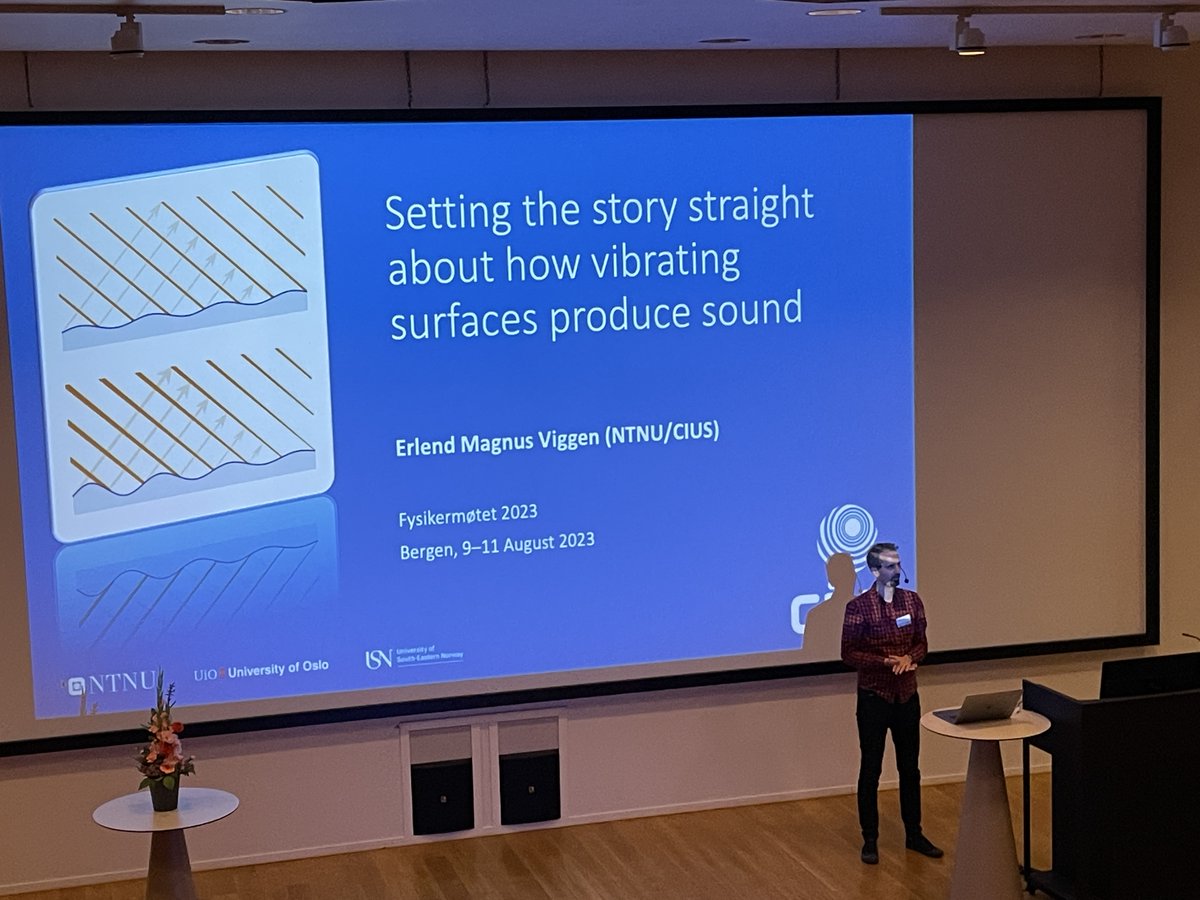
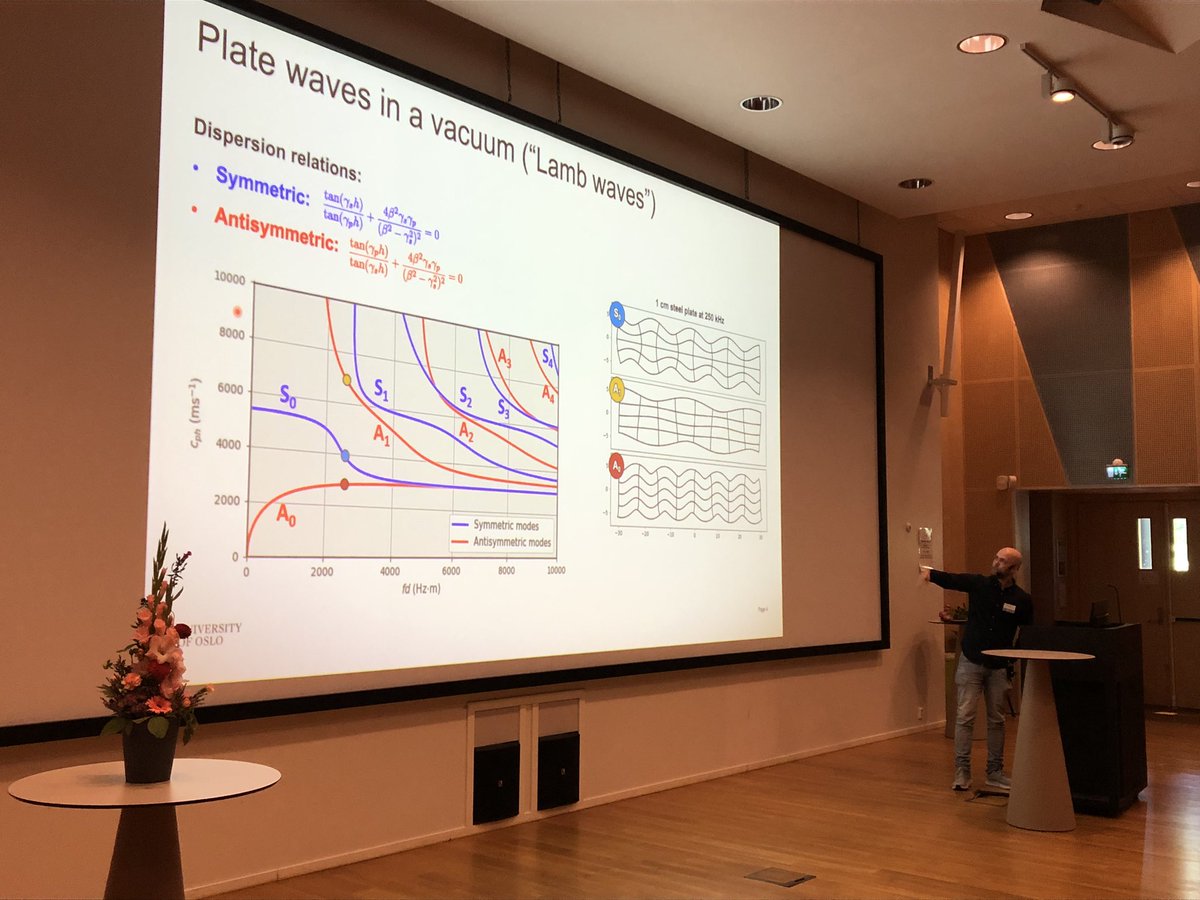
The talk is about understanding why leaky #flexural#waves on thin fluid-immersed plates behave so counter-intuitively. It's been investigated mathematically since the early 1990s, but we provide some physical understanding that has been missing in the literature.
The 2023 International Congress on #Ultrasonics made me record a video for my online presentation of some work I did with @HavardArnestad — so why not just post it on YouTube as well? https://t.co/FKBLhsf4Me
Lots of creds to my former student @HavardArnestad, whose @CIUS_NTNU thesis won a Martin Landrø Prize for Outstanding Master Thesis in Physics at #Fysikermøtet2023!
Sad to hear. I never met Liv, but her pioneering work in ultrasonic heart imaging is recognised in every presentation from my group that mentions our roots.
Chris Appleton and I have a sad news to share with the entire #Echo@ASE360 community.Liv Hatle, the legend, pioneer, and mentor to ALL of us passed away on 6/23. When we saw her a mo. ago, she was talking about her new book and calcific MS. Let us celebrate her amazing career!
After just one month, @HavardArnestad and I already have two citations on our new #acoustics article on sound radiation from vibrations, including a citation from the great Michael Lowe. This is really starting to take off... https://t.co/guOS2dWd90
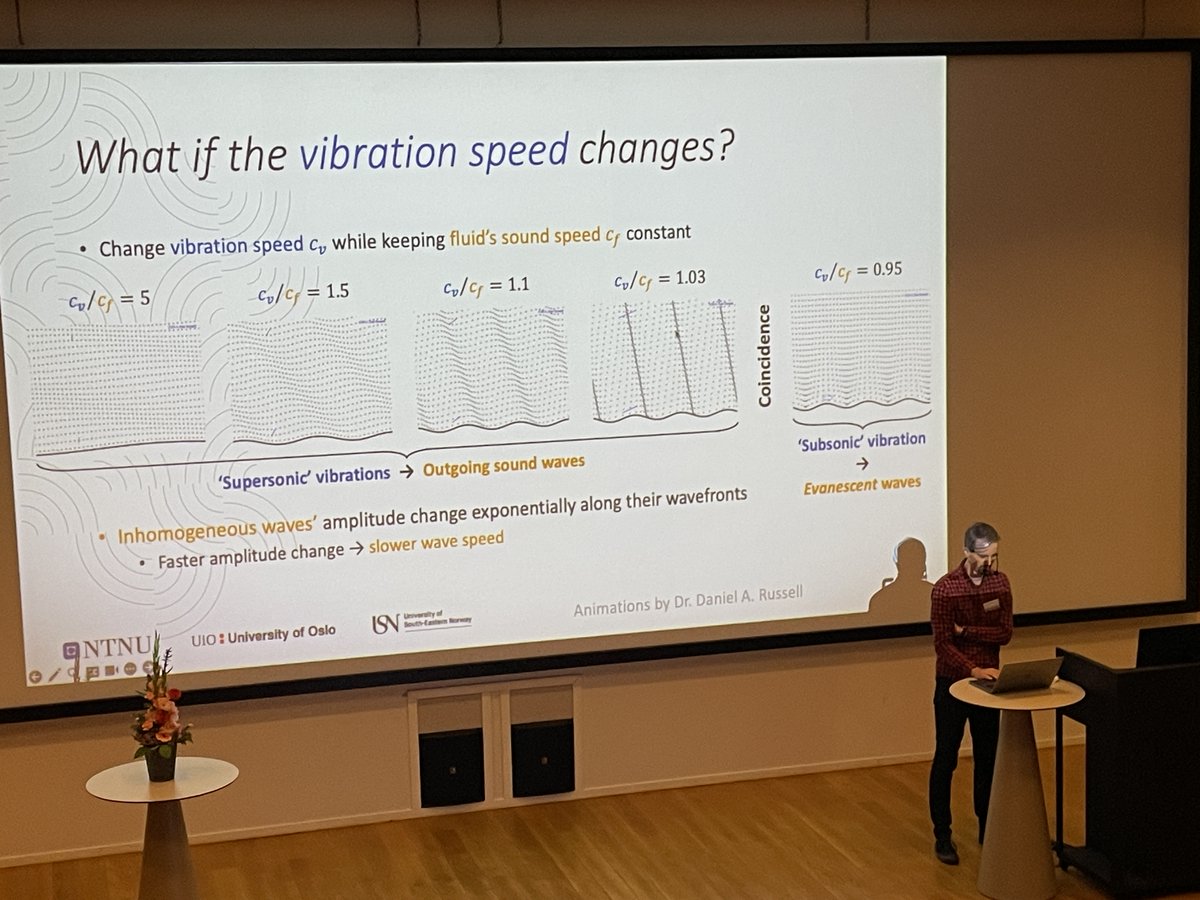
The old view is based on a simplified model that neglects energy conservation. A better — yet still simple — model that properly conserves energy can finally explain the phenomenon of ‘subsonic radiation’, where vibrations slower than the fluid's sound speed radiate sound waves.
@HavardArnestad and I have a new open access article out in Journal of Sound and Vibration (@AcousticalSci)! It corrects the prevailing view of something so fundamental as how vibrating surfaces radiate sound: https://t.co/guOS2dWd90
Want to work with improving #drugdelivery and #immunotherapy using #ultrasound? Together with partner Exact Therapeutics, NTNU has two #postdocposition in Trondheim. Application deadline: 22 May. https://t.co/FbGg1AArqT
I wrote a post for @CIUS_NTNU's blog about my work with @Equinor to build an AI-based assistant for Equinor’s well integrity log interpreters. Check it out: https://t.co/6mremLVVIq
Can #AI help us avoid environmental disasters? Perhaps so when it improves well integrity log interpretations. #oilandgas#equinor#SFI
📷: United States Coast Guard https://t.co/31caTEWaAF
Trying out this YouTube fad that all the kids are talking about these days. Here's the video summary of the poster presentation on subsonic radiation that I held at @ieeeius in Venice in October: https://t.co/zurKs7x4MQ
Our article finally explains why this “subsonic radiation” is possible by deriving and validating a simple radiation model. The key is that our model properly conserves energy by balancing radiated power with lost vibrational power, unlike the model you find in textbooks.
We have a preprint of a new article out! It deals with a pretty fundamental topic in acoustics, namely flat vibrating surfaces radiating sound waves into an adjacent fluid: https://t.co/YVlrJtusSV
A lot of introductory acoustics textbooks cover this — wrongly, as it turns out. They show that vibrations moving slower than the fluid's sound speed can't radiate a sound wave. However, a handful of articles over the last 30 years have found that this is possible, but not why...
@strain_rate Jeg har konvertert fra sukker først til kanel først. Det gjør at grøten rekker å kjølne litt mer før sukkeret strøs på, sånn at det ikke smelter i like stor grad.
@oysteivi Kanskje dette bare er en videreutvikling av god gammeldags ring-på-og-stikk-av? Jeg fikk forøvrig to slike telefoner som jeg ikke tok, så joke's on them.