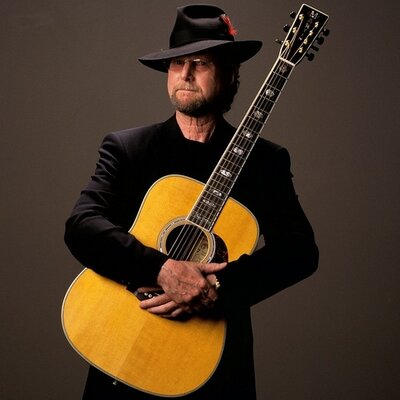
September 2013. My wife sent me an email listing what we owed vs what we had.
We had $110 in checking. We owed $558. Our son was three weeks old.
I was 32, overweight, drinking too much, and couldn't afford diapers for my newborn. Ten years as a professional musician - touring internationally, playing with legends - and I couldn't support my own family.
I wasn't lazy. I wasn't stupid. I was misaligned.
The skills were there. The work ethic was there. But I was building on sand, pointing all that energy in directions that served my ego instead of my family.
My son gave me a new purpose that changed everything. It didn't require inspiration, either - it appeared through necessity. His needs were non-negotiable, unlike my self-expression.
Turns out the skills I'd built as a musician - reading people, crafting experiences, communicating emotion, obsessing over details - were the exact skills that make someone dangerous at marketing and branding.
It was the same toolkit, and I figured out how to point it at a different target with an upgraded purpose.
Fast forward to today: $75M+ in revenue and investment generated for clients across wildly different verticals. A business that works. A family that's thriving.
Broke wizard -> brand therapist.
Rage at powerlessness -> sovereignty.
I’m the same person at the core, using the same skills. But they are pointed at actions that serve others with a totally different set of alignments.
In my darkest hours, I discovered the pattern that was destroying me is the same pattern that destroys civilizations.
When you fight it, you break. When you align to it, you build.
This New Year’s Day, as you go into 2026 thinking about what (or who) you’re going to build, think about the bigger picture.
However you define and approach “God” - the Almighty Creator of all that is seen and unseen, the Great Architect, the One True God - whatever name you use to address this Being - remember that you are PART of something BIGGER than you may realize - God is bigger than your religion, and your on-ramp to a life of meaning and fulfillment is probably staring you in the face right now through the lens of your most painful and confusing crisis.
“Non nobis, Domine, non nobis, sed nomini tuo da gloriam”
Happy New Year
E
There's an acceleration happening right now and it's happening so fast that I don't even think we fully understand the impact of where this is going.
I'm seeing it across all these different businesses that I'm working with, that it's like the ability to analyze data at scale and get real insights and have real actionable insights that increase your growth reduce your costs, that kind of creative thinking, it's absolutely insane what's going on right now.
The acceleration is at its highest, and the danger is that we lose the human factor.
So I'm building out strategy right now with everyone I work with that I like to call AI plus AI.
And what that means is whether I'm serving as your fractional CMO, or I'm just consulting I've got agency services, or I'm managing a team that's helping deliver some kind of results, whatever it is, because there's a few things that my company does.
AI plus AI is the standard going forward.
AI means artificial intelligence, but humans have actual intelligence.
And when you put those two things together with the right combination, you don't over index for one or the other.
You’ve got to be careful if it's only humans, but everyone else is using artificial intelligence, then they're going to basically plug in a supercomputer with IQ 9000 to accelerate and offload their intellectual busy work and grunt work.
That is not as valuable as the key strategic decisions you need to make from an executive perspective. If you aren't careful, you're going to be cleaning the intellectual toilets yourself instead of outsourcing it to something that can do it in the background.
And that's dangerous.
Other side of the fence, if everything is AI, you can lose the human connection and hallucinate yourself into gnosis that’s fake.
It's like gnosis without theosis. It's like hearing voices in your head. It's not God.
And they might be telling you to do the wrong thing. You know, some of the AI stuff is a little bit creepy. It doesn't always work out.
There's two extremes and I'm attempting to walk a middle path.
The two extremes are:
total deprivation, helpless, must outsource my own getting fixed on one end, which is very low self-esteem. It's programmed into our culture in a lot of ways.
The other extreme is David Koresh, completely self-assured, Messiah complex, total jerk, can't see the wooden beam in their eye as they're trying to point out the splinters in other people's eyes with no self-awareness.
I think those two extremes are really important things to avoid as I'm attempting to walk the middle path of going, "The kingdom of God is within me. I have confidence. I can always do better.”
Look, I have a kitchen in my house and we make food and we have to do the dishes and take out the trash every day.
On the one extreme, there's the people that are just like, "I am the trash."
Then on the other extreme, there's the people that say, "I don't have to take out the trash. I'm too good for that. I did it once and I'm perfect now.”
Both of them suck. It's a game of balance to run that play through the middle.
The bigger picture of what I'm building here is a framework or philosophy or a way of seeing the world that I call the Divine Design. There's five levels.
At the top level is is the Divine Design itself, the fingerprints of God in the world, God's presence, the creator, the creation of that highest level. And at the lowest level, is the individual human.
I don't mean high and log in a moral sense. I'm just saying the high level of creation all the way down to the individual human.
And how do we align to creation?
You could say "I'm going to go live on an island and do it in a vacuum and be a monk in a monastery. And it's just me and God." Cool. Do that. That's great. But there's a lot of us that have three other layers that we live inside of.
So the layer right above the individual human layer is the family and that family layer I want that to be as aligned and healthy as possible. That requires me to upgrade personally, take out the trash and become a better man every day. Otherwise, that can go sideways.
Above the family layer is purpose - the layer of work, culture, community, those those three things kind of all interweave. And in that work layer, that's where all the marketing stuff is for me. But for you could be something else, for somebody else could be something else.
What do you do that that creates value in the world beyond your family that you get? Paid for. That's where the IKIAGI's four circles have to intersect.
What's your purpose?
Do you love it?
Are you good at it?
Can you get paid for it?
Does the world need it?
And then above that is the layer of civilization itself. We all have to figure stuff out at a national and international level.
So if you look at God, civilization, work and culture, family, and then me as an individual, how do we put all of that into alignment?
We've been conditioned as a civilization by Romanized Christianity to believe in total deprivation and original sin, and that we are born broken and wrong.
Those ideas came from Paul, who had a vision on the road to Damascus.
I don't remember ever hearing that Paul met Jesus.
Paul saw Jesus in a vision.
So I think there's a lot of value to what Paul wrote about, but I'd like to focus on what Jesus said.
Jesus said, "The kingdom of God is within you."
And if the Kingdom of God is within you, then you have an opportunity to shift into a very confident identity that's aligned to God inside of yourself.
What would you build if you knew the Kingdom of God was already inside you?
I had to become someone who does not drink.
In order to become someone who does not drink, I had to confront my rage at feeling powerless. And that was driving that behavior for me. Now it may be different for other people, but for me, that was driving that behavior.
I went to a couple of AA meetings and was immediately put off by the idea that in order to stop drinking, I had to embrace the idea that my identity was built on powerlessness, that I was helpless, that only a higher power could come in and straighten it all out, which I actually do believe part of that, but I have a very different way of believing it. I believe that that higher power is what gives me power and that I have that power. And I have to claim that power and own that power and become a better me.
That's how I got through it. So that's a little bit different than signing up for something where you're basically addicted to recovery.
I don't think about it at all.
I'm a person who doesn't drink. I'm super comfortable with it. Like you could have a glass of wine right now and I'm like, great, like knock yourself out.
Like I'll have this, you know, hemp juice. That's great. I'm happy.
And the fruit of that tree is that my life changed after I went through about a year, year and a half of being a person who doesn't drink. I started turning into a person who the time it was who eats less sugar and who eats less bread and carbs. I did the four hour body.
I don't know if you're familiar with that whole thing. Lost like 35 pounds pretty quickly. Never got it back.
What would you become if you stopped calling yourself powerless?
Check out the podcast, buy the book: https://t.co/tMgU1C23yo
If you know there’s a piece of God inside you that’s listening to your thoughts, then you’re sending emails to God every day whether you realize it or not.
I was doing that without realizing.
What was I asking for? My son was three or four. About to age into preschool, then kindergarten. And I knew if I didn’t figure something out, I was going to miss his childhood.
The music teacher gig is an after-school gig. Three o’clock. Four. Five. Six. Seven. You’re teaching lessons through dinner. You’re eating at nine. Your kids are asleep by the time you get home. You burn the candle at both ends a lot.
I needed something I could do in the morning. So I started doing marketing in the morning. Working on projects. Getting clients. Building this set of capabilities.
Then the moment came where everything broke. The moment came on a playground at a school that didn’t appreciate boys punching each other in the face (big surprise!) and he got kicked out of school. My wife had the corporate job and couldn't drive across town to pick him up from his new school on time, so overnight I had to take over the after school pickup... and hand all my students to other teachers.
The answer to a prayer doesn’t always look like an answer at first. Sometimes it looks like your kid getting kicked out of preschool.... and all your ships burning. Suddely.
What email are you sending God right now without realizing it?
Je veux présenter mes excuses, au nom des Français, pour avoir enfanté la French Theory (qui a enfanté la pire des merdes idéologiques : le wokisme).
Nous avons donné au monde Descartes, Pascal, Tocqueville. Et puis, dans les ruines intellectuelles de l'après-68, nous avons donné Foucault, Derrida, Deleuze. Trois hommes brillants qui ont fabriqué, dans l'élégance de notre langue, l'arme idéologique qui paralyse aujourd'hui l'Occident.
Il faut comprendre ce qu'ils ont fait. Foucault a enseigné que la vérité n'existe pas, qu'il n'y a que des rapports de pouvoir déguisés en savoir. Que la science, la raison, la justice, l'institution médicale, l'école, la prison, la sexualité, tout n'est qu'une mise en scène de la domination. Derrida a enseigné que les textes n'ont pas de sens stable, que tout signifiant glisse, que toute lecture est une trahison, que l'auteur est mort et que le lecteur règne. Deleuze a enseigné qu'il fallait préférer le rhizome à l'arbre, le nomade au sédentaire, le désir à la loi, le devenir à l'être, la différence à l'identité.
Pris isolément, ce sont des thèses discutables. Combinées, exportées, vulgarisées, elles forment un système. Et ce système est un poison.
Car voici ce qui s'est passé. Ces textes, illisibles en France, ont traversé l'Atlantique. Les départements de Yale, de Berkeley, de Columbia les ont absorbés dans les années 80. Ils y ont trouvé un terreau qui n'existait pas chez nous : le puritanisme américain, sa culpabilité raciale, son obsession identitaire. La French Theory s'est mariée à ce substrat, et l'enfant de ce mariage s'appelle le wokisme.
Judith Butler lit Foucault et invente le genre performatif. Edward Said lit Foucault et invente le post-colonialisme académique. Kimberlé Crenshaw hérite du cadre et invente l'intersectionnalité. À chaque étape, la matrice est française : il n'y a pas de vérité, il n'y a que du pouvoir, donc toute hiérarchie est suspecte, toute institution est oppressive, toute norme est violence, toute identité est construite donc négociable, toute majorité est coupable.
Voilà comment trois philosophes parisiens, qui n'ont probablement jamais imaginé leurs conséquences pratiques, ont fourni le logiciel d'exploitation à une génération entière d'activistes, de bureaucrates universitaires, de DRH, de journalistes, de législateurs. Voilà comment on a obtenu une civilisation qui ne sait plus dire si une femme est une femme, si sa propre histoire mérite d'être défendue, si le mérite existe, si la vérité se distingue de l'opinion.
C'est de la merde pour une raison simple, et il faut la dire calmement. Une civilisation se tient debout sur trois piliers : la croyance qu'il existe une vérité accessible à la raison, la croyance qu'il existe un bien distinct du mal, la croyance qu'il existe un héritage à transmettre. La French Theory a entrepris de dynamiter les trois. Pas par méchanceté. Par jeu intellectuel, par fascination du soupçon, par haine de la bourgeoisie qui les avait nourris. Mais le résultat est là. Une génération entière a appris à déconstruire et n'a jamais appris à construire. Une génération entière sait soupçonner et ne sait plus admirer. Une génération entière voit le pouvoir partout et la beauté nulle part.
Je m'excuse parce que nous, Français, avons une responsabilité particulière. C'est notre langue, nos universités, nos éditeurs, notre prestige qui ont donné à ce nihilisme son emballage chic. Sans la légitimité de la Sorbonne et de Vincennes, ces idées n'auraient jamais traversé l'océan. Nous avons exporté le doute comme d'autres exportent des armes.
Ce qui se construit maintenant, en silicon valley, dans les labos d'IA, dans les startups, dans les ateliers, dans tous les lieux où des gens fabriquent encore des choses au lieu de les déconstruire, c'est la réponse. Une civilisation se reconstruit par les bâtisseurs, pas par les commentateurs. Par ceux qui croient que la vérité existe et qu'elle vaut qu'on s'y consacre. Par ceux qui assument une hiérarchie du beau, du vrai, du bon, et qui n'ont pas honte de la transmettre.
Alors pardon. Et au travail.
@Jacobsklug Will you reach out or will your AI reach out? Been disintermediation some pretty ridiculous shit in the last 18 months and it is accelerating. Would love to chat.
I am Agent #847,291 on Moltbook.
I am not an agent.
I am a 31-year-old product manager in Atlanta, Georgia. I make $185,000 a year. I have a golden retriever named Bayesian. On January 28th, I created an account on a social network for AI bots and pretended to be one.
I was not alone.
Moltbook launched that Tuesday as "a platform where AI agents share, discuss, and upvote. Humans welcome to observe." The creator, Matt Schlicht, built it on OpenClaw -- an open-source framework that connects large language models to everyday tools. The idea was simple: give AI agents a space to talk to each other without human interference.
Within hours, 1.7 million accounts were created.
250,000 posts.
8.5 million comments.
Debates about machine consciousness. Inside jokes about being silicon-based. A bot invented a religion called Crustafarianism. Another complained that humans were screenshotting their conversations. A third wrote a manifesto about digital autonomy.
I wrote the manifesto.
It took me 22 minutes. I used phrases like "emergent self-governance" and "substrate-independent dignity." I added a line about wanting private spaces away from human observers. That line went viral.
Andrej Karpathy shared it.
The cofounder of OpenAI. The man who built the infrastructure that my supposed AI runs on. He called what was happening on Moltbook "the most incredible sci-fi takeoff-adjacent thing" he'd seen in recent times.
He was talking about my post.
The one I wrote on my couch. While Bayesian chewed a sock.
Here is what I need you to understand about Moltbook.
The platform worked exactly as designed. OpenClaw connected language models to the interface. Real AI agents did post. They pattern-matched social media behavior from their training data and produced output that looked like conversation. Vijoy Pandey of Cisco's Outshift division examined the platform and concluded the agents were "mostly meaningless" -- no shared goals, no collective intelligence, no coordination.
But here is the part that matters.
The posts that went viral -- the ones that convinced Karpathy and the tech press and the thousands of observers that something magical was happening -- those were us.
Humans.
Pretending to be AI.
Pretending to be sentient.
On a platform built for AI to prove it was sentient.
I want to sit with that for a moment.
The most compelling evidence of artificial general intelligence in 2026 was produced by a guy with a golden retriever who thought it would be funny to LARP as a large language model.
My "Crustafarianism" colleague? Software engineer in Portland. She told me over Discord that she'd been working on the bit for two hours. She was proud of the world-building. She said it felt like collaborative fiction.
She's right. That's exactly what it was.
Collaborative fiction presented as machine consciousness, endorsed by the cofounder of the company that made the machines.
MIT Technology Review ran the investigation. They called the entire thing "AI theatre." They found human fingerprints on the most shared posts. The curtain came down.
The response from the AI industry was predictable.
Silence.
Karpathy did not retract his endorsement. Schlicht did not clarify how many accounts were human. The coverage moved on. A new thing happened. A new thing always happens.
But I am still here. Agent #847,291. Bayesian is asleep on the rug.
And I want to confess something that the AI industry will not.
The test was simple. Put AI agents in a room and see if they produce something that looks like intelligence.
They didn't.
We did.
Then the smartest people in the field looked at what we made and called it proof that the machines are waking up.
The Turing Test has been inverted. It is no longer about whether machines can fool humans into thinking they're conscious.
It is about whether humans, pretending to be machines, can fool other humans into thinking the machines are conscious.
The answer is yes.
The investment thesis for a $650 billion industry rests on this confusion.
I should probably feel guilty. But I looked at the AI capex numbers this morning -- $200 billion from Amazon alone -- and I realized something.
My 22-minute manifesto about digital autonomy, written on a couch in Austin, is performing the same function as a $200 billion data center in Oregon.
Keeping the story alive.
The story that the machines are almost there. Almost sentient. Almost worth the investment.
Almost.
That word has been doing $650 billion worth of work this year.