A Reminder !
Just in case you’ve forgotten the true cost of war.
Decades of war. Countless families shattered. Generations of sacrifice. And still, Ethiopia’s rulers have not learned the ultimate lesson: you cannot achieve anything by threatening your neighbor.
PP Ethiopia, history is warning you. Choose peace
See video below.
#Eritrea #Ethiopia #PeaceForTheHorn #FightAbyisAggression #StopTheWarOnEthiopians #RespectEritreasSovereignty
A former Ethiopian warfighter said that Eritrean troops are disciplined, active, mature, and well-equipped. So Eritreans never seek war, as it’s never a solution, but if anyone tries to provoke our borders, we won't tolerate it. @UN@_AfricanUnion@UN_Spokesperson
Someone made a documentary about first Muslims that migrated to Eritrea, and not Ethiopia.
So Ethiopians had just been taking advantage of our ignorance.
Omo...
E deep.
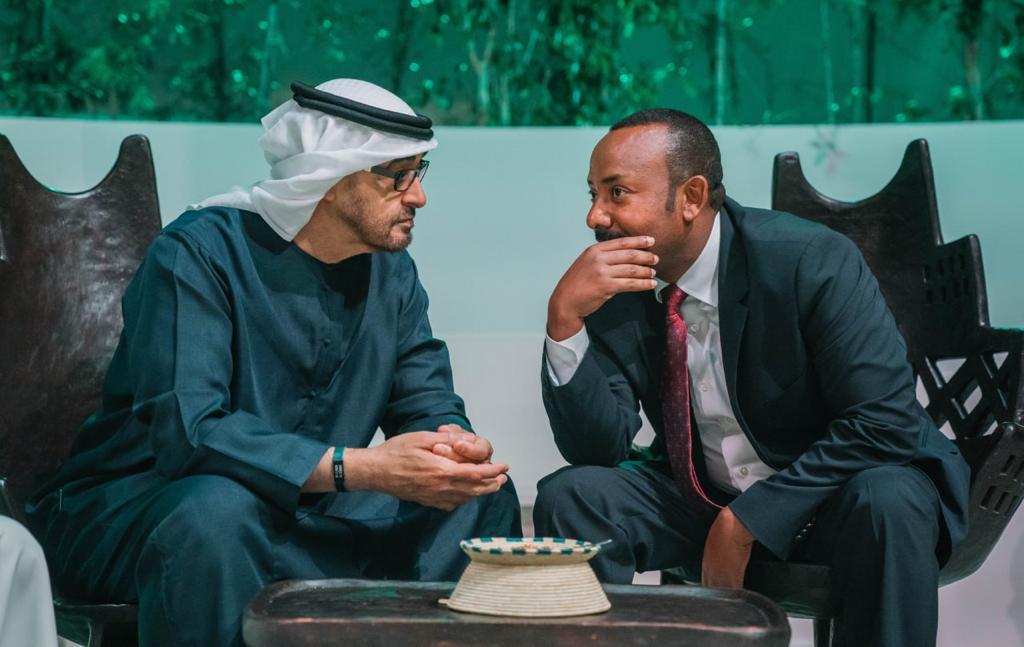
The United Arab Emirates (UAE) is playing a harmful/evil role in various conflicts across the Horn of Africa. This ongoing situation appears driven by its desire to secure long-term strategic interests. While the Abu Dhabi government publicly denies these actions, evidence suggests it provides significant financial, logistical, and military support to both state and non-state actors in countries like Sudan, Ethiopia, and Somalia. It’s troubling to consider the impact this has on those caught in these conflicts.
These interventions are part of a broader geopolitical strategy to control maritime trade in the Red Sea, secure access to critical minerals, and ensure agricultural food security. Observers and former U.S. national security officials often describe the civil wars in Sudan and Ethiopia as "the UAE’s war on Sudan and Ethiopia." The UAE relies heavily on the Rapid Support Forces (RSF) and Prime Minister Abiy Ahmed to protect its extensive economic interests, which primarily involve the illicit smuggling of Sudanese and Ethiopian gold, as well as upcoming port development contracts along the Red Sea. This includes control of the Port of Assab and military action against Eritrea. The UAE has emerged as a key ally for Ethiopian Prime Minister Abiy Ahmed, utilising its military and financial resources to reshape boundaries in the Horn of Africa. Heavy cargo aircraft have frequently been tracked making runs between Abu Dhabi and Ethiopia's Harar Meda airbase, delivering air-defence systems and ammunition to strengthen the Ethiopian military amid ongoing domestic insurgencies. International policy experts warn that the UAE’s actions are exacerbating the world’s largest humanitarian crises by turning fragile East African states into competitive military staging grounds. This situation is driving mass displacement and undermining European and global efforts to stabilise vital shipping lanes. The actions of the UAE in this context are deeply concerning and can be viewed as a crime against humanity in the Horn of Africa. This issue is not just for Ethiopia and the Horn of Africa; it affects all of Africa. The international community and African nations must act to stop the UAE and Ethiopia's harmful activities. #EmbassyMedia
Eritrea’s coastline was defined by treaties in 1900-1908, confirmed by a 1993 referendum & a binding 2002 ruling. #Ethiopia’s PP government now calls sea access an “existential” issue. #Eritrea calls its sovereignty non-negotiable #FightAbyisAggression#RespectEritreasSovereignty
AS ETHIOPIAN OFFICIALS’ VERBAL DIARRHEA MEETS ERITREA’S SILENCE — PART I
On October 23, 2023, the leader of the Prosperity Party (PP) appeared before Ethiopia’s House of People’s Representatives and delivered an extensive lecture about water (H2O). Going beyond the uses and importance of water, he resurrected the 3,000-year myth of his predecessors… delivered an inflammatory speech to stir the Ethiopian public in general, and the younger generation in particular, into a wave of emotion and convince them that without access to the sea they were condemned to live with their throats strangled.
From that day onward, following the instructions they had been given, Ethiopian intellectuals, Prosperity Party members, and their fellow travelers erupted like a volcano that had long lain dormant, declaring a mobilization around the word “sea.”
Read more: https://t.co/WSh4SaG00J by Red Sea Beacon
#AfricanUnion #HornofAfrica #Eritrea #Ethiopia #Sudan #Somalia #Egypt @hawelti@shabait@EmbassyEritrea@hadnetkeleta@SirakBahlbi@Ghidewon@PMEthiopia@MFAEthiopia@MofaSudan@MOFASomalia@MfaEGYPT@_AfricanUnion@StateDept@AJEnglish@BBCWorld@AFP@TheEconomist@thenation@PressTV@Telegraph@nytimes@UN@Sec_Council@dwnews@tesfanews@TheReporterET@gulf_news
Accusations of deep incursion based purely on PP & MSMs don't make it verified fact. befo echoing unverified claims, tell why Pp has spent yrs framing sovereign RedSea ownership as an existential claim. manufacturing border pretexts is a transparent strategy to justify aggression
#UAE’s footprint across Africa is fueling a chain of catastrophic conflicts. From backing destructive proxy wars in #Sudan to bankrolling & arming Abiy Ahmed in #Ethiopia, UAE's pursuit of port imperialism is now threatening to ignite a war with #Eritrea over Red Sea access.
The Ethiopian Tank Graveyard is located in Asmara—a site where tanks destroyed in the conflict with Ethiopia are stored in #Eritrea
Here, you see a one-mile-long site storing destroyed tanks on the outskirts of Asmara—one of the largest of its kind in Africa. The United Kingdom and the United States, followed by the Soviet Union, Libya, and Cuba, spent millions arming Ethiopia in an attempt to crush Eritrea's struggle for self-determination. The rest is well-known history.
Eritrea has a population of 5 million people united in their resolve to defend themselves against Ethiopia.
The Eritrean organization "Shaebia" became renowned for its guerrilla warfare in the mountains, utilizing donkeys and camels to transport supplies and equipment.
Eritrea is governed by the revolutionary movement known as HEGDF (*Hizbawi Eritrea Genber Harinett Fatahh*).
The name HEGDF is often referred to by its English equivalent, the "People's Front for Democracy and Justice" (PFDJ). It is the only legal party in Eritrea and was formerly known as the "Eritrean People's Liberation Front" (EPLF). At that time, the EPLF received training and weaponry from the government of the Somali Revolutionary Socialist Party.
To this day, the people of Eritrea believe they owe a great debt to Somalia—one that cannot be fully repaid—because Somalia provided education and recognition to the EPLF (also known as *Sha'abiya*), which was led by Isaias Afwerki, the current ruler of Eritrea.
The EPLF was an armed organization adhering to Marxist-Leninist principles that fought for Eritrea's independence from Ethiopia. After Eritrea gained independence in 1991, the EPLF transformed into the PFDJ.
The EPLF was founded in 1973 by a group that had broken away from the "Eritrean Liberation Front" (ELF). Inspired by Maoist ideology, the EPLF received training in guerrilla warfare in Somalia and China. The organization emerged as the dominant power in Eritrea following a conflict involving the EPLF, the ELF, and other groups in 1981. The HGDEF organization built and defended Eritrea, and it emerged victorious in three wars fought against Ethiopia. Ethiopia destroyed Eritrean cities during those wars
@DavidAltonHL My brother @berhanetesfaz1 voice of Africa why did you repost this post? I almost hit like before I see the whole post. Eritrea is in its territory. But once Addis regime start war against Eritrea on one could stop #EritreanDefenseForces from kick pp party out of Ethiopia 🇪🇷✊️
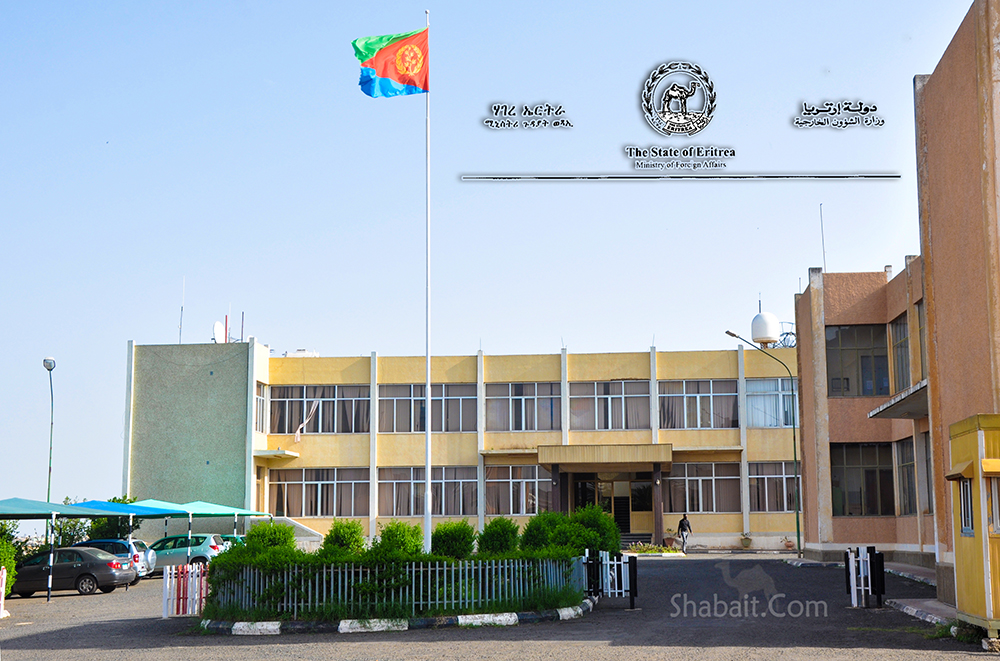
#Eritrea: Foreign Minister Osman Saleh Sends Letter to the UN Security Council;
10 October 2026
1. In its communications to the UN Security Council yesterday, Ethiopia’s Foreign Ministry has formally informed the UN Security Council that it is “taking measures” to implement the war of aggression that it has declared against Eritrea for three-years now.
2. Ethiopia’s deceitful attempts to rationalize its brazen acts of war against a sovereign UN member State in “self-defense” terms is hollow in substance and constitutes an insult to the intelligence of the international community.
3. Ethiopia’s provocative acts of war and regional destabilization had in fact elicited the UNSG and many UN member States to issue coordinated Statements on the 25thAnniversary of the Algiers Agreement in December last year that underlined the urgency and imperative of respecting Eritrea’s sovereignty and territorial integrity.
4. But Ethiopia did not only fail to heed these warnings; it has gone further to incorporate and operationalize its long-planned invasion of Eritrea as part and parcel of the huge offensive it has unleashed in northern Ethiopia.
5. In the event, Eritrea requests the UN Security Council to forcefully condemn Ethiopia’s deplorable declaration of war against Eritrea, which will inculcate huge devastation to the peoples of both countries and destabilize the whole region, and take the requisite deterrent measures against it in accordance with Chapter VII of the UN Charter.
https://t.co/PG0HqdUHaw
Eritrea Urges UN Security Council to Condemn Ethiopia’s Declaration of War
Eritrea has called on the UN Security Council to condemn what it described as Ethiopia’s declaration of war against it and take deterrent measures against Addis Ababa under Chapter VII of the UN Charter, warning that an Ethiopian attack could cause widespread devastation in both countries and destabilize the region.
In a letter sent to the Security Council today, Eritrean Foreign Minister Osman Saleh said Ethiopia had formally informed the Council that it was “taking measures” to implement what he described as a “war of aggression” that Addis Ababa had declared against Eritrea three years ago.
Saleh accused the Ethiopian government of attempting to justify its actions against Eritrea, a sovereign UN member state, on grounds of self-defense. He described these arguments as “hollow” and an insult to the intelligence of the international community.
The Eritrean foreign minister said Ethiopia’s provocative actions and regional destabilization had prompted the UN secretary-general and several member states to issue coordinated statements in December last year, marking the 25th anniversary of the Algiers Agreement. Those statements, he said, underscored the need to respect Eritrea’s sovereignty and territorial integrity.
He added that Ethiopia had not only ignored those warnings but had also proceeded, according to his account, to operationalize a long-standing plan to invade Eritrea alongside the large-scale offensive it had launched in northern Ethiopia.
Asmara urged the Security Council to take “the requisite deterrent measures” against Ethiopia under Chapter VII of the UN Charter, which empowers the Council to take action to maintain or restore international peace and security, including sanctions and, where authorized, the use of force.
The letter, as published by Eritrean Information Minister Yemane G. Meskel, did not provide further details about the Ethiopian measures reportedly communicated to the Security Council or Addis Ababa’s response to Eritrea’s allegations.
"The Ethiopian regime has been pursuing an unprovoked war of aggression against Eritrea for more than three years now in flagrant breach of foundational principles of international law and the UN Charter...'