I evaluate startups as an operator. The survival metrics are:
- System uptime
- Latency and scale
- Security and compliance
My operator bias drives my investment decisions, asking: can this actually scale in the real world, not just in a deck?
Venture capital risk involves money and psychology.
You invest in teams knowing many fail. Outliers like Stripe transform your portfolio.
Survive the power law:
- Back enough companies
- Pursue large markets
- Respect probability
- Stay human with founders
How do $1B+ Private Equity funds generate returns? They underwrite operations, management, industry, and capital structures. Their outperformance is driven through these three actions. Buying well, improving the business. Exiting at the right time.
#PrivateEquity#VentureCapital
A VC fund raises 150M to 300M. In a 20 to 30 startup portfolio, most fail. Outliers generate the returns. I focus on portfolio construction over single deal heroics.
Apply to your own approach:
- Build a diverse portfolio
- Target outliers
- Measure total return
Blackstone bought Hilton in 2007. The economy crashed soon after.
Follow their playbook:
- Deploy capital during bad years
- Improve internal operations
- Wait for optimal exit timing
Build infrastructure during recessions and scale when markets recover.
Entering VC is not impossible, but the path is narrow. Successful candidates behave like investors before holding the title. Leading AI in defense and finance taught me to weigh risks and measure the trade-offs. You must adopt an investor mindset today.
#VentureCapital#Finance
You need to understand US Private Equity. Firms do not bet on ideas, they engineer value in mature businesses.
The playbook: 1. Buy controlling stakes 2. Improve operations 3. Exit via sale or IPO
Look at how Blackstone bought Hilton. The risk here differs from a startup.
US Venture Capital funds early-stage companies. They anticipate complete losses, few moderate successes, and very few full-returners.
Success requires- Sourcing the right founders, Underwriting markets early, Supporting teams through chaos.
#VentureCapital#Startups#USMarkets
Trading systems and defense teach you to respect system failures and latency. Strategy without execution is just a slide. I bring an operator mindset to capital. Build solid architecture before pitching your business.
#VentureCapital#PrivateEquity#CapitalMarkets#Telecom
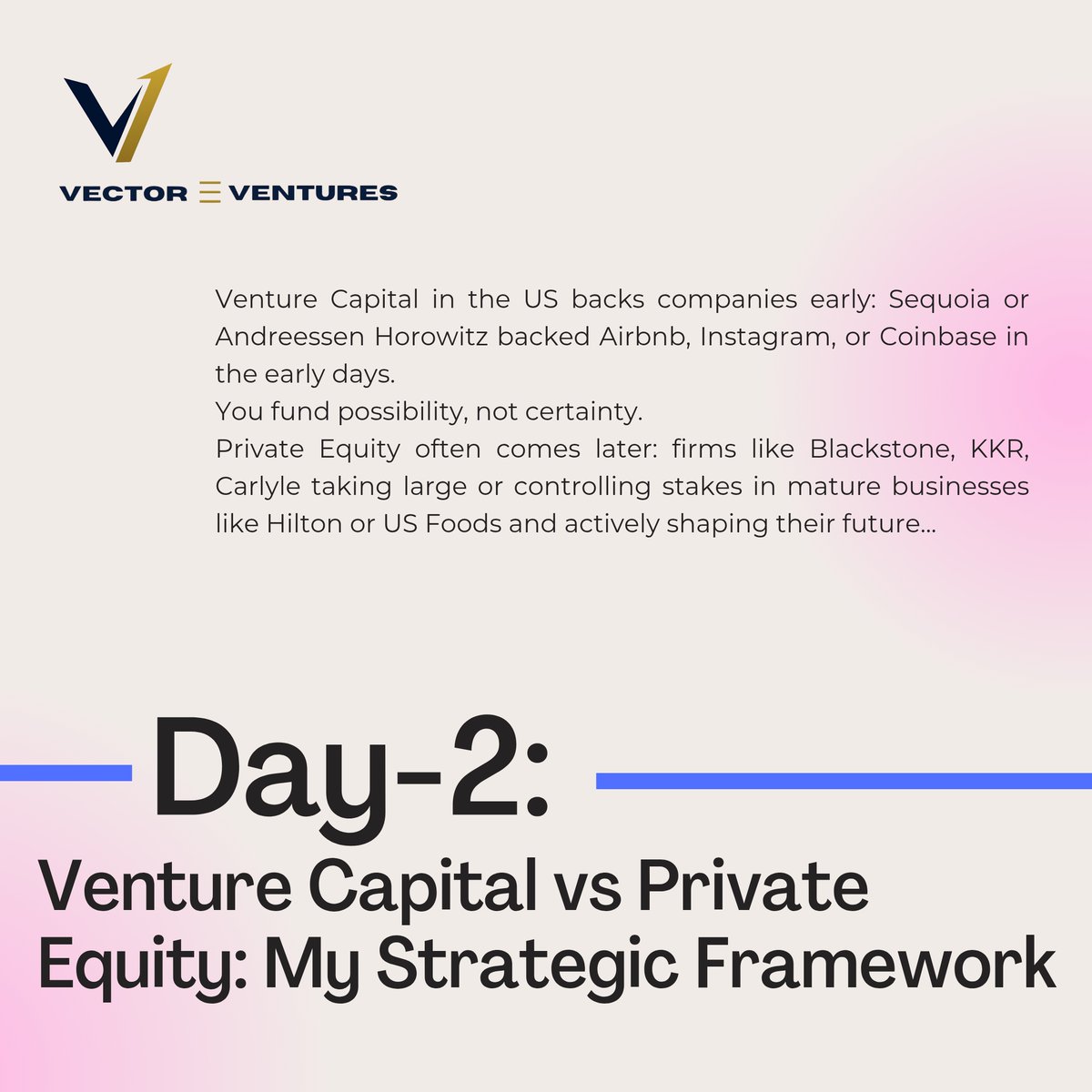
VC vs PE. My mental model.
VC: Early stage. Think Sequoia backing Airbnb. You fund possibility over certainty. Goal: Find the next category leader.
PE: Late stage. Think Blackstone buying Hilton. You acquire and scale proven assets.
Different tools. Same goal: ROI.
My background in capital markets, telecom, and defense shaped how I evaluate risk. I am now bringing that technical lens to Venture Capital and Private Equity.
Follow for a 30 day series on:
- VC and PE mechanics.
- Revenue models.
- Risk assessment.
- My new fund.
You finished the 10 day sprint. Here is your 'Hybrid Career Framework' to adapt, pivot, and thrive.
- Anchor in AI/ML Mastery
- Architect Scalable Digital Structures
- Build Resilience through Experience
- Adopt VC Mindset
You are the architect. Act now.
AI fluency is the new standard for 2025. Here are the most in demand skills:
- Cloud infrastructure
- Data literacy
- Design thinking
- Responsible AI
Master these to lead digital transformations.
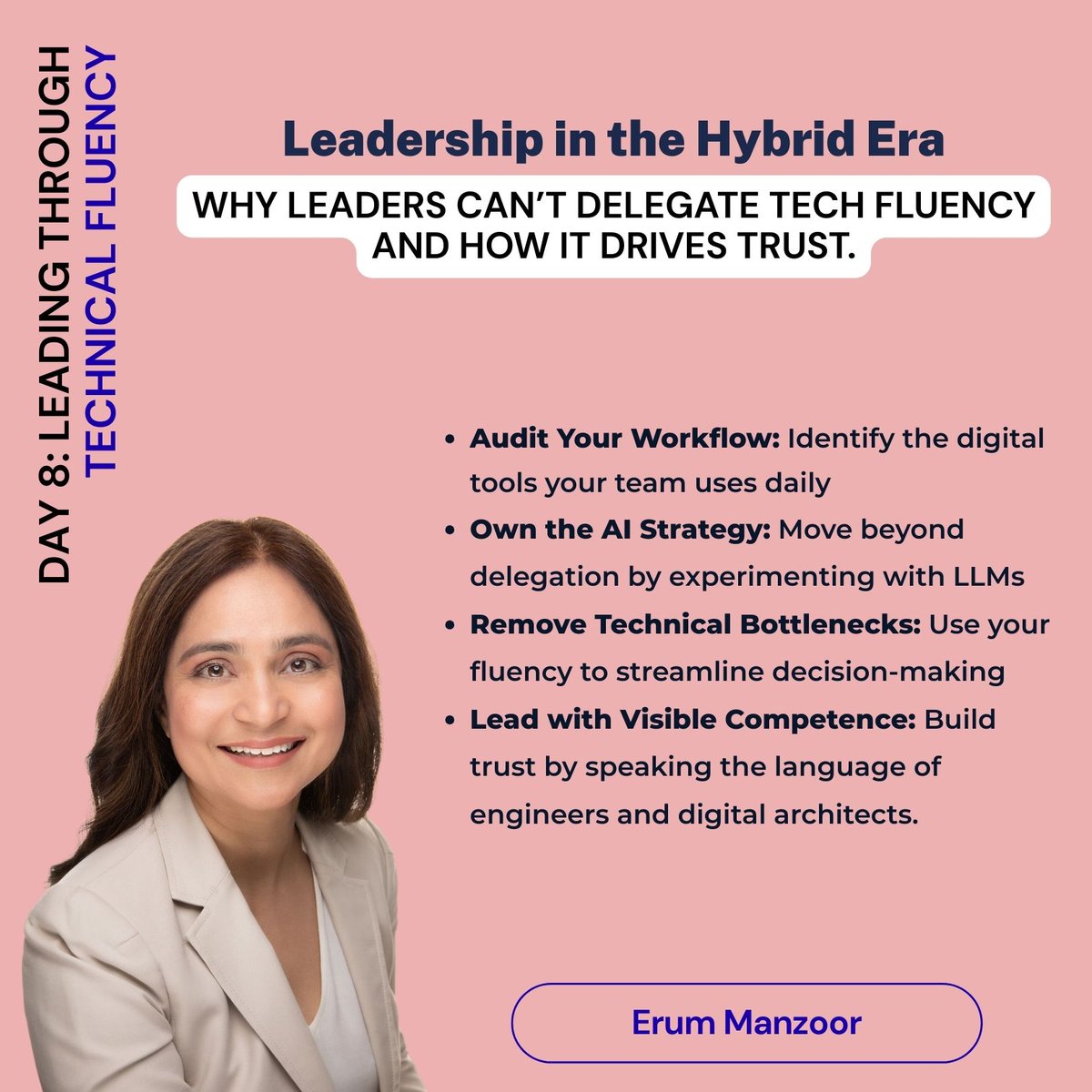
Hybrid leadership requires technical fluency. You cannot lead a remote team if you do not understand their tools.
Fluency builds trust by:
- Shortening feedback loops.
- Improving risk assessment.
- Reducing team friction.
Do not delegate your digital literacy.
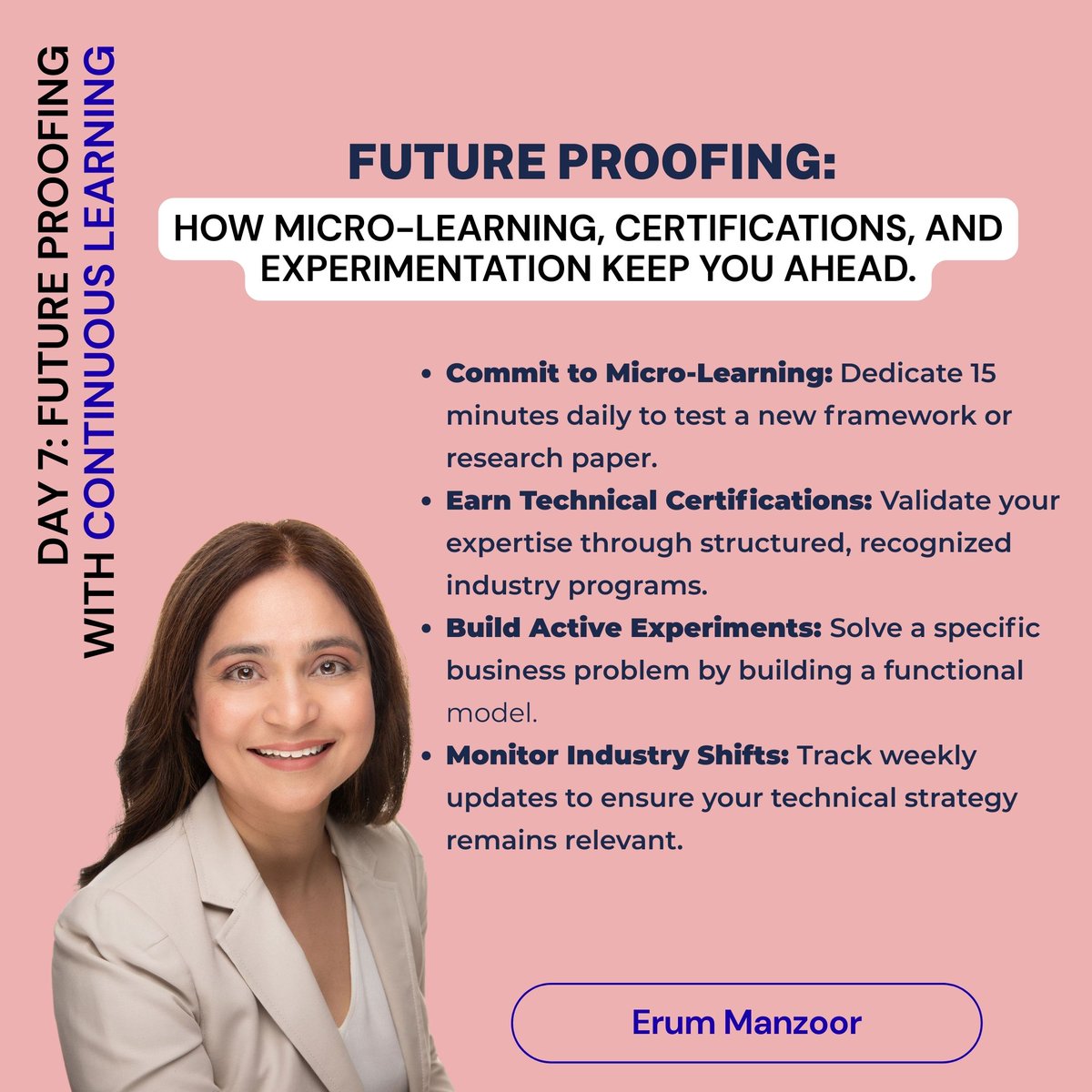
Artificial intelligence advances daily. You must learn faster. Three ways to protect your career today are-
- Spend 15 minutes on micro-learning.
- Earn structured certifications.
- Experiment by building models.
- Your learning speed defines your career.
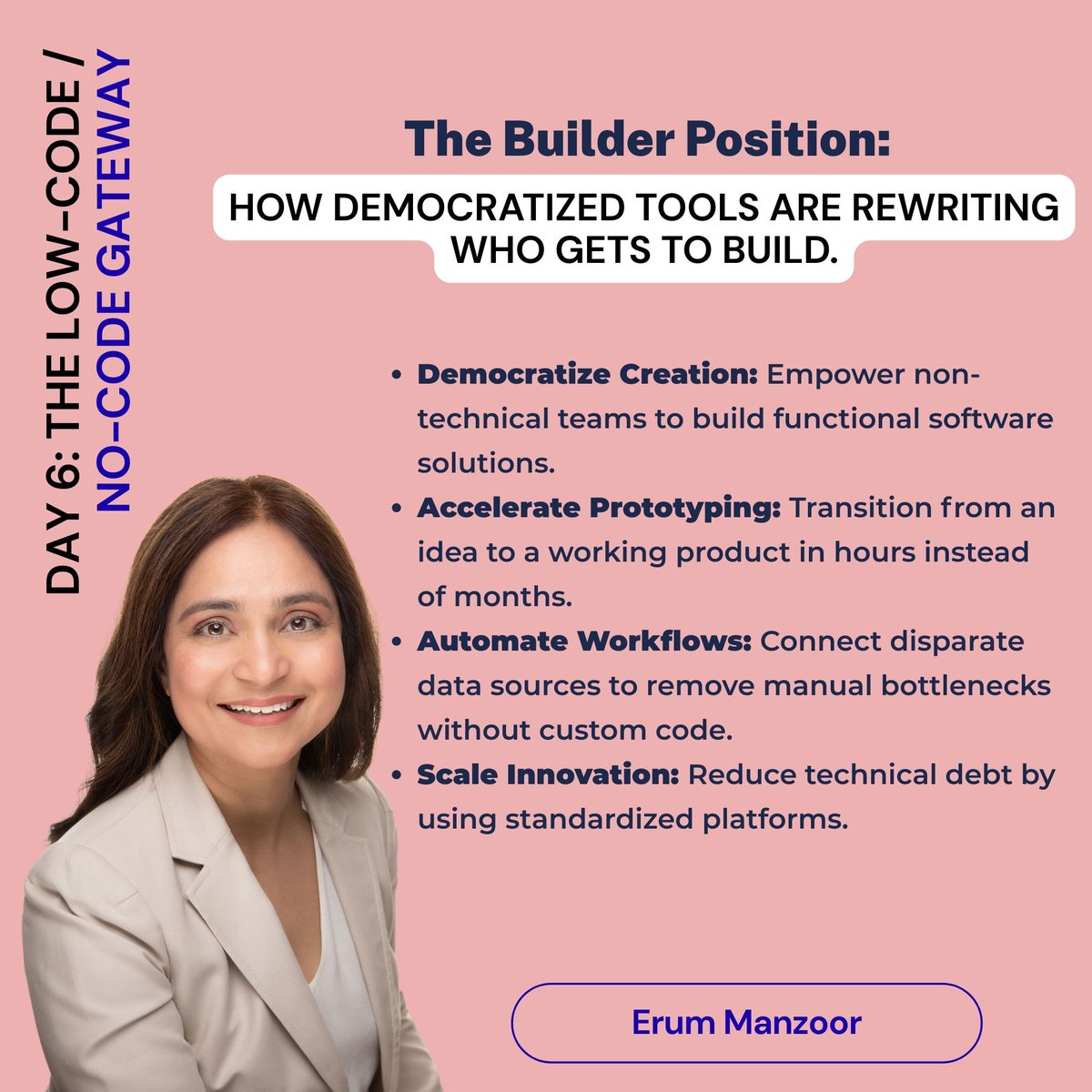
Low-code tools democratize innovation. You do not need to be a programmer to build a technical solution. Focus on logic and workflow. Use these tools to automate your business and test new ideas fast. Building is now accessible to everyone.
AI failure stems from communication gaps. Engineers build features. Leaders chase revenue. They rarely align.
The AI translator is the most valuable person in the room.
- Simplify architecture.
- Identify ROI.
- Manage risk.
- Align goals.
Own the middle layer to win.