American-born French dancer, singer and actress Josephine Baker was born #OnThisDay in 1906. This cut-out mesh costume, embellished with a scalloped design of metal beads, textured sequins and rhinestones, was worn by Baker in the 1930s. Sold by @KerryTaylorAuct. #fashionhistory
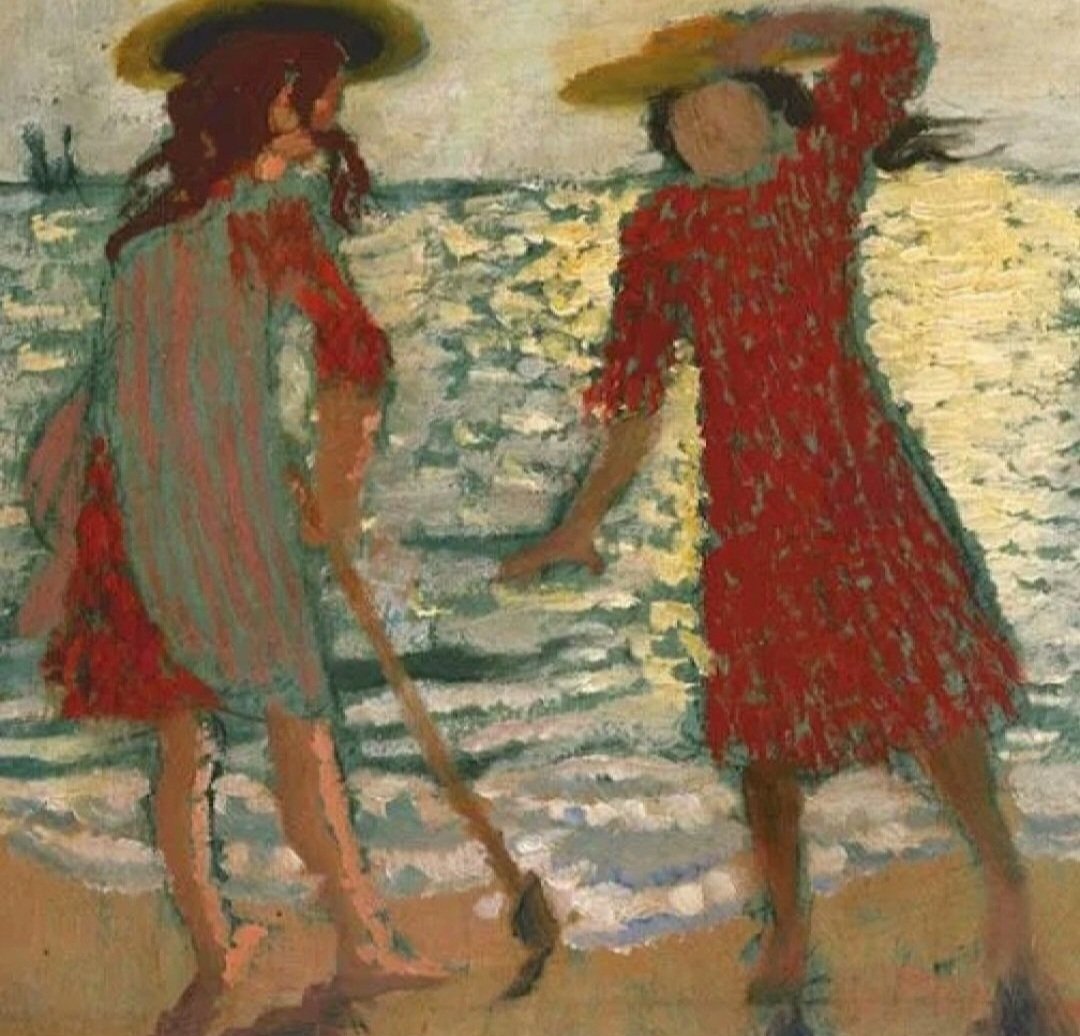
'On the Beach,' (1891) was one of Maurice Denis' first experiments in capturing the elusive quality of how light moves on the surface of water; a source of constant inspiration as he focused on themes for pictures during summer holidays on the Brittany coast.
In 1884, when he was working at Fontainebleau, John Lavery painted an unknown woman resting in a hammock slung between trees close to a river. That sense of dolce far niente, of beautiful youth and summer's luxuriance remained with him for the rest of his life. This is from 1904
'The Brothers.' (1928) A child prodigy, Joan Manning-Sanders was aged 15 when this work was painted and was the youngest artist to have shown at the RA Summer Exhibition in the late 1920s.
In his 1900 painting, 'A Mermaid,' John William Waterhouse's siren sits alone in an isolated inlet combing out her long hair with her lips parted in song. Beside her is a shell filled with pearls, which legend says are made from the tears of dead sailors.
Edward Wadsworth was commissioned by the British chemical company ICI to produce public information posters during WW2, including this one 'Straight from the Tap,' (1944) warning the public to boil water before drinking it.
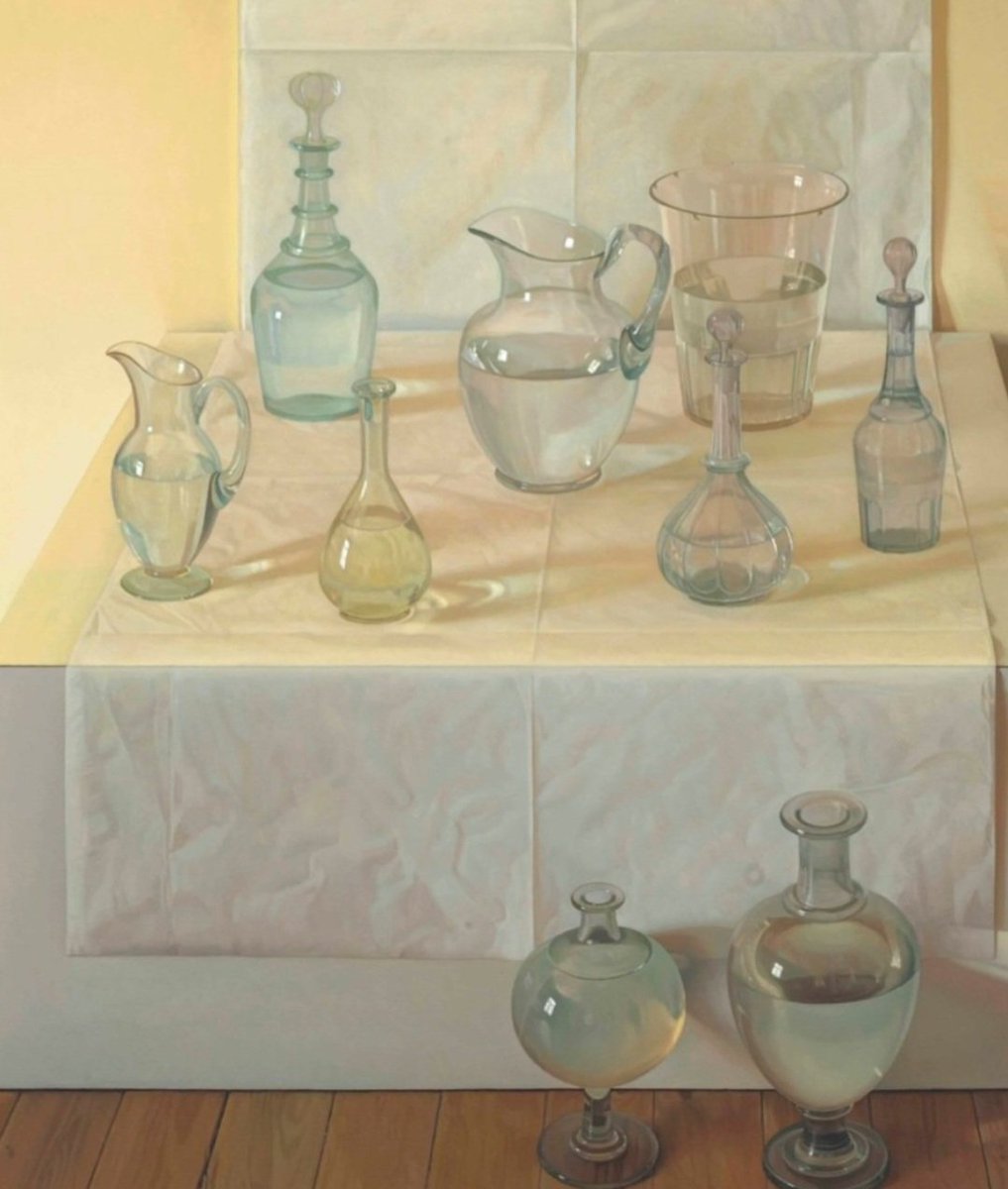
'Water.' (2001) Claudio Bravo was known for his classically inspired paintings which often recall references to Greco-Roman art. He wrote: 'The ancients desired to reach what no one else has even tried for, a state of precision and exactitude.'
The scene in Duncan Grant's painting from 1920 is the farm pond at Charleston in Sussex the home he shared with Vanessa Bell (in the hammock) their daughter Angelica is pulling a toy animal, Quentin Bell rocks the hammock next to Sebastian Sprott; Julian Bell punts on the pond
Isaac Israels travelled frequently through Italy in the 1920s often in the company of his girlfriend, Sophie de Vries who is depicted here talking to a friend on a beach (furthest away from us) at Viareggio in northern Tuscany.
The intense gaze in 'Madame Canals,' (1905) is the most remarkable feature of Picasso’s markedly classical portrait; a composition inspired by traditional Spanish portraits and evokes the typology of figures in Picasso’s previous works, characterised by their slenderness.
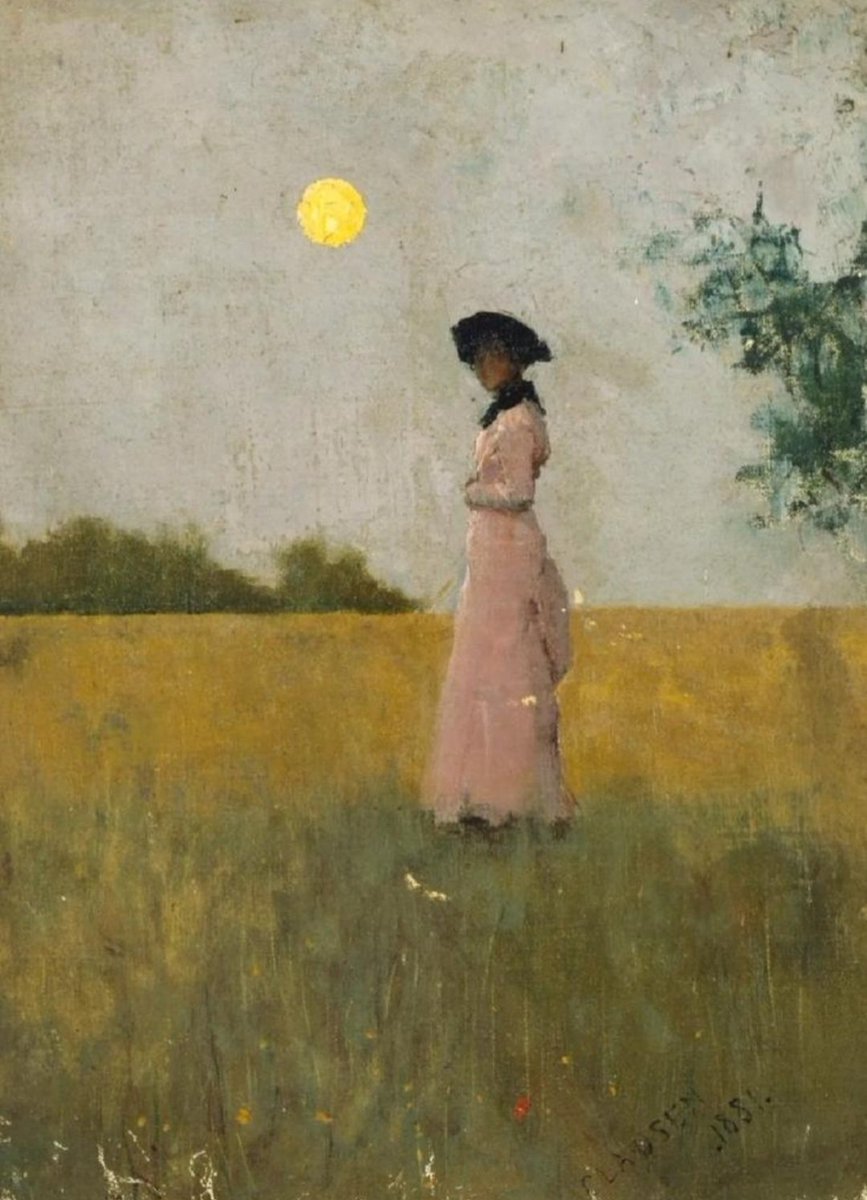
George Clausen's 'Lady in Pink in Moonlight,' (1881) gives a sense of a surrounding narrative which can only be guessed at. In an art world dominated by the grand manner of classicism, this was a daring composition, a radical departure for its day.
William Nicholson painted Sydney and Beatrice Webb (founders of the LSE) at their country house, Passfield Corner, in Liphook, Hampshire between March and June 1928. The painting was paid for by subscription; contributors included Churchill and George Bernard Shaw.
One summer morning in 1909, Spencer Gore painted this work from an upstairs window at 31 Mornington Crescent in London. The art critic Frank Rutter said of Gore's work: 'the hallmark of the true artist is he finds beauty ever waiting for him at his own door.'
Painted at the very beginning of the 20thC, this work is among Klimt’s most abstract of paintings. Depicting the waters of the Attersee (Atter Lake) in Austria, it marks a key moment in his career, as he pioneered a new and distinctive approach to landscape painting.
An early picture by Henri Matisse from around 1903, depicting a house in his parents village of Bohain en Vermandois, Aisne in northern France. Already, he's introducing his well-known motifs: the tilted picture plane and the open door.
'The Beach at Runswick Bay' (1905) Employing dense layers of paint, and spontaneous, broken brushwork reminiscent of John Lavery's beach scenes, Mark Senior was one of the first group of artists painting en plein air along the Yorkshire coast.