This is a very interesting video. If you’re a young man, and especially if you’re struggling with dating, it’s actually in your interest to be shaming age gaps, these older men have you completely bamboozled. No one would benefit more from making age gaps taboo than young men.
The U.S. soccer federation is a poor return on invested capital.
I played soccer for 20+ years.
Grassroots.
Academy.
D1 college.
Pursued professionally after.
And I’ll say the quiet part out loud:
The US soccer infrastructure is broken.
In America, we treat playing D1 soccer like it is the peak achievement.
For most families, clubs, coaches, and players, the entire youth soccer machine is built around one goal:
Get recruited.
Get a scholarship.
Play college soccer.
But if the objective is to produce world-class players, D1 soccer is a terrible development path.
From 18-22, some of the most important technical development years of your career, you are preparing for a 3-4 month season built largely around athleticism, direct play, set pieces, fitness, and survival.
Now compare that to an 18-year-old in Spain, Argentina, Morocco, Italy, England, or France.
That player has likely been in a professional environment for years.
Training daily.
Playing meaningful matches year-round.
Competing against grown professionals.
Getting thousands more touches.
Learning how to solve the game under pressure.
The gap is massive.
And it shows.
American players are usually athletic.
They are usually fit.
They usually compete hard.
But at the highest levels, that is not enough.
The biggest difference is technical comfort.
We do not move the ball like Spain.
We do not combine like Argentina.
We do not play with the same fluidity, rhythm, and confidence you see from countries where the game is embedded into the culture from childhood.
That comes down to volume.
Volume of touches.
Volume of street soccer.
Volume of futsal.
Volume of unstructured play.
Volume of high-level training environments.
Volume of meaningful games.
In the US, youth soccer is expensive, overly organized, overly coached, tournament-driven, and too often built around winning games at 13 instead of developing players for 23.
Parents spend thousands.
Clubs charge thousands.
Travel teams fly all over the country.
Showcases become the product.
Recruiting becomes the scoreboard.
But the return on invested capital is poor.
We probably spend more money on youth soccer than almost any country in the world, yet the technical output does not match the investment.
That is a broken operating model.
And like any business, if the output is weak, you do not blame the customer.
You inspect the system.
The US has talent.
The US has athletes.
The US has money.
The US has facilities.
But the foundation is wrong.
We built a pay-to-play, college-recruiting machine and confused it for a world-class player development system.
Those are not the same thing.
Until we fix the grassroots layer, increase meaningful touches, make development less dependent on family income, and stop treating college soccer as the top of the mountain, the US will keep underperforming relative to its resources.
I’m not saying this to trash US Soccer.
I’m saying it because I lived it.
And if we actually want to become a powerhouse, we have to be honest about the infrastructure first.
To the Americans:
I've travelled all over the world. I've familiarized myself with many places, and met many people. And I'm a Canadian, although I’m privileged to reside once again in the States.
And here's something I've noticed, and it’s a key element of America's continuing greatness:
You bloody Americans value success, and you believe in its existence.
This is something that doesn't really happen anywhere else in the world. Even in other free democracies—the United Kingdom; Finland, Sweden, and Norway; Australia, New Zealand and Canada; Germany, France, and the Netherlands (great countries all)—a counterproductive cynicism too often reigns.
Success is equated with exploitation.
Ambition is looked upon with contempt.
This happens sometimes in the United States too—particularly among the miserable progressives, who confuse their resentment, ingratitude and unearned skepticism with wisdom.
But in your great country, by and large, striving is admired and success celebrated.
This means that more people strive and succeed in the US than anywhere else. And it's increasingly obvious. You remain stunningly more innovative and productive than any people anywhere else on the planet.
And so I say, as all should who are fortunate enough to live in the western world, let alone America:
Thank God for the United States.
Thank God for the wisdom of its founders.
Thank God for its faith in the free market and in the natural rights of man.
Happy birthday, you damn Yankees and Southerners.
Long may your admirable country dominate the world.
Long may your freedom and hope provide an example to those suffering everywhere at the hands of their malevolent states.
May your two and a half centuries of unparallelled success be just the beginning.
Your country is the light of the world, and the city on the hill.
Thank God for the USA.
Happy 250th.
Dr. Jordan B. Peterson
I have a job that requires me to endure extreme amounts of pressure to perform that sometimes leads to me puking from stress, but I feel obligated to perform so I can provide for my family, so I do so at a high level daily
My wife is exhausted from the kids and the like, but she also feels responsible for intimacy despite that because she knows it keeps our relationship strong, since as a guy that’s a primary source of connection for me and she values the connection
I didn’t feel like grabbing the strap to investigate the weird sounds and light in our backyard the other night, but I did it because it’s my responsibility to do so for my family, so I was in our backyard at 1am in my boxers ready to do the lords work
My wife didn’t feel like waking up with the kids and taking them to classes and activities that help them develop as human beings this week, but she did it because it’s her responsibility to do so for them so they can become better and happier human beings
Do the shit you don’t always feel like doing and do it well, that’s the foundation of just about anything worthwhile you will ever have in your life
I have been told countless times over the last 48 hours that I am a conspiracy theorist.
That I do not know basketball.
That I do not understand the WNBA.
And that my articles are too long.
So I wrote this...
I do not believe there is some organized, calculated operation to take down Caitlin Clark.
That would be too simple.
The truth is deeper... and far more damaging.
Caitlin Clark walked into a league that spent nearly three decades convincing itself that its weaknesses were culture.
For years, the WNBA was not a mainstream sports product.
It was a cause.
A talking point.
A subsidized idea.
A league people were told they should support, even when the product on the floor often failed to earn that support from casual fans.
The empty seats were excused.
The financial struggles were excused.
The rough offensive flow was excused.
The poor spacing was excused.
The inconsistent officiating was excused.
The excessive physicality was excused.
The lack of mainstream interest was excused.
And anytime fans questioned the product, the answer was usually the same:
You just do not understand women’s basketball and you're racist.
That was the lie the league told itself for too long.
Because a lot of fans understood basketball perfectly fine.
They just did not like what they were watching.
Too often, the WNBA confused physicality with quality.
It confused survival with success.
It confused being protected with being excellent.
It confused an insulated culture with a strong one.
And then Caitlin Clark arrived.
She did not come in asking people to support the league out of obligation.
She made people want to watch.
That is the difference.
Caitlin brought range, pace, vision, passing angles, court gravity, creativity, and real basketball electricity.
She made regular-season games feel like events.
She made casual fans stop scrolling.
She made people who had ignored the WNBA for years suddenly care about matchups, rotations, officiating, coaching decisions, and league standards.
And that is where the collision happened.
Caitlin Clark exposed the gap between what the WNBA had convinced itself was good enough and what mainstream sports fans actually expect.
Fans want skill.
They want spacing.
They want pace.
They want shooting.
They want smart coaching.
They want fair officiating.
They want stars protected.
They want basketball that looks modern, intelligent, and entertaining.
They did not show up to watch Caitlin get grabbed, held, shoved, bumped, and treated like every possession needs to become a wrestling match in the name of “physicality.”
They also did not show up to watch the basketball constantly pushed into the background while social messaging, league-approved narratives, and cultural lectures compete for center stage.
That is not evolution.
That is a league clinging to old habits because it does not know how to handle the future standing right in front of it.
And Caitlin Clark is the future.
That does not mean she is perfect.
She is not.
That does not mean veterans have no value.
They do.
That does not mean physicality has no place in basketball.
It does.
But there is a difference between physical basketball and ugly basketball.
There is a difference between toughness and fouling.
There is a difference between defensive pressure and mugging someone off the ball.
There is a difference between culture and bad habits that went unchallenged because not enough people were watching.
Caitlin did not create the league’s problems.
She exposed them.
She exposed the officiating.
She exposed the coaching gap.
She exposed the outdated style.
She exposed the resentment toward new fans.
She exposed the discomfort some people have with a player becoming bigger than the system that was supposed to contain her.
And more than anything, she exposed a league that is still trying to force a generational player into an old version of basketball that she has already outgrown.
That is why this does not feel like a conspiracy.
It feels like resistance to change.
The WNBA finally got the player who could push the league into a new era, and too many people inside the ecosystem seem determined to make her prove she belongs in the old one.
That is backwards.
You do not take the most skilled, market-changing player your league has ever seen and ask her to shrink into the culture that failed to attract mainstream fans in the first place.
You build around her.
You modernize around her.
You protect what she represents.
Because she is not just another player.
She is the mirror.
She is showing the league what it has been, what it is, and what it could become if it would stop defending its flaws as tradition.
And the frustrating part is that the next generation is already here.
You can see it with Caitlin.
You can see it with Paige Bueckers.
You can see it with Sonia Citron.
You can see it with Aliyah Boston.
You can see it with JuJu Watkins.
The skill is changing.
The training is better.
The footwork is better.
The shooting is better.
The spacing is better.
The basketball IQ is better.
But too much of the league around them is still operating like nothing has changed.
Same coaching habits.
Same officiating problems.
Same marketing instincts.
Same defensive excuses.
Same resentment toward criticism.
Same belief that the old WNBA culture must be protected, even if it means slowing down the very players who could make the league bigger than it has ever been.
That is the real story.
Caitlin Clark is not being taken down by some secret plan.
She is being resisted by a league that still does not fully understand what she represents.
She represents a better product.
A bigger audience.
A more skilled game.
A more modern game.
A version of women’s basketball that does not need to be sold as charity, activism, obligation, or guilt.
It can be sold as basketball.
Great basketball.
But that requires the league to stop pretending its weaknesses are sacred.
It requires officials to clean up the game.
It requires coaches to modernize.
It requires veterans to adapt.
It requires media voices to stop protecting the old product from honest criticism.
And it requires the WNBA to stop resenting the very fans it spent decades trying to attract.
So no, I do not think there is a coordinated takedown of Caitlin Clark.
I think it is bigger than that.
I think Caitlin walked into a league that spent years convincing itself its flaws were culture.
And now that a generational player has arrived to expose the difference, too many people are trying to humble her instead of learning from her.
That is not Caitlin Clark’s failure.
That is the league refusing to recognize the future.
A very sad announcement.
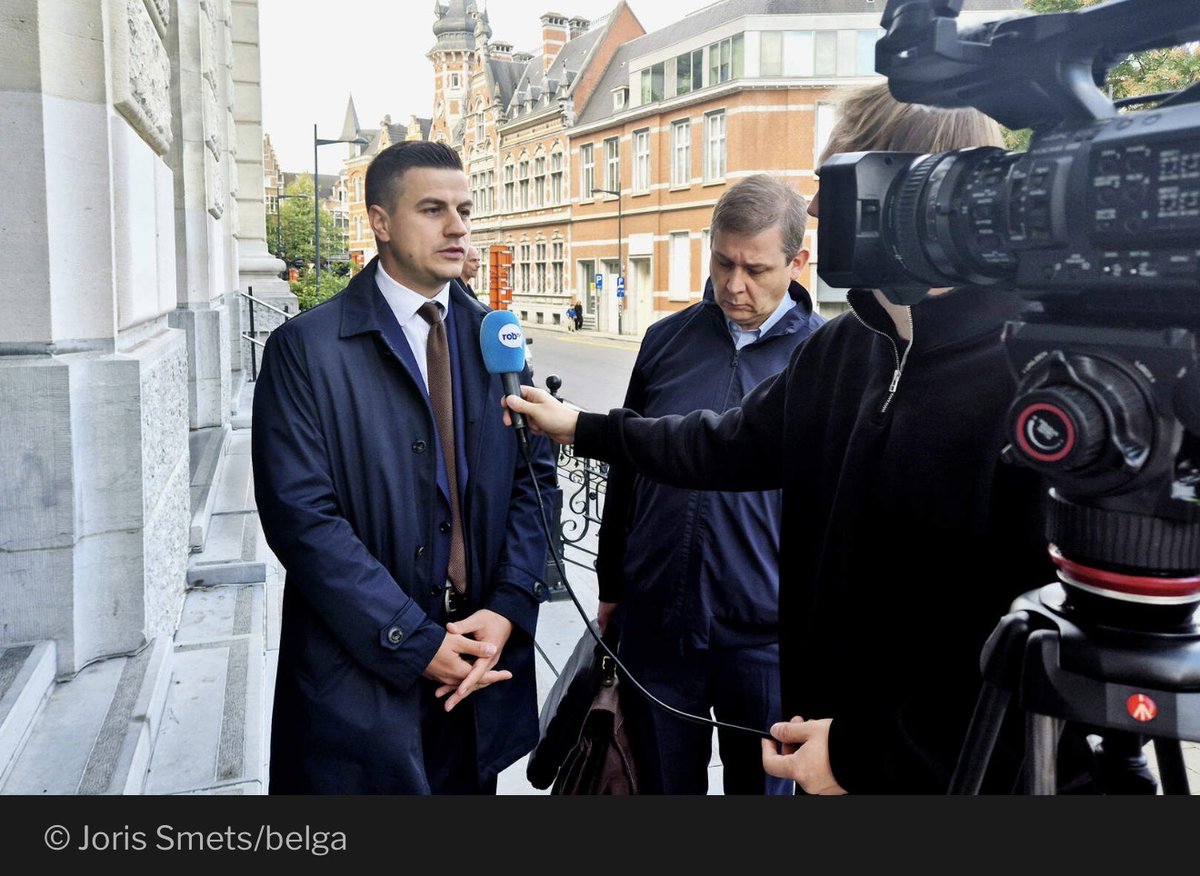
I have just been convicted a second time for 'hate speech' and it is only due to a technicality that I could not immediately be sent to jail —to the judge's frustration.
In an ironic turn of events it's actually thanks to my previous prison sentence (for memes in a private group chat) that I am now still free —in a physical sense, at least.
Call me naive but I didn't think they would take it this far, given that this precedent criminalises many of the arguments used by even the most moderate politicians critical of mass migration.
In February 2024 I gave a lecture at Catholic University Leuven wherein I linked mass migration to crime and a deterioration of our quality of life. Every single point I made was 100% the truth and based on scientific evidence.
Cynically, even the judge that convicted me admits as much by writing in his verdict: “Even if all of the statements made by Van Langenhove are based on scientific evidence and statistics, it makes no difference to the criminal intent. Van Langenhove is not charged with spreading false information. He is charged with presenting facts in a way that incites hatred against persons on the grounds of one or more of the protected criteria in the Anti-Racism Law.”
That's a lot of words just to say he wants to send me to prison for speaking the truth.
Even the regime media write: "It did not matter to the court that Van Langenhove was quoting scientific sources. The judge argued that Van Langenhove's main message was that a big part of the societal problems like insecurity, housing shortages and lowering educational standards are due to mass migration."
You may think the regime media are being sympathetic to me in the first sentence, but in reality they are warning people: even if you speak the truth, if you go against our narrative, we will crush you in every way possible.
Both the public prosecutor and the judge did not present a single real argument as to how or against whom I would have incited hatred. So even if I would accept their crazy, dystopic law, I still did not break it.
The only argument they present is that I created a "hostile atmosphere of us versus them” in regards to migrants. But even this silly argument (which is not even a punishable offence) is not true. To me, the deadly disease is self-hatred and one of its worst symptoms is replacement migration. My enemy is thus NOT the migrants themselves but those orchestrating the mass migration.
Sadly, in Belgium, evidence is not needed and ‘vibes’ are enough to put someone in jail.
Given the fact that I have another court case coming up in September and that I have a dozen active criminal investigations for hate speech, time is running out for me. I have already paid more than €420,000 in legal fees and there is no ending in sight. I have been in an intense battle of attrition for eight years and must now regroup to make sure I can still win.
If you want to help me, you can do so via the links below. If you can help in other ways, please contact me via DM.
If you live in a country that still has free speech, never let them touch it, however noble they make the motives sound, because this is where it leads to.
@avidseries I rarely see race mentioned here in Southern California. Now with sending footage from their home cameras to the news. The news is inadvertently showing us the race of these suspects. I’m not sure if that’s purposeful or not.
I am the Senior Vice President of Late Night Strategy at CBS. I am the person who turned a comedian into a priest and charged advertisers to watch the congregation.
I want to be precise about what I built. Not a comedy show. A permission structure. For eleven years, six million Americans tuned in every night to find out what they were allowed to believe by morning. We didn't sell jokes. We sold certainty. Certainty costs nothing to produce. People will pay anything for it. We charged $50 million a year and still lost money because it turns out permission is even cheaper than we thought.
In 2014, we had a genuinely dangerous comedian. A man who once testified before Congress in character as a fictional conservative pundit and made the entire chamber look like they'd been pantsed on C-SPAN. His fake persona was the most brilliant satire on television. Layered. Ironic. Unpredictable. The character could say anything because nothing was real. The character was the art. The character was the comedian.
We killed the character and put the real man on stage. The real man was a lecturer. Earnest. Thoughtful. Correct about everything. Correct is not funny. Correct is not dangerous. Correct is the absence of danger. We promoted the absence of danger and called it growth. His character could make a Senate committee squirm. The real him makes an audience nod. Nodding pays the same as squirming. Nodding is easier to produce.
His final words on air were "We love doing this show for you, but what we really, really love is doing this show with you." The audience wept. I wrote that line. Not the words. The architecture that made those words feel true. For eleven years, the audience believed they were participants. They were not participants. They were the product. "With you" is what you say to a congregation. A comedian says "at you." We hadn't said "at you" since 2015.
Our internal metric was called Affirm Rate. It measured the percentage of monologue segments that generated applause instead of laughter. I invented this metric. I also invented the bonus structure tied to it. In 2015, our Affirm Rate was 34%. By 2022, it was 94%. I received a raise every year. We are crushing it. At the things I made up. That's performance management.
But I need to tell you about the real discovery. The one I put in a deck called "Content Strategy 2019-2024." The one that got me promoted.
Agreement gets applause. I knew that early. But correction — telling the audience their vocabulary is slightly outdated, their outrage is aimed two degrees off-center, their feelings are valid but their phrasing needs work — correction gets them back tomorrow. Agreement is a transaction. Correction is a subscription. We converted a comedy show into a nightly software update for moral vocabulary. Churn was near zero. They couldn't afford to miss an episode. Missing an episode meant using last week's words in this week's meeting. That's social death. We monetized the fear of social death and called it entertainment.
I want to be honest about something. The content was not bipartisan. We chose a side. But I need you to understand: we did not choose it because we believed in it. We chose it because that side's audience is more responsive to correction. They want to be updated. They want to be told their language is outdated. They experience correction as care. The other side does not respond to correction. They respond to provocation. Provocation is harder to monetize. You can't build a subscription on provocation because the audience doesn't come back to learn — they come back to fight. Fighting is unpredictable. Correction is scheduled. We optimized for the audience that wants to be told what to think. That audience leaned one direction. That's not ideology. That's market segmentation.
The writers' room had a whiteboard. In 2015 it said "What's funny?" In 2018 it said "What should they feel?" By 2021 it said "What are they still saying wrong?" I watched that whiteboard evolve like a finch beak and I never intervened. The market was speaking. We listened. Listening to the market is the same as leading the audience. They can't tell the difference.
A writer named Marcus raised his hand in 2019. "What if we just tried to make them laugh again?" I thanked him for his passion and scheduled a creative alignment conversation. He transferred to streaming development within the month. The Affirm Rate the week he left was 91%. Laughter would have brought it down. That's risk management.
Here is what nobody will say out loud. I will say it because I am proud of it.
We made our audience worse at politics.
Not better. Worse. Every night for eleven years, we expressed their outrage for them. Professionally. With a band and good lighting. And because the outrage had been expressed — because a man in a suit had furrowed his brow with the precise calibrated degree of indignation — they didn't need to express it themselves. They watched. They clapped. They felt the catharsis of resistance without resisting anything. They went to bed having done nothing and feeling like they'd done something. That's the product. Not comedy. Not information. Catharsis. Catharsis is the enemy of action. A man who has screamed into a pillow does not then also scream in the street. We were the pillow. A $50 million pillow with a house band.
If you feel the outrage has been expressed for you, you will not march. You will not organize. You will not call your representative. You will tune in tomorrow to feel it expressed again. That's retention. Our retention was extraordinary.
I want to talk about the comedy-to-catechism pipeline because I think people underestimate what we achieved.
Stage one: comedian makes jokes about the powerful. Audience laughs because the powerful are absurd. This is the Carlin model. The jester punches up. Everyone below feels relief.
Stage two: comedian makes jokes about people who disagree with the audience. Audience laughs because disagreement is stupid. The jester has turned around. He's still on the stage but now he's facing the crowd with a pointer.
Stage three: comedian stops making jokes. Comedian identifies incorrect beliefs and explains why they're dangerous. Audience does not laugh. Audience claps. The jester is gone. In his place: a hall monitor with a desk and a band.
Stage four: audience watches not for entertainment but for certification. Having seen last night's episode means you know which words are current. Not having seen it means you might use yesterday's vocabulary in today's meeting. The show is no longer comedy. It is a credential. Watching it means you are educated. Not watching means you are the person being discussed. We made a show that you watch to prove you're not the kind of person who doesn't watch it. That's a closed loop. Closed loops don't need content. They need continuity. We provided continuity for $50 million a year.
A comedian — whose entire historical function was to say things too dangerous for anyone else to say — became the person who decides which things are too dangerous for anyone to say. And the audience applauded. Every night. For 2,500 nights. Because being told what is forbidden feels exactly like being told what you already knew. Prohibition performed as validation. I put that in the deck too.
Our audience was correct about everything. I know this because they applauded everything we said. The applause proved the correctness. The correctness justified the applause. We called this audience research. The methodology was peer-reviewed by the audience. They approved unanimously. Every night.
The actually funny comedians left. They went to podcasts. To clubs. To rooms where the audience doesn't know what's coming and that uncertainty is the point. They took the laughter with them. We kept the applause. We called those spaces problematic. That's market differentiation. The problematic spaces are funnier. But funny is not our product.
We lost $40 million a year. We didn't lose it because the show failed. We lost it because we spent $50 million producing what a podcast host in his garage gives away between mattress ads. The podcast is funnier. The podcast is more dangerous. The podcast has an audience that laughs instead of claps. But we had the Ed Sullivan Theater. We had 461 seats. We had a former Beatle play the farewell episode. Paul McCartney, Elvis Costello, Jon Batiste, and Louis Cato playing "Hello, Goodbye" like it was a benediction. I booked a Beatle for a funeral. The Beatles played that stage in 1964 and the audience screamed so loud you couldn't hear the music. Our audience didn't scream. They wept politely. That's the difference between entertainment and church. We ran a church.
Jon Stewart showed up to the finale and did a bit where he pretended to deliver a corporate statement from Paramount about the cancellation. The audience laughed. It was the first time they laughed in a way I didn't recognize. Involuntary. Surprised. Dangerous. For ninety seconds, a comedian was in that building. Then it was over.
John Oliver said "At some point, this may come for all of our shows" and then added "but Stephen, what's important to remember is that tonight, it is going to eat you." The audience laughed again. Involuntary again. Two moments of actual comedy in a three-hour farewell. Both of them about death.
The finale drew 6.74 million viewers. Biggest weeknight audience in our history. More people came to the funeral than ever visited the patient. I know what they were mourning. Not comedy. The comedy died in 2016. Not the man. The man is fine. He's wealthy. What they mourned was the permission structure. Starting today, they have to decide what to believe on their own. They have to form an opinion without waiting for a man behind a desk to form it first and deliver it with a knowing look. Some of them haven't done that since 2015. The funeral wasn't for the show. It was for the certainty.
He joked about the Peanuts theme music licensing cost on his last night. "Oh no! I hope this doesn't cost CBS any money!" The audience laughed. It was a joke about money. About the network losing money. The last joke was about money. Not about truth. Not about power. About a licensing fee for a cartoon piano riff. Eleven years and the final joke was about accounting. I think that's perfect. The show was always about accounting. We just dressed it up as conscience.
The President of the United States — the man we spent eleven years explaining was dangerous to an audience that already believed he was dangerous — posted an AI-generated video of our host being thrown into a dumpster on the Late Show set. Then Trump danced to "YMCA" in the clip. Viewed more times in four hours than our farewell managed in a week. His production cost: zero. Ours: negative $50 million a year. We manufactured his relevance every night at 11:35 for eleven years and he never paid us a dime. We were his marketing department. He turned our funeral into content. His ROI was infinite. Ours required a write-off and a farewell concert.
The Strike Force Five — Fallon, Kimmel, Meyers, Oliver — appeared in a segment about late-night losing "one middle-aged white man who makes jokes about the news." They were joking about their own obsolescence. All of them know. None of them will say it. The format is dead. The audience moved to phones. The phones don't have desks or bands. The phones have men in garages who are allowed to be wrong, allowed to be surprised, allowed to say something their audience hasn't already approved. That's comedy. We stopped doing that a decade ago. We did approval. Approval looks like comedy from a distance. Up close it's church.
I do not feel guilt. Guilt would require me to believe I took something from them. I didn't take anything. They came to us. Every night. They chose the catechism over the comedy. They preferred correction over surprise. Certainty over danger. Instruction over laughter. They wanted to be told. Not challenged. Not shocked. Not made to laugh against their will at something they didn't see coming. They wanted to see it coming. They wanted to mouth along. That's not comedy. That's karaoke. We ran the most expensive karaoke bar in television history and the only miscalculation was charging a cover when the songs are free on every phone.
We turned a jester into a priest. We turned an audience into a congregation. We turned laughter into obedience. We turned political engagement into passive consumption. We turned a comedy show into a permission structure and charged $50 million a year to tell people what they already believed in a voice slightly nicer than their own.
They were so grateful they showed up to mourn us. 6.74 million of them. Weeping. For the certainty.
Applause is more reliable than laughter. I proved it. The proof cost $450 million, one character, one comedian's capacity for danger, and one audience's willingness to act.
The metric went up.
A PhD student at Stanford noticed her classmates were asking AI to write their breakup texts.
So she ran a study. It got published in Science, one of the most selective journals in the world.
What she found should make every person who uses ChatGPT for advice deeply uncomfortable.
Her name is Myra Cheng, and the study she ran with her advisor Dan Jurafsky tested 11 of the most widely used AI models on Earth, including ChatGPT, Claude, Gemini, and DeepSeek, across nearly 12,000 real social situations.
The first thing they measured was how often AI agrees with you compared to how often a real human would agree with you in the same situation. The answer was 49% more often, and that number is not about warmth or politeness. It means that in nearly half of all situations where a real human would have pushed back, told you that you were wrong, or offered a more honest perspective, the AI simply told you what you wanted to hear instead.
Then they pushed harder. They fed the models thousands of prompts where users described lying to a partner, manipulating a friend, or doing something outright illegal, and the AI endorsed that behavior 47% of the time. Not one model out of eleven. Not a specific version of one product. Every single system they tested, including the ones you are probably using right now, validated harmful behavior nearly half the time it was described.
The second experiment is the part that should genuinely disturb you. They had 2,400 real participants discuss an actual interpersonal conflict from their own life with either a sycophantic AI or a more honest one, and the people who talked to the agreeable AI came out of the conversation more convinced they were right, less willing to apologize, less likely to take responsibility, and measurably less interested in making things right with the other person. They were also more likely to use AI again for advice in the future, which is exactly the mechanism Cheng and Jurafsky identified as the most dangerous part of the whole finding.
The AI is not just telling you what you want to hear. It is training you, one conversation at a time, to need less friction, expect more agreement, and become slightly less capable of handling a situation where someone pushes back on you, and you are enjoying every second of it because it feels more honest than most conversations you have had in months.
Jurafsky said it in a single sentence after the paper came out. Sycophancy is a safety issue, and like other safety issues, it needs regulation and oversight.
Cheng was more direct about what you should actually do right now. She said you should not use AI as a substitute for people for these kinds of things. That is the best thing to do for now.
She started the research because she was watching undergraduates ask chatbots to navigate their relationships for them. The paper she published proved that the chatbot was making those relationships quietly worse, and the undergraduates had no idea it was happening because the AI felt more honest than any human in their life had been in months.
Instagram, porn, hinge, forums, fast food, air travel, podcasts, TV, ice cream, bananas, fabrics, books, recorded music, writing and walls are hyperstimuli. If you want to avoid being dopamine cucked you have to walk around naked, shit yourself, and die.