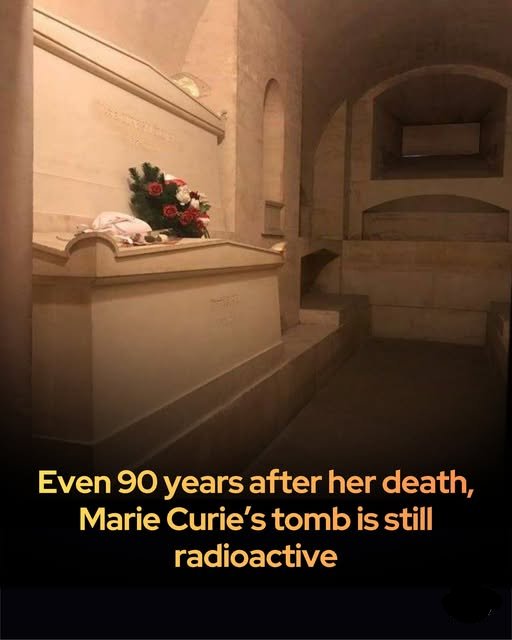
Marie Curie died ~90 years back, but her tomb is still radioactive.
Marie Curie changed science forever, but the work that won her two Nobel Prizes also slowly poisoned her. She handled radium and polonium long before their dangers were known, often keeping glowing samples on her desk or in her pockets. She died in 1934 from aplastic anemia, caused by cumulative, massive exposure that destroyed her bone marrow.
Her belongings still tell the story. Her notebooks, clothes and lab tools remain radioactive and are kept in lead-lined containers in Paris. Even a century later they require protective gear to handle. When she and Pierre were moved to the Panthéon in 1995 their coffins were sealed in thick lead to contain the lingering radiation.
Curie’s achievements reshaped physics, chemistry and medicine. Her legacy continues to shine with the same intensity as the materials she studied: a reminder of brilliance, sacrifice and the early dangers of scientific discovery.