West Virginian, Washingtonian, narrative builder, bourbon drinker, civic optimist, master baker, organization builder, and change maker. My views are my own.
In 1985, nearly 1 in 5 wage and salary workers were members of a union. In 2025, 1 in 10 workers were members of a union.
Lauren Bauer and Tia Cole offer six economic facts about union density: https://t.co/2KLnV2VcGd
Union density is at an all-time low: In 2025, one in 10 workers were members of a union.
These six economic facts describe trends in union density in the U.S. 📊⬇️
“We must avoid being lulled into complacency.” Former Treasury Secretary Robert E. Rubin warns that enormous damage has been done to the economy, yet markets and the economy may not yet react until it is far harder to get back on track: https://t.co/IUGWVrYLAw
What you need to know about SNAP work requirements:
- They do not increase employment.
- They cause a large decrease in participation in SNAP.
- They impose burdens on workers, even those outside the policy’s intended target.
Learn more: https://t.co/SdA2zZJG0l
An overwhelming majority of American workers—over 90 percent—support the right to earned time off.
@BetseyStevenson explains what a federal guarantee of earned paid time off could look like—and how it would benefit all workers: https://t.co/wTcZYJ1c7A
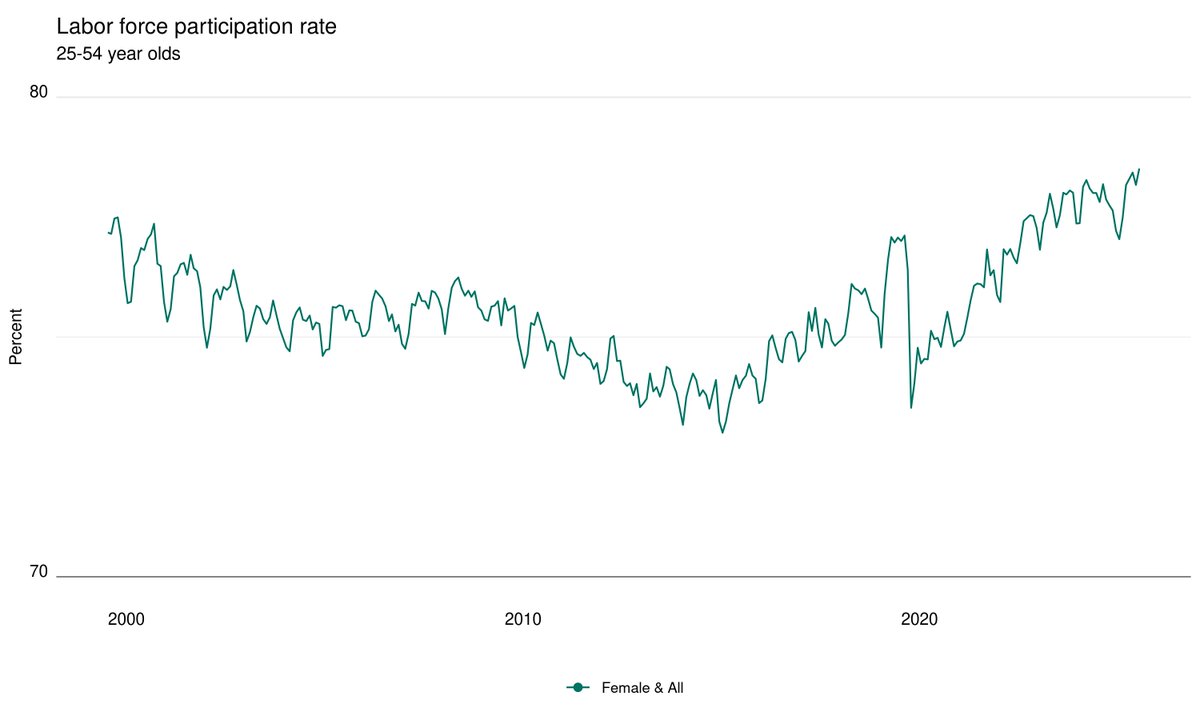
This Women’s History Month, we’re spotlighting the crucial role that women play in the labor force: As of January 2026, labor force participation among prime-age women is a record 78.5 percent.
Dive into the data: https://t.co/7LssEe4HsQ
@CenterOnBudget In another NYT op-ed & elsewhere, @HawleyMO drew a line against "cutting health care for the working poor" https://t.co/Zm98KMUtkE
Work requirements unequivocally fail that test, threatening health care for many workers b/c of the instability of real-world low-wage jobs 6/6
@CenterOnBudget Trump Adm officials' op-ed argues ppl who work “inconsistently” aren’t “truly needy,” presumably on the theory they could work more hours
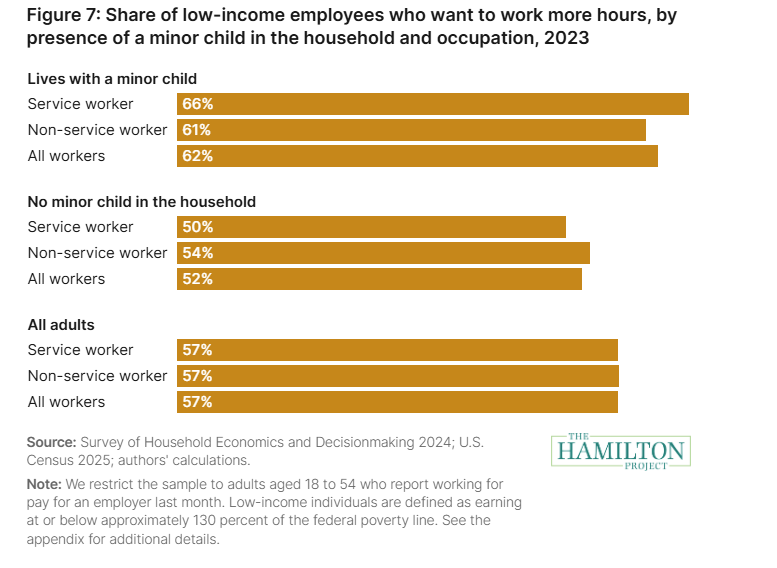
But on top of health, caregiving, & other barriers, new analysis finds most low-income service workers want more hours than they get 5/
Why? B/c service sector jobs are volatile. Ppl working in retail or restaurants or home care end up w/spells of unemployment & low hours.
And these are #s from a good labor market; in a recession, even more pple w/strong labor force attachment would be unemployed 3/
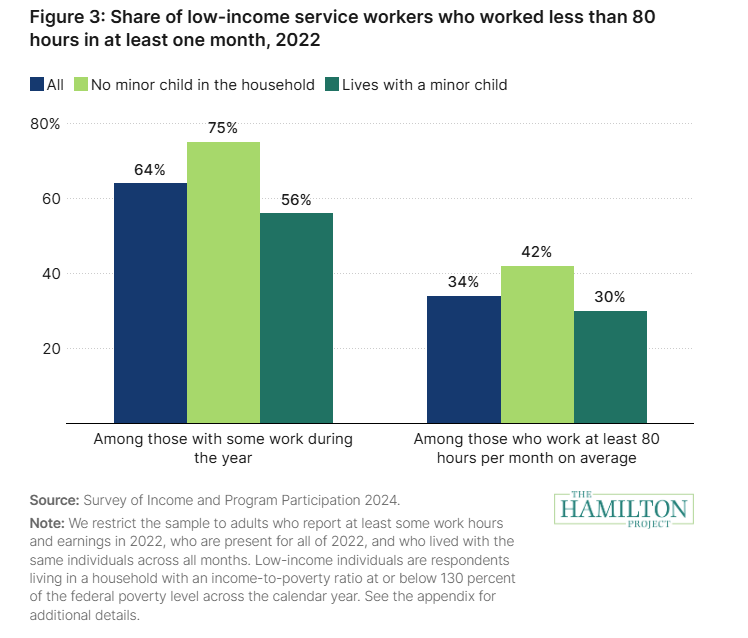
Key finding: among low-income service workers in 2022, 64% would have failed an 80-hour/month work requirement in at least 1 month, including > 1/3 of those who worked >= 80 hours/month ON AVERAGE over the course of the year 2/
A striking admission in Trump officials’ work requirements NYT op-ed: many working ppl who “work inconsistently throughout the year” will lose Medicaid & SNAP
New @hamiltonproj brief by @LizAnanat, @agpines, Olivia Howard shows this is true - and why https://t.co/YipGpMVsbT 1/
@hamiltonproj created a federal expenditures tracker to monitor the flow of funds to key programs and departments. Try it here: https://t.co/N7epy2mxMM
“The economic effects may not be earth-shattering with respect to the aggregate economy, but earth-shattering with respect to individuals who are going to bear the brunt of this.” @WendyEdelberg spoke to @CNN about Trump’s federal funding freeze: https://t.co/byryu3eaGF
"For low-income renting households, about a third of their expenditures go toward rent. For those reasons, many are describing the current situation as a 'housing crisis.'"
@WendyEdelberg explains the US housing shortage and possible fixes in a new video.
https://t.co/EMkJURqOpw
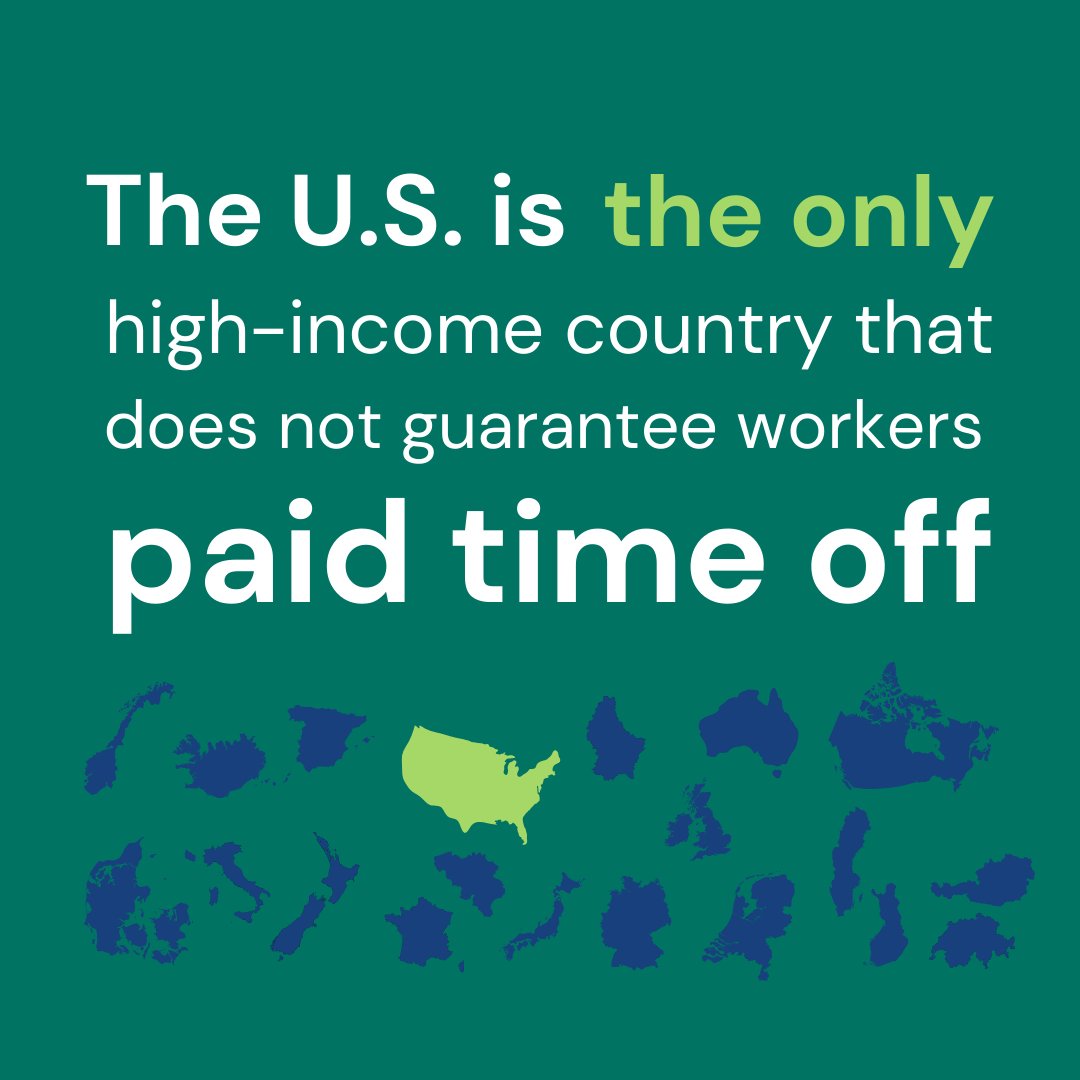
The United States is the only high-income country that does not guarantee workers paid time off as part of national workplace standards. In her proposal, @BetseyStevenson makes the case for a federal guarantee for earned paid time off. https://t.co/RljJ5LRdgc
The cost of housing has climbed steeply over the last four years. In a new video, @WendyEdelberg explains what's behind that increase, why the US faces a housing shortage, and what Washington can do to address the problem.
https://t.co/EMkJURqOpw
Should the U.S. replace income taxes with tariffs? At our event earlier this month, @PIIE’s Maurice Obstfeld argued that tariffs are an inefficient and outdated way to raise revenue. https://t.co/Cf7HQli2sR
In a new proposal, @BetseyStevenson outlines the benefits of a federal guarantee for earned paid time off, including:
➡️ Increased productivity, health, and well-being
➡️ Reduced income volatility
➡️ Improved norms around taking time off
https://t.co/RljJ5LRdgc
The Fair Labor Standards Act (FLSA) went into effect on this day in 1938. A lot has changed over the past 86 years. What could a federal labor standard for the 21st century look like? @BetseyStevenson makes the case for earned time off: https://t.co/RljJ5LRdgc