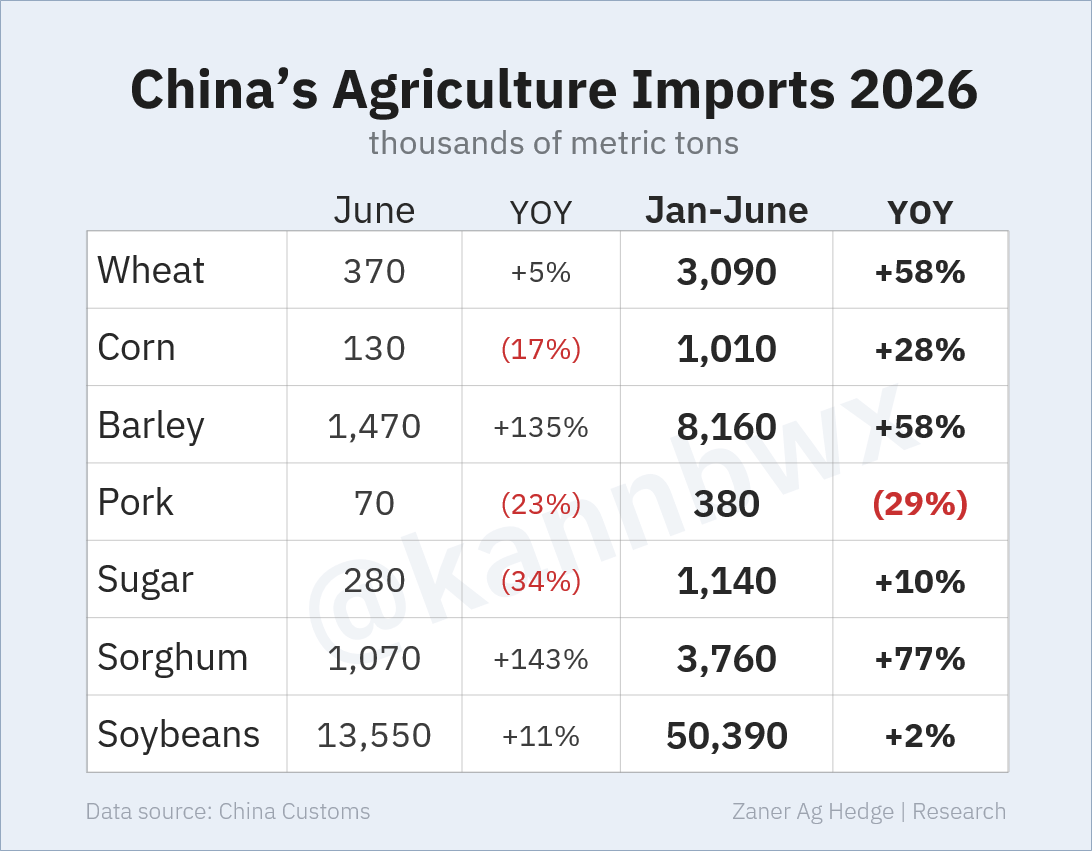
🇨🇳 China's appetite for imported feed grains continues to recover from year-ago levels, though corn imports in particular remain well below the record pace seen a few years ago.
Record June soybean imports accelerated the yearly pace, while pork imports continued to slow.
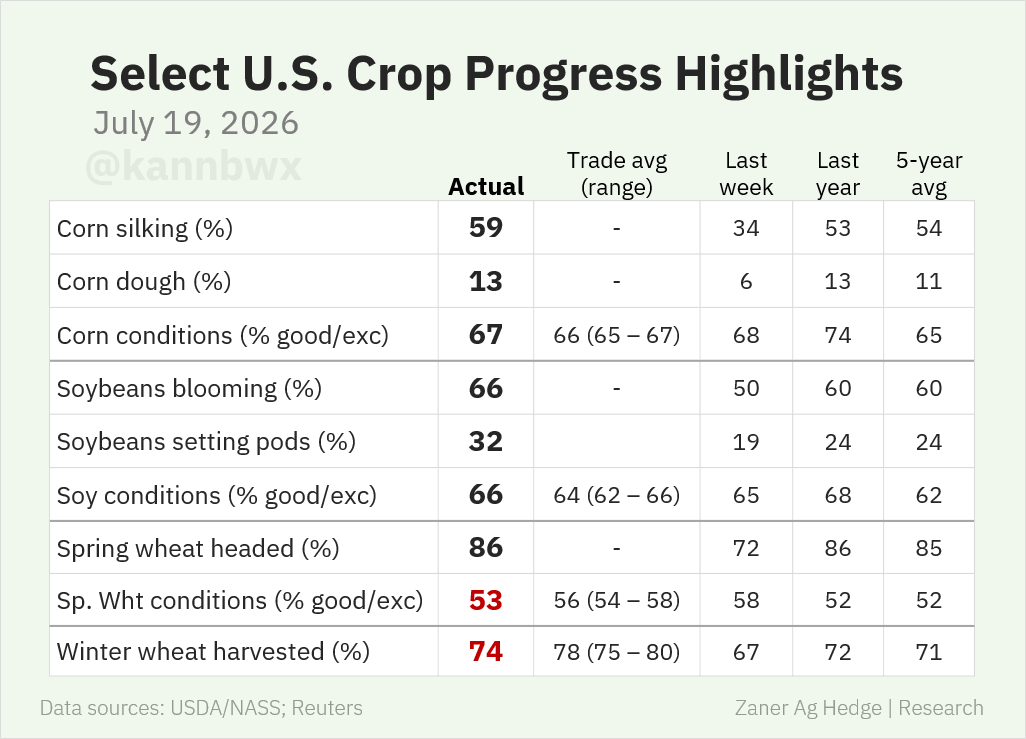
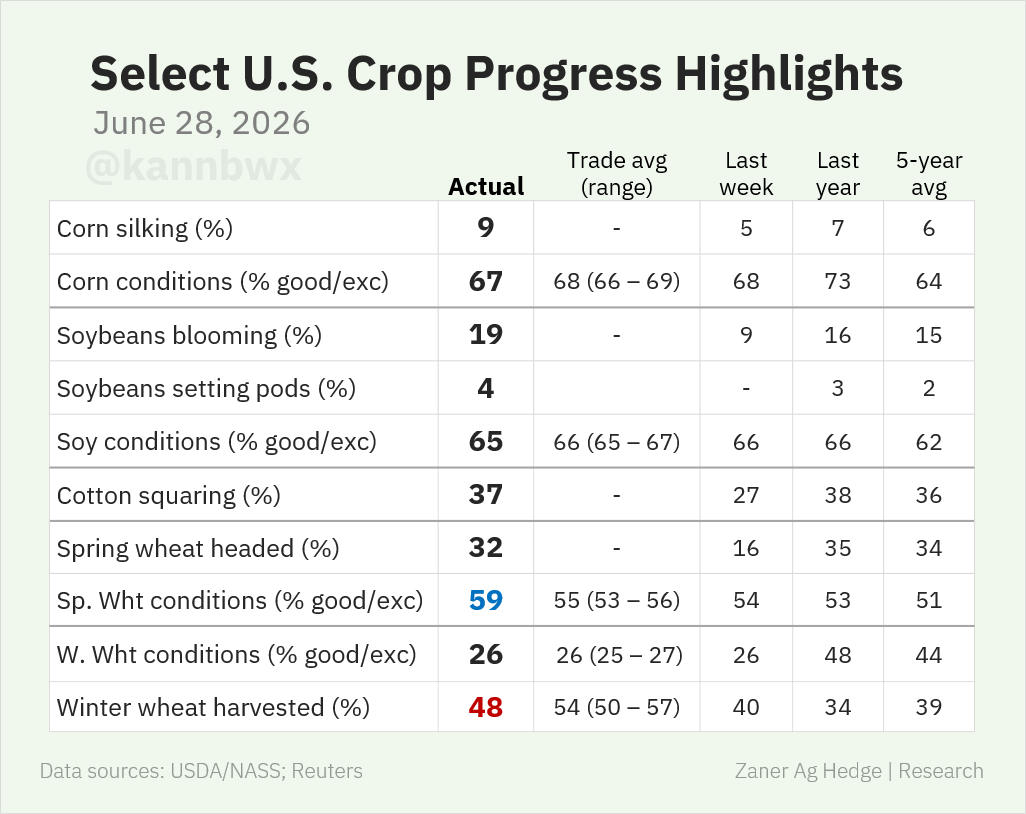
🌽 A large portion of the U.S. corn crop moved through pollination during last week's heat wave, though ratings fell only 1 pt versus the expected 2-pt decline.
Soybean conditions rose 1 pt against an expected 1-pt decline, but spring wheat ratings landed below all estimates.
As of today, #Kerch Strait remains closed.
In 25/26 it accounted for ~25% of Russian #wheat exports.
We're not convinced this is a short-lived story.
If it drags on, the consequences for Russian exports — and the global S&D balance — will be significant.
Is the market pricing that in? Our take: https://t.co/B5Yxvkvyg1
#wheat #Russia #blacksea #sizovreport
🇧🇷 Conab increased Brazil's 2025/26 corn crop, now expected to exceed last year's levels. That was on a boost to second corn production.
Soybean production rose slightly, though ending stocks still sit below the month- and year-ago levels.
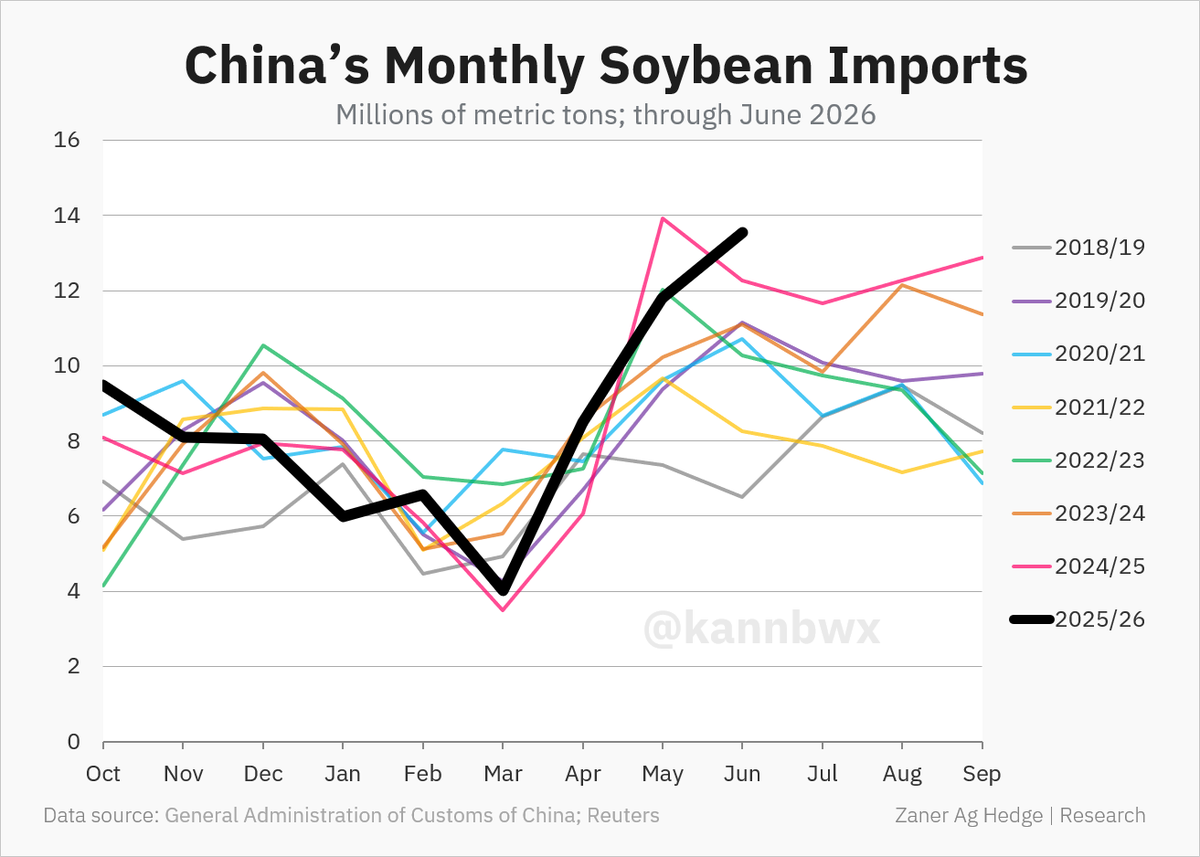
🇨🇳 China imported 13.55 million metric tons of soybeans in June, a monthly record and up nearly 11% from a year ago.
Through nine months of the 2025/26 marketing year, imports totaled a record 76 mmt, up 5% from the same period last year.
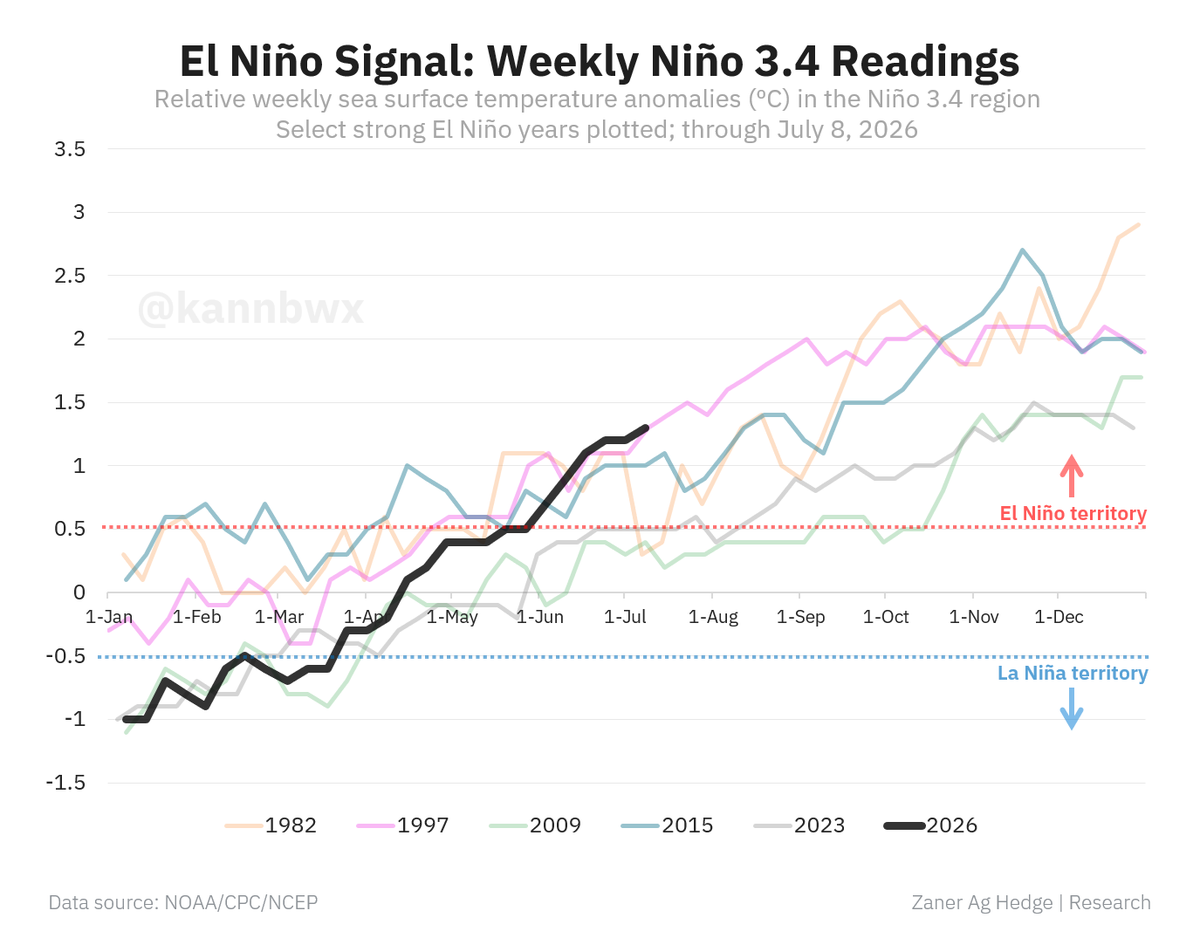
🌡️El Niño continues to build in the Pacific Ocean, with sea surface temperature anomalies last week reaching +1.3°C, the warmest since late 2023.
The anomaly has warmed 2°C since early March, the largest March-to-date increase in 40+ years of records.
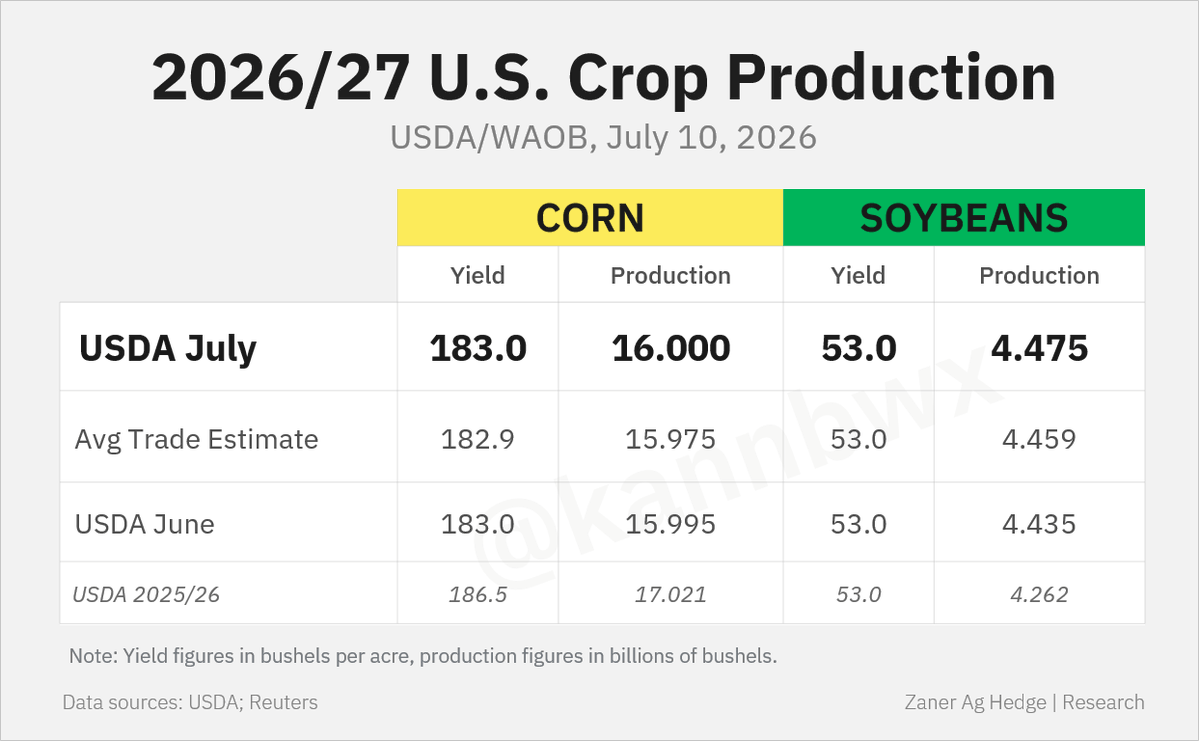
After the June acreage survey, USDA's 2026/27 U.S. corn production estimate edges up to 16 billion bushels, more than 1 bbu smaller than last year's record crop.
However, 2026/27 soybean output is seen up 5% from the prior year on larger area.
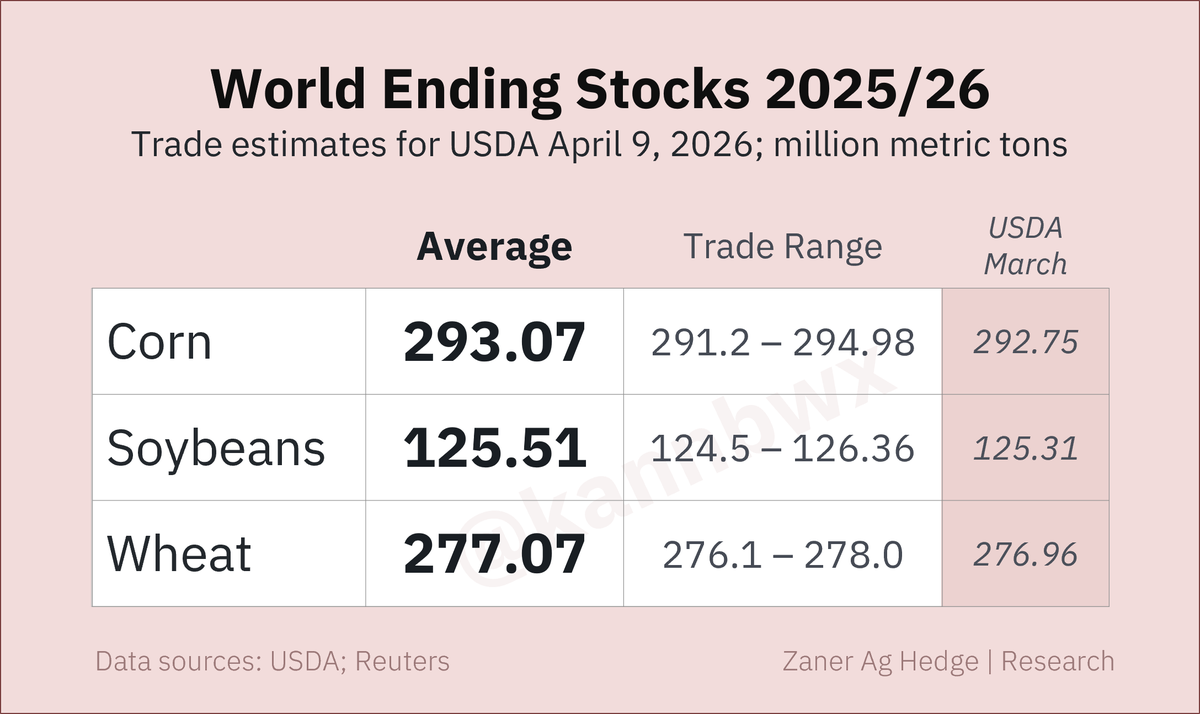
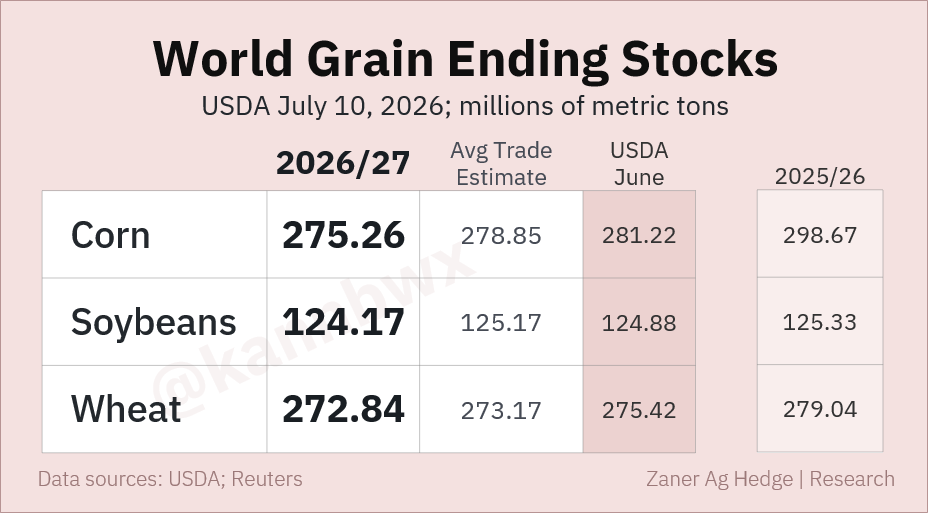
USDA's 2026/27 world ending stock projections all came in below market expectations. A smaller U.S. crop drove wheat lower, while corn was down on a smaller carry-in. The 26/27 EU corn harvest was cut by 3.7 mmt on the French troubles. New-crop China soy imports went up 1 mmt.
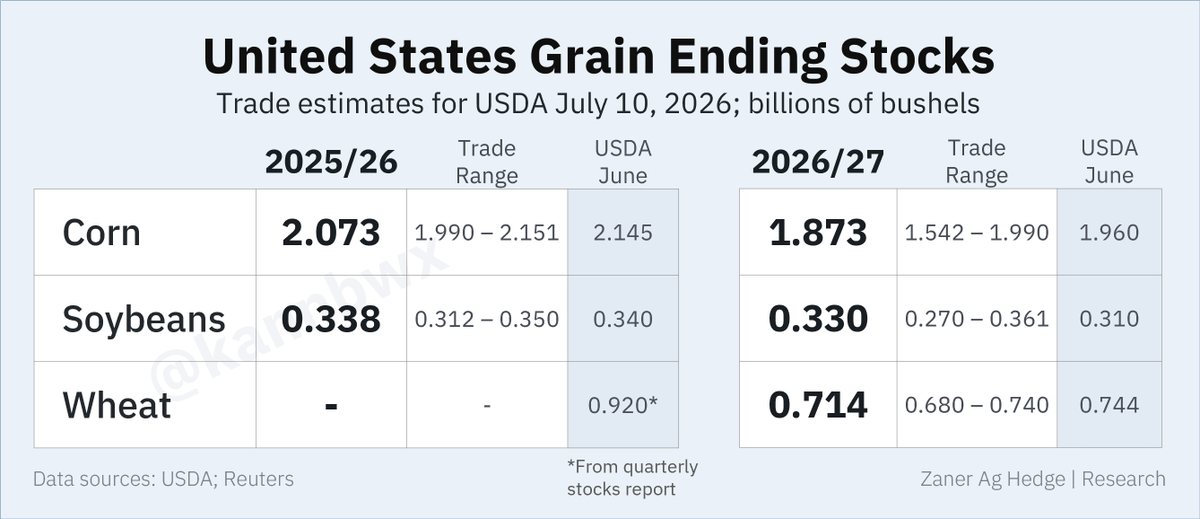
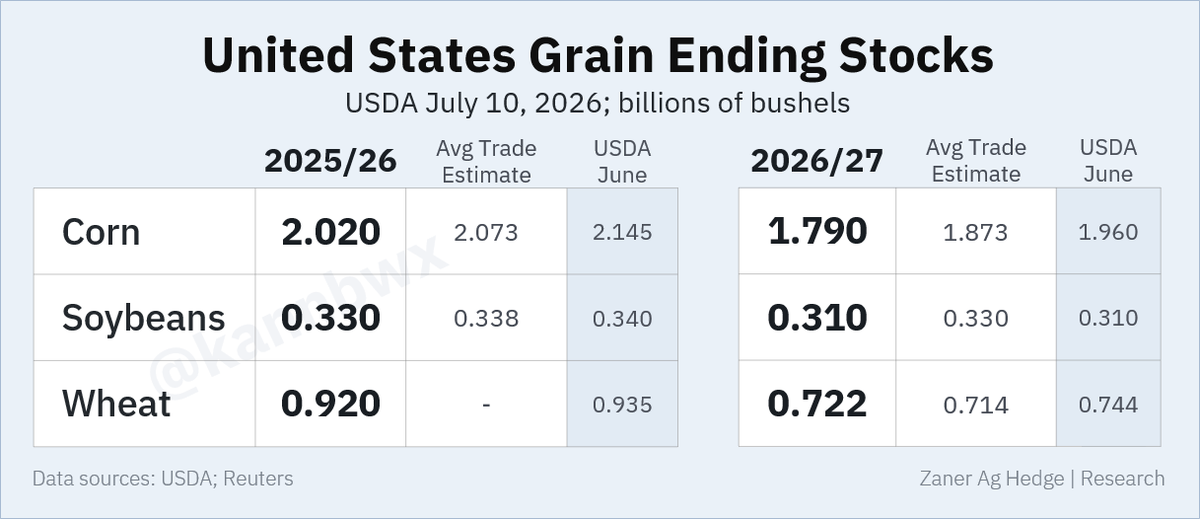
USDA cuts old-crop U.S. corn ending stocks by much more than analysts expected, while soybeans came down slightly more than expected.
New-crop wheat and corn came down from last month. Soybeans were unchanged but below analyst estimates.
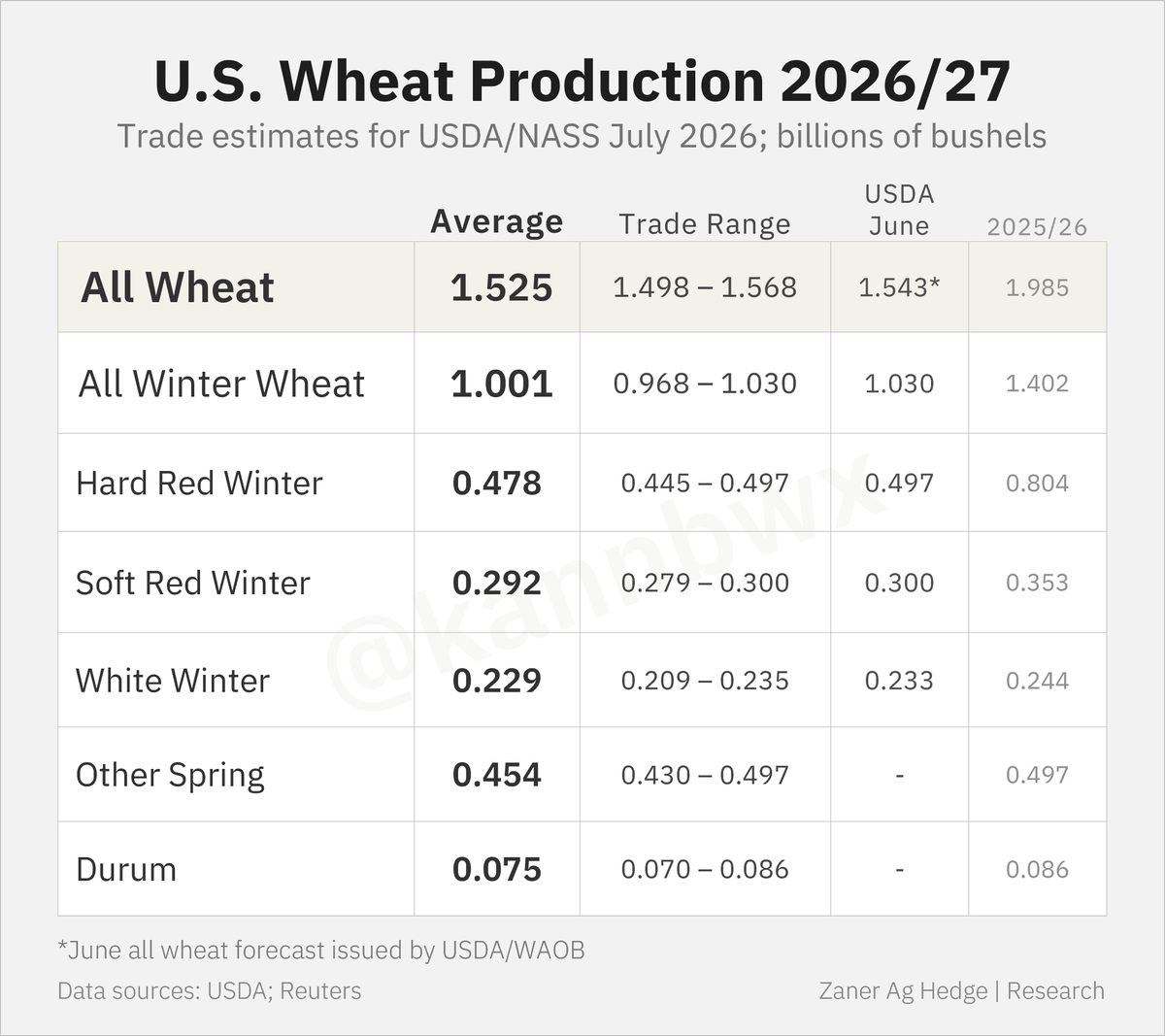
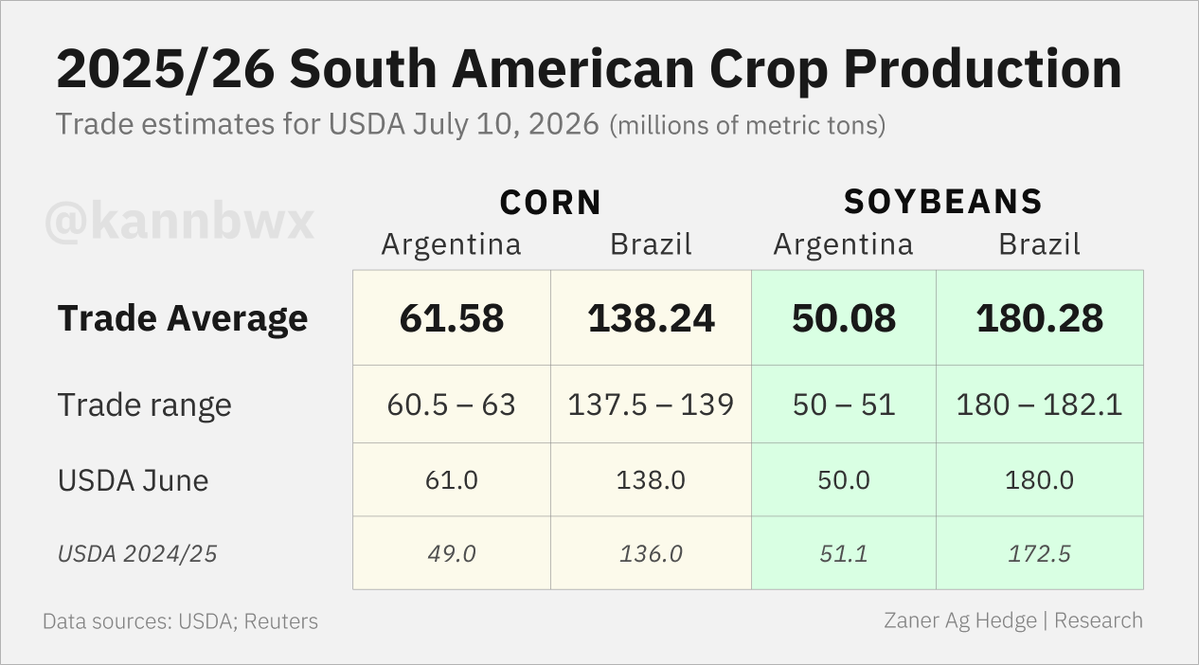
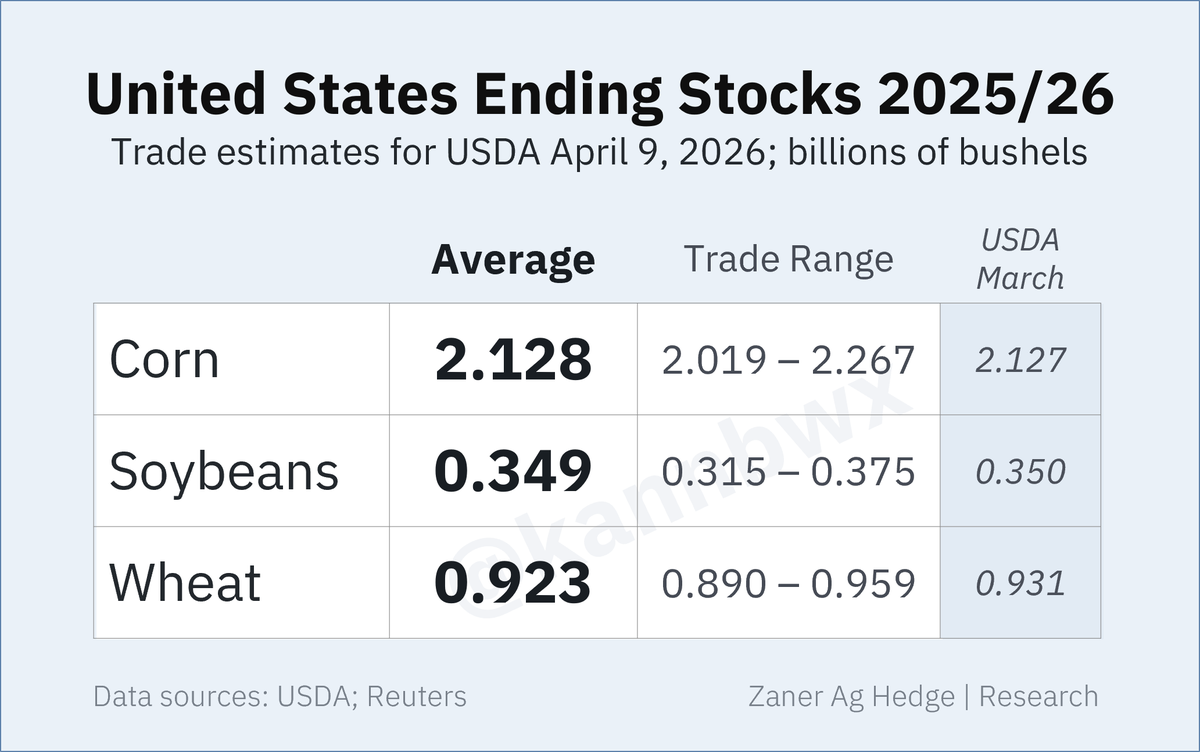
All trade estimates for USDA's July 10 reports.
Traders will be watching how USDA adjusts U.S. corn & soy balance sheets after last week's stocks report. Does the U.S. winter wheat crop shrink further? Friday also brings USDA's first assessment of the U.S. spring wheat crop.
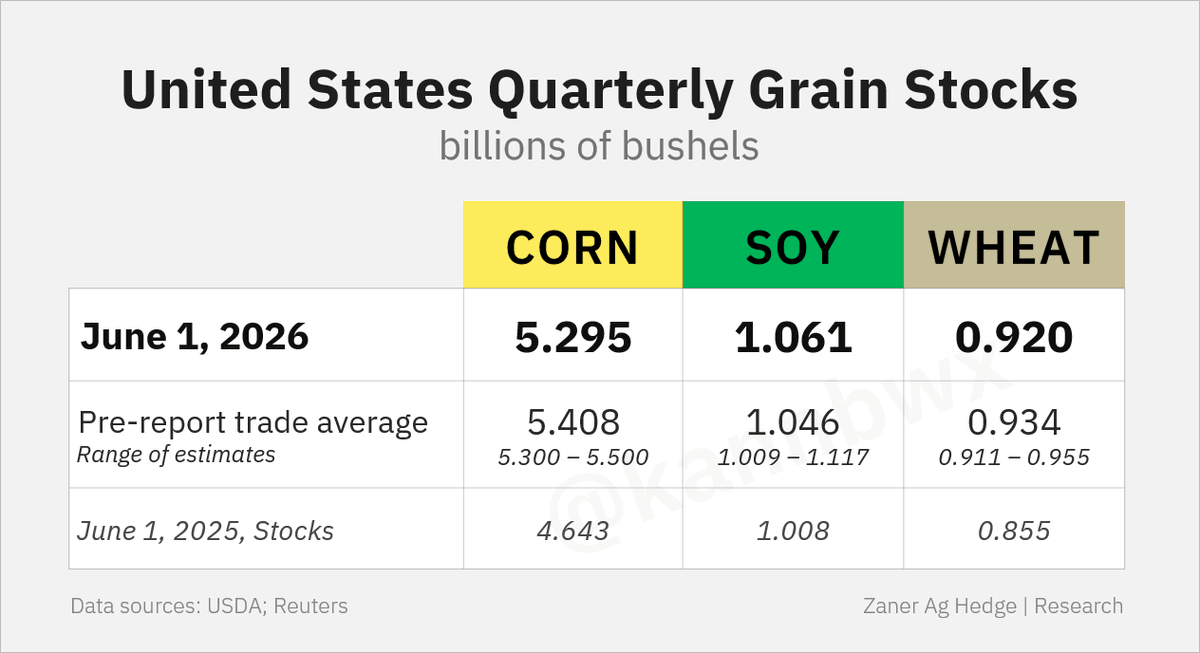
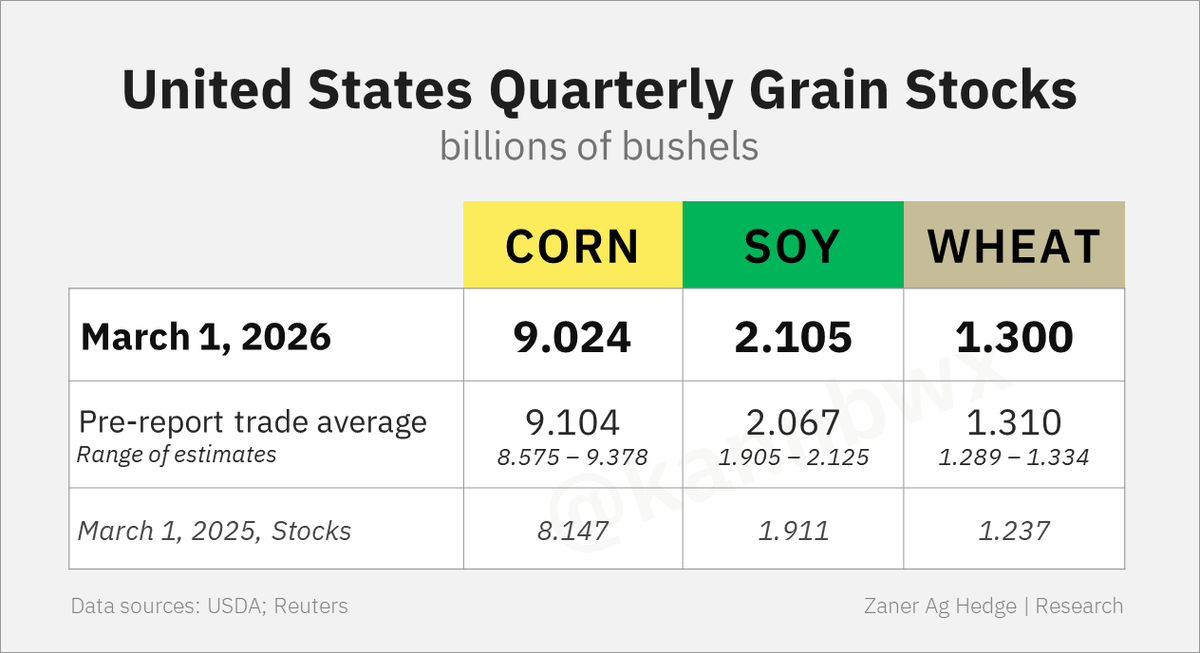
June 1 U.S. corn stocks land below all trade estimates. Soybean stocks come in above the average estimate while wheat stocks are a bit lighter than expected.
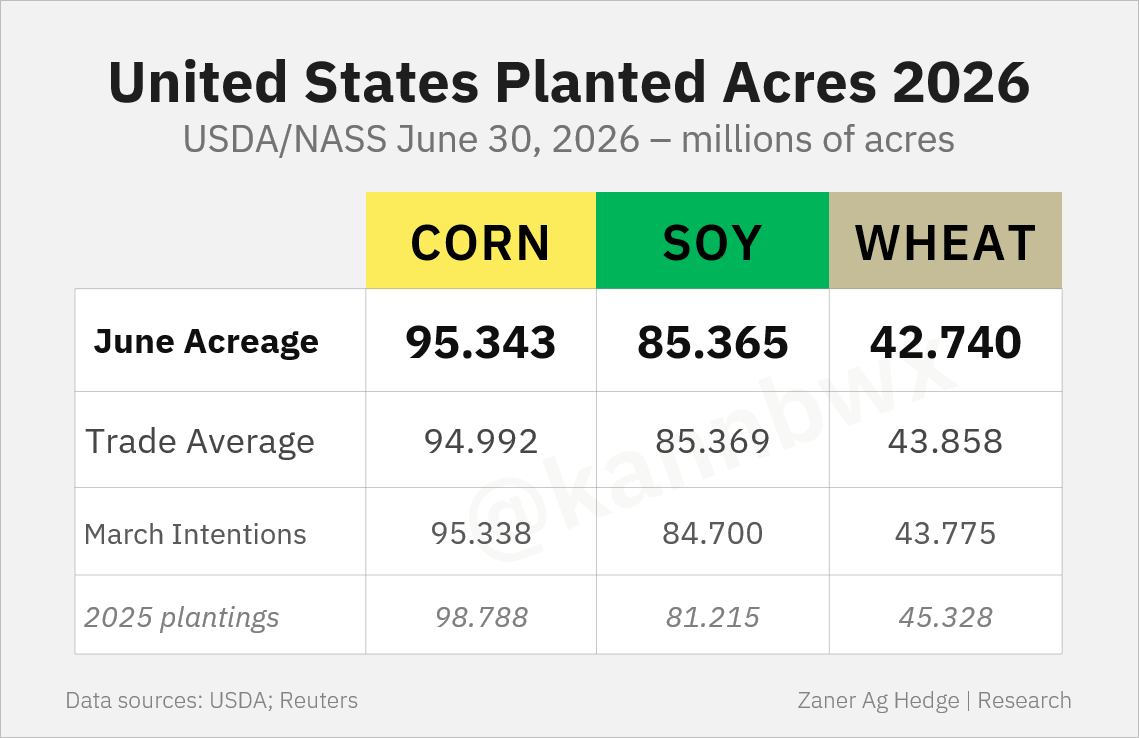
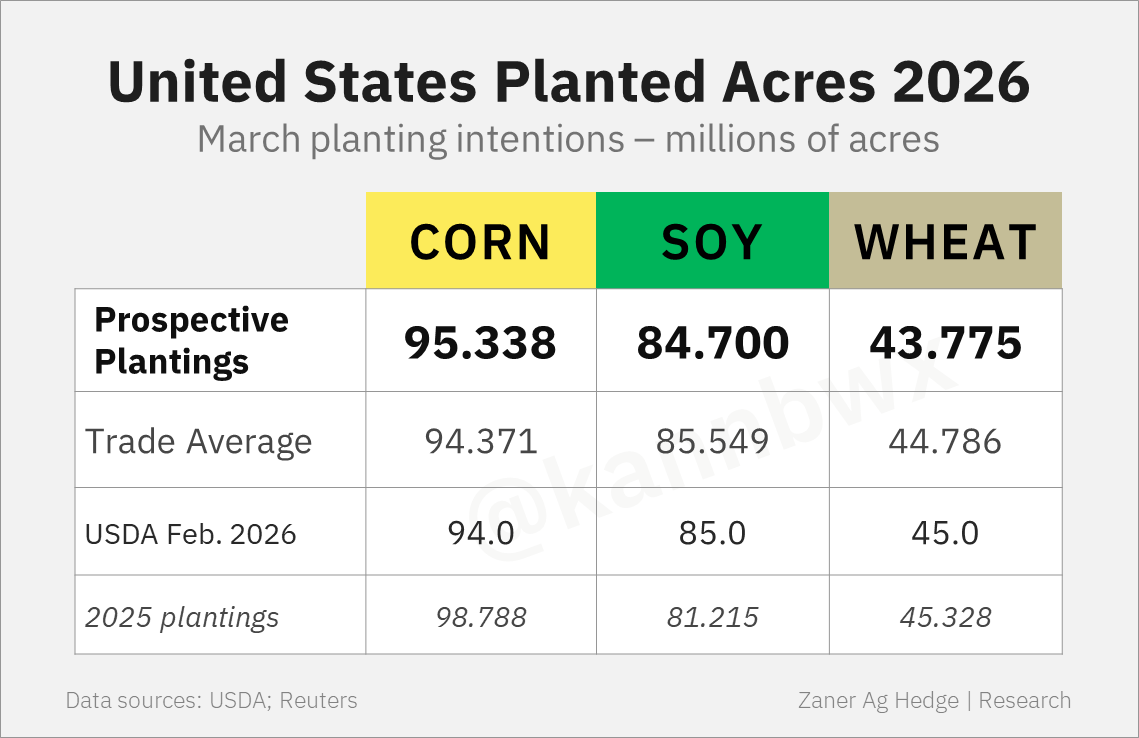
U.S. corn acres land above expectations and nearly equal with the March figure. Soybean plantings rise as expected from March, but wheat acres fall well below expectations.
🇺🇸U.S. corn and soybean conditions dropped 1 pt each on the week, but spring wheat conditions surged 5 pts, topping analyst estimates. Winter wheat harvest pace, while still ahead of average, was slower last week than all analysts expected.
🇺🇸U.S. soybeans are 6% planted, above expectations and historically quick. Corn is 5% planted, slightly ahead of last year. Winter wheat conditions dropped another point this week.
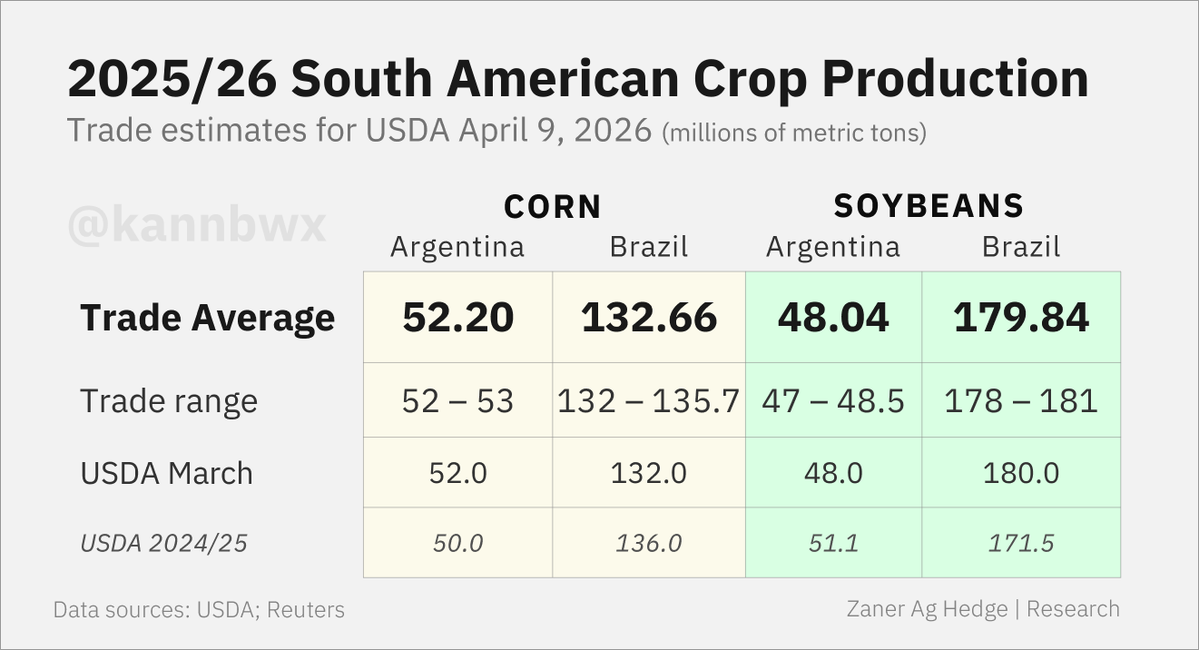
All trade estimates for USDA's supply & demand report due Thursday at noon EDT. Not many changes expected to headline numbers on average, though the ranges of ideas are healthy. Top items to watch are South American corn/soy crops and U.S. corn/soy demand.
🇧🇷Brazil's March soybean exports hit 14.5 million metric tons, *down* 1% from last March.
But the more interesting story might be the unusually large non-China share. Only 69% of Brazil's March exports went to China, the month's lowest in 7 years and below a 73% March average.
📈Funds are record bullish CBOT soybean oil & Minne wheat, and they're now net long in CBOT wheat for the first time in nearly 4 years.
But funds' corn buying streak snapped. I discuss implications of specs' latest positioning in Sunday's mailing, plus a bonus on corn exports.
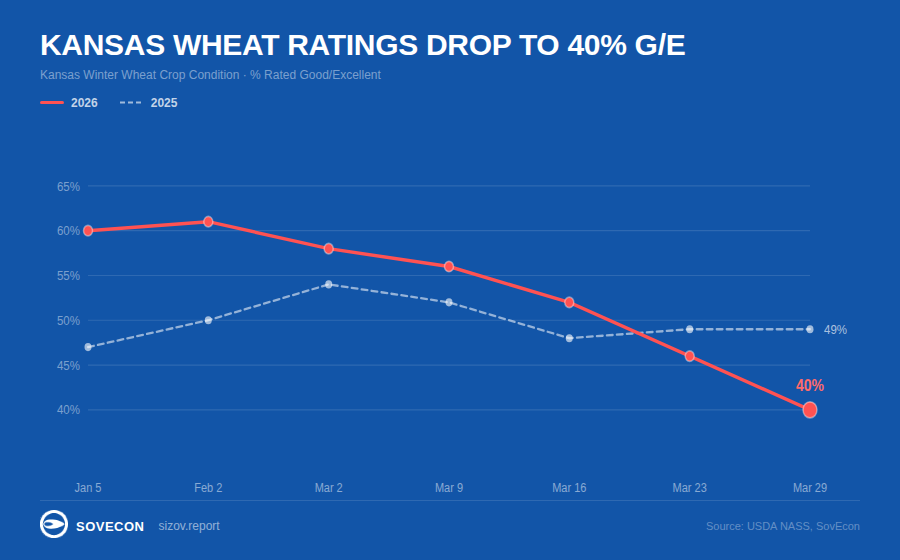
Gradually, then suddenly… US #wheat crop conditions continue to deteriorate amid drought.
In Kansas - the top grower - the share of good/excellent wheat dropped again to 40% (-9 p.p YoY).
Conditions are likely to worsen further as rains are forecast to miss key western and central areas.
#oatt #agwx #wheat #grains #sizovreport