Ethereum has a 12-second blocktime. By slicing the block into sub-blocks, Realtime Ethereum moves in milliseconds ⚡️
No more waiting. No more uncertainty. Just 100x faster. The era of Realtime Ethereum starts now.
Go Realtime at : https://t.co/XpI6PnPURk
Institutional finance is moving onchain. Ethereum’s infrastructure needs to be ready.
Proud to sponsor Fracton Ventures’ invite-only summit for institutions, with our founder @lepsoe joining the speaker lineup.
See you in Tokyo.
What is the wait costing you right now?
Every month, Ethereum's 12-second blocks quietly cost you through slippage, failed transactions, and users who leave while waiting for "pending".
Those are hidden costs that never show up on your bill, but they churn your users over time.
Realtime Ethereum reduces those costs where timing matters most.
Realtime Ethereum doesn't have to start with a full migration.
Route one flow through it and measure the before and after: fewer failed transactions, tighter fills, and no "pending."
That number makes the case for the next flow, and the one after.
The next Ethereum validator war won’t be fought over staking yield.
The real battleground:
1. Programmable transaction ordering via Realtime Execution instead of extractive block building
2. Routing institutional order flow with execution protection through real, identifiable, and accountable operators
Realtime Execution and Institutional Readiness would become the differentiating edge for validators.
Our founder, @lepsoe, breaks down the shift on @CoinMarketCap ↓
https://t.co/zj0MIEqpiM
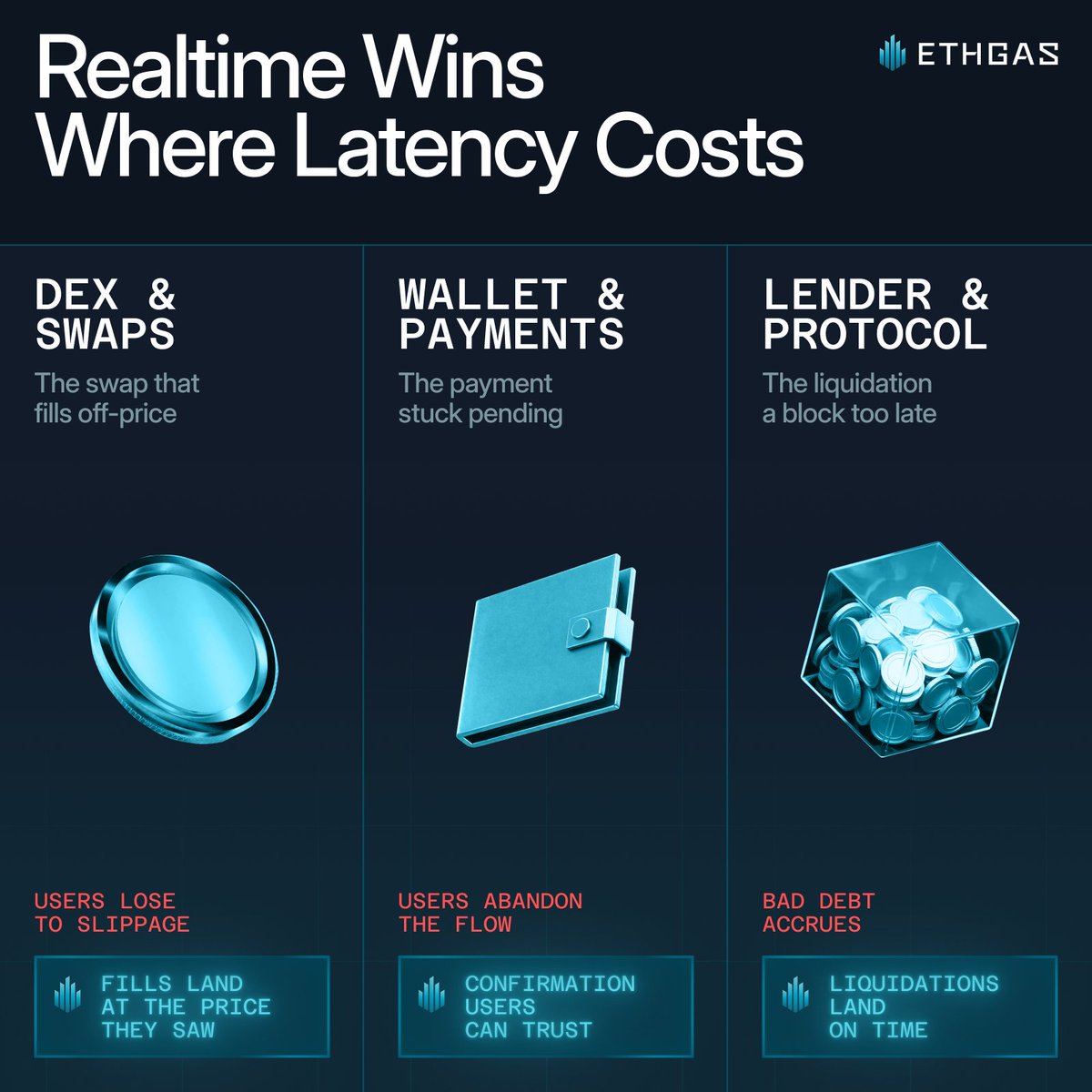
Realtime Ethereum delivers the biggest gains where latency already has the highest cost.
For a DEX, the swap that fills off-price.
For a wallet, the payment stuck "pending."
For a lender, the liquidation a block too late.
Better experiences, better loops, better apps.
The practical way into Realtime Ethereum is to start where latency already costs you.
The swap that slips.
The payment that stalls.
The liquidation that lands late.
Pick the flows with the highest cost of waiting and use Realtime Ethereum to ensure instant confirmation.
One flow. One measurable win. Instant improvement.
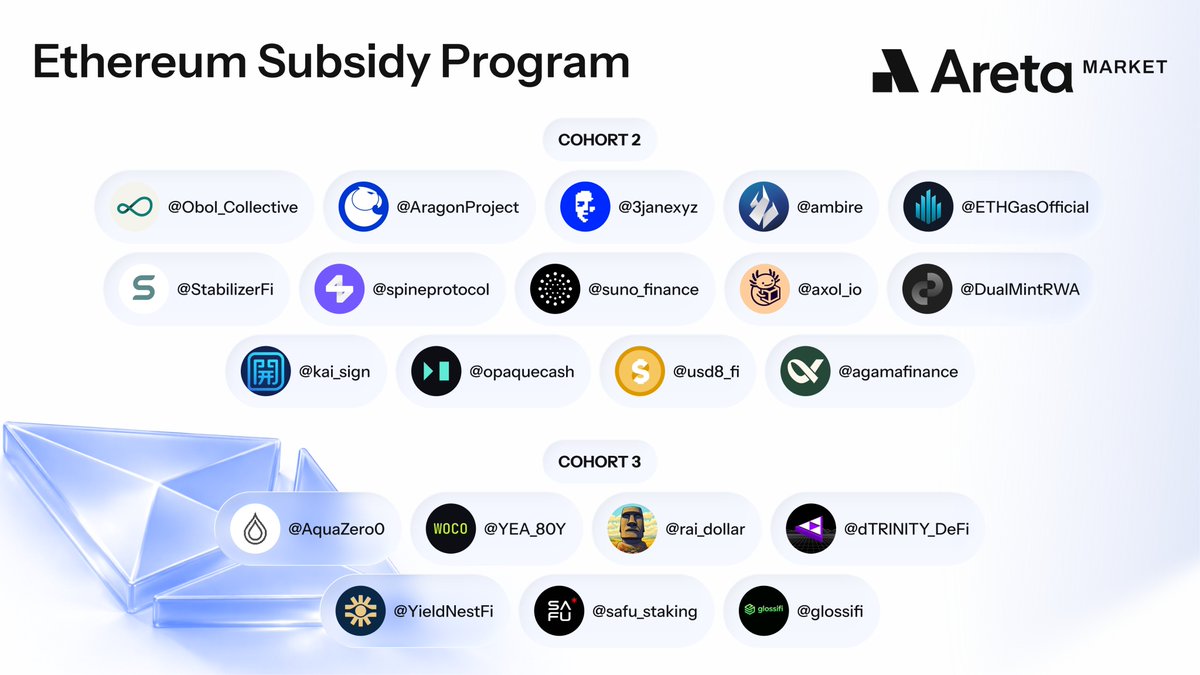
1/ Two new cohorts, 20 new teams, the same one goal: harden Ethereum through accessible world-class security.
From restaking and stablecoin infra to onchain governance and agent-powered commerce, we’re thrilled to officially welcome Cohort II and III to the Ethereum Security Subsidy Program!
Together, as always, with @ethereumfndn, @nethermind, and @chainlinklabs.
Every slot, a validator rolls the dice.
Block value is uncertain until it lands, making running validators a game of chance and predicting future rewards challenging.
Realtime Ethereum changes the model: validators can pre-sell inclusion, turning per-slot uncertainty into predictable income.
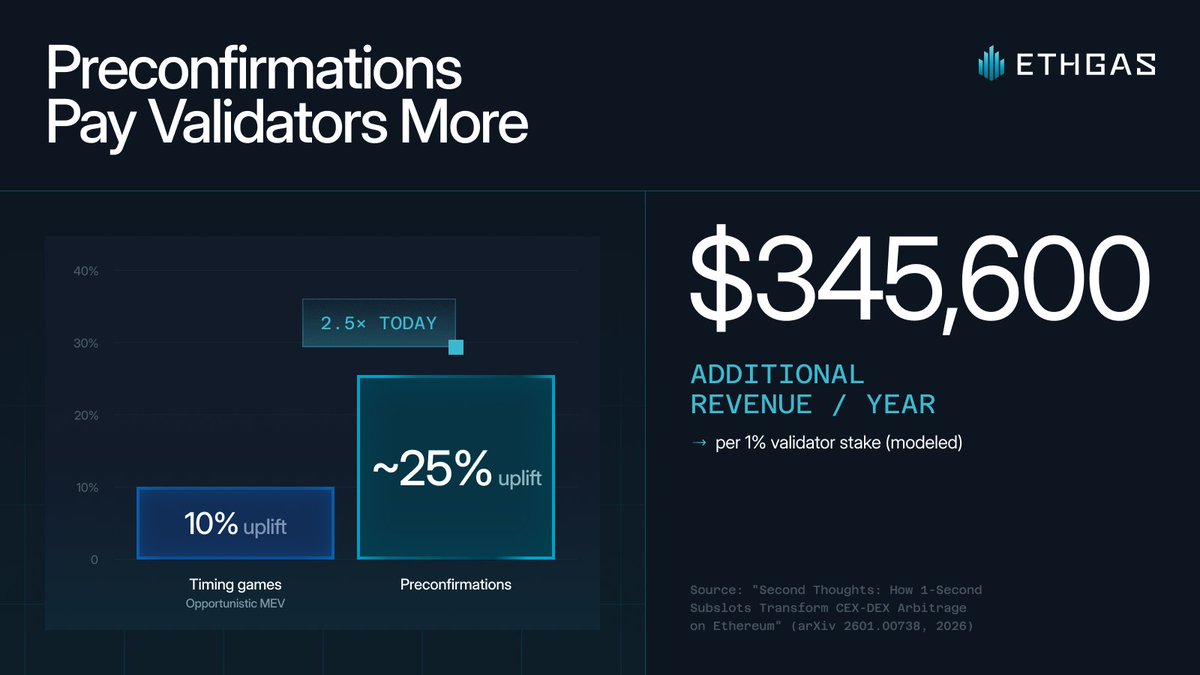
A model estimates that a validator running its own preconfirmations at ~1% stake penetration could capture ~$345,600/yr in incremental MEV.
That's a ~25% uplift in validator rewards, compared to ~10% from today's timing games.
The economics make the case for preconfs as a category. ETHGas extends that opportunity to any validator through gateway-based delegation.
Original estimates: “Preconfirmations Under the No Lens" (Ethereum Research, 2024)
Cited in: “Second Thoughts: How 1-Second Subslots Transform CEX-DEX Arbitrage on Ethereum” (arXiv 2601.00738, 2026)
Every valuable commodity develops a forward market. Oil, power, natural gas… first you trade the spot, then the futures.
Blockspace is next. Once it’s precise enough to price in ahead, validators stop selling one block at a time and start selling into a market. ETHGas builds that market.
The apps you use every day share one trait: the loop closes instantly. Tap, done, repeat.
On Ethereum, a 12-second wait kills that rhythm. Actions that once felt automatic become things users only do when they have to.
Realtime blocks keep the loop closed on Ethereum, so you can retain your users.
DEX prices on Ethereum lag behind the real market by seconds. That lag is the gap between the quote you see and the fill you get.
100ms subslots could shrink that gap significantly. Prices on-chain stay closer to the real market, with fairer fills and fewer LPs getting picked off.
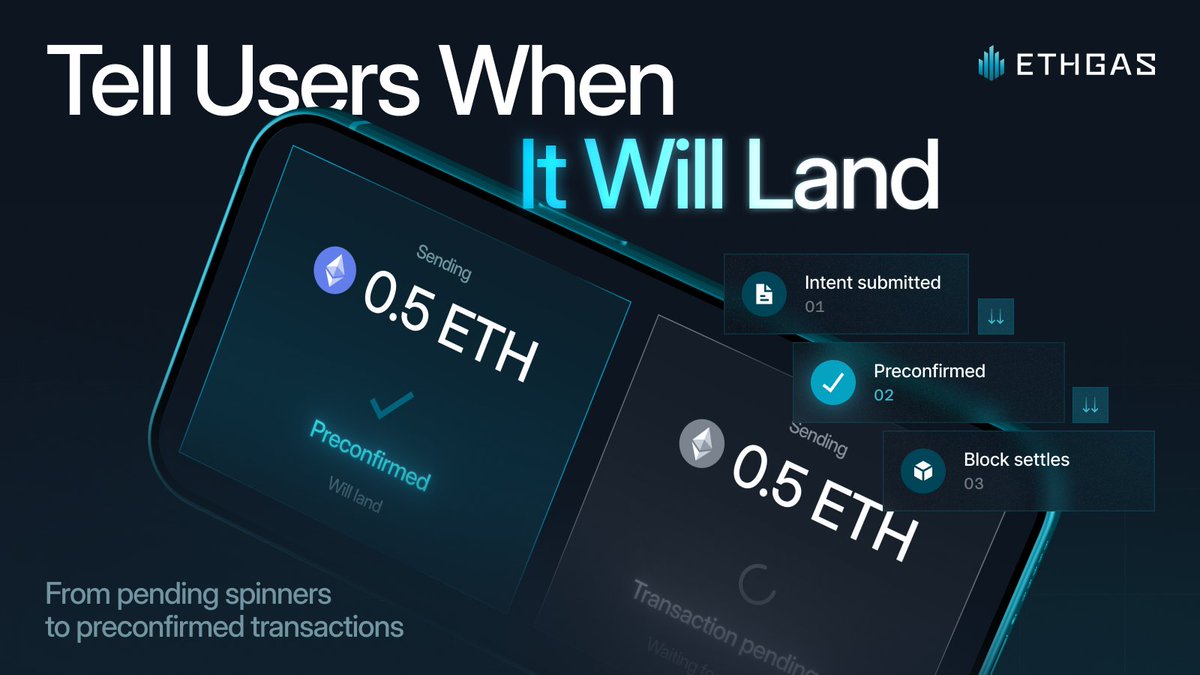
"Pending" is a design choice.
Wallets and apps can keep showing users a spinner or they can offer a guarantee: your transaction will land.
ETHGas preconfirmations make that shift possible.
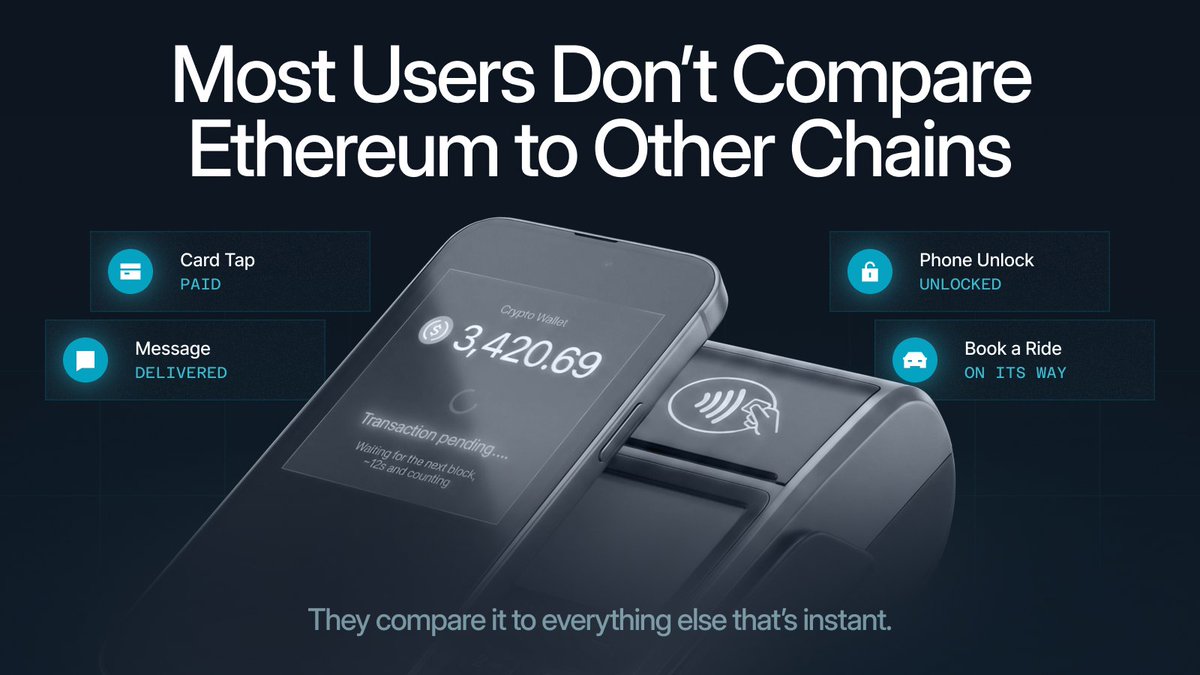
Most users don’t compare Ethereum to other chains. They compare it to the instant products they use every day: tap to pay, send, done.
Next to that, the current chain and wallet experience can feel broken because it is still designed around Ethereum’s ~12-second blocks.
What consumers need is speed, enabled by 100ms Realtime Ethereum sub-blocks.
For years, the conversation was:
Will institutions come to Ethereum?
That question is becoming less relevant.
Today, the conversation is: What infrastructure does institutional Ethereum actually need?
This new research from @Xangle_official is a valuable contribution to that discussion.
We think one answer is execution. This is not because settlement isn’t important, but because institutional workflows begin long before settlement.
That's the thinking behind Institutional Blockspace.
Public settlement. Institutional execution.