Block space on Ethereum is becoming a commodity institutions will want to control.
@lepsoe, Founder of @ETHGasOfficial, tells @Johnyonthefloor "Ethereum's most valuable instrument is that block space, the ability to land trades on the network."
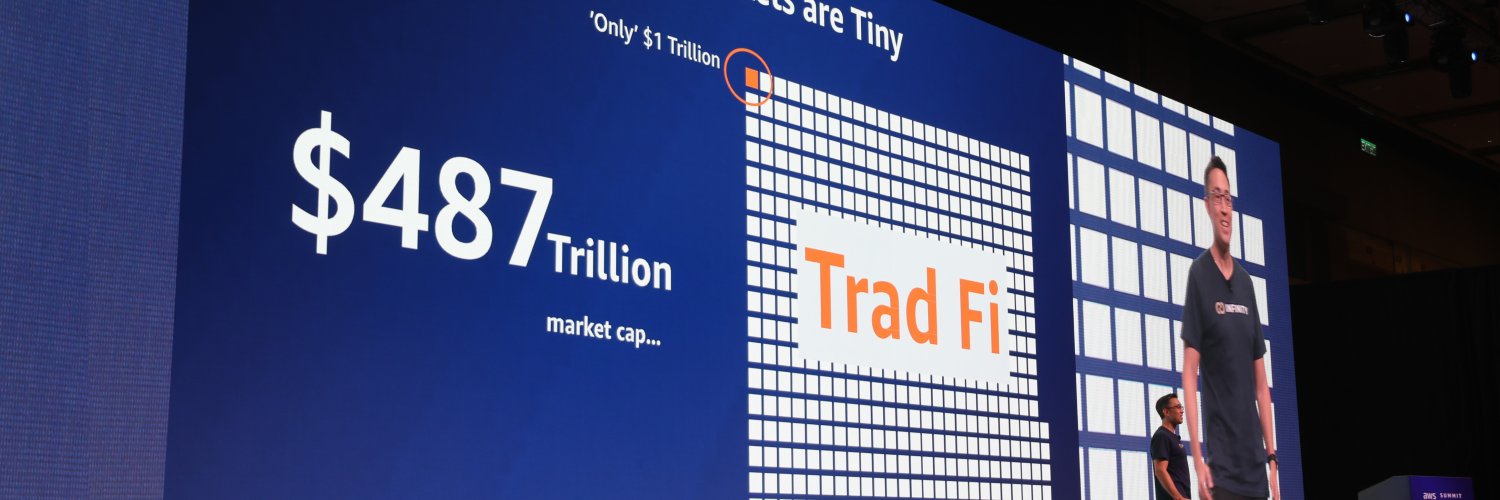
Earliest public entry point for the most valuable companies on earth being $1-2 trillion is mega cooked
Good news is DeFi has been building the solution for the past 8 years
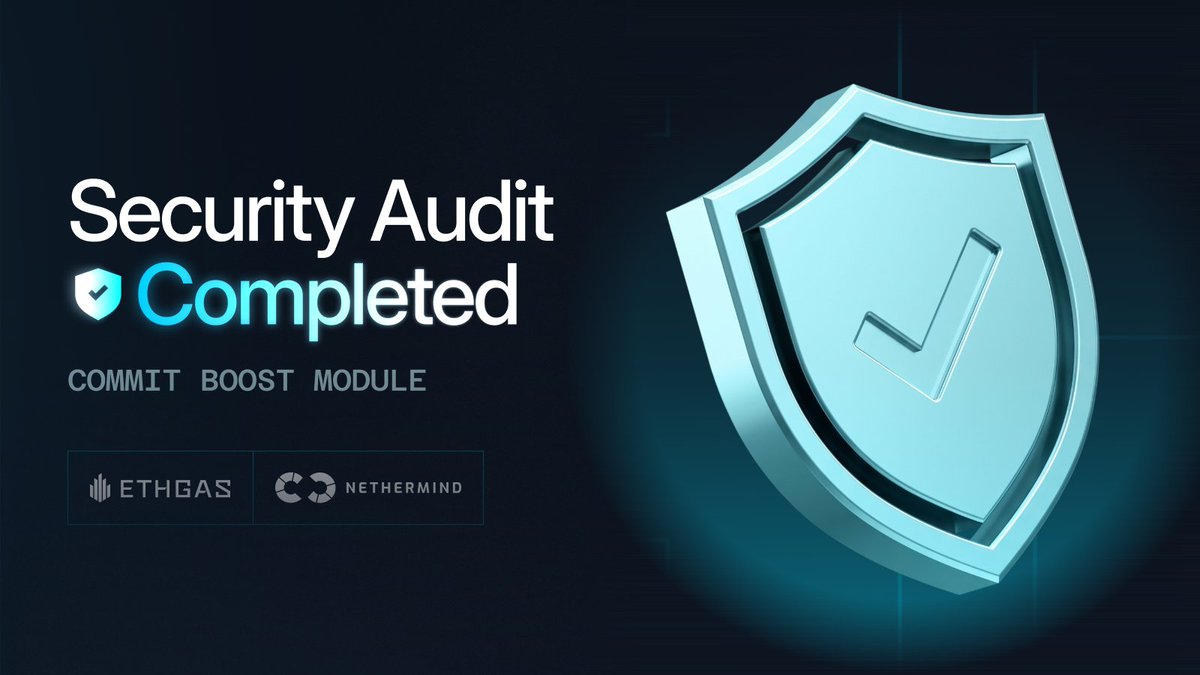
ETHGas has been accepted into the Ethereum Security Subsidy Program, a joint initiative supported by @ethereumfndn, @chainlinklabs, @Nethermind, and @areta_io.
As part of the program, @NethermindSec completed an independent security audit of our Commit Boost module, a validator sidecar.
This is our second audit, following our first review in March 2025. Since then, the module has shipped 16 releases, adding DVT support, an OFAC compliance layer, and stronger validator registration security.
Another step toward stronger infrastructure for Realtime Ethereum. We take security seriously. 🔒
For all the conversations around the hack today, there are just as many about builders shipping new, incredible products..
We have @gattacahq 's fast Consensus client, Silver, which is almost magnitudes faster than the current clients: https://t.co/7jZIandn6B
We also @EurekaBuilder 's BEX which allows you to run code inside the builder while the blocks are being assembled:
https://t.co/svW4ELeRH1
Bunch of cool stuff coming out, let's not miss it..
Not that I like seeing this carnage, but Ethereum's tamper resistance, hardening, and exploit mitigation is far better than all these traditional systems.
Why would an institution leave Ethereum for a private chain?
Not for settlement. For control before a transaction lands.
@Delphi_Digital on how we’re bringing that control onchain: rules before inclusion, predictable inclusion, and public settlement ↓
Crypto has plenty of traders.
Now, the industry needs more builders who understand both finance and technology, @lepsoe, founder of @ETHGasOfficial, says, "There's still a lot of financial infrastructure left to build onchain with stablecoins, lending, futures, credit securitization and more."
An institution wants to buy $1 billion of an asset onchain. What stops someone from front-running the trade?
@lepsoe, founder of @ETHGasOfficial, says institutions also need clarity on where transaction fees go.
His pitch: fix MEV so big trades don't get sandwiched.
Glamsterdam charges ahead!
The Hoodi testnet upgrade is scheduled for the 26th of October while the mainnet date will be announced separately. Activation table, client releases, and info on the bug bounty program can be found here: https://t.co/nshjh26hxH
If trillions of dollars in equities and fixed income move onchain, the gas tokens powering those chains become something very different.
"It's hard for me to imagine that those gas tokens don't become strategic commodities because so much value is sitting in those ecosystems."
$160T in equities. $160T in fixed income. Hundreds of billions in stablecoins already. The infrastructure underneath all of that starts to matter a lot.
FT @perkinscr97@BitcoinJesusETH@Nexo
I am leaving Cambridge after a few days spent for a workshop on fast finality, concurrent with other workshops on post-quantum crypto and formal verification. Quick takeaways
- Faster finality is coming, the research is mature, even as new ideas have come in during the week, the handoff to specifiers and implementers feels well underway. Next catalyst event will be at devcon in a few weeks, with core devs
- The performance numbers for post-quantum finality are improving massively, and this is the worst that they’ll ever be. This is significant, it means the penalty from moving to more complex crypto would not require, in my opinion, if the numbers hold up, a deep rearchitecting to move to PQ-secure consensus, in particular when it comes to incentives
- The biggest opportunity imo remains networking. Simulations and live experiments are exploring both the current pre-PQ setting, where networking is clearly the bottleneck, and the post-PQ setting, where compute remains the bottleneck. But with PQ compute numbers improving, I wouldn’t be surprised if once again networking becomes the bottleneck
All of this is making me extremely bullish that we’ll achieve PQ-secure and faster finality even faster.
Many thanks to @yannvon@benjaminion_xyz and @robsaltini for the workshop, and to @corcoranwill and @drakefjustin for hosting us in Cambridge!
PropAMMs are AMM contracts run by sophisticated trading firms where they are the single LP that dynamically adjusts their pricing/liquidity often in realtime.
This enables them to update/tailor their pricing curves and liquidity multiple times within a slot (interfacing directly with a Builder).
On the other side, the trading firm has positions on CEXes so their pricing curves often reflect the realtime market and as a result, can offer very tight spreads (<1bp).
It's important for Ethereum because they're just so darn capital efficient, they're on-chain and they should enable traders to get the best onchain prices vis-a-vis traditional DEXes.
TLDR; you're trading with a CEX market maker, but onchain