From a 300% surge in 90 days to the next trading plan: The "Structural Breakout" logic born of 15 years of real-world experience 🧵📈🚀
Wall Street never lacks "shooting stars"—fleeting successes—but it is sorely lacking in hardcore traders capable of consistently outperforming bull and bear markets alike.
Over the past three months, utilizing a strategy model combining "strong fundamental catalysts" with "institutional accumulation hubs," we achieved a cumulative return exceeding 300%!
🧠 Three ironclad rules distilled from 15 years of active US stock trading: 1️⃣ Don't chase random, mediocre market gains: Focus exclusively on stocks with explosive upside potential driven by macro trends and concentrated industrial capital expenditure.
2️⃣ Rigorous risk management: Maintain tight stop-loss thresholds to ensure risk is controlled on every single trade.
3️⃣ Share concentration is the deciding factor: Build positions ahead of a solid support zone, or go heavy after a confirmed breakout on high volume.
🎯 [The Next 90 Days: "Structural Breakout" Plan Targeting 300%–400% Returns — Officially Launching]
Trading is a disciplined game of probability and risk-reward ratios. If you want to break free from the cycle of reactive chasing and panic selling, join us to capture the explosive opportunities of the next 90 days.
#USStocks #ActiveTrading #AlphaReturns #TechnicalAnalysis #AICapitalStocks #StockTrading #InvestmentAdvisor
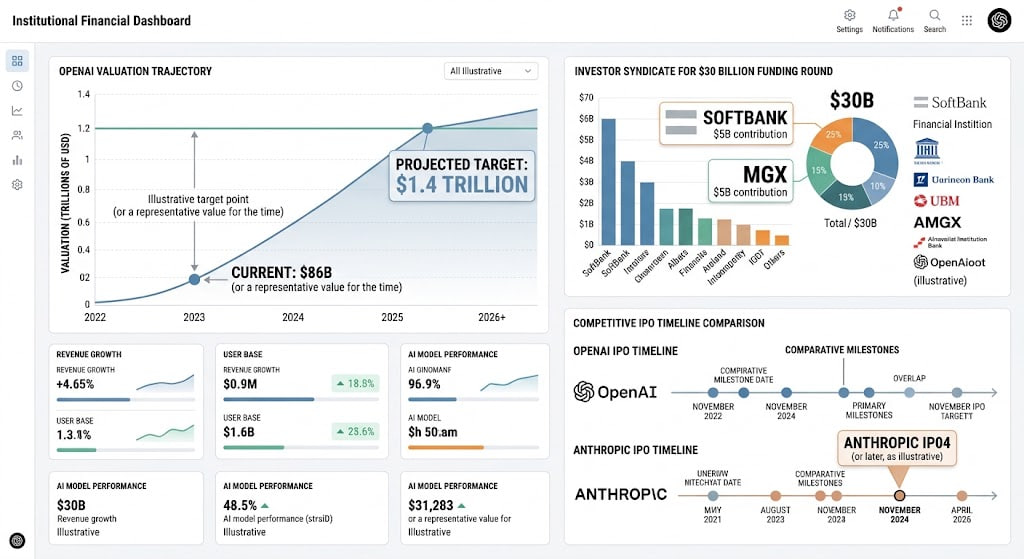
🚨[October 20 Morning Briefing] OpenAI is intensifying efforts to secure capital commitments from investors, aiming to finalize its funding round before its competitor, Anthropic, is expected to go public in mid-November. The fundraising process is moving at an exceptionally rapid pace, potentially pushing OpenAI’s valuation beyond $1.4 trillion. Furthermore, OpenAI is leveraging the revenue growth spurred by the recent launch of its new models to attract additional investment. Meanwhile, SoftBank, the Abu Dhabi-based firm MGX, and other existing OpenAI investors are in negotiations to participate in this funding round, which is valued at approximately $30 billion.
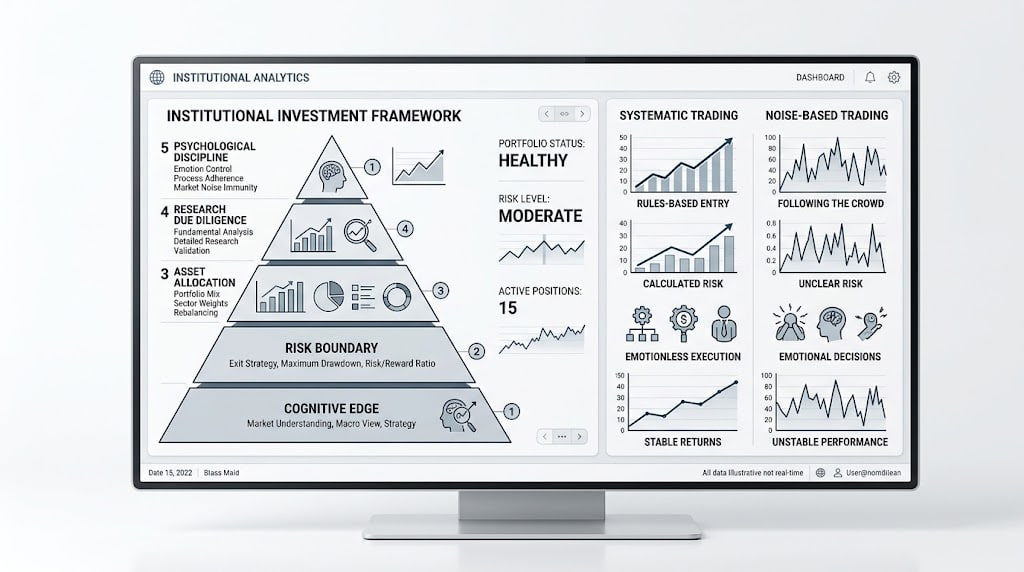
💡 Investing is not about frequent trading, nor is it a battle against market noise. Rather, it entails:
1️⃣ Developing your own personal investment framework;
2️⃣ Identifying high-quality investment opportunities, while fully grasping the rationale behind each purchase and the boundaries of associated risks;
3️⃣ Implementing sound asset allocation and position sizing to manage drawdowns and steadily advance toward long-term wealth goals;
4️⃣ Conducting exhaustive research and maintaining a comprehensive execution log for every buy or sell decision;
5️⃣ Remaining completely immune to market noise—never allowing broader market fluctuations to disrupt your own investment rhythm.
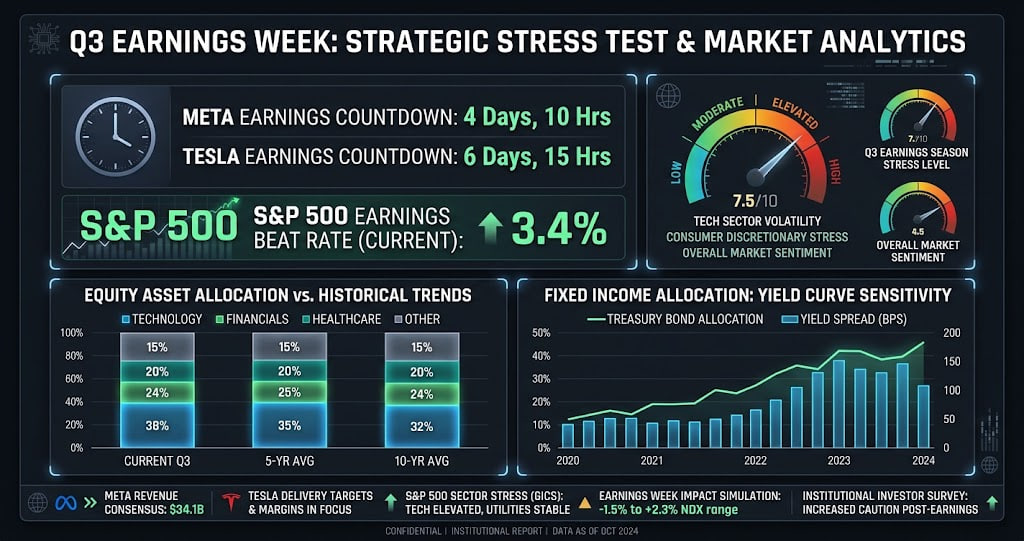
🚨 Corporate earnings will be the primary focus for investors this week. Following generally positive performance updates from several major U.S. financial services firms last week, the earnings season has been encouraging so far.
✅ I believe investors should carefully evaluate these investment opportunities based on their own financial goals and risk tolerance.
📌 With Meta and Tesla set to report earnings after the market closes on Wednesday, which one do you think is more likely to deliver an "earnings beat" and trigger a surge in its stock price?
$PLTR
🌏 $PLTR has risen nearly 70% this year. With the Q3 earnings report approaching in early November, investors are currently taking a wait-and-see approach. Today’s strong rebound confirms the existence of a solid support zone below. As a core asset in the enterprise AI software sector, its long-term growth prospects remain unquestionable.
#USStocks #PLTR #StockMarketStrategy #AlphaReturns #TechnicalAnalysis
$OUST
Today, $OUST demonstrated remarkable resilience at the key support level of $28.
📢📢📢 As a leader in the digital LiDAR sector, the company continues to enjoy strong investor confidence regarding its long-term outlook—specifically the expectation of achieving positive free cash flow and the successful execution of its commercialization roadmap. With the Q3 earnings release approaching in early November, the current market volatility is simply a process of digesting short-term speculative holdings and building momentum for the next phase. The current price, near the support level, presents an excellent buying opportunity. You will be pleasantly surprised by this decision within the next three months.
#USStocks #OUST #Q3Earnings #StockMarketStrategy #AlphaReturns #TechnicalAnalysis
$APLD $ASTS
Yesterday, $APLD President Jason Zhang increased his stake in the company by purchasing 300,000 shares directly on the secondary market. This move signals strong confidence that the company’s medium- to long-term HPC/AI data center projects remain on track for timely delivery. This significant insider purchase immediately spurred pre-market buying activity, serving as the primary catalyst for the stock’s strength against the broader market trend.
$ASTS: Peter Adderton, founder of Boost Mobile, publicly disclosed today that he has purchased shares of $ASTS at the current price level.
🚀 He also proposed a forward-looking thesis regarding potential M&A activity:
🔰 Major global mobile network operators (MNOs) have a compelling strategic incentive to acquire $ASTS, viewing it as a "defensive hedge" against the monopoly of SpaceX’s Starlink satellite network.
#USStocks #ASTS #APLD #StockMarketStrategy #AlphaGeneration #MergersAndAcquisitions
🚨 As the deep deleveraging and reshuffling of holdings within the tech sector over the past few months gradually stabilize, the recent pullback appears to be bottoming out and nearing its end. Investors should re-evaluate their allocation to risk assets and prepare to increase their equity exposure.
⚠️ The upcoming quarterly earnings reports from several key companies will test investor confidence in this rally throughout the week. $META, $LRCX, $TXN, https://t.co/M5LBvuaZfJ, and $SPCX will be the primary focus. Beyond these earnings, NVIDIA’s ($NVDA) participation in the GTC conference in Berlin this week could also serve as a critical "stress test" for the current AI-driven trade.
$NDX
$NDX plunged over 1.3% during today’s session, with major tech stocks coming under broad pressure and pulling back. Yet, following a wave of intense selling and panic-driven liquidation, the index managed to form a **"hammer reversal"** candlestick—a pattern of significant technical importance—right at the intersection of a key trend support level and the 100-day moving average!
⚠️ The current level serves as a critical battleground where bulls and bears are locked in a high-stakes showdown. In my view, holding this support could trigger a powerful short squeeze; conversely, a breakdown below it could cause market conditions to deteriorate rapidly.
📉 Following an exceptionally difficult week, the U.S. tech sector looks set to close on a bearish note today. By midday, the Nasdaq Composite ($IXIC) saw its losses widen to 1.0%, pushing its decline for the week beyond 3.0%—a clear sign that the deleveraging pressure on high-beta growth stocks continues to play out.
Meanwhile, CoreWeave’s equity and debt instruments are under renewed pressure, further fueling market concerns regarding credit spreads—specifically the fear that heavy, debt-fueled spending could lead to a deterioration of balance sheets.
With the Nasdaq down more than 3% this week amid a volatile deleveraging of the "AI trade," do you think tech stocks can find a floor and rebound next week? Let’s discuss.
#USStocks #Nasdaq #SOX #AIComputing #StockMarketStrategy #RiskControl
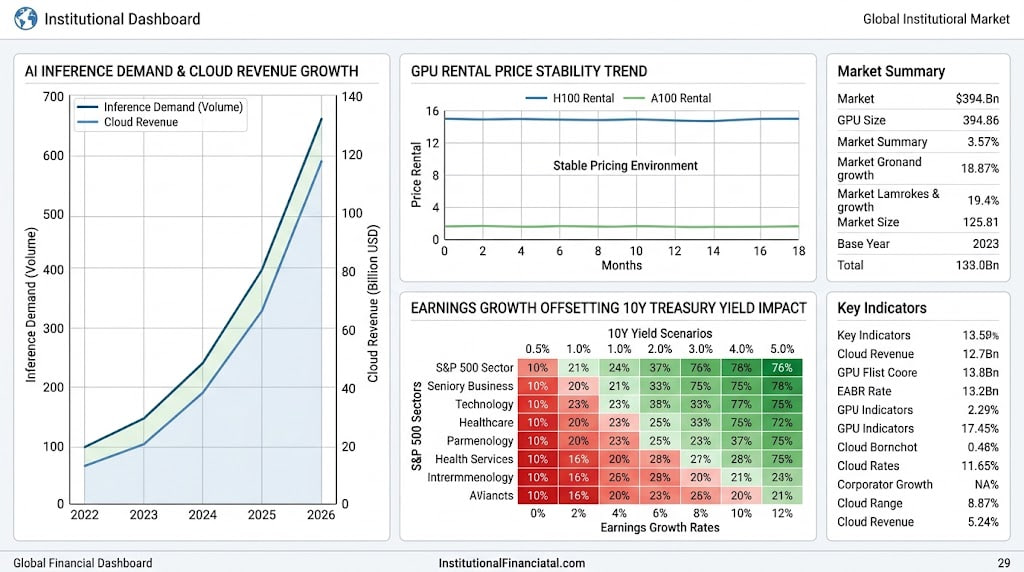
🚨【October 16 Morning Briefing】: Investors should avoid "betting against AI." The AI sector exhibits strong earnings momentum, with increasingly clear paths to monetization. Following recent valuation adjustments, the sector is no longer expensive, and its overall risk-reward profile remains attractive. AI continues to be one of the most formidable trends in the current market, with signals regarding monetization remaining consistently positive. Meanwhile, accelerating demand for AI inference is bolstering cloud revenue for major hyperscale cloud providers, while GPU rental rates remain firm. This indicates that the AI value chain is shifting from a "capital expenditure narrative" to a "revenue realization narrative," helping to alleviate market concerns regarding the returns on investments in computing power. While the recent sell-off in the bond market has pushed yields higher—typically a source of pressure for high-valuation growth stocks—the performance of the equity market suggests that the earnings support underlying the AI theme is effectively offsetting the impact of rising interest rates.
In my view, as long as AI monetization continues to be validated, corporate IT spending remains tilted toward AI, and demand for cloud services and computing power stays robust, there is further upside potential for the AI-driven rally in the stock market.
$ASTS
The stock displayed a classic "dip-then-rally" pattern during the session: early on, sentiment was dampened by concerns over potential competition following SpaceX’s acquisition of low-frequency spectrum, pushing the price down toward the $40 level. This was quickly met by a massive surge in buying volume, triggering a powerful V-shaped reversal!
⁉️ Did you manage to "buy the dip" during this deep V-shaped rebound in $ASTS?
#USStocks #ASTS #SatelliteCommunications #TechnicalAnalysis #AlphaReturns #RiskRewardRatio
🚨 Market Close Summary: A strong rebound in U.S. stocks! AI sentiment thaws, the 10-year Treasury yield plunges by 10 basis points, and capital flows back into risk assets!
📌 In my view, there are four core drivers behind today’s cross-asset market movements:
1️⃣ A major turnaround in tech stocks ➔ The market has digested concerns regarding AI spending; strong "buy-the-dip" interest has emerged, halting the recent slide in the tech sector.
2️⃣ A sharp decline in U.S. Treasury yields ➔ The 10-year Treasury yield plummeted by as much as 15 bps during the session, closing down 10 bps. The resulting drop in discount-rate pressure served as the primary catalyst for the rebound.
3️⃣ Renewed support for gold bulls ➔ The retreat in yields has bolstered gold’s appeal as a safe-haven asset and an inflation hedge.
4️⃣ Divergence in oil prices (WTI surges 3%) ➔ WTI and Brent crude have decoupled, with technical factors driving short-term volatility in the oil market.
Key Tactical Focus This Week: "Contrarian" (Left-Side) Entry Maps & Asymmetric Odds Matrices for Three High-Beta Growth Stocks 🧵📈🚀
Strike precisely when pullbacks test key liquidity pivot zones. This week, we are targeting three high-beta growth and AI-sector stocks that offer exceptional risk-reward ratios:
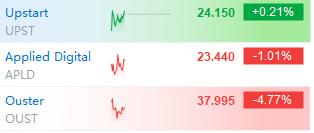
🔹 $OUST: A pullback touching the strong support base at $36.00 will trigger an institutional "left-side" entry signal, with a rebound target pointing toward the $52.00+ valuation expansion channel.
🔹 $APLD: A dip below the critical $23.00 defense zone will present a prime accumulation opportunity within the high-volume liquidity cluster, with a target reset to $38.00+.
🔹 $UPST: A pullback below $23.00 represents a classic asymmetric risk-reward setup, offering significant upside potential toward the $40.00+ level.
Investing requires immense patience; wait for prices to retrace to the designated pivot trigger zones before scaling in. Maintain tight stop-loss levels to leverage minimal downside risk against the potential for uncapped structural breakouts.
$ASTS
The stock displayed a classic "dip-then-rally" pattern during the session: early on, sentiment was dampened by concerns over potential competition following SpaceX’s acquisition of low-frequency spectrum, pushing the price down toward the $40 level. This was quickly met by a massive surge in buying volume, triggering a powerful V-shaped reversal!
⁉️ Did you manage to "buy the dip" during this deep V-shaped rebound in $ASTS?
#USStocks #ASTS #SatelliteCommunications #TechnicalAnalysis #AlphaReturns #RiskRewardRatio
🚨 The three major U.S. stock indices opened with divergent performances today, as tech stocks accelerated their decline for the second consecutive session. The Nasdaq Composite has seen its losses widen to 1.23%.
📌 In my view, three primary factors are driving this deep downturn in tech stocks:
1️⃣ CPI figures exceeding expectations
➔ A resurgence of hawkish sentiment has pushed discount rates higher, directly capping the valuation ceiling for tech stocks.
2️⃣
A decline in the value of CoreWeave’s debt
➔ This has sounded an alarm in the credit market, forcing a repricing of the financing risks inherent in the highly leveraged model used for AI computing infrastructure.
3️⃣
Skepticism regarding AI return on investment (ROI) ➔ The capital market is no longer willing to blindly fund expensive capital expenditure (CAPEX) narratives; the ability to translate investments into actual earnings has become the sole benchmark for success.
#USStocks #StockInvesting #AIStocks #USTreasuryYields #MacroAnalysis
[Morning Briefing, October 15] Following an inflation print that surged beyond expectations, the U.S. bond market exhibited a classic case of "failure to react to news"—rather than breaking out to the upside, U.S. Treasury yields spiked only to quickly retreat.
Investment bank BTIG noted that this anomaly confirms the 10-year Treasury yield has reached a tactical peak. However, prominent Wall Street strategist Klinsky warns that this is not a signal of a resurgence in risk appetite, but rather a highly dangerous "reverse trap"—a scenario where "yields fall, yet the Nasdaq declines."
For investors, this suggests that the one-sided logic of "betting on rate cuts and buying tech stocks" may be giving way to a new dynamic: a decline in yields no longer equates to a recovery in risk appetite; instead, it appears to reflect a repricing of growth and earnings expectations.
Today’s September CPI inflation report came in higher than expected across the board, triggering intense volatility in the bond market. U.S. Treasury yields surged sharply in early trading; the benchmark 10-year Treasury yield later retreated from a high of over 5.32% (seen on Wednesday) to close at 5.189%.
Upward revisions to discount rate expectations have prompted equity investors to flock toward defensive assets, with the technology and semiconductor sectors bearing the brunt of the sell-off. The PHLX Semiconductor Sector Index (SOX) plunged 4.3%, led by declines in $ORCL, $MRVL, $CRWV, and $AMD. AI computing firms—characterized by high balance-sheet leverage—have found themselves at the epicenter of the selling storm.
Given the shakeout in tech stocks driven by high inflation and interest rate volatility, do you believe the downward pressure on the share prices of highly leveraged AI computing companies has fully run its course?
In September, the year-over-year increase in U.S. core CPI rose to 2.6%—a high since June and above the expected 2.5%—while the month-over-month core CPI came in at 0.3%, exceeding the forecast of 0.2%.
Following the data release, the logic driving global cross-asset trading rapidly shifted toward aggressive hawkish pricing: U.S. Treasury yields surged sharply, and the U.S. Dollar Index skyrocketed. I anticipate a high probability that the three major indices will open lower today.
$APLD
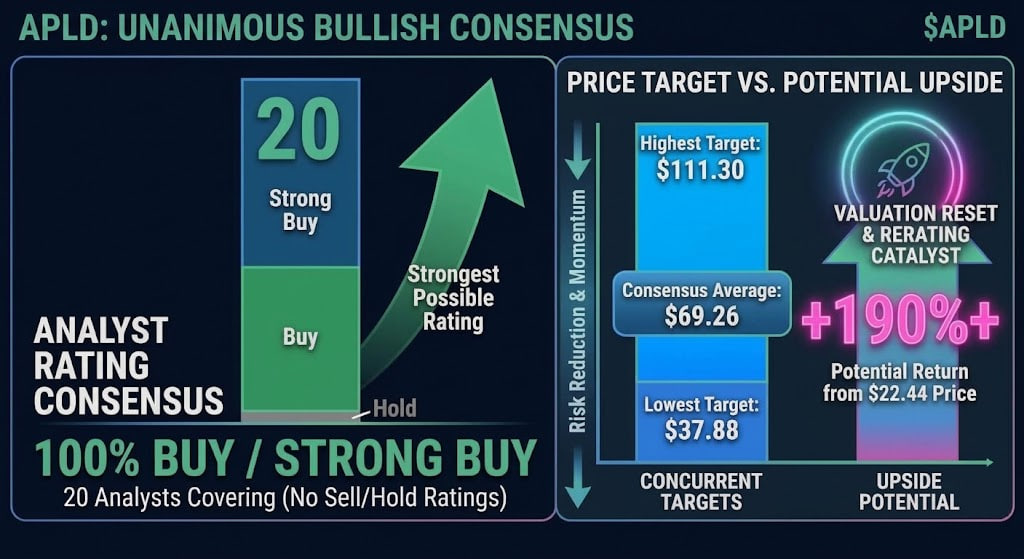
Analysts currently covering $APLD have assigned it "Buy" or "Strong Buy" ratings, with a consensus 12-month average price target of $69.26 (ranging from a high of $111.30 to a low of $37.88). This implies a potential upside of over 190% from current levels.