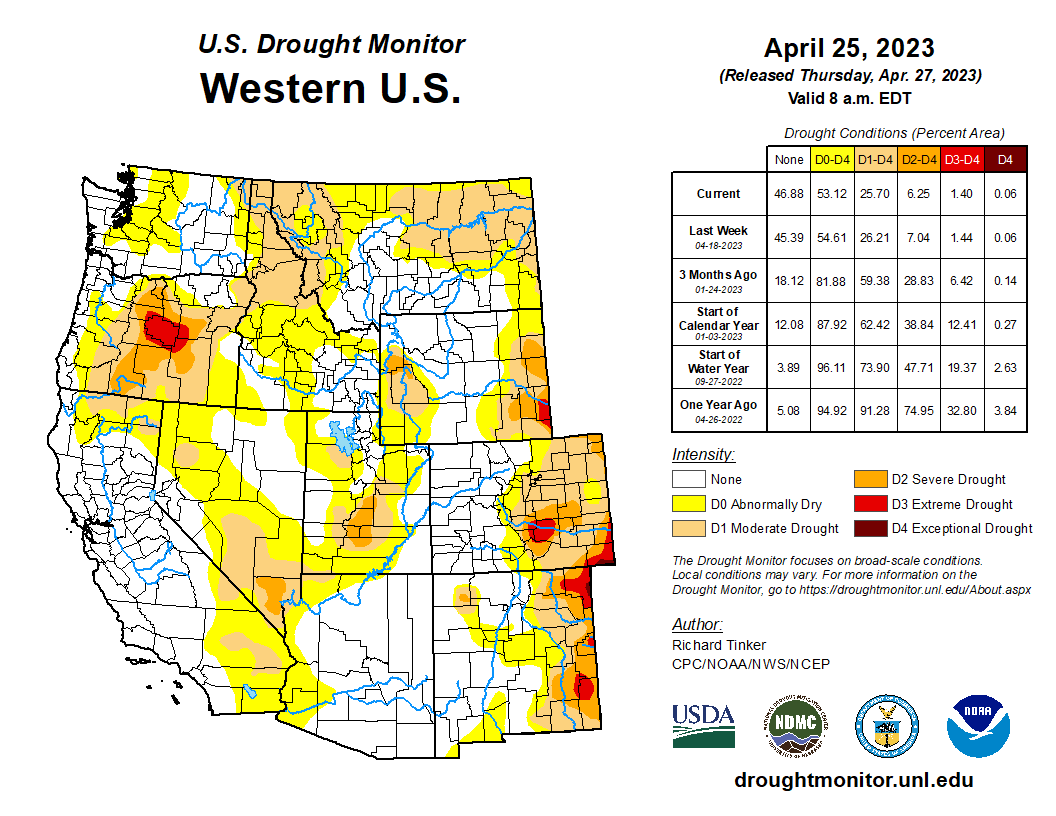
The 2023 water year began with nearly two-thirds of the Intermountain West in drought. Much-above average precipitation fell across nearly the entire region during winter and many long-term monitoring sites in Utah and western Colorado broke SWE records. ☃️https://t.co/dSXDupPi4L
Another huge congratulations to the @CiresEO-led @WeAreWaterSW team for receiving a Governor's Award! Last night, the team was honored at the annual @ColoradoCOLABS awards ceremony which recognizes high-impact research across Colorado.
Read the story: https://t.co/wDNrkP3HVM
Early September brought the last monsoonal storms of the season and by mid-month, the first snows fell over the region’s highest peaks. Greater than 150% of average precipitation was observed in southeastern Colorado, western Utah and northeastern Wyoming. https://t.co/dSXDupPi4L
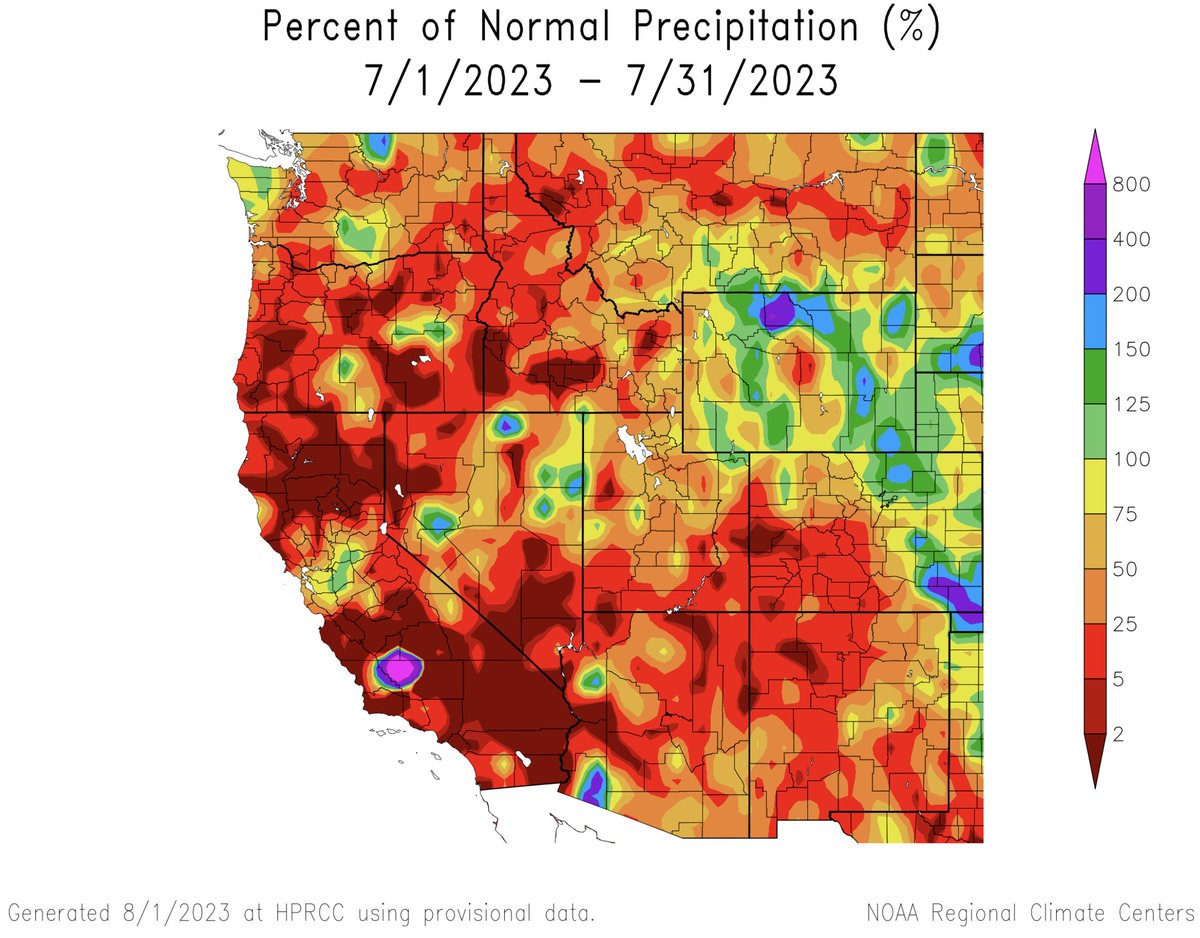
After a record winter #snowpack at many locations in eastern Utah and western Colorado, hot and dry conditions have caused the emergence of #drought. July was the driest on record for a large area of southwestern Colorado and southern Utah. https://t.co/ddbmBkD743
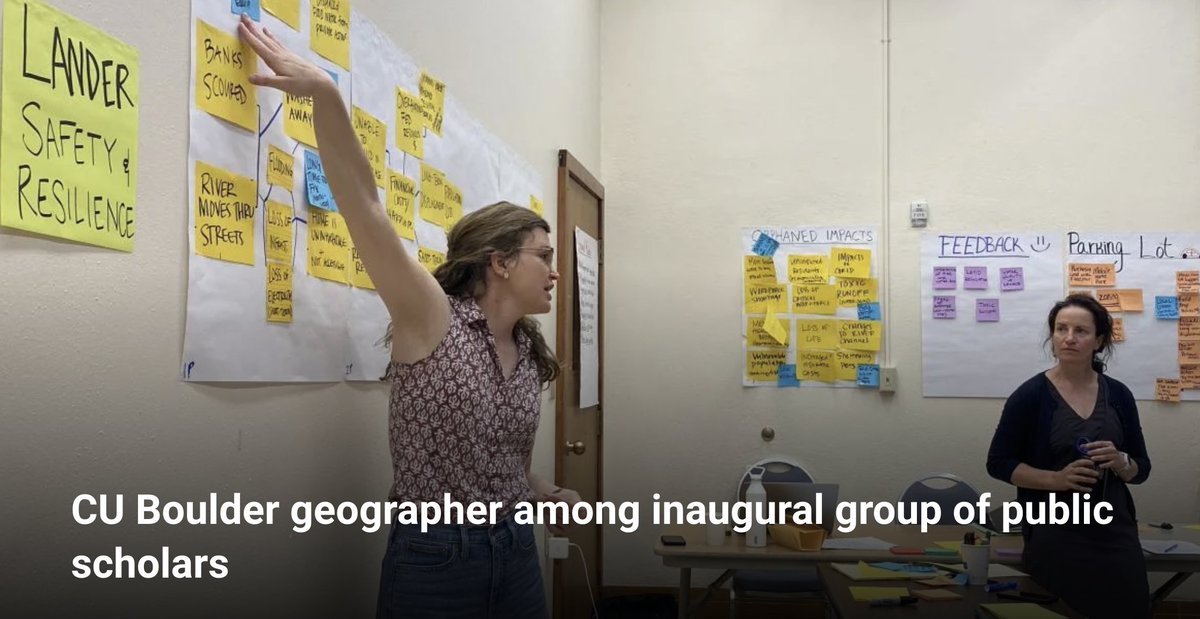
Katie Clifford, lead social scientist with CIRES' @WWAnews, is part of an inaugural group of public scholars with @theAAG “Elevate the Discipline” program. Read the story from @CUBoulder: https://t.co/C8VPtwIEFq
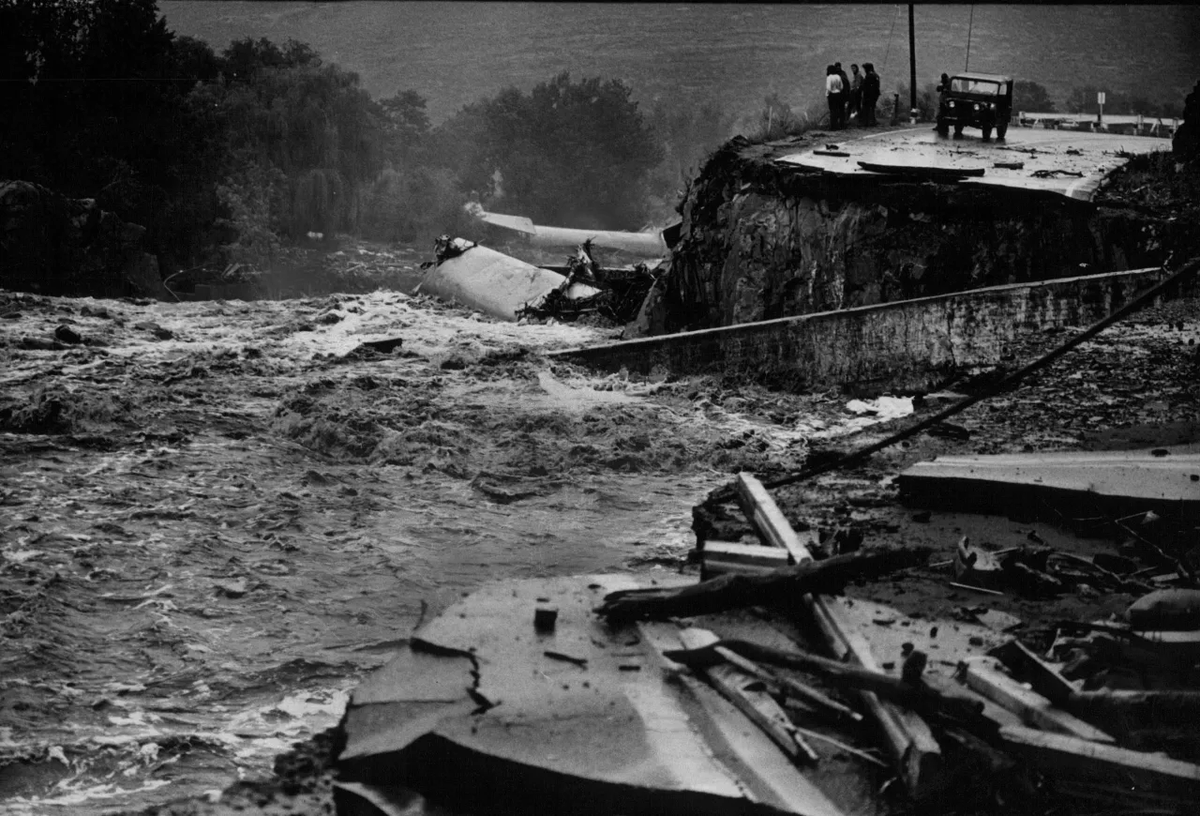
On this day in 1976, the most deadly natural disaster in CO history occurred. A massive thunderstorm dropped up to 12" of rain in 6 hours in Big Thompson Canyon, causing extreme #flashflooding and killing 144 people. https://t.co/OiCeGCkzN6
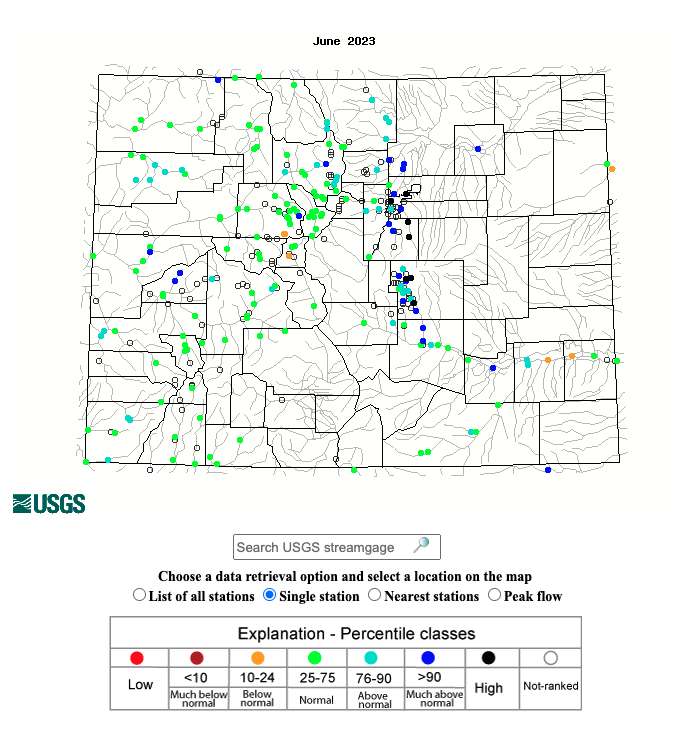
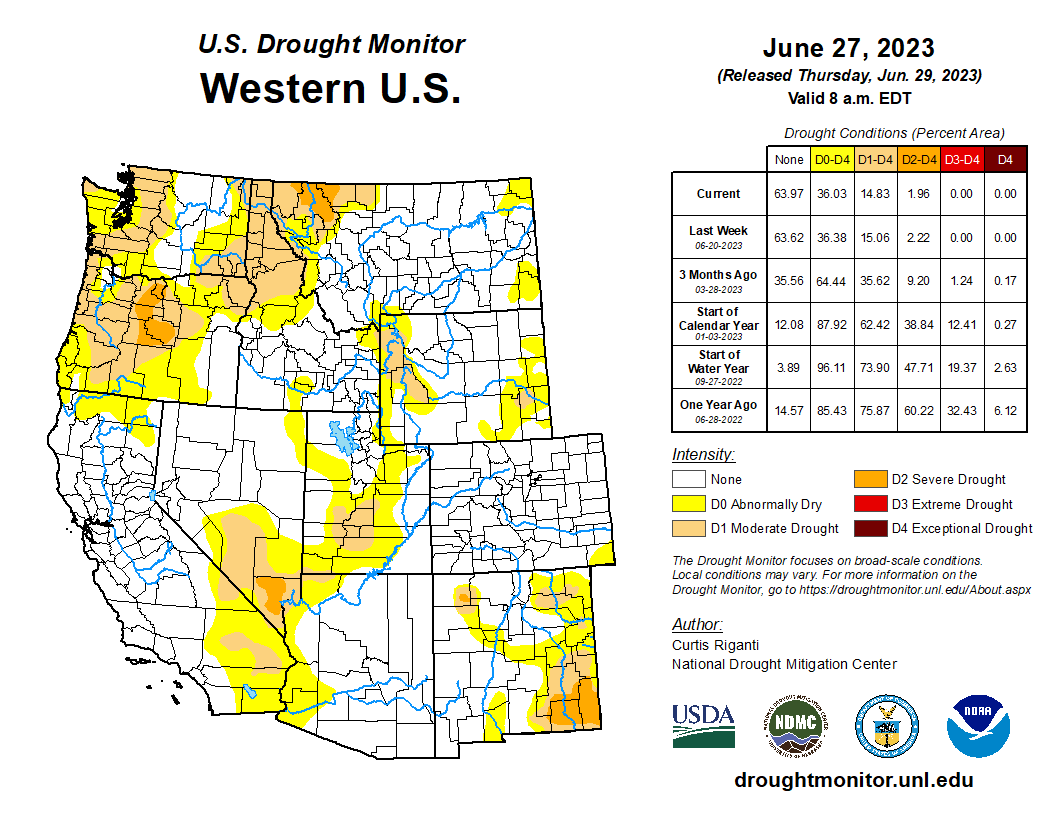
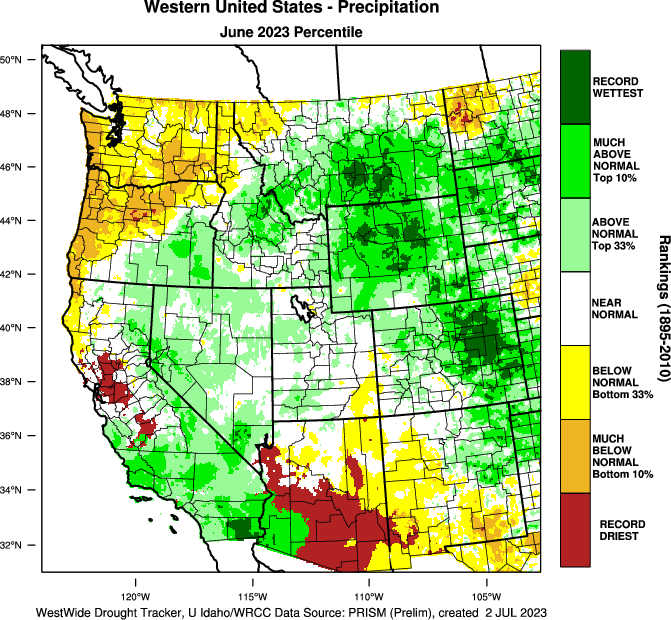
Heavy #rainfall continued through June, breaking precipitation records in Colorado and Wyoming and completely removing #drought from Colorado. Most #streamflow gauges recorded normal to above normal flows throughout the region. Learn more here: https://t.co/dSXDupPPUj
For this week’s #HumansOfCIRES, meet @EthanHKnight, an environmental scientist with @WWAnews. Ethan does climate research related to water resources & hazards, he plays the drums, and he’s gotten to play alongside some big artists! Read the full interview: https://t.co/yOVtFagbUP
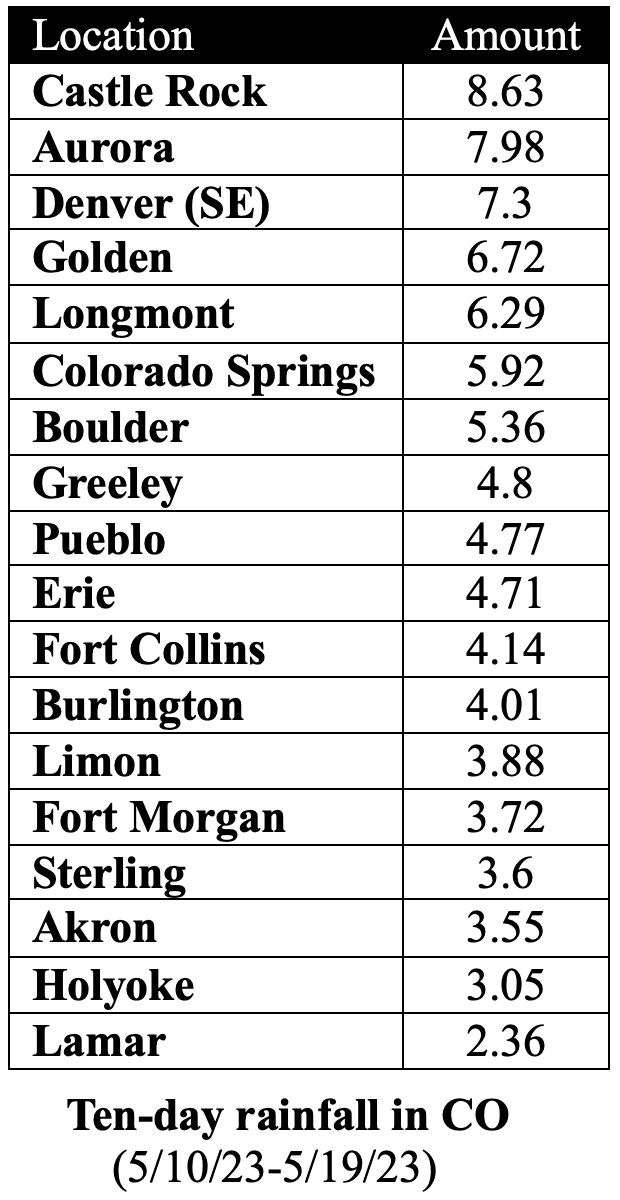
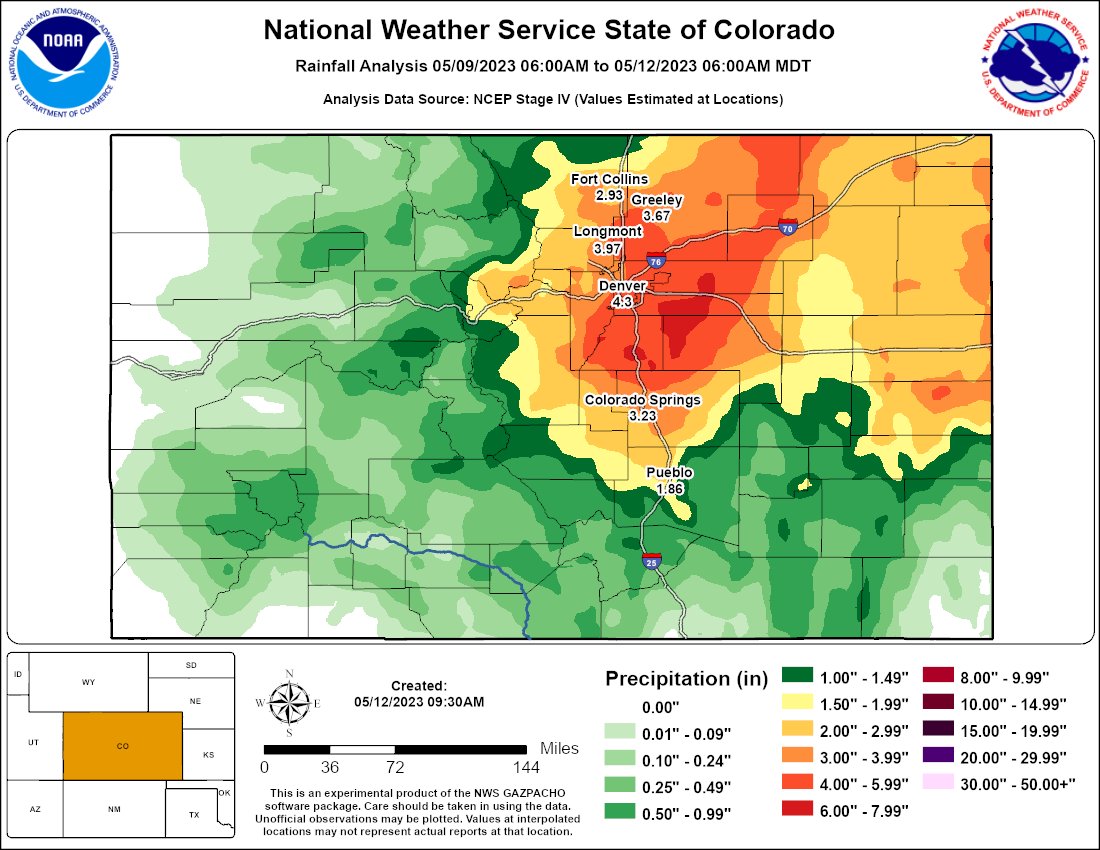
A slow-moving storm system that combined elements of both winter and summer #weather patterns brought ten days of #rain to the Front Range and Eastern Plains of Colorado. From May 10-19, two to nine inches of rain fell in CO east of the Continental Divide. https://t.co/dSXDupPPUj
WWA Director Ben Livneh and WWA PI Noah Molotch were co-authors on a study led by Katherine E. Hale (@CUBoulder/@INSTAAR) finding that from 1950 to 2013, #snowpack water storage significantly declined in more than 25% of the Mountain West. Learn more: https://t.co/bDFcEUgZD3
Fangfang Yao, WWA Director Ben Livneh, and Balaji Rajagopalan from @CIRESnews and @CUBoulder find that more than 50% of the world’s largest freshwater lakes are in decline, storing less #water than they did three decades ago. https://t.co/ZFfDHPTjYH
Thank you @CIRESnews for the Outstanding Performance Awards! We are honored. Huge shoutout to the @WeAreWaterSW team led by @CiresEO and all of our colleagues there who won awards alongside us! It has been and continues to be a wonderful project to be a part of.
Our recent publication, “The ‘Nuts and Bolts’ of Doing Coproduction: Exploring Implementation Decisions in #Climate Adaptation Research with Stakeholders,” is out. Read more from WWA’s Katie Clifford, Lisa Dilling, Benét Duncan, Seth Arens, and others. https://t.co/LPnsWpzEsN
As of May 1, #snow-water equivalent (SWE) values remain above to much-above normal for the majority of the region, especially in Utah. #Streamflow volume forecasts are above to much-above average for the Upper Colorado River and Great Basins. https://t.co/dSXDupPPUj
As #LakePowell water levels drop, native plants are reclaiming #GlenCanyon. "This landscape in its current state is not really known. Depending on the area, it’s only been out of the water for one to 20 years..." says WWA's Seth Arens. https://t.co/fPkuoLJYmB
WWA PI Noah Molotch and colleagues at @INSTAAR have been using satellite data to track #snowpack along the Sierra Nevada range every two weeks. Their analysis on April 1—which is typically the date of peak snowpack—confirmed that this season was a boom. https://t.co/GOpuPh434A
"The Biden administration on Tuesday proposed to put aside legal precedent and save what’s left of the river by evenly cutting water allotments, reducing the water delivered to California, Arizona and Nevada by as much as one-quarter." #ColoradoRiver https://t.co/vQiIKGnyJ5
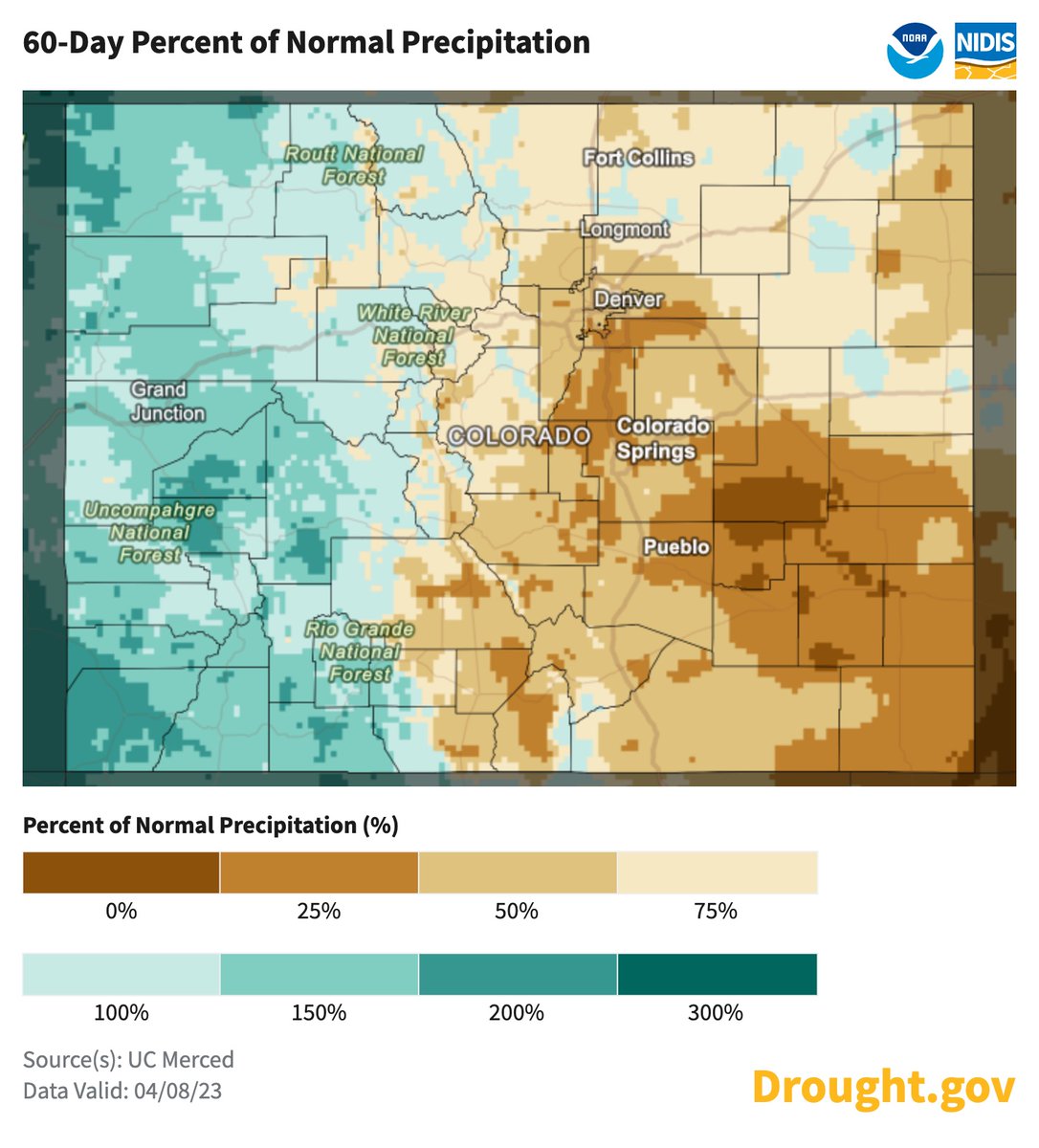
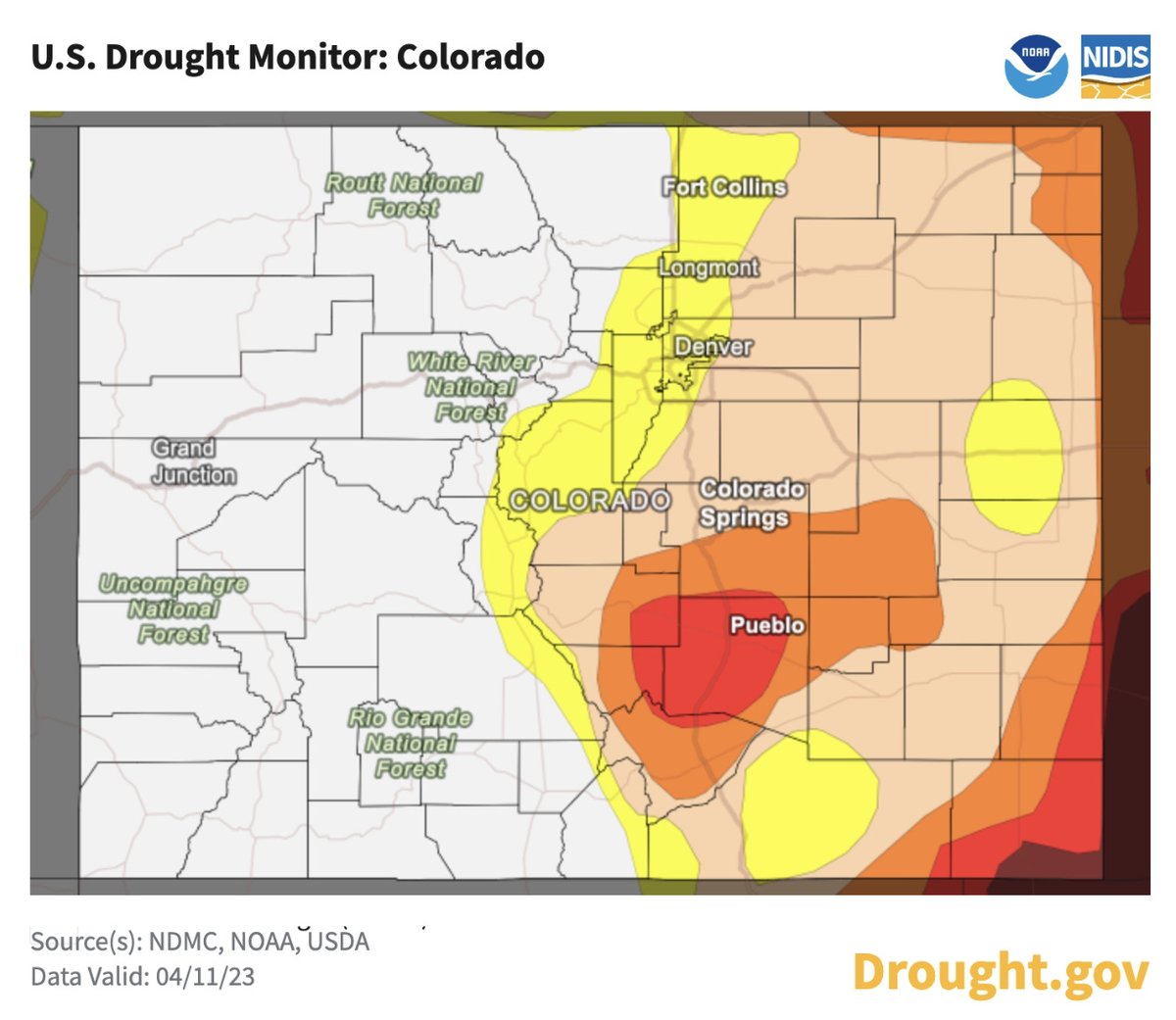
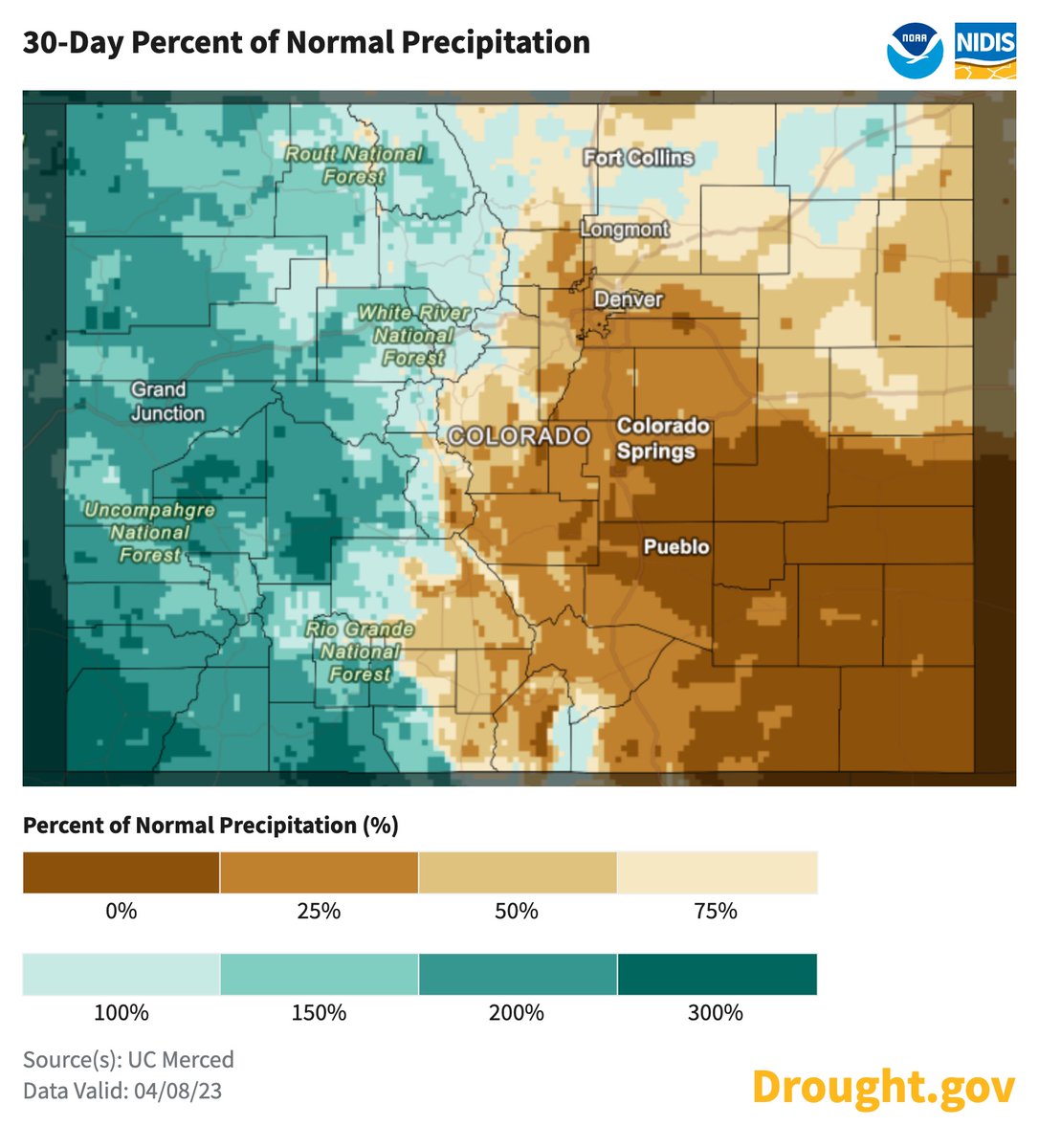
Spotlight on CO, which just bucked the trend of improving western drought.
Western CO remains drought free, but a pocket of Extreme Drought was added to south central CO.
The 30 and 60 day % precip shows dryness in almost the whole eastern half.
https://t.co/1ZmFYdsGqh @NOAA