🏜️ The Desert Tomb That Still Watches…
Hidden deep in the silent sands of northwestern Saudi Arabia lies a massive rock carved with incredible precision—standing alone, as if guarding secrets no one has fully uncovered. This is part of Hegra (Al-Hijr), an ancient city built by the mysterious Nabataean civilization nearly 2,000 years ago.
At first glance, it looks like a grand doorway… but it leads nowhere. No windows, no life—just a tomb carved straight into stone for a powerful family of a forgotten era. The details are shocking—perfect columns, sharp edges, and elegant designs that have survived centuries of wind and sand. How did they achieve such precision in the middle of a harsh desert?
But here’s where it gets strange…
This place once stood along powerful trade routes, where caravans carried spices, incense, and untold riches across continents. Wealth flowed here. Stories were exchanged here. And then… silence. The city was abandoned, left to the desert as if something made people walk away.
Today, the structure still stands—untouched, isolated, and watching. No crowds, no noise… just wind echoing through history. Some say these tombs were not just for the dead, but symbols of power meant to last forever.
And maybe they have.
Because even now, staring at it, you can’t help but wonder…
What really happened here? 👁️
Hitit İmparatorluğu'nun ulusal tapınağı Yazılıkaya’daki 12 tanrı figürü neyi simgeliyordu? Zamanın, ölümün ve ölümsüzlük arayışının taşa kazınan hikayesini, akademik bir süzgeçten geçirerek köşe yazısı samimiyetiyle kaleme aldım. Lütfen linki tıklayınız 👇
https://t.co/OZ8C5I8vYK
THE LOST PALACE WHERE ANCIENT SECRETS STILL WHISPER FROM THE STONE
Hidden on the island of Crete lies a place that looks like it came from a forgotten legend. This is the Palace of Knossos — a mysterious ancient city where kings ruled, priests performed sacred rituals, and thousands of people once walked through grand halls more than 3,500 years ago.
At its peak between 1700 and 1450 BCE, Knossos was the heart of the powerful Minoan civilization. But what makes this place truly fascinating is its strange and complex design. Giant courtyards, endless corridors, hidden rooms, colorful walls, and mysterious chambers created a palace so confusing that ancient stories later connected it with the legendary Labyrinth of the Minotaur.
Inside these ruins are places that still capture the imagination today — the famous Throne Room, the North Pillar Hall, and the Hall of the Double Axes. Every stone seems to hold a forgotten story of ceremonies, power, and a civilization that vanished almost like a mystery waiting to be solved.
The Minoans built a world far ahead of its time, with advanced architecture, art, and engineering. They created a palace that was not just a home for rulers, but a symbol of their greatness and connection to the unknown.
Standing among the remains of Knossos, it is hard not to wonder: What secrets are still buried beneath these ancient stones? What stories were lost when this incredible civilization disappeared?
Thousands of years later, the Palace of Knossos still stands as a silent reminder that some mysteries of the past never truly disappear.
1970'ler Arşivini tararken : Kan-ter içinde Perge kazılarında çalışırken kazı evinde değerlendirme molasında. Soldan sağa ; Epigraf İsmail Kaygusuz, Ülkü İzmirligil ve Nezih Başgelen .(Fotoğrafı çeken rahmetli topoğraf Adnan Şakar. O günlerde bir yanda İsmail Hocayla antik kentteki otlar arasındaki yazıtları bulup estampajlarını alıp fotoğraflarını çekerken diğer yanda da rahmetli Adnan Bey'in (Ülkü Hn. ile birlikte) antik kentin planını çıkarmalarına yardımcı oluyordum. NB
Çekiliş Sonucu 👇
@hllcnakgn
Halil Can Akgün'ün "Türk Mitolojisinde kozmik sembolizm" adlı kitap hediyesini kazanan talihli @yigitburakozden oldu.
Tebrik ediyoruz.
Lütfen Dm vasıtasıyla iletişime geçiniz.
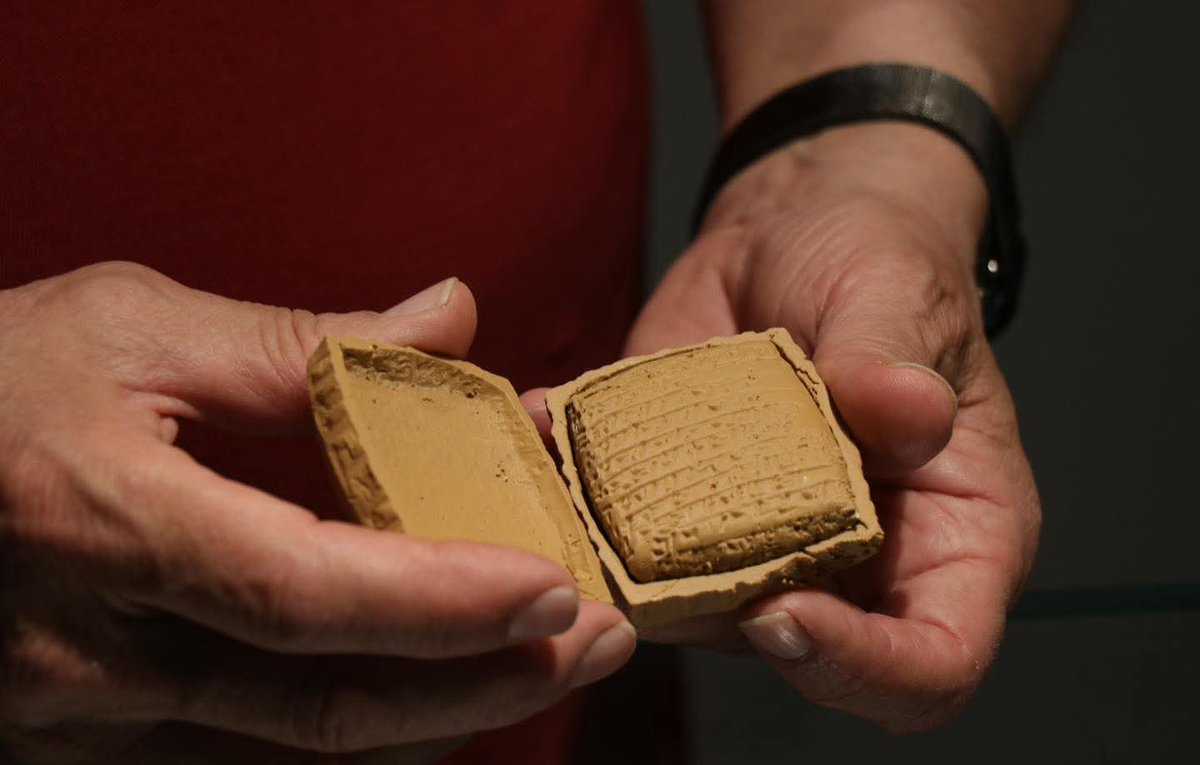
A 4,000-year-old trade record from Kayseri is now on display with its original clay envelope.
Found at Kültepe Kaniş/Karum, the tablet was read without damaging the sealed envelope. The text records a commercial agreement over wheat and barley between Shawidashu and Enishar.
This 3,000-Year-Old Wall Still Speaks… But Can You Understand Its Secrets?
Hidden on the western side of Luxor, inside the magnificent Mortuary Temple of Ramesses III at Medinet Habu, stands a wall that has been silently telling its story for over 3,000 years. Carved between 1186 and 1156 BC, these intricate hieroglyphs are far more than decoration—they are a powerful record of a king’s life, his victories, and the world he ruled.
At first glance, the wall looks like a beautiful pattern of symbols. But look closer… and it transforms into a living story. You’ll see scenes of fierce battles, royal ceremonies, and sacred rituals, all carefully etched into stone by ancient hands. These carvings reveal how Ramesses III defended Egypt against powerful enemies and maintained order during a time of great uncertainty.
But what makes this wall truly fascinating is not just its age—it’s the detail. Every symbol, every figure, every line was designed to last forever. The ancient Egyptians believed that writing something in stone gave it eternal life. In a way, they were right… because today, thousands of years later, we are still reading their messages.
The breathtaking nave of the Siena Cathedral (Duomo di Siena) in Tuscany, Italy 🇮🇹. It is famous for its striking black-and-white striped marble pillars and its magnificent, intricate inlaid marble mosaic floor.
Duomo di Siena was built between 12th-14th Centuries AD, as the principal church of Siena and remains one of the finest achievements of Italian Gothic architecture. Construction began around 1196 AD, on the site of an earlier church, reflecting Siena’s growing wealth and influence during the medieval period.
The cathedral was dedicated to the Assumption of the Virgin Mary, who became the patron saint of the city and a central figure in Sienese religious life. During 13th Century AD, renowned architects and sculptors transformed the building into a masterpiece distinguished by its black-and-white marble façade and richly decorated interior.
In the early 1300s, Siena launched an ambitious expansion project known as the “Duomo Nuovo,” intending to create the largest cathedral in Christendom. The expansion was abruptly halted after the devastating Black Death of 1348, which killed much of Siena’s population and weakened the city’s economy. Although the grand enlargement was never completed, the surviving unfinished walls remain a striking reminder of Siena’s medieval aspirations.
The cathedral became a showcase for the work of celebrated artists, including Nicola Pisano, Giovanni Pisano, and Donatello. Its remarkable interior features intricate marble floors, elaborate sculptures, and the magnificent Piccolomini Library adorned with frescoes by Pinturicchio.
Today, the Duomo di Siena stands as one of Italy’s most treasured medieval monuments, preserving the artistic, religious, and political history of Siena across more than eight centuries.
#archaeohistories