Look closely at the dial on this watch and you’ll notice it doesn’t say Daytona anywhere on it.
That’s not a mistake and it is not a service replacement. Rolex never sent steel Daytonas for chronometer certification. The gold ones went to COSC, and a certified dial carries the four line script instead: Rolex, Oyster, Superlative Chronometer, Officially Certified. So the only Daytonas Rolex thought were worth certifying are the ones that do not have the name on the dial.
Across nearly two decades of 6263 and 6265 production, the gold cases are generally estimated at around two thousand total, against roughly twenty-four thousand in steel.
The 6265 is the 6263's twin with a single difference. A metal tachymeter bezel engraved to 200 units per hour instead of a black acrylic insert.
Inside is the calibre 727, the last and the fastest of the hand-wound Daytona movements, running at 21,600 beats an hour against the 18,000 of everything that came before it. After this reference Rolex went automatic and never built a manual Daytona again.
Coming to our website soon!
We answered a Rolex Reddit AMA! Which Jaeger-LeCoultre watch is the best?
Justin and Rob answer with any JLC Reverso... Just not the Reverso Squadra.
Do you agree? Which JLC watch would you pick: the Reverso, Master Control, Polaris or something else? Tell us in the comments 👇
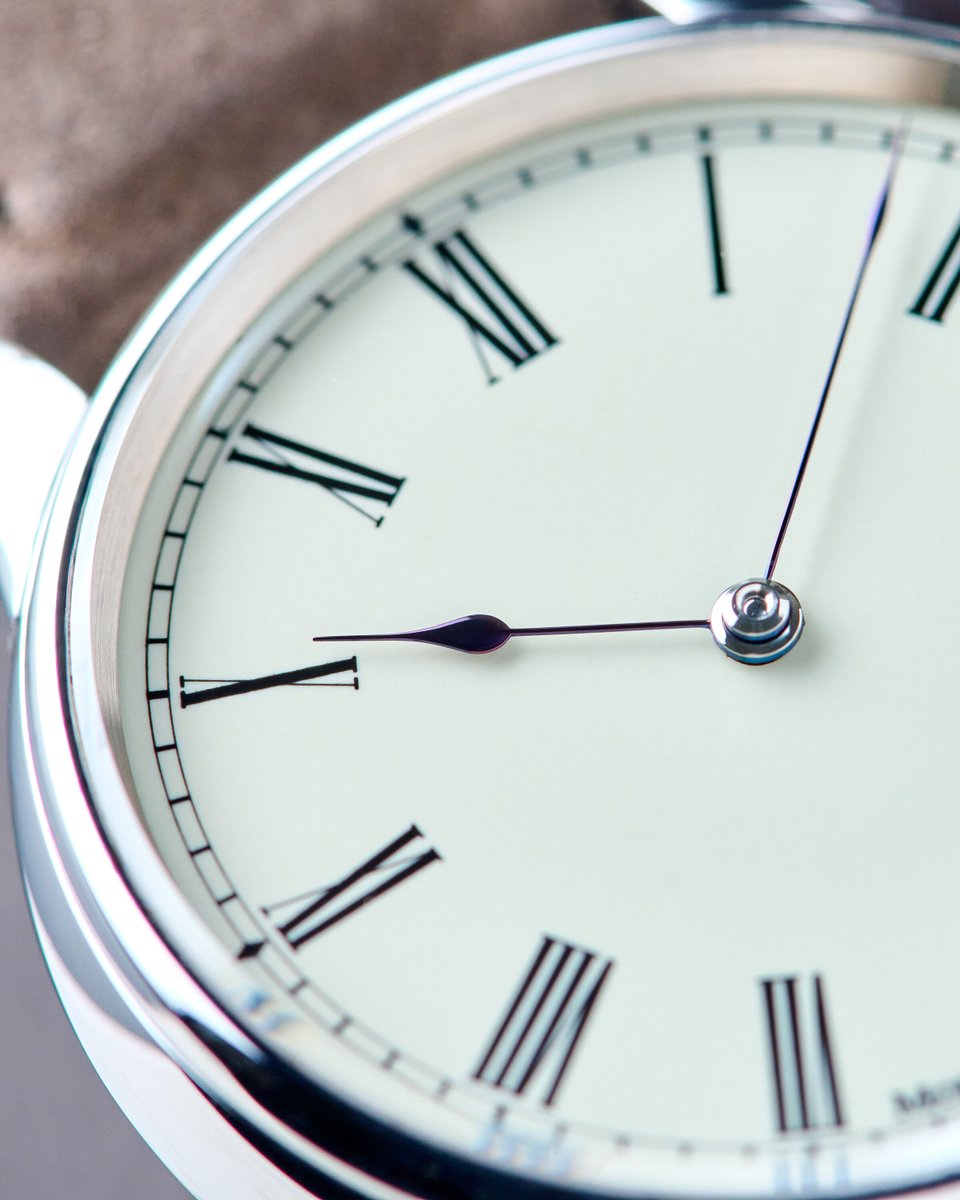
There is a hand missing from this dial...
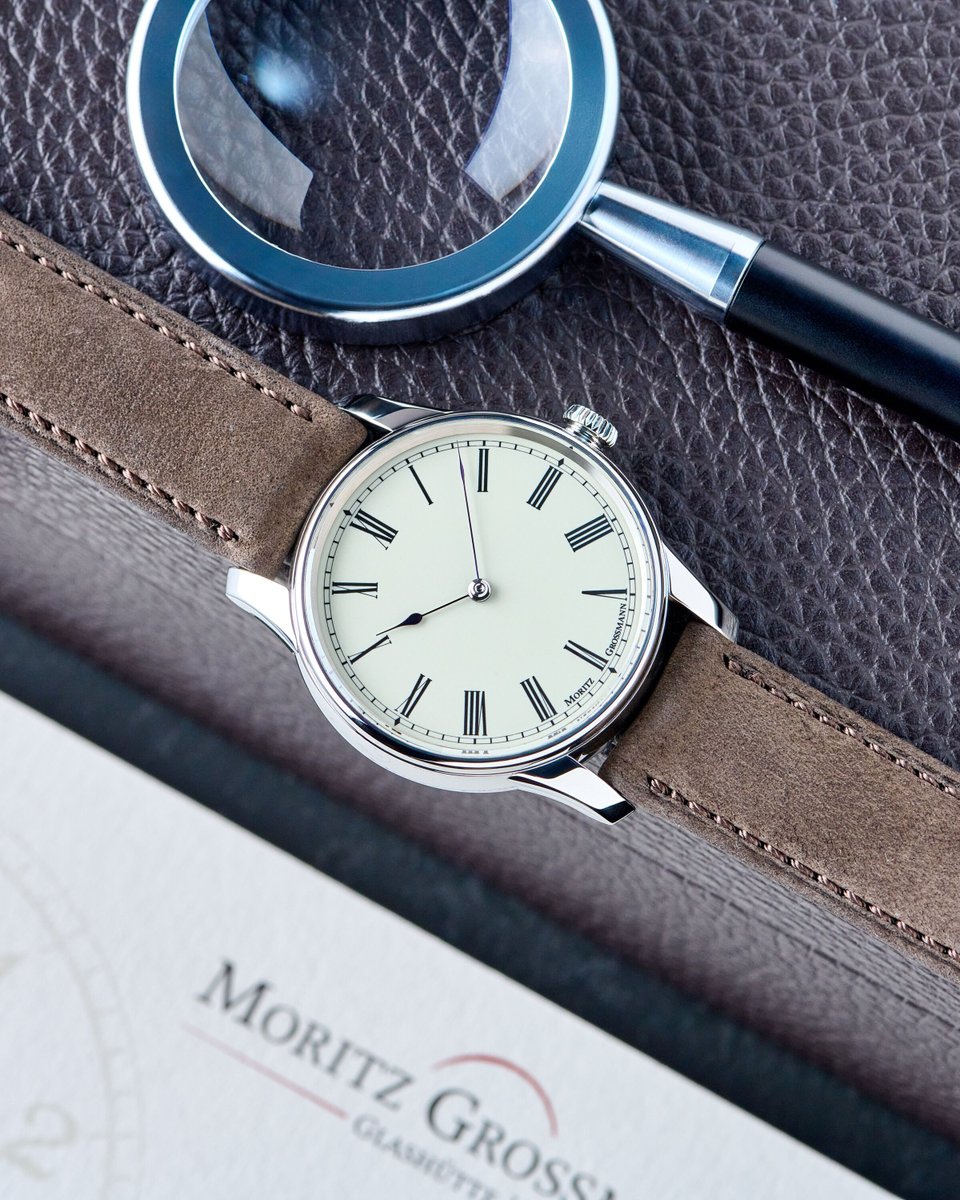
Every other Benu 37 has a small seconds register recessed into the dial at 6 o'clock with a polished chamfer cut around it. This one does not. That decision came from Wei Koh at Revolution, who commissioned the watch. He wanted a dial that read as completely still, and decided a small seconds register was the one detail restless enough to break it. Eight were made, built only to order.
The collaboration also ran in reverse from the way these usually go. Christine Hutter, who bought the rights to the Moritz Grossmann name in 2008 and restarted the company in Glashutte, approached Revolution rather than the other way round, after a unique Atum 37 sold at Grossmann's tenth anniversary sale at Christie's, alongside a Grossmann pocket watch movement from 1872.
The brief was half past and half future. The dial came from the past, grand feu enamel like the piece at Christie's, but ivory instead of white, with black Roman numerals and a chemin de fer track. The case came from the other direction. Steel, chosen deliberately because it is the only alloy that takes a hand polish to a true mirror.
Then look at the hands. Grossmann makes its own, by hand, out of steel. Ground with diamond files, chamfered to an unusually sharp point, then annealed over an open flame until they turn brown-violet, with the eyes left polished. The movement screws get the same flame treatment instead of being blued.
Turn it over and the plates are untreated German silver, left unplated. They oxidise where they are handled and deepen with age, so each of the eight ends up looking slightly different from the other seven.
Available now.
You know the reference. The production year. The details that make your example different. Your watch insurance should account for those details, too.
EWC brings more than 30 years of buying, selling and servicing fine watches to insuring your collection. We help establish current market values, build coverage around how you collect, and stay with you from quote to claim.
Worldwide itemized coverage against loss, theft and accidental physical damage. No deductible. Appreciation protection up to 150% of the insured value for scheduled items, up to the policy limit. Up to 25% of the policy limit for newly acquired watches, for 90 days.
Buy. Sell. Trade. Insure. One relationship for the collection you’ve built.
DM us to speak with an EWC insurance specialist about coverage for your collection.
Coverage is subject to policy terms, conditions and exclusions.
We asked Zach which Lange he’d choose if he could have any of them.
His answer: the Saxonia Annual Calendar in 38 mm.
Wellendorf bracelets are getting a lot of buzz right now, and he’d love a Datograph on one. He admits those might technically be “better” watches. Still, the Saxonia Annual Calendar fits his wrist perfectly, it appeals to him most, and it’s actually somewhat attainable.
It’s underrated, and we love the pick.
Which Lange would you choose? 👇
There are no subdials on this chronograph.
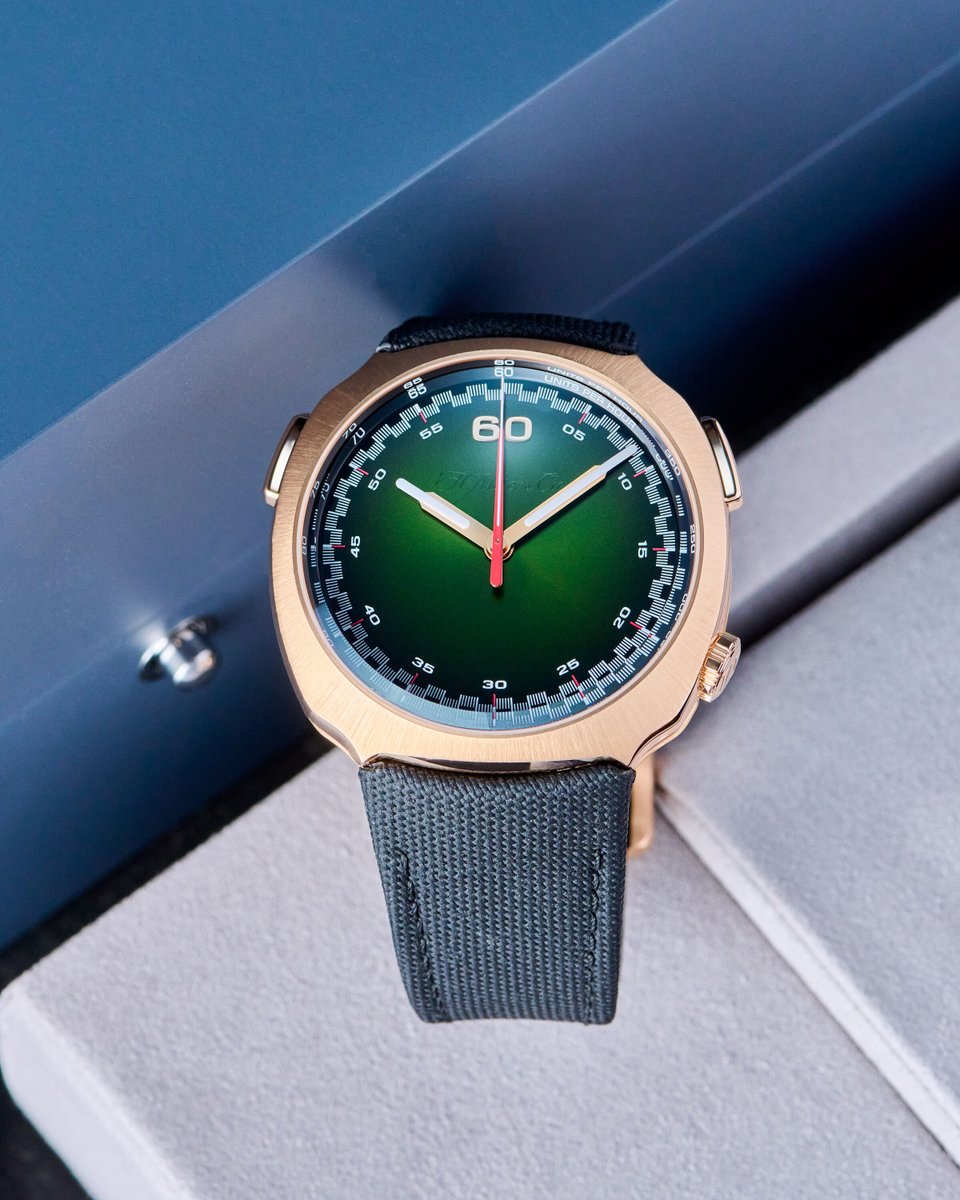
There are two chronograph hands that sit in the centre. Elapsed seconds and minutes are read against two peripheral scales, one printed on the dial and one on the sloped flange, which leaves the face completely open. Rather than add a register for the running seconds, Moser deleted that too.
The layout exists because of how the movement is built. Agenhor arranged the calibre as a ring, with the gear train, regulator and twin barrels around the outside and the middle left hollow for the chronograph to sit in. The self-winding rotor was moved to the dial side. Look through the caseback and nothing is covered up. You are looking straight at the chronograph and its column wheel.
The clutch is the part worth understanding. A horizontal clutch normally engages tooth to tooth, which is why a chronograph hand so often twitches at the moment you start it. This one engages through toothless friction wheels coated in a diamond and nickel composite, with toothed security gears underneath holding the alignment. The hand starts dead still. The reset is gentler as well. Instead of a hammer striking a heart cam, a brake holds the wheel and spring tension walks the hands back to zero.
And it can do all of that 120 meters underwater. The pushers and the flyback are rated to work while submerged, because who doesn’t need a solid gold chrono that you can swim with?!
This was also the first Streamliner in gold and the first one to come off the integrated bracelet. It was made for the opening of Moser’s boutiques in Hong Kong and Shanghai and sold only through them and Moser’s own website, which is the reason you rarely see one. The only branding on the dial is the name in transparent lacquer beneath the 60.
Coming to our website very soon!
Every complicated watch has the same quiet problem.
The moment a date jumps or a hand fires, it draws power from the same place the balance does, amplitude dips, and the timekeeping takes the hit.
Jaeger-LeCoultre’s answer was to stop sharing. Inside this watch are two mainspring barrels driving two completely separate gear trains. One runs the time. The other runs everything else. They meet at a single balance and escapement and nowhere else, so the complications never touch the energy keeping the watch accurate.
You can see the split right on the dial. Two power reserve indicators sit side by side at the bottom, one for each train, marked Régulateur and Heure. Two fuel gauges in one watch.
The subdial just above them is what that second train powers. It is marked 1 through 6 and its hand jumps in sixths of a second, a reading a conventional movement could only give you by robbing the balance to do it.
On the left, the date runs around the outside of the subdial on a pointer hand, with the moon set inside it and its own scale counting out 29½ days. On the right, the time is deliberately pushed off the centre of the dial and into its own register.
Only two hundred were made in white gold with this black dial.
Available now.
EP 23 of ranking EVERY watch brand
Gucci is a mainstream fashion brand, but it also has an atelier that makes some genuinely crazy watches. That leaves it in a strange spot: it can be a killer watch, and it still says Gucci on the dial.
Justin and Rob talk about how Louis Vuitton is working hard to change the “fashion watch” perception, and they’re not sure Gucci is doing the same. They also remember Burberry watches from 20 years ago, which were basically a Fossil sold for three times the price.
Agree or disagree? Where would you rank Gucci? 👇
Is this watch a mess or a masterpiece?
This is the URWERK UR-150 Scorpion in blue.
At first glance, you think it’s chaos. Spend some time with it, though, and it starts to make sense.
The tail flick: the hand sweeps around to 60, then snaps back like a scorpion’s tail. That’s where the name comes from.
Everything you expect from URWERK: satellite time display and wild architecture.
A more wearable case: it’s less “UFO on the wrist” than other URWERKs.
Justin’s question for Rob: “Do I do ridiculous? Do I do whimsy?” 😂
Would you wear the Scorpion? 👇
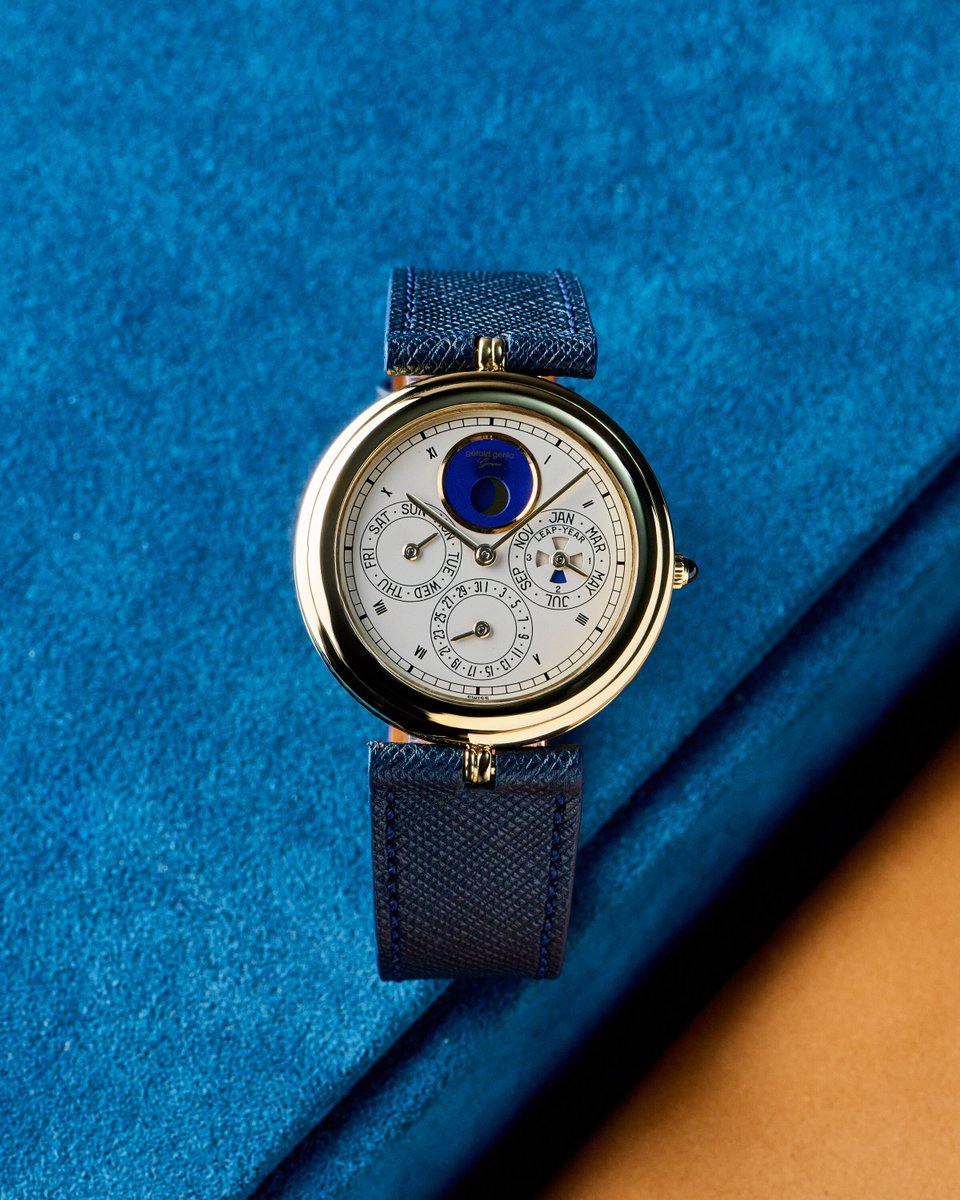
The moon on this dial is a disc of real lapis lazuli, set into a gold ring.
And it sits at 12 o’clock. On almost every other perpetual calendar ever built the moon is tucked away at the bottom of the dial, underneath everything else. Genta moved it to the top, raised the subdial slightly above the surface and finished the gold ring around it with a bevelled, polished edge. He trained as a jeweller before he ever drew a watch, and this is where it shows. The moon is treated as the piece of jewellery on the dial rather than the last item on a list of calendar functions.
There are no lugs. Genta’s rule was that they should either be absorbed into the case or removed altogether, because a watch should not catch on a shirt cuff. His own line on protruding lugs was that they make a watch look thick and unfashionable. This one is 36mm and sits flat.
Underneath is a Frédéric Piguet automatic, 2.4mm thick, one of the thinnest ever built. That is the only reason a full perpetual calendar fits into a case under 8mm.
And the thing worth knowing about the date. Genta was still running his own company when this was made, and he made almost nothing in volume. His wife has described the manufacture as prototype makers, with runs that were sometimes fifty pieces and sometimes one.
Available now.
This is the A. Lange & Söhne 1815 Rattrapante Honeygold, the “Homage to F.A. Lange,” made for Lange’s 175th anniversary.
Honeygold has a hue that doesn’t match anything else on the market. Paired with the grayish-black dial and gilt printing, it looks different in every light.
Only 100 pieces made
About 41 mm across and 12.5 mm thick, so it’s very wearable
A split-seconds chronograph in its purest form
It just feels special on the wrist.
Honeygold: yes or no? 👇
The Cartier Crash was drawn from this watch. Deliberately, at a desk, not in a car.
The story everyone repeats is that a Baignoire melted in a crash and the wreck became a design. Francesca Cartier Brickell, who has the family archives, tells it differently. Jean-Jacques Cartier and his designer Rupert Emmerson sat down and discussed taking this shape and pinching the ends to a point, then pulling a kink through the middle.
So the elongated oval you're looking at here is the parent of the most valuable shaped watch Cartier ever made.
The name came later too. Cartier launched the model in 1958 as the Ovale Cintré, or curved oval, because the case bends around the wrist rather than sitting flat on it. The Baignoire name wasn't used until 1973.
The dial isn't just a round one that has been stretched. The numerals near 3 and 9 are drawn wider apart, the ones near 12 and 6 compressed, so the layout follows the case rather than fighting it. 47mm long, 21mm across.
Available now on our website!
This is the Audemars Piguet Code 11.59 Flying Tourbillon Chronograph Skeleton, a limited edition of just 50 pieces.
You can see all the inner workings, including the tourbillon at 6 o’clock. It isn’t the kind of skeleton where you see straight through to your arm hair, though. The openworking is layered, and it reads perfectly.
A two-tone case in rose and white gold
A fully skeletonized dial
Gold hands and a gold balance wheel
A flying tourbillon and a flyback chronograph
There’s so much going on, yet it all comes together beautifully. It’s comfortable on the wrist, too, and the canvas strap is a great match.
Would you wear the Code 11.59? 👇
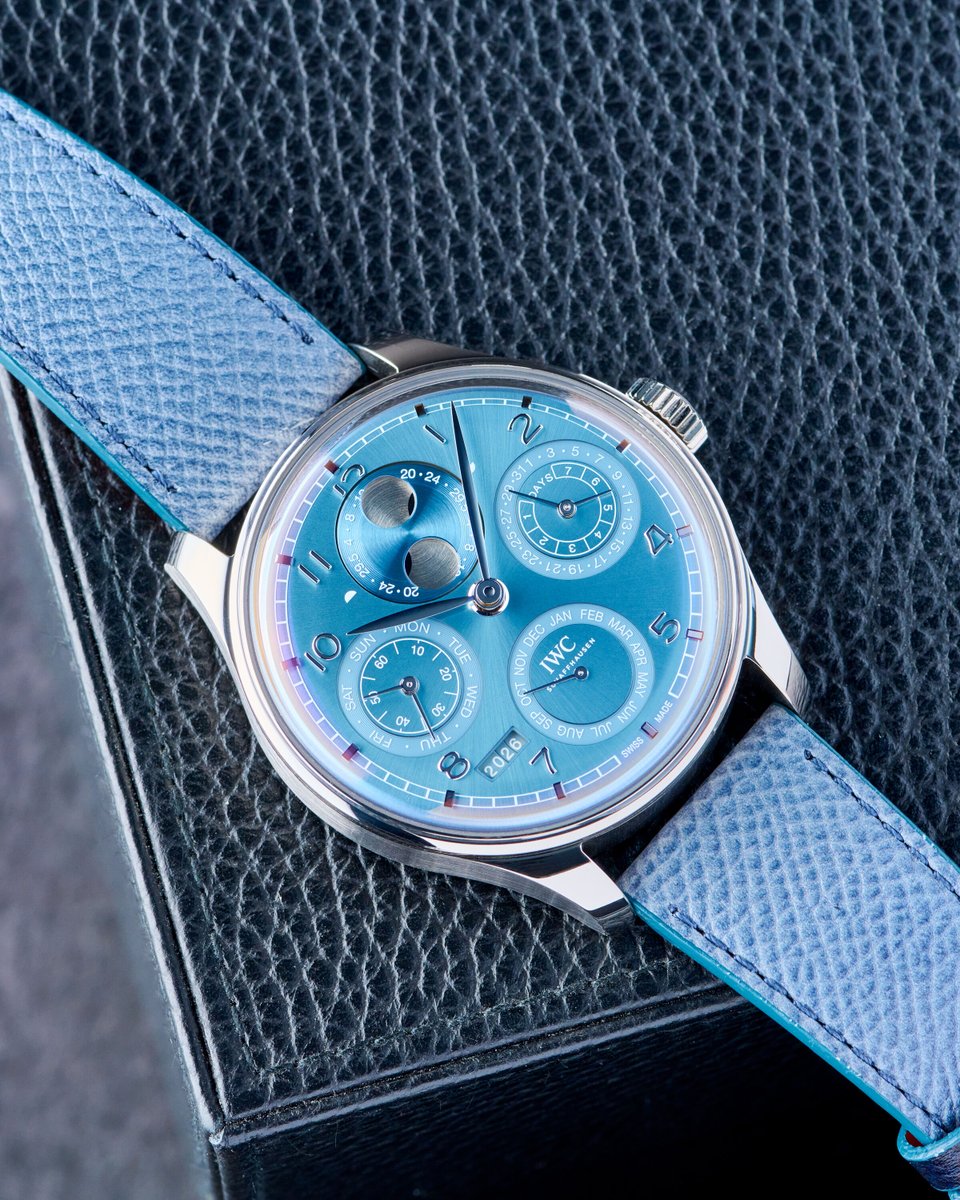
There are no pushers or correctors anywhere on this watch.
Every calendar function, the date, day, month, four digit year and both moons, is set through the crown alone. Kurt Klaus designed it that way in the early eighties, by hand, with a slide rule and paper models. It was the last movement IWC designed without a computer.
The whole perpetual calendar is 81 parts, packed into a module a millimetre and a half tall. The pocket watch perpetuals of the period needed more than twice that.
The slowest moving part in the watch is the century slide, which creeps forward just 1.2mm in a hundred years. The fastest is the balance, and in that same hundred years a point on its rim covers enough ground to go round the Earth forty times. Both of those are happening simultaneously inside this case.
Then there are two moons, showing both the northern and southern hemispheres, which will run for 577.5 years before it needs a correction. Guess we’ll just have to take IWC’s word for that one!
Coming to our website soon..
EP 22 of ranking EVERY watch brand
This was the easiest ranking we’ve done yet.
We’ve been saying Breguet is an incredible brand for years, and now collectors are catching on. Interest in the early pieces is surging, like the ref. 3050 perpetual calendar we had.
Breguet has modernized its design language without losing any of the heritage that makes a watch unmistakably Breguet. The team running it now is clearly on it.
Is Breguet S tier material? Let us know your thoughts below 👇
One half of this movement counts in sixths of a second. The other half counts in centuries.
Start with the split. Two seconds hands sit stacked on the same axis and sweep as one. Press the pusher at 10 and the top hand stops dead while the one beneath it keeps running, so you can take a reading without losing the count. Press again and it snaps back as if it had never left. The scale around the dial is marked to a sixth of a second.
The calendar lives at the opposite end of that scale. It knows the length of every month and every leap year, and will not need correcting until the first of March 2100, the year the Gregorian calendar skips its leap day. The moonphase holds to a single day of drift across 122.6 years. Lange publishes that figure to the decimal.
Of the 631 components in the movement, 206 belong to the split seconds chronograph, 211 to the perpetual calendar, and each mechanism runs on its own column wheel. It is basically two complete watches sharing one mainspring.
Lange took their time getting here. The L101.1 is their eighth in-house chronograph calibre. The Datograph and the Double Split came first, and only after those did they put a split seconds together with a perpetual calendar.
Both complications sit in a platinum case 41.9mm across and 14.7mm thick, which makes it thinner than the Double Split which is far less complicated. Seven openings in the case, three pushers and four recessed correctors, and from a foot away it still reads as an 1815.
The GPHG jury gave it the Grande Complication prize in 2013. The public vote went the same way.
Available now on our website.
A one-of-a-kind blue-dial Patek 5041G. The Krayon Anyday. A platinum Lange 1815 Rattrapante Perpetual Calendar.
And that’s just the first grid.
Swipe through this week’s 45-piece selection at EWC. Find your next addition at the link in our bio.
The most wearable Greubel Forsey we’ve ever had?
This is the Greubel Forsey Tourbillon 24 Seconds Vision, one of only 55 pieces made.
Case: 43.5 mm in rose gold and 16.1 mm thick, but it hugs the wrist and never feels bulky.
Sapphire bubble: Greubel made the case as thin as they could, so a sapphire bubble on the caseback makes room for the movement.
Dial: it’s a real dial, which is rare for a Greubel. The handset, the applied GF logo and the frosted movement finishing are all superbly done.
Usually you’re too busy staring at the technical wizardry to notice details like these.
Would you wear this one daily? 👇
The two golds on this case aren’t decoration. They’re a diagram.
The Code 11.59 case is an octagon suspended between a round bezel and a round caseback, which is the whole engineering idea and also the part that was almost impossible to see on the single metal versions. Here the octagonal middle is pink gold and everything round is white gold, so the construction finally reads from across a room.
The lugs don’t touch the middle section at all. Each one is soldered to the bezel by hand and then a polisher works the joint until the line disappears. They did it that way specifically so nothing would obstruct the octagonal shape of the midcase.
The column wheel that runs the chronograph is hidden directly underneath the flying tourbillon at 6 o’clock and shares the cage’s pivot. It is an arrangement that has been described as uncommon and possibly unique.
The gear train that drives the hands was moved into the top half of the dial to keep the view clear and ensure that nothing crosses the toubillon cage. In the space that freed up, Audemars Piguet fitted a pair of stacked, spring-tensioned gears that cancel the play in the hands when you set the time.
Fifty pieces, released first in Japan.
Available now.
Christopher’s favorite Patek Philippe isn’t the one you’d expect 🤫
The 3940 might be the most beautiful perpetual calendar ever made. Christopher’s pick, though, is the Patek Philippe 3939.
At first glance it looks like a simple time-only watch, with:
A 33.5 mm case
Breguet numerals
A clean white dial
Hidden inside are a minute repeater and a tourbillon. For such a small case, the chime sounds amazing.
It’s the ultimate sleeper watch. 🔔
3940 or 3939: which would you take? 👇