US regulators just handed Starlink Mobile more spectrum 📶
On Wednesday the Federal Communications Commission (FCC) approved SpaceX's purchase of three unused spectrum licenses from Tristar License Group. They cover 5MHz of uplink in the 1695 to 1700MHz band across 62 counties in eight US states, including Massachusetts, North Carolina and Virginia. SpaceX has to hit uplink benchmarks starting in November 2029.
Spectrum is the scarcest resource in wireless, and every block SpaceX adds brings Starlink Mobile closer to being a real fourth US carrier.
Tesla just filed for FSD approval in South Korea 🇰🇷
Tesla Korea sent its request for Full Self-Driving (Supervised) approval to South Korea's transport ministry this week, by email and registered mail. The filing came out today in a National Assembly audit, where Transport Minister Hong Ji-seon confirmed it had come in.
Right now about 77.6% of the 238,968 Teslas registered in Korea can't use FSD at all. Most of those, 183,407 cars, are China-built Model 3 and Model Y. Only US-built cars get FSD there, thanks to the US-Korea free trade agreement.
Korea is one of Tesla's hottest markets, and the owners who've been locked out are the vast majority. Lawmakers are now telling the ministry that since an application is on the table, it has to actually test the system instead of just saying no. If this goes through, it could switch on FSD for well over 180,000 cars in one go.
You can see the new Tesla Roadster in person this weekend 🚀
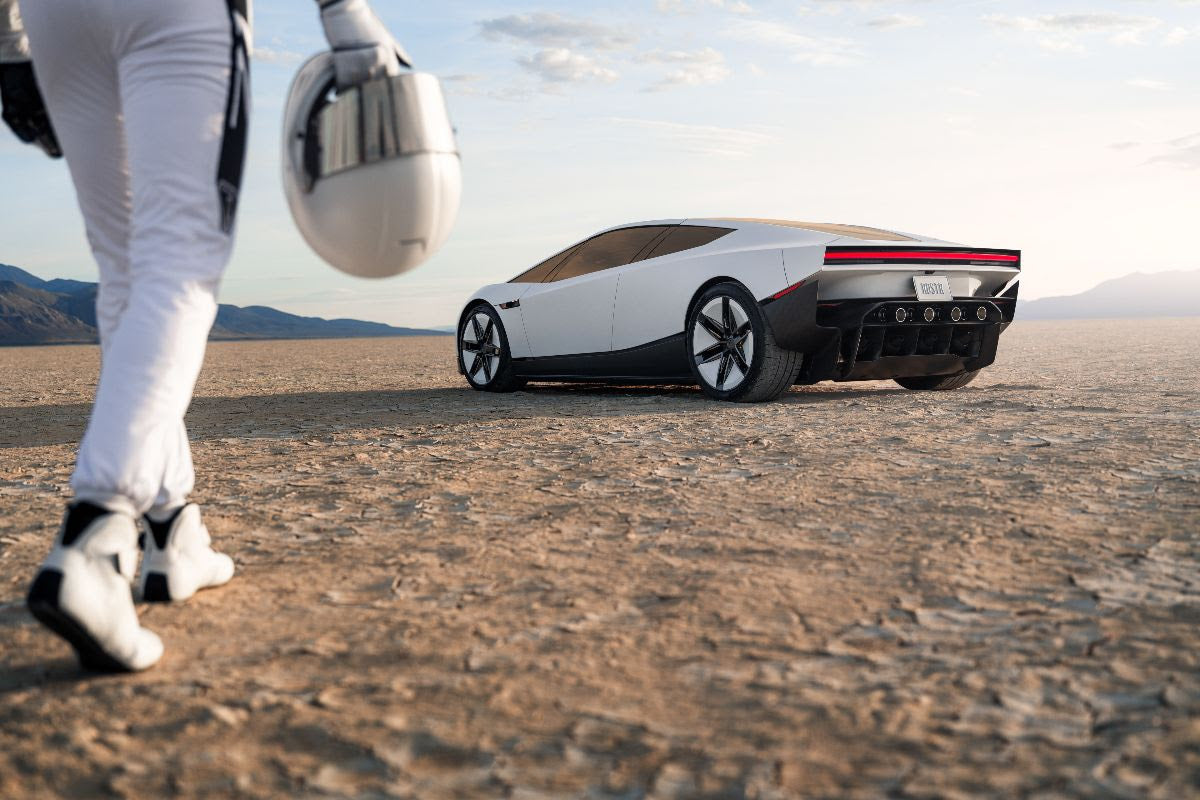
The same Roadster Tesla showed off at its October 15 reveal at SpaceX's McGregor, Texas site goes on display at the Petersen Automotive Museum in Los Angeles. It's there from Saturday, October 24 through Tuesday, October 27. This is the public's first chance to get up close to the car.
At the reveal, Tesla showed a prototype hopping into the air on cold-gas thrusters built with SpaceX, and another car driving upside down using fan suction. After a reveal that wild, seeing is believing, and now anyone in LA can walk up and look at the real car.
Grok is heading into India's IT giants 🇮🇳
Tech Mahindra, India's fifth-largest IT services company, is teaming up with SpaceXSI to bring the Grok Build coding agent into enterprise software work.
Together they plan to help large companies modernize legacy systems, speed up software delivery and raise code quality in banking, telecom, manufacturing, healthcare and retail. Tech Mahindra will also run Grok training and certification programs for engineers, and the two companies will sell joint solutions to clients.
Firms like Tech Mahindra maintain huge amounts of old business code for global clients, so this puts Grok right inside real enterprise workflows.
Starlink just reached a rural classroom in Uganda 🇺🇬
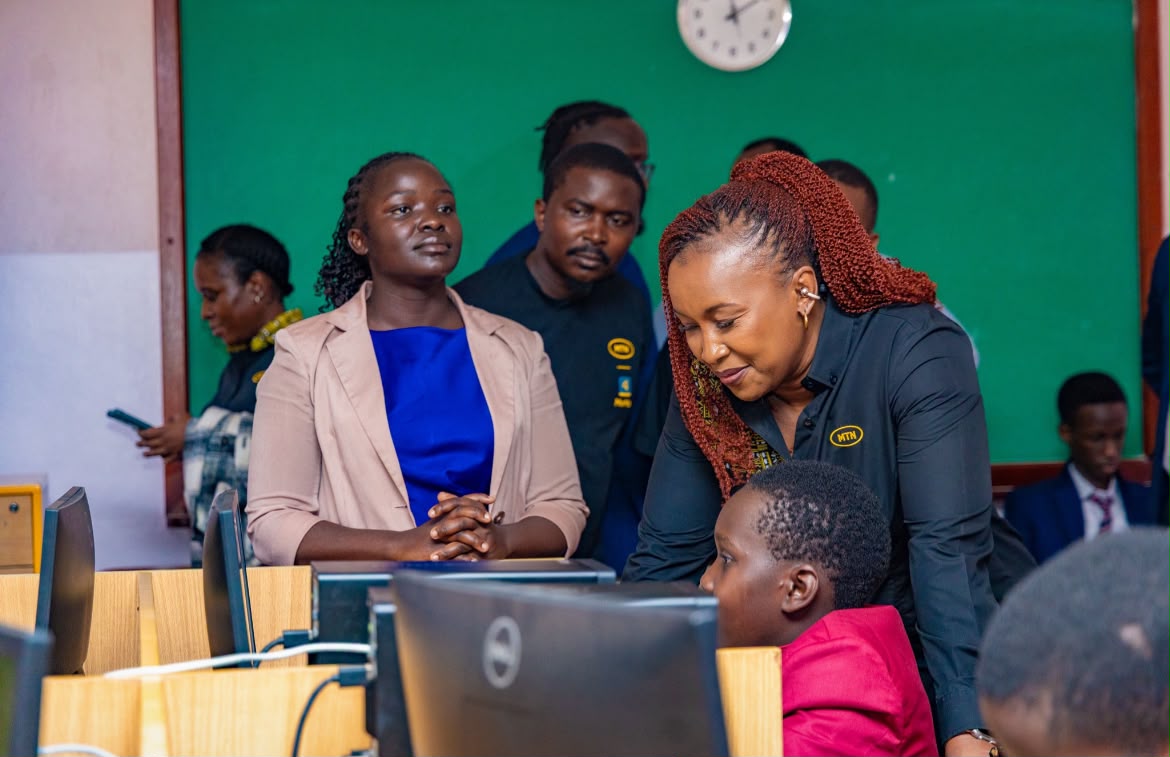
MTN Uganda, one of the country's largest mobile carriers, officially launched "MTN Starlink for Business." They chose to unveil it at Libra International School in Zirobwe, Luweero District.
Before Starlink, the school paid a lot for internet that didn't work well enough for teaching and research. The school's director says students can now do research much more easily, and the whole campus is connected, including the computer rooms. MTN is also offering the service to clinics, farms, tourism, energy and humanitarian groups working beyond the reach of fiber and cell towers.
Texas just said “YES” to Tesla's $10.1 billion solar factory ☀️
Fort Bend County commissioners near Houston approved every Tesla agreement on the table this afternoon. All four passed 4-0, with one abstention. That covers the property tax abatement, an economic development deal, and two payment-in-lieu-of-taxes agreements for "Project Crystal Sun," a planned plant that would make solar cells and full solar modules on about 3,000 acres.
Tesla's state filing projects 9,712 permanent jobs by 2033, with production starting in early 2029 if this site wins.
Tesla is clearly treating solar as one of its core businesses, not a side project. Bringing cell manufacturing back to the US at this size would be a big deal for energy independence. The state still has to sign off, and Tesla is still looking at sites in other states, but Texas is making a strong offer.
Belgium just turned an old coal plant site into a Tesla battery hub 🔋⚡
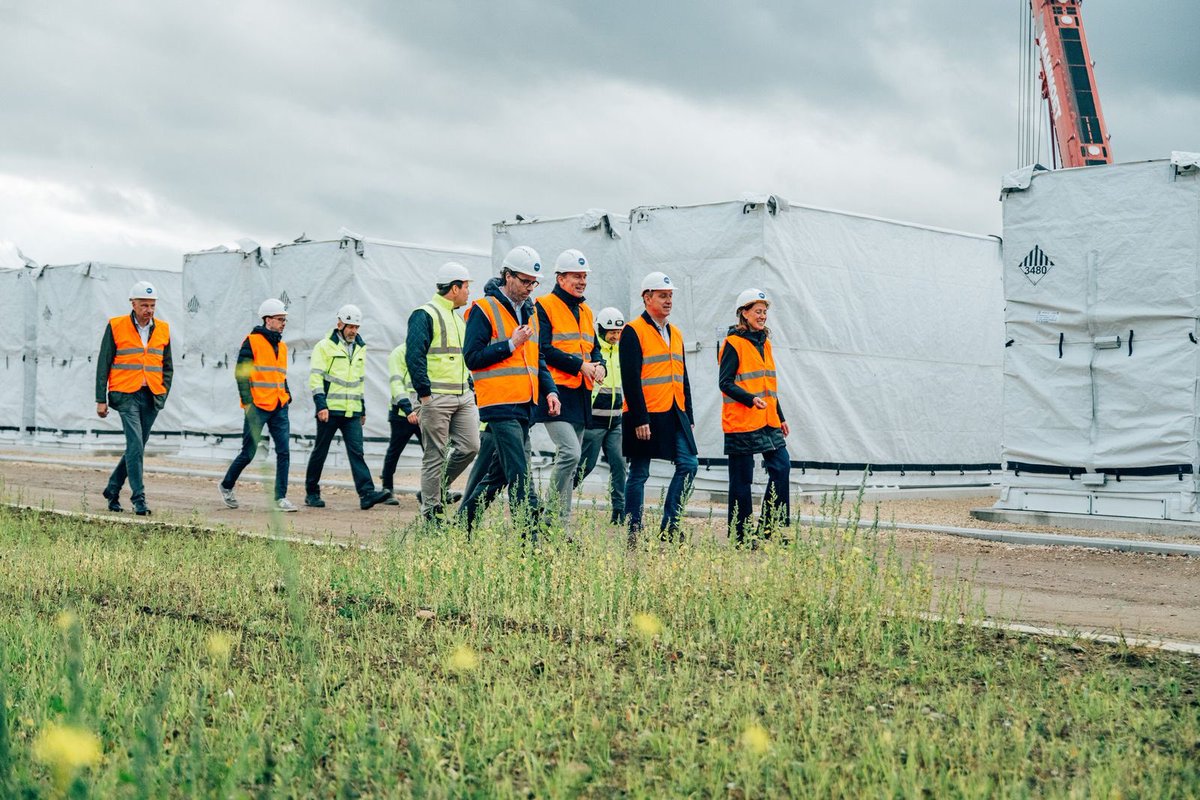
On the grounds of the former Langerlo power station in Genk, where coal was burned until 2016, energy company Storm has installed 106 Tesla Megapack 2XL units. Flemish minister Jo Brouns toured the site today. The park packs 100 megawatts (MW) of power and 400 megawatt-hours (MWh) of storage, roughly equal to 40,000 home batteries, and is set to go live in 2027. Tesla supplies and installs the batteries, while Eneco will run the park for 10 years.
The same grid connection that once carried coal power will now soak up extra wind and solar and release it when the grid needs it. Megapack keeps landing in Europe's biggest storage projects, and Tesla Energy is quietly becoming one of the company's strongest growth stories.
Starlink is heading to 25 rural classrooms in Kyrgyzstan 🇰🇬
Kyrgyzstan's government just handed Starlink terminals to 25 schools across the country, aimed at remote, hard-to-reach villages. Deputy Prime Minister Ulan Mamatkanov joined the handover. The equipment was donated free of charge.
The cabinet said this follows a satellite internet pilot launched in 2025, after which the country adopted rules allowing satellite connectivity to be used permanently.
US regulators just handed Starlink Mobile more spectrum 📶
On Wednesday the Federal Communications Commission (FCC) approved SpaceX's purchase of three unused spectrum licenses from Tristar License Group. They cover 5MHz of uplink in the 1695 to 1700MHz band across 62 counties in eight US states, including Massachusetts, North Carolina and Virginia. SpaceX has to hit uplink benchmarks starting in November 2029.
Spectrum is the scarcest resource in wireless, and every block SpaceX adds brings Starlink Mobile closer to being a real fourth US carrier.
Thanks to Starlink, five people stranded in the mountains of Kazakhstan were saved 🛰️
Their SUV broke down about 15 km from the village of Kystau Kurchum in the Kurchum district of East Kazakhstan. With no regular signal around, they kept in contact with the emergency service over Starlink. Rescuers drove an all-terrain Trekol about 100 km to reach them and escorted the car back to the village. Nobody needed medical help.
In remote mountain country, the hardest part of a rescue is often just knowing where people are and how they're doing. A dish and a clear view of the sky turned a dangerous night into a routine pickup. Starlink is quietly becoming standard safety gear wherever cell towers don't reach.
NEWS: A rural high school in Argentina just got connected to the world, thanks to Starlink 🛰️
Students and teachers at Provincial Oriented High School No. 33 in General Urquiza, in Argentina's Misiones province, now have working satellite internet on campus. The town government, the regional school supervisor and Marandú, the provincial state telecom company, worked together to make it happen. The school's principal called it "a door opening to the future."
For a rural school, getting online used to mean waiting years for cables or towers that might never come. A Starlink dish skips that wait entirely. These kids now get the same research and learning tools as students in the big cities.
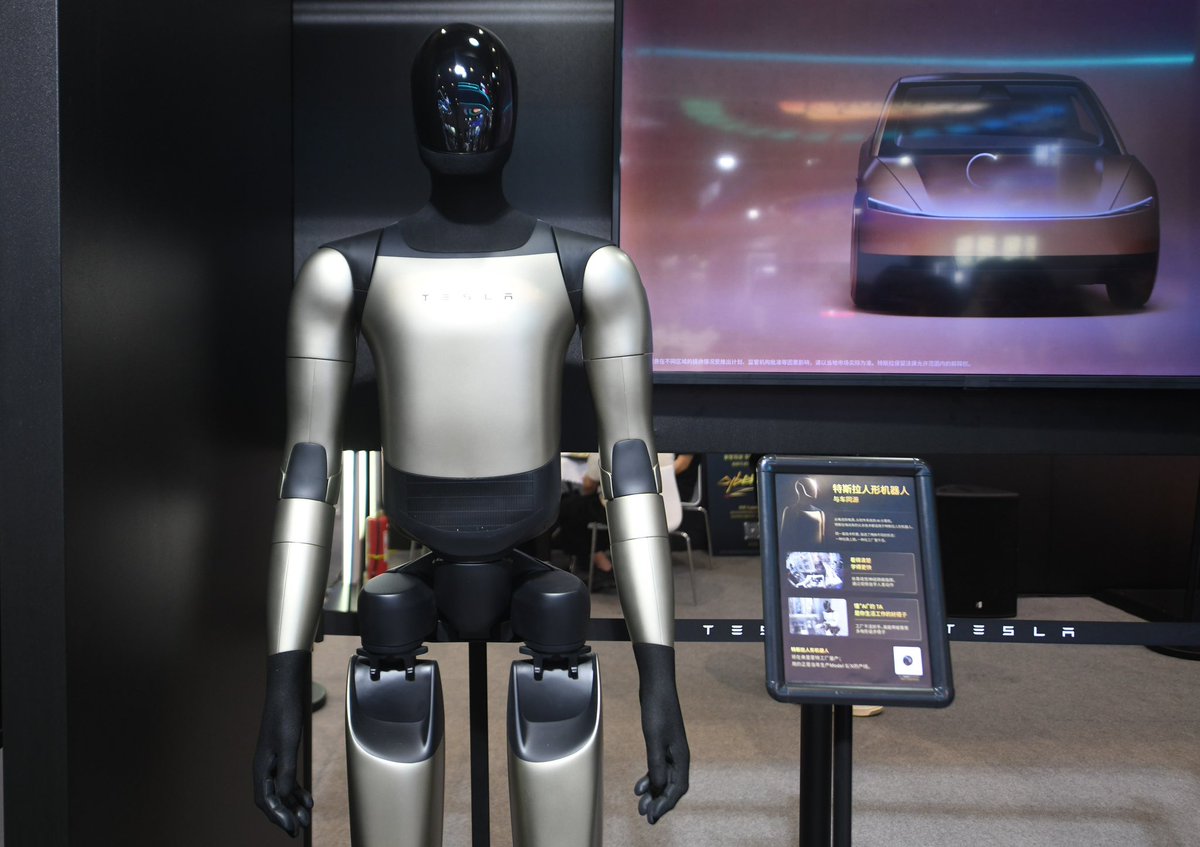
Tesla just started producing Optimus robots in Fremont 🤖⚡️⚡️⚡️
That line is buried in Tesla's Q3 2026 update, released after the bell today. Tesla says the robots coming off its new high-volume lines are the first production-quality Optimus units it has ever built, and that the process is proven suitable for a commercial product.
Summary on the Q3: • Revenue of $28.05B, flat year over year • Adjusted earnings per share of $0.48, beating the $0.45 Wall Street expected • $1.53B in positive free cash flow • Tesla Semi now in production on the high-volume line in Nevada • Full Self-Driving (Supervised) on over 75% of new North American deliveries, with 1.74M active subscriptions • Nearly 2 million unsupervised Robotaxi miles, now with Cybercabs in Austin • Megafactory Texas has started production
Wall Street will argue about margins all night, but the real story is that three new products moved from slides to factory floors in one quarter. Optimus, Semi and Cybercab are all being built now, not just promised. Tesla says battery supply, not demand, is what is holding volumes back, and a four-year-high backlog backs that up.
In 1995, having just finished his studies at Penn and arrived in Silicon Valley for grad school at Stanford, Elon Musk was convinced the internet would change the world, and he wanted nothing more than to work at Netscape, the company that seemed to be building that future.
He applied, waited, and never heard back.
So he went to Netscape's office and stood in the lobby, hoping to find someone he could talk to. Years later he admitted, "I was too scared to talk to anyone. So then I left."
It's hard to imagine now that the man who launches rockets and isn't afraid to argue with the whole world once stood in a lobby feeling too shy to say hello, but that's exactly who he was back then.
With Netscape off the table, Elon spent the summer writing code, and instead of starting at Stanford that fall he put grad school on hold and started his own company, Zip2, with his brother Kimbal.