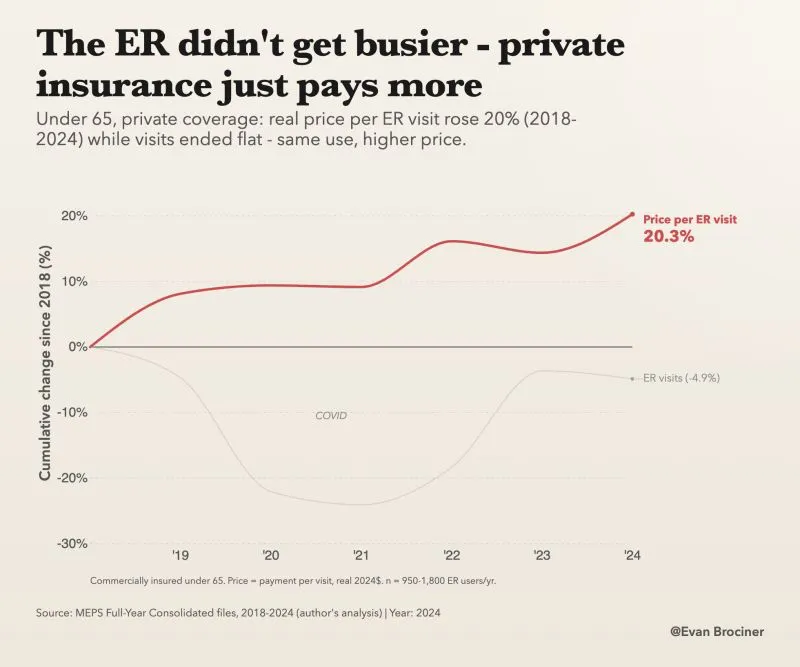
A hospital CEO lobbying for a merger was asked: will patients pay more?
His answer: insurers don't have to pass on higher prices. Then he was asked if he could name one insurer that doesn't. And... he couldn't.
Family premiums are up 24% in five years (KFF). ER prices up 20%.
I had a great conversation recently with Maggie Kane, the Executive and Founder of @tableraleigh. We discussed the success of @tableraleigh at building community and reducing food insecurity in Raleigh using a pay-what-you-can model. Read about it here: https://t.co/b4JqXCSeLy
Why is value-based care not a win-win for everyone?
@suhas_gondi, describes the negative health equity impact value-based care has on disadvantaged patients.
@suhas_gondi also answers would he would like the future of payment models to be.
Article:
https://t.co/w46i6OefLw
And will require not just continuous health reform but actual new economic and social policies that strengthen the safety net, narrow income and wealth inequality, and lead to a reversal of generational disinvestment in certain communities in our country.
I had the chance to ask @DusetzinaS, Ph.D prior to the Inflation Reduction Act's passing in the Senate her thoughts on the proposed policy changes and what she would like the future of medication pricing to be in the US.
Read about it here:
https://t.co/ulF8altiRk
The Inflation Reduction Act is a game-changer for Medicare Part D Reform.
The reform will:
* Empower Medicare to negotiate prices directly with drugmakers.
* Cap the amount that Medicare Part D recipients pay out of pocket for drugs each year at $2,000.
For my first newsletter article, I got the chance to ask what @oziadias would like the future of AI in medicine to look like. 3/3
Read my first newsletter article here:
https://t.co/O8EwCJAPrE
One of the things that I rarely see in the news is moving past the challenges we face in the day-to-day and taking a step back to get the long-term perspective of what experts in different fields would like the future to look like and how we should get there. 1/3
Telemedicine decreases clinic no-shows in some pediatric clinics. Not so much for those who are socioeconomically disadvantaged @JAMAPediatrics https://t.co/isxGMU8MOc
Paper I worked on as first author was just released. Race, Socioeconomic Disadvantage, and Missed Telemedicine Visits for Pediatric Patients During the COVID-19 Pandemic https://t.co/GRYwLd5hRp. Special thank you to @zakkohane and @kunhsingyu.
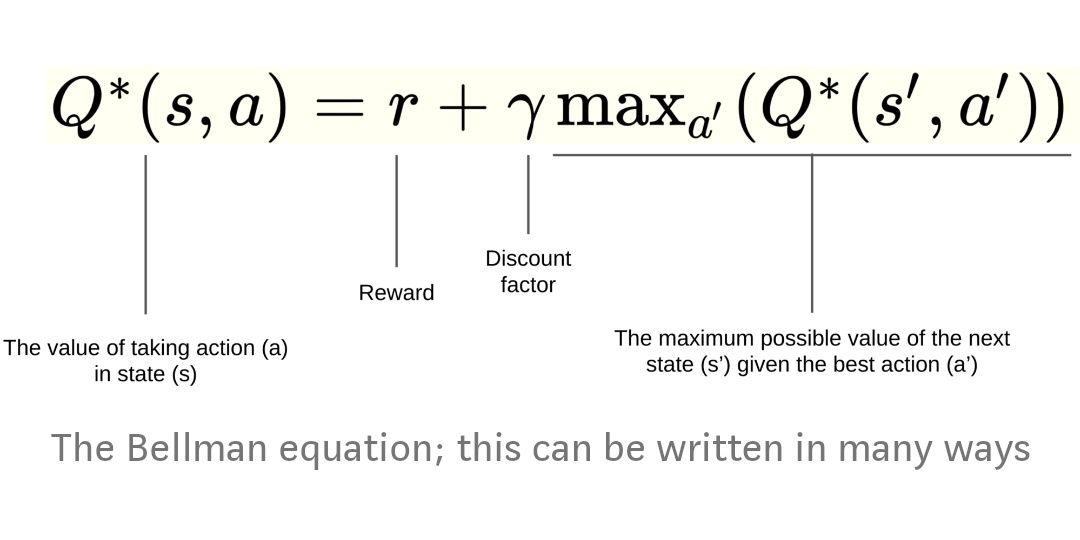
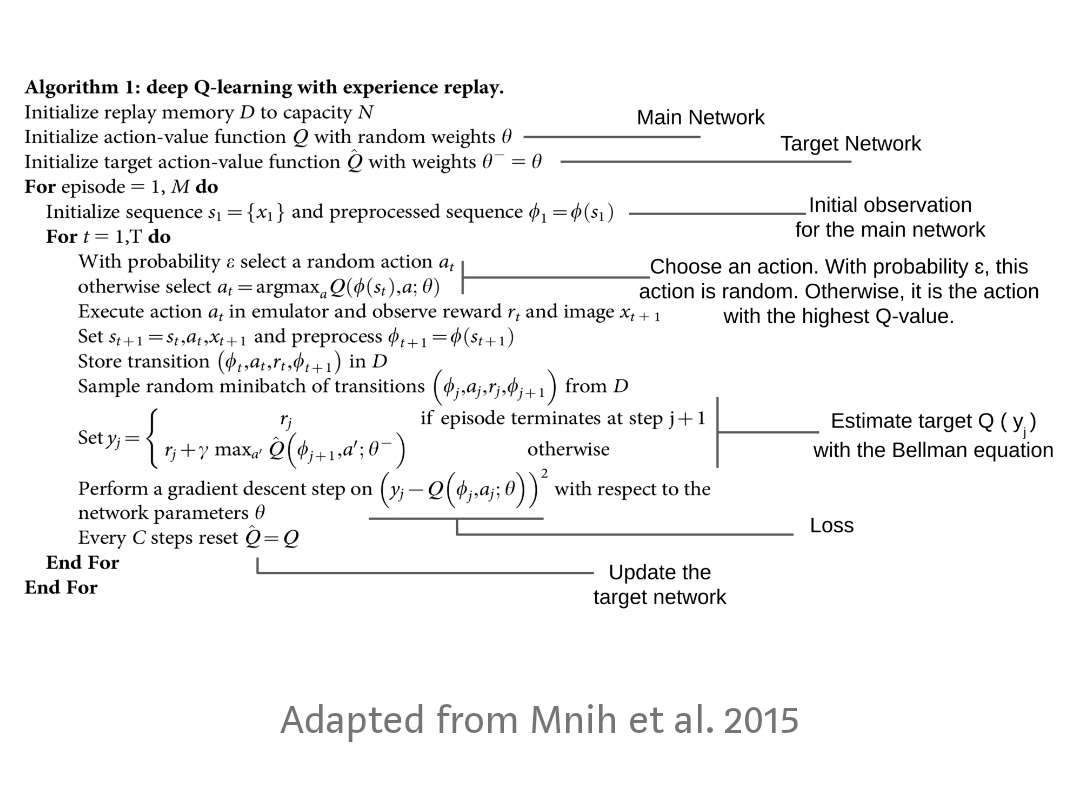
I'm absolutely in love with the mathematical and code annotations for this blog post on reinforcement learning! 😍✨
Building a Powerful DQN in @TensorFlow 2.0 (explanation & tutorial) by Sebastian Theiler https://t.co/wEQ87u4VbN
THRILLED to announce Philter, our new tool to deidentify clinical text. Now more than ever, safe & responsible sharing of #EHR data is needed to fight pandemics & disease, but text is hardest to share. @BeauNorgeot built a new tool w/ a great team! https://t.co/FVGF49ja3a
Our video AI system for assessing heart function is published today in @nature! We have also made available the full data set (>10k annotated ultrasounds) and code. https://t.co/qdbEDtR8QB