80-90% of transistors on next-gen AI accelerators could be forced idle at any instant due to thermal bottleneck. Our new white paper breaks down the dark silicon constraint and why advanced chip-level cooling is a compute multiplier — unlocking 2-3x more performance from the same silicon.
Read it:
https://t.co/yNRnHYXAS6
https://t.co/uBgA7JsJ9R
AI chips are no longer limited by how many transistors we can pack. They're limited by how much heat we can extract. Chip designers call it "dark or dim silicon". Here's why it matters for the next $3 trillion of AI hardware. 🧵
The non-obvious part: extra cooling on today's GPUs buys a few %. Designed into the next chip, it lets more silicon run, and compute rises almost 1:1.
Cooling is becoming a compute problem, not a facilities problem.
https://t.co/VPZHcA6cmm
AI chips are no longer limited by how many transistors we can pack. They're limited by how much heat we can extract. Chip designers call it "dark or dim silicon". Here's why it matters for the next $3 trillion of AI hardware. 🧵
It already costs compute.
The roadmap makes it worse. TSMC keeps adding transistors, but not the power savings to run them all at full speed.
On today's cooling, chips go "dim" and give up ~10–15% of what TSMC's 2028 node allows. Stack logic in 3D and it could reach ~1/3.
#NVIDIA's newest Vera #Rubin racks are 100% liquid-cooled through copper cold plates. Rising GPU power means more flow, pushing coolant toward the erosion limit. The catch -- that limit comes from plumbing, not cold plate data. Longest relevant test we found: ~1,000 h.
Learn about the water erosion and leakage risk in #datacenters.
https://t.co/YPPnO4Ebhe
We are excited to announce that Evaporion has been technically assessed “Awardable” for the DARPA ERIS Marketplace. Government customers can now select, negotiate and award our membrane-driven evaporative cooling for pulsed-power electronics: directed energy, radar and super compute use cases.
We are excited to announce that Evaporion has been technically assessed “Awardable” for the DARPA ERIS Marketplace. Government customers can now select, negotiate and award our membrane-driven evaporative cooling for pulsed-power electronics: directed energy, radar and super compute use cases.
Great demo day event! Thanks for UCSD Office of Innovation and Commercialization and Bow Capital for organizing the incubator program!
https://t.co/gCatCZH0NA
Great demo day event! Thanks for UCSD Office of Innovation and Commercialization and Bow Capital for organizing the incubator program!
https://t.co/gCatCZH0NA
Proud to be part of UC San Diego × Bow Capital’s inaugural dual-use incubator.
Evaporion is advancing sweat-inspired cooling to break thermal barriers for AI chips and defense systems.
More compute. Less cooling overhead.
https://t.co/BemXOQHQHm
Legacy air-cooled data centers run at PUE 1.55. Today's best liquid cooling still needs chillers at PUE 1.35. Our fiber membrane evaporator enables chiller-free operation at PUE 1.14 — all the while raising the thermally-throttled Silicon compute celing by 30-50%.
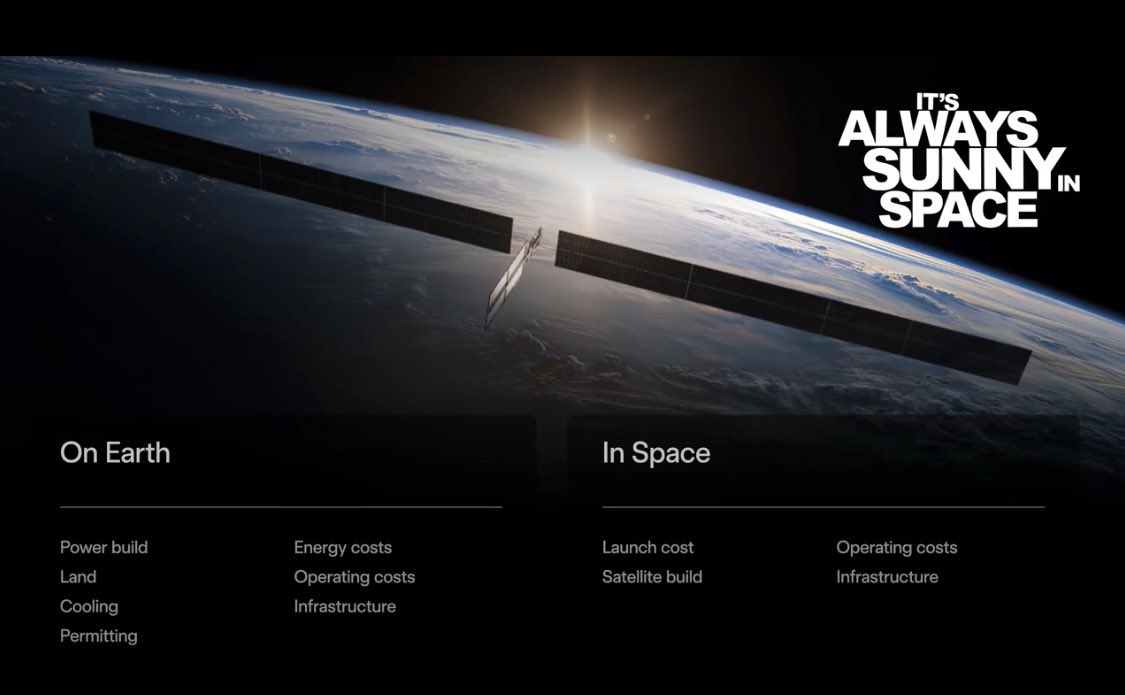
Jensen Huang announced that NVIDIA is officially expanding its data center into space.
"It's going to start data-centers out in space. Of course, in space there's no conduction, no convection, there's just radiation, so we have to figure out how to cool these systems out in space, but we got lots of great engineers working on it."
---
Full video from 'Nvidia' YT Channel
youtube. com/watch?v=jw_o0xr8MWU