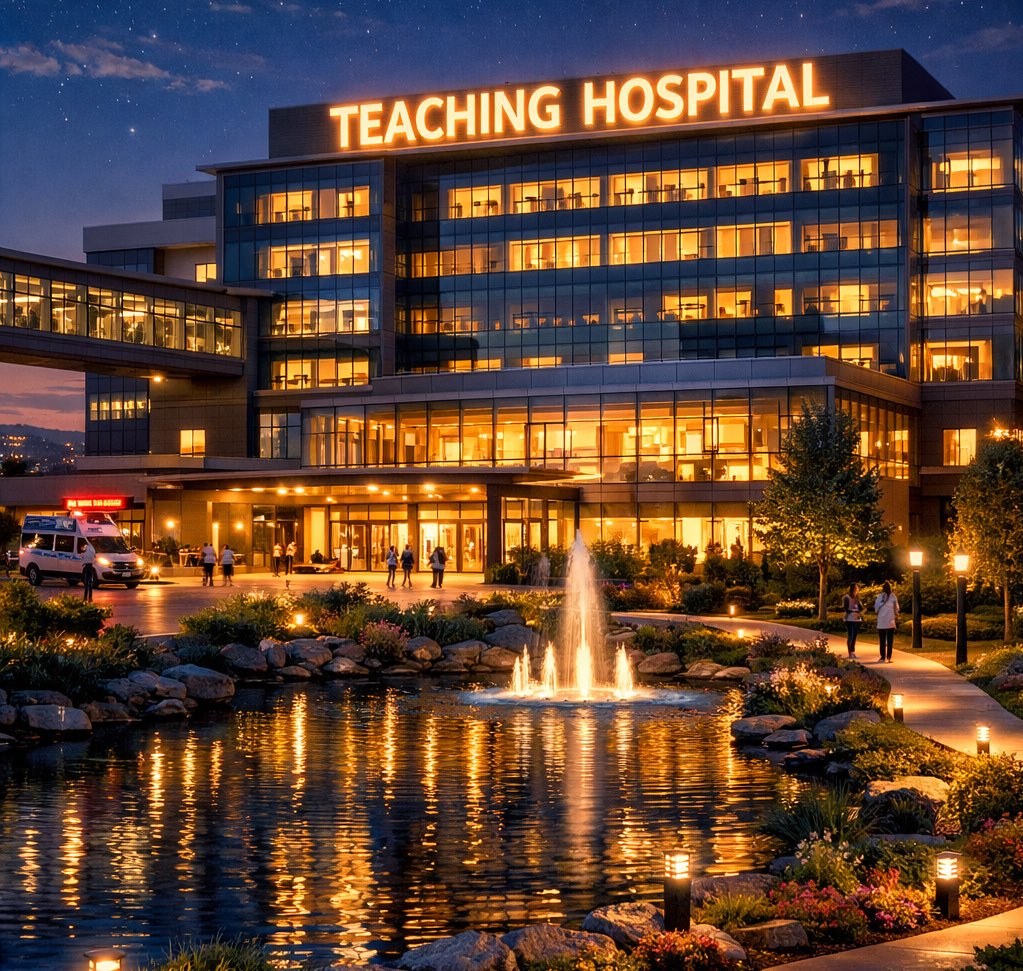
I’ll Expose Something that’s been hidden today. The secret No one wants to let out, It’s a long read but you’ll understand why.
Nigeria’s healthcare system needs reform. Not cosmetic reform. Not committee-after-committee reform.
Real reform. Structural reform. Urgent reform.
And at the centre of this collapse is something we don’t talk about enough:
the teaching hospital system.
It has been bastardized. Quietly. Gradually. Almost politely.
And people are dying because of it.
Let’s slow down for a moment.
A teaching hospital, in its true sense, is not just another big hospital with many buildings.
It is supposed to be the final referral point in the health system.
The place where the most complex cases go.
Where specialists teach.
Where research informs care.
Where time, depth, and thinking matter as much as drugs and procedures.
Ideally, a teaching hospital should sit at the peak of a pyramid:
•Primary Health Care handles common, simple conditions
•Secondary (general) hospitals manage moderately complex cases
•Teaching hospitals deal with rare, severe, complicated, or poorly understood problems
That is the theory.
Now, let’s be honest about the Nigerian reality.
In Nigeria, teaching hospitals spend the bulk of their time doing what primary and secondary facilities were created to do.
Very uncomplicated cases.
Cough and catarrh.
Simple diarrhoea.
Uncomplicated urinary tract infections.
Normal labour with no risk factors.
Patients stroll straight into teaching hospitals for issues that should never be there in the first place.
The result?
Doctors, nurses, and trainees are overwhelmed.
Clinics are overcrowded.
Wards are congested.
Emergency rooms are flooded with non-emergencies.
By the time the real teaching hospital cases arrive, the system is already exhausted.
And this is the most painful part.
When the complex cases come, the ones that actually require:
•prolonged clinical reasoning
•multidisciplinary discussions
•careful review of literature
•tailored, patient-specific management
…the doctors are already physically tired.
Mentally drained.
Emotionally worn out.
So what happens?
Care becomes rushed.
Teaching becomes shallow.
Research becomes an afterthought.
And patients who needed the highest standard of care receive something less than optimal.
Not because doctors don’t care.
Not because they are incompetent.
But because the system has set them up to fail.
A teaching hospital is supposed to be your last bus stop.
The place where nothing is too complex.
The place where a single patient can be discussed for hours if needed.
The place where someone can say, “Let’s go back to the literature,” and actually have the time to do it.
That vision is largely lost in Nigeria.
What we have now are teaching hospitals functioning like overcrowded general hospitals, just with more titles, more stress, and higher expectations.
And people are paying for this failure with their lives.
If we are serious as a country, we must rebuild the referral system.
Strengthen primary health care.
Make secondary hospitals functional and trusted.
Enforce proper referral pathways.
Until that happens, teaching hospitals will remain overwhelmed, diluted, and dangerous in ways that are not immediately obvious.
This is not noise.
This is not complaining.
This is a warning.
Reform Nigerian healthcare.
And do it now.
This is the minister in charge of cyber crime in Ghana. Recently one of the biggest online fraudsters in Ghana was arrested by the FBI.
Just listen to the clarity of thought and the seriousness of purpose. Now compare to that blind eagle in red jacket.