The ruins of the Roman Bridge at Ain Diwar, in the far northeast corner of #Syria, are covered in stone carvings of zodiac signs and other astrological symbols.
Curious about other historic and tourist sites in northern Syria? Read here: https://t.co/a4ruY1Hpcu
"Qubbab Fransi," or the French Domes of #Raqqa, stands as a symbol of the French occupation, during which the buildings were used as a military brothel.
Want to know more about northern #Syria's historic sites? Read here: https://t.co/hnFa3594sa
The mangled remains of cell towers, schools, and civil institutions is all that's left of #Zargan after constant shelling by Turkish-backed armed groups. The town is nearly empty as civilians flee shelling on their homes and shops.
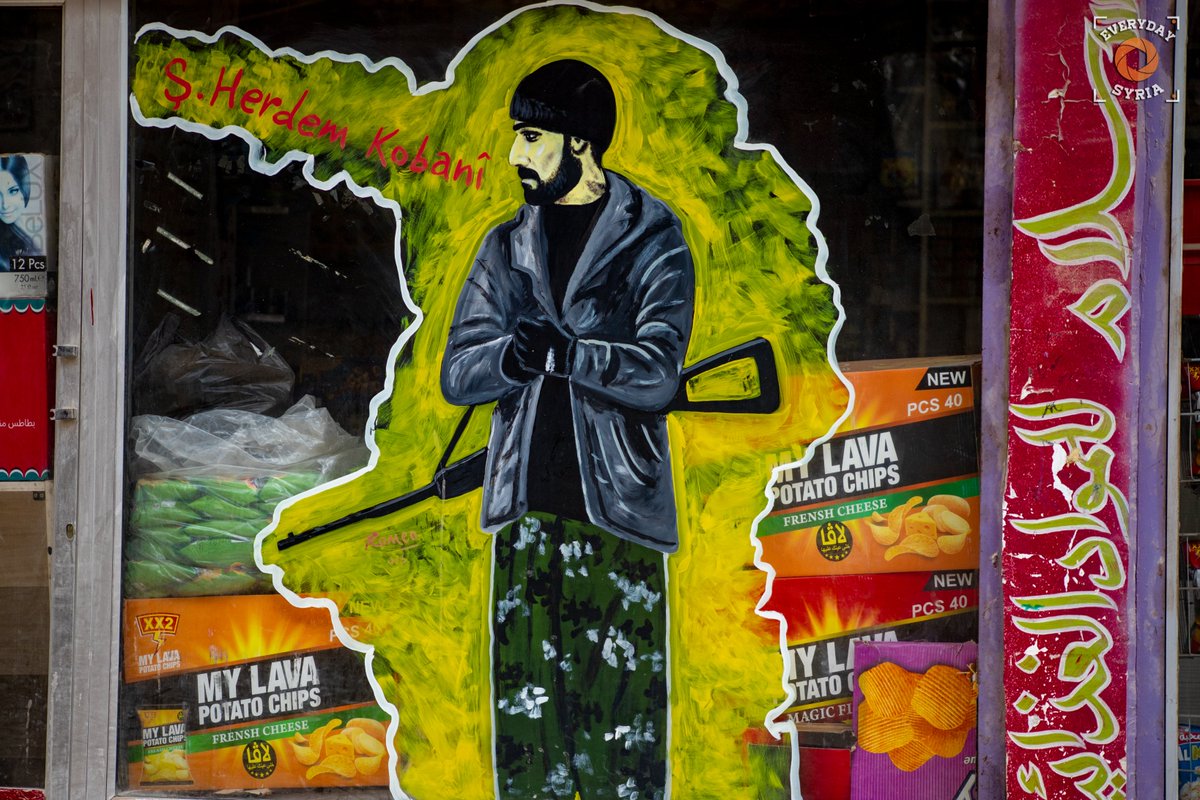
A mural of Musa Herdem, a prolific sniper from Iranian Kurdistan, is displayed on a shop window in #Kobani. Herdem was well known for his participation in the defense of Kobani as part of the #YPG, and was killed in battle on April 7, 2015, the day the city center was liberated.
Qesr al-Banat, or Palace of the Ladies, is an historic site in #Raqqa. Its origins and purpose have been debated, though most agree it was built during the reign of the Abbasid Caliph Harun al-Rashid, possibly as his summer residence.
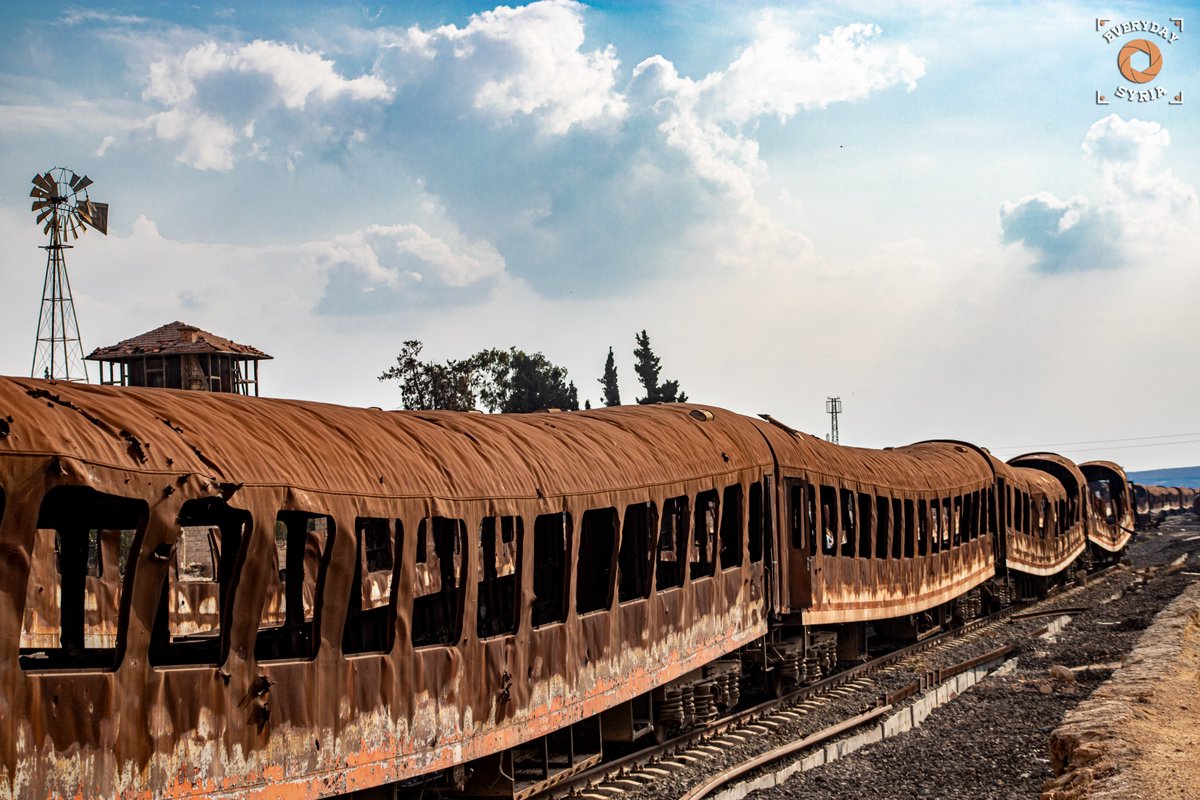
Rusted-out train cars are all that remains of the once-bustling train station in the Shahba region, north of Aleppo, which is now surrounded by Turkish-backed armed groups and Syrian government forces.
The Halabiye and Zelabiye castles were fortified by Queen Zenobia of the Palmyrene Empire in the 3rd century CE. They sit on opposite banks of the Euphrates River near Deir ez-Zor.