The Model for Great Teaching offers a curriculum for teachers’ professional learning.
It provides a common professional language and a shared structure for enabling Great Teaching.
"Having words for important concepts enables community members to talk about them, think together and agree on their meaning, interrogate them for deeper understanding and gain collective clarity around related action and impact."
Language for learning leadership
Stoll (2020)
Which Element will you focus on first?
Let us know in the comments below! 👇
What does inclusion in a classroom really look like?
In our recent webinar on inclusion in education Dr Haili Hughes Associate Professor at La Trobe University, joined Stuart Kime to discuss what inclusion can look like in everyday classroom practice and how teachers can think more carefully about the choices they make.
In this clip, Haili uses cold calling as an example. Rather than asking whether a teaching technique is simply “inclusive” or “not inclusive”, she suggests asking more useful questions:
What is the purpose of the technique?
Which pupils might be disadvantaged by it, and why?
How can we reduce unnecessary barriers while preserving the part that supports learning?
It’s a helpful shift away from thinking about inclusion as a list of strategies to use or avoid, and towards making thoughtful, purposeful adaptations based on the pupils, the content and the learning goal.
Catch the full webinar here: https://t.co/NQB6n2ugdR
Also available as a podcast.
How have you used the feedback tools in the Great Teaching Toolkit this year?
We asked Ruth Stead, Assistant Head at Netherhall School part of the @WELLPartnership, how they have used the feedback tools in the Toolkit to develop their teaching practice.
Find out more about the platform here https://t.co/xeAFZsiKNi
What have been the positives of using the Great Teaching Toolkit at your school?
Jordan Gale, Headteacher and Chloe Evans, Deputy Headteacher at Fairfield Primary School part of the @WELLPartnership share their experience of using the Toolkit within an academic year.
Find out more about the platform here https://t.co/RfbmzXR6Ta
What was the reason you chose the Great Teaching Toolkit?
We asked Dr Michelle Henley, Senior Deputy Headteacher at Cockermouth School, part of the @WELLPartnership, what prompted them to use the Toolkit to develop their teaching practices.
Find more about the platform here https://t.co/GUwiHMA4cU
We Need a Revolution in Professional Learning
Not because teachers need more to do, but because professional learning deserves to be treated as the core work of improvement.
In this new paper by Professors @ProfKime and @ProfCoe they make the case for a different approach: one that protects time, builds expertise and looks carefully at whether professional learning is improving practice.
Download your copy
https://t.co/9GLpayArZu
What we can learn from the Great Teaching Toolkit’s Survey Data
"We know schools have been particularly interested recently in exploring inclusion and belonging so this summer I took a look at response data from inclusion-related GTT survey items from over 127,000 student surveys, nearly 600 peer surveys, and some 2,000 teacher self-reflections"
In this blog Rachel Conlon-Bose Research Statistician here at Evidence Based Education, analyses GTT survey data and reveals what we've learned about belonging and inclusion
https://t.co/ouVP5o8DEa
By 31 December 2026, mainstream schools in England receiving the Inclusive Mainstream Fund must publish an Inclusion Strategy Statement.
But what should this strategy include, and how can schools make it a plan that delivers long-term value and benefits the greatest number of learners?
In this webinar with @ProfKime and Victoria Gardiner-Earl, Deputy Director at @NcleRSN they explored this new strategy requirement and explained what an Inclusion Strategy Statement is, what schools are expected to include in it, and how it connects to the seven principles of inclusion set out by the Department for Education.
We also focused on one of the most powerful ways schools can use the Inclusive Mainstream Fund: sustained, evidence-informed professional learning that strengthens high-quality, adaptive teaching.
The DfE explicitly identifies professional development focused on improving classroom teaching as an appropriate use of the fund, so we'll look at how schools can connect their pupils' needs and barriers to learning to high quality professional learning, and how they can make that case clearly and defensibly within their strategy.
Watch the full webinar here https://t.co/IW1nN3CPzG
We Need a Revolution in Professional Learning
"...A profession built around learning should be much more serious about the learning of its own professionals. We would not accept a model of student learning that was occasional, one-size-fits-all, poorly sequenced and barely assessed. Yet that is too often what we offer teachers."
In this new paper by Professors @ProfKime and @ProfCoe they make the case for a different approach: one that protects time, builds expertise and looks carefully at whether professional learning is improving practice.
Download the paper here 👇
https://t.co/rRRagesYrz
How have you and your colleagues been using the Great Teaching Toolkit this year?
Laura Todhunter, Head of School at Braithwaite C of E School which is part of the @WELLPartnership, gives us an overview of how the they have been using the GTT this year.
Find out more about the platform here https://t.co/Q69DxEh9lA
We are building a classroom observation tool
"Have you sat at the back of a colleague’s lesson and formed a judgement about how good it was? It feels valid. Experienced teachers surely know good teaching when they see it.
The evidence says otherwise, and it is worth exploring. When trained observers using rigorously developed protocols watch the same lessons, their agreement is often only modest..."
Read what's coming here https://t.co/TdENMvBS6s
What do we mean by inclusive teaching?
@ProfKime explains in this short video, taken from the first Chapter of our new Inclusive Education course: Same ambition, better access.
Our new Inclusion course, available within the Great Teaching Toolkit, explores how teachers can maintain ambitious goals for every learner while noticing, reducing and removing barriers to learning and participation.
It’s part of our wider approach to inclusive teaching, grounded in a simple belief: Great teaching is inclusive teaching.
Explore the course, feedback tools and practical support for inclusive teaching 👇
https://t.co/wj0q1fgPzH
We Need a Revolution in Professional Learning
"For many teachers, school leaders and college leaders, professional learning is still far from what it could be. It is often treated as an extra thing: fitted into INSET days, twilight sessions, one-off workshops, or whatever time remains after the urgent business of school and college life has taken its share.
It is too often generic, episodic, weakly connected to teachers’ real work, and rarely evaluated in ways that tell us whether it has changed teacher expertise, classroom practice or student learning. That should trouble us...."
In this new paper by Professors @ProfKime and @ProfCoe they make the case for a different approach: one that protects time, builds expertise and looks carefully at whether professional learning is improving practice.
Download the paper here 👇
https://t.co/7mOSohvnR0
Speaker applications are now open for the Festival of Education 2027!
This is a chance to share an idea, experience or piece of practice that others could learn from, whether that’s from your classroom, your school or your professional learning.
As strand partners we will have a dedicated Great Teaching Strand at the Festival. You can add a note in the additional information section to say you’d like to be considered for the strand. If your application is successful, you may be selected to join us!
And if presenting feels like a new step for you, don’t let that put you off. We’re pleased to be joining BAMEed and the Festival of Education Advisory Board to offer mentoring support to successful applicants who would value some help developing their session.
📅 Deadline: 1 November 2026
Find out more and apply here: https://t.co/HzjvbktbaE
Professors @ProfCoe and @ProfKime joined The Community Connection podcast with Eric Worcester, Nathaniel Provencio and guest co-host @S_Oberle to discuss why we need a revolution in professional learning based on our newly released paper.
They make the case for a different approach: one that protects time, builds expertise and looks carefully at whether professional learning is improving practice.
Watch the whole conversation here https://t.co/YzKaCvcAJb
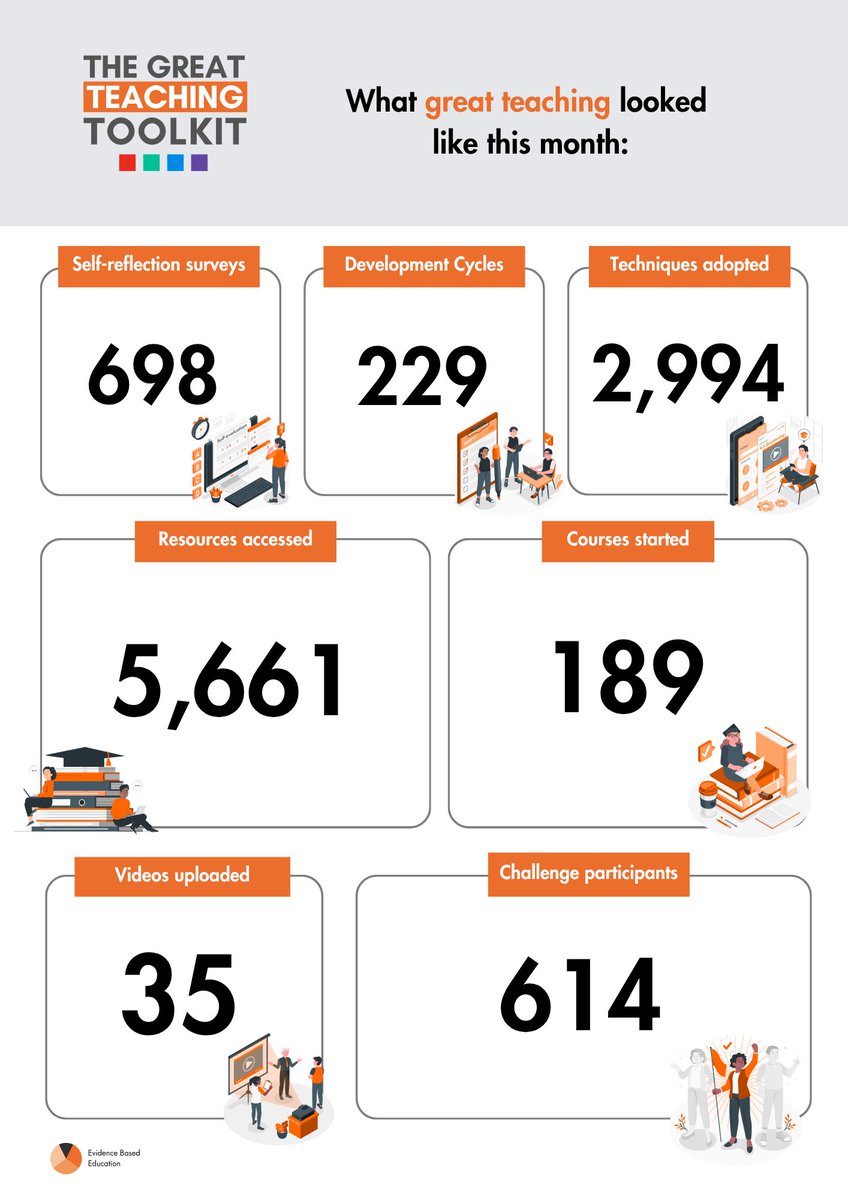
What does great teaching look like in practice?
This is what our Great Teaching Toolkit member schools have been doing this month:
• 730 self-reflections shaping practice
• 663 development cycles driving improvement
• 2,227 evidence-informed techniques adopted
• 4,089 resources accessed
• 1,189 courses started
• 11 feedback videos uploaded by educators
Find out more about the Toolkit and what it can do for you here
https://t.co/3tAGxwryih
Whole-class feedback: when and why to use this technique?
"Whole-class feedback has been very well received, especially across schools in England in the last decade. It’s no surprise that teachers have embraced this approach to feedback.
It is a time-efficient and workload-friendly method of providing feedback to multiple learners, either in groups or as a whole class.
The teacher reviews a class set of work, such as written tasks, assessments or practice exercises, and provides actionable feedback to everyone rather than writing individual comments on every piece."
Blog by @KateJones_teach
https://t.co/vcr8CGzgqd
School improvement is complex. Professional learning shouldn’t add to that complexity.
But even the most well-intentioned professional learning can leave teachers asking:
“Where do I even start?”
“How will I know it’s working?”
“What’s the best focus for me?”
That uncertainty costs time and impact.
That's why we made a major update to the Great Teaching Toolkit learning platform to include:
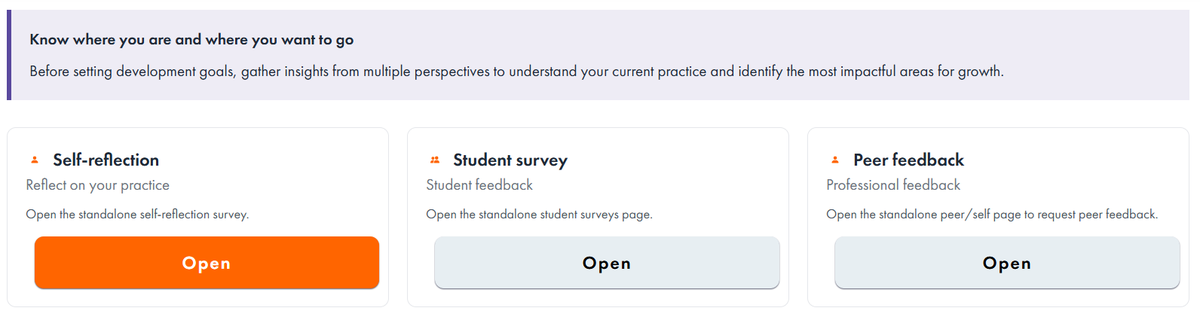
🗣️ 360° feedback: student, self-reflection and peer surveys, all providing feedback aligned to the Model for Great Teaching
✍️ Recommended techniques based on your chosen goal.
🏫 Step-by-step guides to implementation.
📝 Guides for adapting techniques to develop adaptive expertise.
Speak to one of the team for a demo https://t.co/7mPTbhmiqm
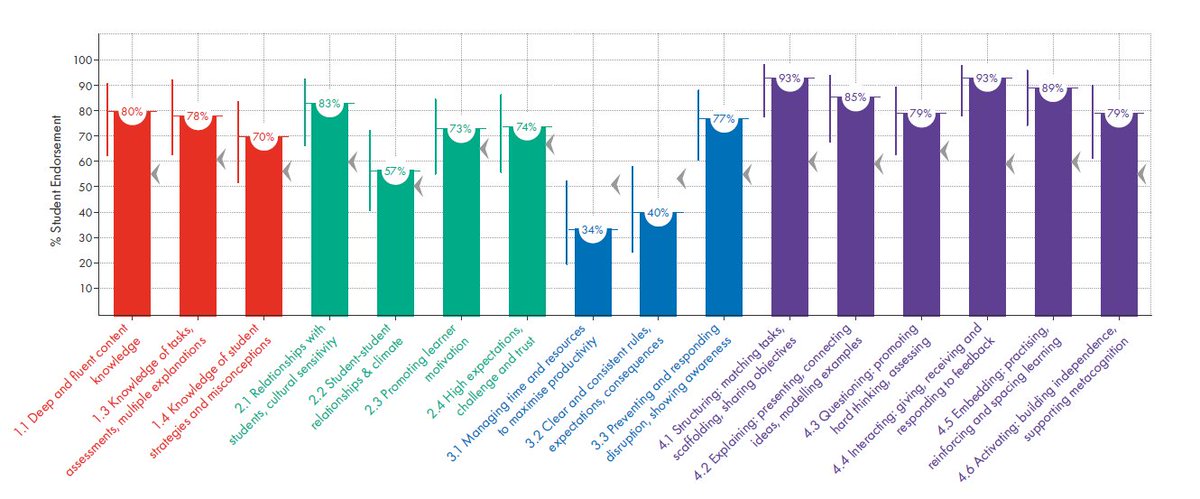
"Sometimes it feels like my teacher spends a lot of time managing behaviour"
How do you think your students would respond?
Generate insights into behaviour and the classroom environment in under 10 minutes with student surveys.
Find out more here 👉 https://t.co/ngBXaQoLeh
"The Great Teaching Toolkit: A Catalyst for Coaching"
Parkside Academy has been using the Great Teaching Toolkit for almost 2 years.
In this blog they offer a valuable insight into how the Toolkit has supported the development of high-quality coaching across the school.
First published in Issue 17/March 2026 of the Advancing Teaching & Learning journal by Advance Learning Partnership.
Read their full story here https://t.co/wKt3ENUjak