I’m not “most” of any. I’m studying and reading about church history.
I’m currently working on an article about the miracle of Fatima which took me down the path of reading the history of how Mary became a thing , how the rosary was introduced.
Maybe others are not interested in, which is fine. Salvation is by grace through faith, not knowledge of the church history.
@doran_oancia The Church recognized the apostolic writings; it didn’t breathe them out. God did.
And Catholic there is carrying a lot more weight than you should put on it. That's a another debate.
@patristicpill Every statue is not an idol. What people do with it is a different story.
God commanded decorative images. He did not command Israel to bow to them, pray to them, kiss them, carry them in procession, or ask them for intercession.
Repent of idolatry.
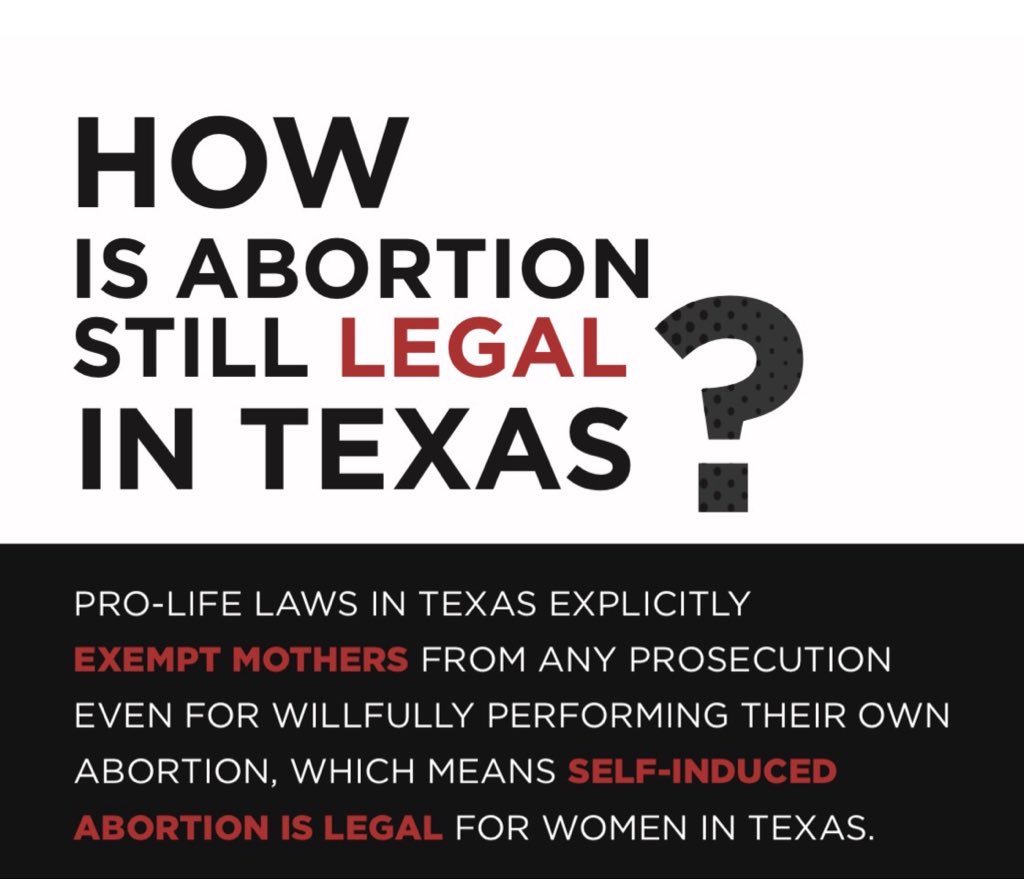
@StudentsforLife No equal protection under the law.
Women can kill their babies without repercussions. That's why your laws have failed. It increased the number of abortions.
Asking my friend is Biblical.
“Therefore, confess your sins to one another and pray for one another, that you may be healed.”
Asking dead people to hear you and intercede is unbiblical.
“For there is one God, and there is one mediator between God and men, the man Christ Jesus.”
On Judgement Day if I am wrong:
God: "Why did you not pray to saints and Mary?"
Me:" My Father, the Scripture doesn't say to do so. Please forgive me"
God:"Fair enought"
On judgment Day if Catholics are wrong:
God "Why did you make statues of MAry and pray to her and Saints?"
Catholic:"My Father, the Scripture doesn't say not to do such thing"
God: “You shall have no other gods before me. You shall not make for yourself a carved image… You shall not bow down to them or serve them.” Exodus 20:3-5
My objection is that Scripture never commands Christians to pray to Mary, invoke saints, bow before their images, or give Mary a special category of religious devotion. Renaming the practice does not prove the practice is biblical.
The government tried to redefine the word "vaccine" to excuse COVID transmission.
I do not submit or accept Catholic made definitions.
Salvation can take more than one form. You can be given medicine after becoming sick, or you can receive a vaccine that prevents you from becoming sick in the first place. Either way, it is the physician who saves you. In the same way, Christ saves Mary not by removing her sin after the fact, but by preserving her from it from the very beginning.
@Burgess7281975 “Behold, your mother!” was addrssing to John, not as a command for all to follow. Jesus is caring for Mary by entrusting her to John.
Clearly in the context with the next verse.
“And from that hour the disciple took her to his own home.”
The early Christians met in homes, caves, and borrowed rooms. Their worship wasn't less pleasing to God because it lacked stained glass and flying buttresses.
Beauty can point people to God. It can also distract from Him. The same is true of simplicity. Neither guarantees true worship.
Medieval Catholics did not build Gothic cathedrals because they liked expensive decoration. They were making a theological claim in stone and light.
In the 12th century, Abbot Suger rebuilt the choir of Saint-Denis near Paris. The result helped launch what we now call Gothic architecture: height, pointed arches, stained glass, and light arranged around worship.
That matters because Suger understood beauty sacramentally. Created light could lift the mind toward uncreated Light. Material splendor was not a distraction from God. Properly ordered, it trained the soul to look beyond matter.
Modern materialism says matter is all there is. The medieval Catholic imagination said matter can become a ladder. Stone, glass, color, music, incense, gesture, and silence can all be ordered toward adoration.
This is why sacred beauty is not optional. Ugly worship teaches. Beautiful worship teaches too.
One teaches that God gets our leftovers.
The other teaches that all creation is meant to become praise.
The early Christians met in homes, caves, and borrowed rooms. Their worship wasn't less pleasing to God because it lacked stained glass and flying buttresses.
Beauty can point people to God. It can also distract from Him. The same is true of simplicity. Neither guarantees true worship.
Context is really cryptonite to Catholic talking points.
Jesus is caring for Mary by entrusting her to John:
“Woman, behold, your son!”
“Behold, your mother!”
Context is personal care, not a command that we shall all must treat Mary as our spiritual mother.
His post also challenges to point to anyone that called Mary as their mother. John did not do that.
I think we’re still talking past each other a bit...Ancient agreement doesn't prove apostolic origin it only proves antiquity. The main question that nees answer is "Did the Apostles teach it?" Show me a 1st- or 2nd-century source for the Assumption. And while 2 Thess. 2:15 proves oral apostolic teaching existed, it doesn't prove later traditions are infallible. I can derive the Trinity from biblical data. Can you derive the Assumption or an infallible Magisterium the same way?
So many words to attack a straw man.
Sola Scriptura does not mean Scripture is the only useful thing, the only teacher, the only tradition, the only sermon, or the only means God uses. It means Scripture alone is the final infallible rule by which all doctrine must be tested.
Catholics fail to understand what they argue against.
The Bible defeats Evangelicalism yet again:
SIXTEEN reasons why the Evangelicals’ go-to verse to justify ‘Sola Scriptura’ absolutely fails:
(2 Tim. 3:16–17: “All Scripture is God-breathed and is useful…that the man of God may be made perfect, thoroughly equipped for every good work.”)
• “ALL” in the original Greek is “each & every [book]”*. Obviously, there is no single book of the Bible that is complete, sufficient, or the sole infallible rule of faith.
• “USEFUL” is just that—useful. Not complete, sufficient, or the sole infallible rule of faith.
• “MAN OF GOD”: which “man of God”? Who’s definition? The ‘faith alone’ guy, or the ‘faith plus Commandments’ guy? The ‘no baptism’ guy? Water baptism? Infant baptism? Baptismal regeneration? Etc.
• “MADE PERFECT”: According to James 1:4, it’s NOT Scripture by which we’re made perfect, but patience: “Let patience have her perfect work, that ye may be perfect & entire, wanting nothing.” So it can’t be Scripture alone.
• “THOROUGHLY EQUIPPED FOR EVERY GOOD WORK”: obviously Scripture is not the only thing he needs for this. He also needs grace, holiness, the charisms of the Holy Spirit, etc., which you don’t get solely by reading Scripture.
• And “EQUIPPED” isn’t enough. You can equip a soldier with a uniform, a helmet, gun, ammunition, & grenade, but that doesn’t mean he knows military strategy, how to fight, etc.
• Notice that NOWHERE in the verse does the word “only” ever appear.
• In v. 15 Paul says he’s only referring to the Old Testament.
• Paul never refers to 2 Timothy as Scripture, so it can’t be used to authenticate itself.
• Paul’s oral teaching was inspired by God (1 Thess 2:13). This inspired oral teaching was therefore infallible. So Timothy had another infallible source to draw on to help make him “thoroughly equipped for every good work.” So, according to the principle of infallibility, Paul cannot be teaching Sola Scriptura in 2 Tim 3:16–17.
• Peter refers to Paul’s letters as scripture (2 Peter), but Peter died 2 years before Paul wrote 2 Tim, so 2 Peter can’t apply.
• It obviously can’t be complete, sufficient, or the sole infallible rule of faith because those Christians living before the New Testament was written were still obliged to accept the oral teaching of the Christian faith that wasn’t found in the Old Testament Scriptures, & nowhere in the Bible does it say that everything that was taught orally by the Apostles made it into the Bible, especially since most of the Apostles never wrote a single word of Scripture.
• Which is why Paul said, “Therefore, brethren, stand fast & hold the traditions which you have learned, whether by word [oral], or by our epistle [written]. Nowhere in the Bible does Paul or anyone else say that every oral teaching would eventually make it into the Bible.
• And Scripture CAN’T be complete because John specifically SAID it wasn’t—3 TIMES: “I had many things to write unto thee: but I would not by ink & pen write to thee. But I hope speedily to see thee, & we will speak mouth to mouth.” (3 John 1:13; also 2 John 1:12; John 21:25). Nowhere does John document that every word he told these disciples made it into Revelation, or even his Gospel.
• Since 2 Tim 3:16-17 is one of the only places St. Paul specifically addresses the nature, purpose, & effect of Scripture, this would’ve been the perfect opportunity for him to make the exclusive use of Scripture, then or in the future, perfectly clear to Timothy—but he didn’t.
• If 2 Tim 3:16-17 = “Sola Scriptura” to us, it would’ve had to have conveyed Sola Scriptura to Timothy. It can’t mean one thing to us & a different thing to Timothy. Which would’ve meant Paul was instructing him to ignore everything else he was taught orally that’s not in Scripture. But we know Paul didn’t think that because in 2 Tim 2:2 Paul instructed Timothy to receive his oral teaching, keep it, & pass it to his disciples who would pass it down to theirs.



![MrCasey62's tweet photo. The Bible defeats Evangelicalism yet again:
SIXTEEN reasons why the Evangelicals’ go-to verse to justify ‘Sola Scriptura’ absolutely fails:
(2 Tim. 3:16–17: “All Scripture is God-breathed and is useful…that the man of God may be made perfect, thoroughly equipped for every good work.”)
• “ALL” in the original Greek is “each & every [book]”*. Obviously, there is no single book of the Bible that is complete, sufficient, or the sole infallible rule of faith.
• “USEFUL” is just that—useful. Not complete, sufficient, or the sole infallible rule of faith.
• “MAN OF GOD”: which “man of God”? Who’s definition? The ‘faith alone’ guy, or the ‘faith plus Commandments’ guy? The ‘no baptism’ guy? Water baptism? Infant baptism? Baptismal regeneration? Etc.
• “MADE PERFECT”: According to James 1:4, it’s NOT Scripture by which we’re made perfect, but patience: “Let patience have her perfect work, that ye may be perfect & entire, wanting nothing.” So it can’t be Scripture alone.
• “THOROUGHLY EQUIPPED FOR EVERY GOOD WORK”: obviously Scripture is not the only thing he needs for this. He also needs grace, holiness, the charisms of the Holy Spirit, etc., which you don’t get solely by reading Scripture.
• And “EQUIPPED” isn’t enough. You can equip a soldier with a uniform, a helmet, gun, ammunition, & grenade, but that doesn’t mean he knows military strategy, how to fight, etc.
• Notice that NOWHERE in the verse does the word “only” ever appear.
• In v. 15 Paul says he’s only referring to the Old Testament.
• Paul never refers to 2 Timothy as Scripture, so it can’t be used to authenticate itself.
• Paul’s oral teaching was inspired by God (1 Thess 2:13). This inspired oral teaching was therefore infallible. So Timothy had another infallible source to draw on to help make him “thoroughly equipped for every good work.” So, according to the principle of infallibility, Paul cannot be teaching Sola Scriptura in 2 Tim 3:16–17.
• Peter refers to Paul’s letters as scripture (2 Peter), but Peter died 2 years before Paul wrote 2 Tim, so 2 Peter can’t apply.
• It obviously can’t be complete, sufficient, or the sole infallible rule of faith because those Christians living before the New Testament was written were still obliged to accept the oral teaching of the Christian faith that wasn’t found in the Old Testament Scriptures, & nowhere in the Bible does it say that everything that was taught orally by the Apostles made it into the Bible, especially since most of the Apostles never wrote a single word of Scripture.
• Which is why Paul said, “Therefore, brethren, stand fast & hold the traditions which you have learned, whether by word [oral], or by our epistle [written]. Nowhere in the Bible does Paul or anyone else say that every oral teaching would eventually make it into the Bible.
• And Scripture CAN’T be complete because John specifically SAID it wasn’t—3 TIMES: “I had many things to write unto thee: but I would not by ink & pen write to thee. But I hope speedily to see thee, & we will speak mouth to mouth.” (3 John 1:13; also 2 John 1:12; John 21:25). Nowhere does John document that every word he told these disciples made it into Revelation, or even his Gospel.
• Since 2 Tim 3:16-17 is one of the only places St. Paul specifically addresses the nature, purpose, & effect of Scripture, this would’ve been the perfect opportunity for him to make the exclusive use of Scripture, then or in the future, perfectly clear to Timothy—but he didn’t.
• If 2 Tim 3:16-17 = “Sola Scriptura” to us, it would’ve had to have conveyed Sola Scriptura to Timothy. It can’t mean one thing to us & a different thing to Timothy. Which would’ve meant Paul was instructing him to ignore everything else he was taught orally that’s not in Scripture. But we know Paul didn’t think that because in 2 Tim 2:2 Paul instructed Timothy to receive his oral teaching, keep it, & pass it to his disciples who would pass it down to theirs.](https://pbs.twimg.com/media/HJ0EaG9aIAAjcbV.jpg)



