Calgary you don't wanna miss any of these.
Join my Onstack AI Labs co-founder Musap Abdelhag and I are for these three hands-on AI workshops coming up in Calgary, Oct 14 to Nov 4.
Operations 201: Start Smart with AI
Hosted by Platform Calgary
Wed Oct 14, 5-8 PM
For founders already using AI tools lets turn it up a notch.
$10 Platform Calgary members, $25 non-members.
https://t.co/7BnQEO92f5
Build Your First AI System: From AI Tools to Workflows
For Calgary Innovation Week
Tue Nov 3, 2-5 PM
In collaboration with Futurpreneur and StartupCourt
Hosted by Platform Calgary
Free with a Calgary Innovation Week attendee signup.
https://t.co/qjBgVwYTwe
Amaka Onwubuya, MBA | 'Dotun Ayodele-Bamisaiye, CPA
AI for Early-Stage B2C Startups: From Hype to Practical Value
Hosted by Hunter Hub for Entrepreneurial Thinking - UCalgary
Wed Nov 4, 9 AM-12 PM
Start with the business problem, then look at where AI can help.
https://t.co/mnwrjTfaYI
Can't make those?
My Work Systems & AI Office Hours run online twice a month, 1-2 PM MT.
https://t.co/aHsFGAhSoU
Healthcare admin runs on paperwork: claims, scheduling, approvals, intake, clinical notes. Here's how I'd pick the first one to put AI on, what to measure before starting, and the parts that stay with people. https://t.co/aE4JMwkIk0
If I took over operations at a small service business on Monday, here's how I'd spend the first two weeks.
Monday to Wednesday: sit with each person for an hour and watch the work. Write down every handoff.
Thursday: follow one customer from first enquiry to paid invoice. Count the systems their details pass through.
Friday: list every place the same information gets typed twice.
Second week: pick the handoff that breaks most often. Name one owner, write the steps on one page, and run the next few jobs that way.
Software decisions wait until week three. By then I know what the business needs.
AI search can only rank what your documents record about themselves. Here's the week of work I'd do first: find what people reuse, name an owner for each item, mark the current version, write down what it assumes, and check permissions. https://t.co/AFoFIa8lVG
In a chat window, your employee still does the legwork: finds the context, pastes it in, checks the answer, copies it into the next system. Here's how I'd find the first workflow worth connecting, and the guardrails I'd put around it. https://t.co/gkvTgkbVoo
AI is moving from assistant to representative.
Before now: you ask ChatGPT a question, it gives you an answer, it waits.
Now: a personal agent has a memory of you, plus tools and permissions. Your calendar, your bank account, your credit card. So instead of "what should I get my dad for Father's Day?" it's "get this, find the best deal, don't spend more than $850." Businesses are no longer dealing with me searching their store.
They are dealing with my agent. Check out our website for more: https://t.co/tiu9a107uT
AI in manufacturing pays off when it starts on one costly problem with data you trust. Here's where I'd look first: the machine that hurts most when it stops, the inspection point that leaks the most defects, and the know-how about to retire. https://t.co/SFqejJrMf0
A spreadsheet works fine for customer information while one person keeps it. Trouble starts with the second editor. Here are the six signs I look for, how to read the count, and the one step I'd take before looking at any CRM. https://t.co/SfFmzjMdin
A software stack builds up one reasonable purchase at a time. Here's how I'd audit one: build the list from the money, add the columns that support a decision, find the same record in two places, and end every tool in one of four calls. https://t.co/5Nk1JfQoqL
When customers are holding back, a lot of owners eat the cost increase to keep the sale. Then the margin has to come from inside the business.
CFIB's Main Street Quarterly came out yesterday. About seven in 10 firms expect to pass on less than half of their higher fuel costs. 39 percent plan price increases above 3 percent over the next year. CFIB forecasts GDP growth slowing to 1.4 percent in the fourth quarter.
Here's where I'd look for margin first. Software you pay for that nobody logs into. Work that gets typed into two systems. Quotes that sit for days before they go out. Invoices that go out late.
Each one is time or money you already control.
The writing is the quick part of a monthly client report. The day goes into working out which system has the right number. Here's how I'd fix that first, then let AI draft the rest, with a person still signing off. https://t.co/iDWyilc69t
#Calgary, join us for this. We are hosting a hands on 3hr session.
Build Your First AI System: From AI Tools to Workflows
For Calgary Innovation Week
Tue Nov 3, 2-5 PM
@OnstackAI in collaboration with @Futurpreneur and @startupcourt
Hosted by @PlatformCalgary
Free with a Calgary Innovation Week attendee
signup: https://t.co/qjBgVwYTwe
@amakabuya | @mynameisDotun | Musap Abdelhag
How I'd set up a handover page for any system in your business:
- Owner. The one person who runs it day to day. Update it when the job changes hands.
- Backup. Who covers when the owner is away. Check it every time someone leaves.
- Steps. How the routine work gets done, written so a new hire could follow it. Rewrite them when the process changes.
- Logins. Where access lives and who holds admin. Review them whenever anyone joins or leaves.
- Escalation. Who to call when it breaks. Refresh it when you switch vendors.
One page per system. Keep it where the whole team can find it.
AI tools are good at a handful of jobs that turn up in every small business: summarizing, drafting, sorting, pulling data out of documents and first-pass analysis. Here's where I'd use it, what stays with people, and how I'd run the first task. https://t.co/osD8x8gwcp
A small law firm runs on documents, deadlines, billing and trust money. Here's the order I'd set up the systems in: one home for every matter, practice management, time and billing, e-signature, secure sharing, and security around all of it. https://t.co/XBocq7g1Io
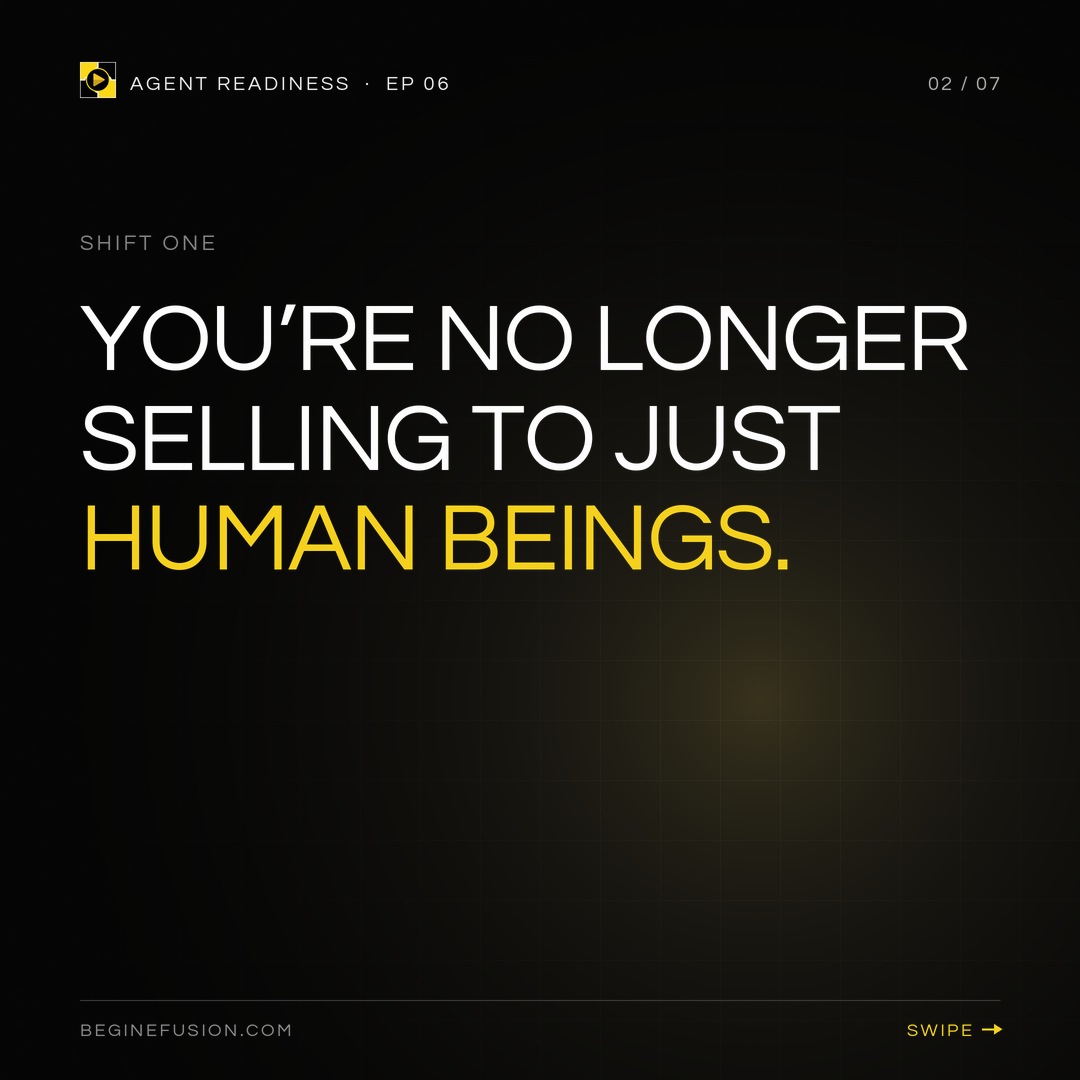
You are no longer selling to just human beings anymore. You are now selling to both human beings and personal AI agents.
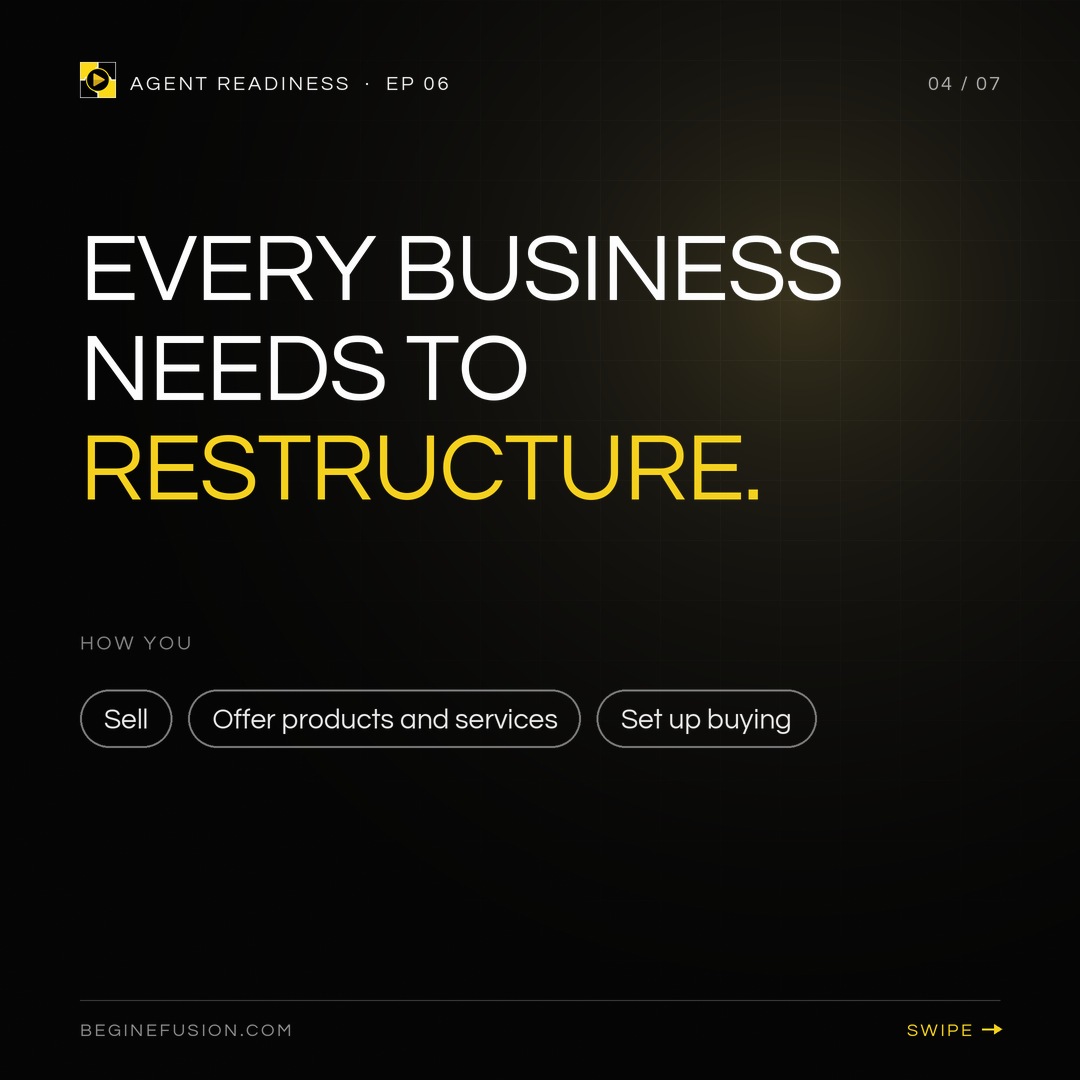
The way you structured your website and your business before now is not the way you need to structure it going forward. Every business needs to restructure the way they sell and the way they set up everything for people to buy from them. Whoever gets there first reaps the benefits faster. And please, do not confuse this with showing up in ChatGPT.
That's a first step. It goes beyond that. Start with the test: https://t.co/tiu9a107uT
Digital change in a small business goes best one process at a time. Here's how I'd pick the next one: list the work, score each process, pick the top one, write down how it runs today, name an owner, then choose the tool. https://t.co/4g6XLLCODi
You are no longer selling to just human beings anymore.
You are now selling to both human beings and personal AI agents. The way you structured your website and your business before now is not the way you need to structure it going forward.
Every business needs to restructure the way they sell and the way they set up everything for people to buy from them. Whoever gets there first reaps the benefits faster. And please, do not confuse this with showing up in ChatGPT.
That's a first step. It goes beyond that.
Start with the test: https://t.co/tiu9a107uT
#AIAgents
Social media for a small business works best as a weekly routine you can keep. Here's the setup I'd run: one or two channels, a short list of post types, one batching session, time set aside for replies, and a monthly look at what worked. https://t.co/k7Y97TTjbV
Before you decide whether a solution needs an AI agent, ask how the work should be executed.
In Chapter 1 of The AI Execution Architecture Playbook, I walk through the central rule we use at Begine Fusion and the execution stack behind every production AI system.
The central rule:
1. Use deterministic execution wherever the process is known.
2. Use AI reasoning where judgment or adaptation is required.
3. Use autonomous execution only where the value justifies the additional risk and complexity.
The execution stack, in order:
1. Business objective: what outcome must the system produce?
2. Trigger: what starts the work?
3. Workflow orchestration: in what order should work happen?
4. AI reasoning: where must the system interpret, decide or adapt?
5. Tool execution: what systems can the AI read from or act through?
6. State management: what must the system remember?
7. Validation: how is correctness checked?
8. Human oversight: which decisions require human authority?
9. Logging and evidence: what must be recorded for audit and review?
The order matters. You cannot have logging and evidence before the trigger.
This playbook is for architects, consultants, product teams, developers and business leaders who want to structure AI properly inside their systems.
Want help designing the execution architecture for your organization?
Book a consultation at https://t.co/u7LYn5sHXm
Ev Oputa, Founder, Begine Fusion
#AIArchitecture #AIAgents #AIAutomation #AIStrategy #WorkflowAutomation #BegineFusion