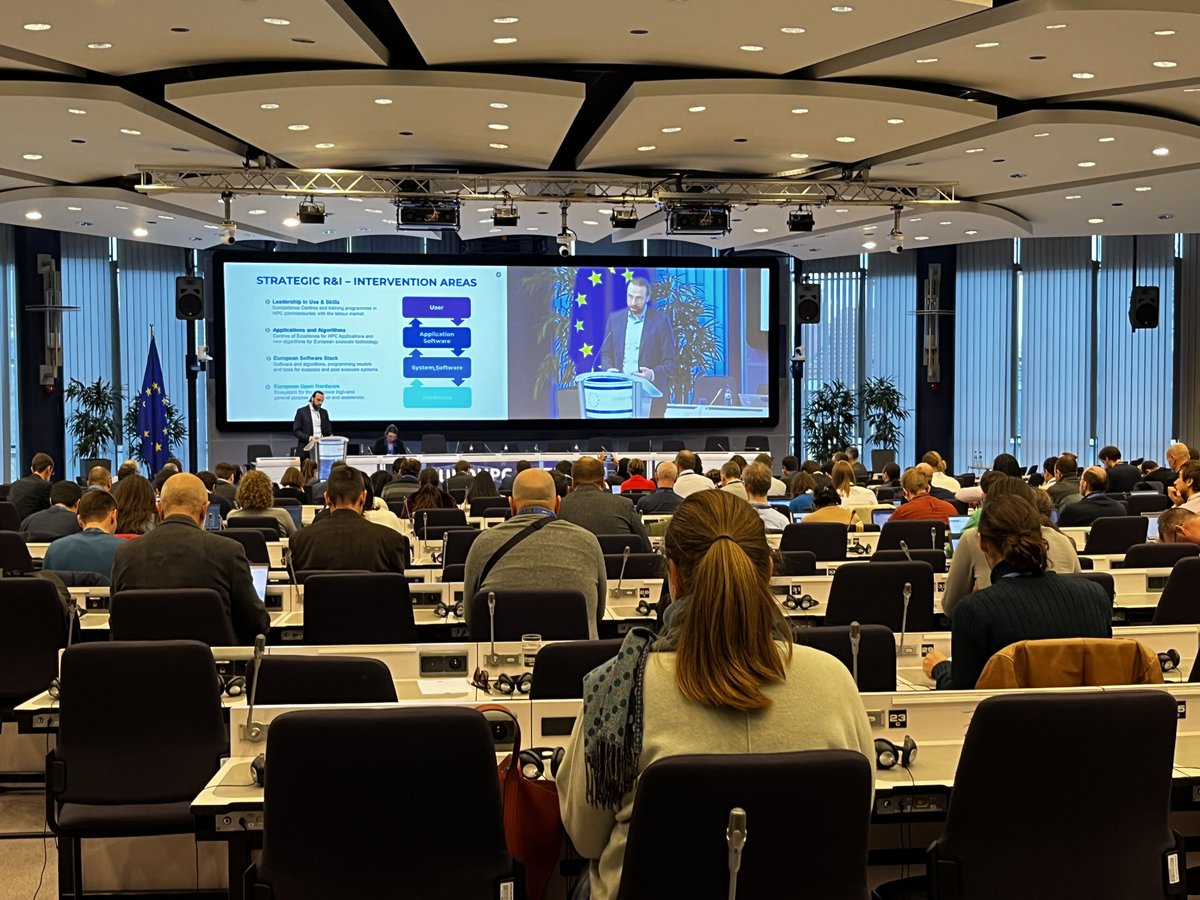
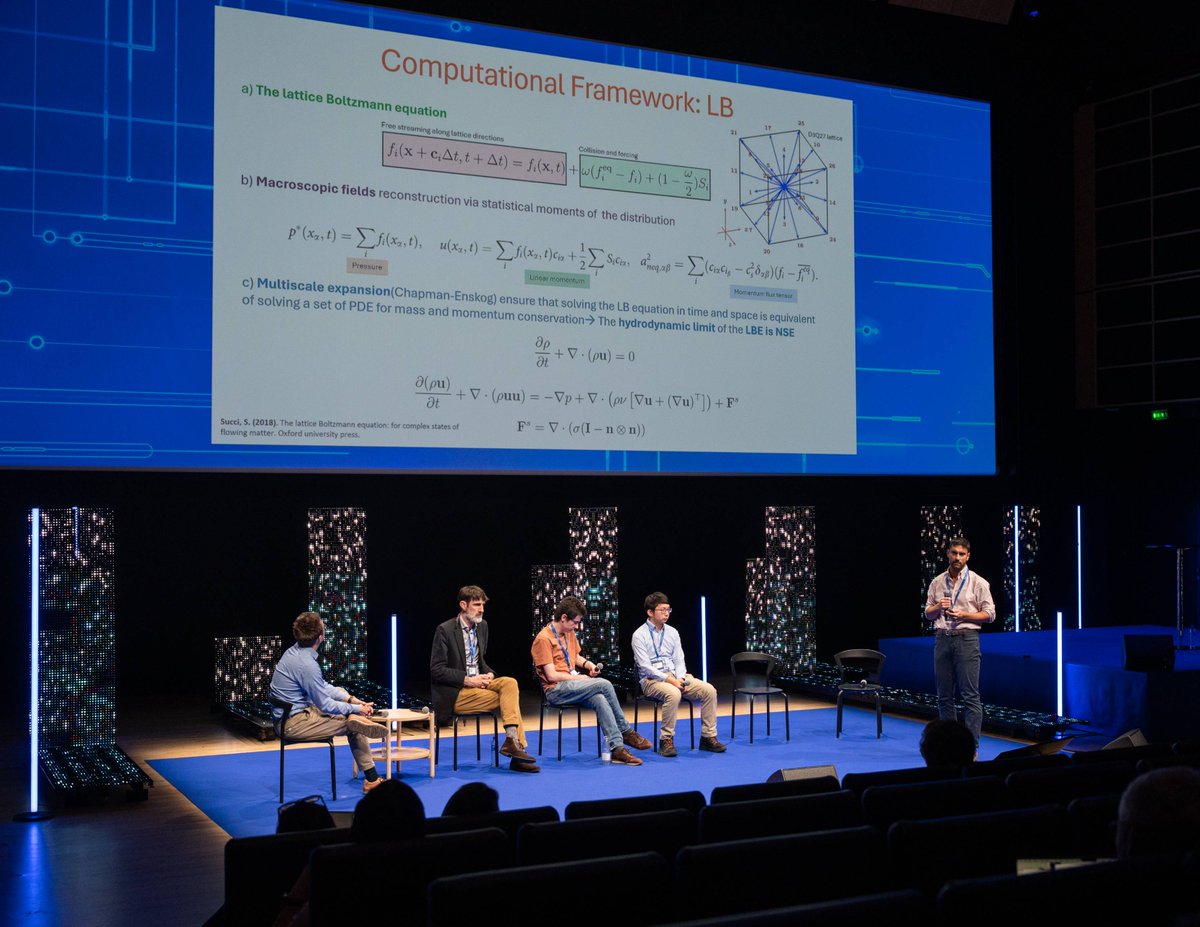
H2020 project, developing solutions for Interconnection Networks, Storage, and Cooling for exascale-level supercomputers, tuning real HPC Applications.
Debian has now officially voted to allow the use of generative AI in project contributions.
After days/weeks of discussion and voting, here's what Debian has decided.
AI tools are permitted for development, maintenance, and documentation work. They can improve contributor productivity when used responsibly.
But every AI-assisted contribution must meet the same quality, correctness, and legal standards as any other. No exemptions.
Contributors must understand, review, test, and where needed, modify AI-generated output before submitting it. The responsibility stays entirely with the human.
Disclosure of AI use is encouraged but not mandatory.
Sharing confidential or security-sensitive information with third-party AI services is explicitly not allowed.
Large-scale automated changes need prior community discussion and human oversight before going through.
............
Debian is doing the balancing act. Outright ban on AI may lead to dwindling contributors as developers increasingly rely on AI assistance. But letting AI lose will turn into slopfest.
Your thoughts?
Half of women in the tech field leave by the age of 35, according to Women Hack. An eye-popping 56% leaving tech between 10 and 20 years into their careers, according to Women in Tech.
“There are so many points of attrition."
Learn more: https://t.co/jkXzebH6aY
Together, we can beat cancer. 🎗️
Check out the currently open #HorizonEU calls for proposals to help advance health research supporting the EU #MissionCancer.
Deadline to apply is 15 September, 17.00 (CEST).
🔗: https://t.co/hod8jrmtJD
📣Apply to the EuroHPC Joint Undertaking #RegularAccess Call!
Projects needing large-scale #HPC or #computing resources can apply under three tracks:
🔬 Scientific
🏭 Industry
🏢 Public Administration
Next cut-off: 4 September 2026
More info 👉 https://t.co/umW7P9eaxF
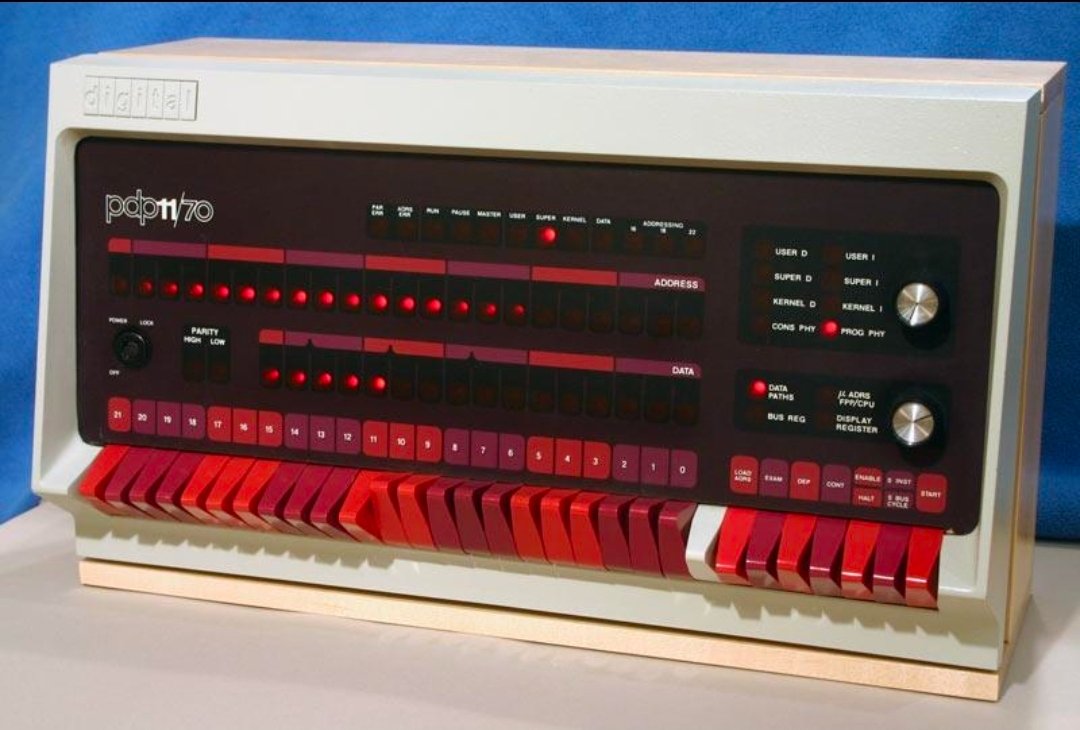
Dennis Ritchie wasn't trying to create one of the world's most important programming languages. he was trying to build a better language for Unix.
Ken Thompson's B was too limited for the new PDP-11, so Ritchie started adding types and building a real compiler.
That became C. the first version was built on a machine with just 24 KB of memory.
Decades later, C is still running the world.
SK Hynix was in San Jose for the #FMS2026 conference, where it showcased high bandwidth flash (#HBF), a new type of vertically stacked flash storage technology it’s developing with #Sandisk. https://t.co/XjT7pExmRi
Happy Birthday to Margaret Hamilton!
In the 1960s, Hamilton led the team that developed the onboard flight software for NASA's Apollo program, introducing rigorous software engineering practices that helped make the Moon landing possible. Her work demonstrated that software could be designed to anticipate and recover from errors, increasing the reliability of complex computer systems.
Today, Hamilton's contributions continue to influence the design of mission-critical software, and the term "software engineering," which she helped popularize, reflects her lasting impact on the field.
#PioneerPOV #ACM #Pioneer #ComputerScience #ComputingHistory
An MIT professor explained the one idea funds pay $500K for, and he does it in the first hour of freshman calculus.
MIT put the whole lecture online. it has been free for twenty years. almost nobody finishes it.
his point: calculus is not a hundred formulas to memorize. it is one idea. take two points on a curve, slide them together until the gap vanishes, and the slope you are left with is the derivative. everything else is just consequences.
he is David Jerison, and his 18.01 lectures have taught more people calculus than any room on earth.
skip to the board, where the power rule, the product rule, the chain rule, the fifty things you were forced to memorize, all fall out of that one limit.
no formula sheet. no tricks. one definition, reused.
that same slope is velocity. it is marginal cost. it is the gradient that trains a neural network. one operation, hiding everywhere something moves.
the math is free. what nobody can sell you is the patience to understand the one limit instead of cramming the fifty formulas that fall out of it. that hour is the foundation, and it is the only part that ever pays.
Do you know how to spot disinformation online?
Check the source, its credibility, transparency & pay attention to the language used.
And when in doubt, don't share further.
Disinformation is a challenge for the EU, and you can help stop it.
Learn more: https://t.co/Z5UZtvvnDm
The @EU_Commission is supporting free, diverse and pluralistic media.
EU funding opportunities in the news media sector help:
🔹support collaborative journalism
🔹monitor risks to media pluralism
🔹map violations of media freedom
& more.
Learn more: https://t.co/VKfdteaXbx
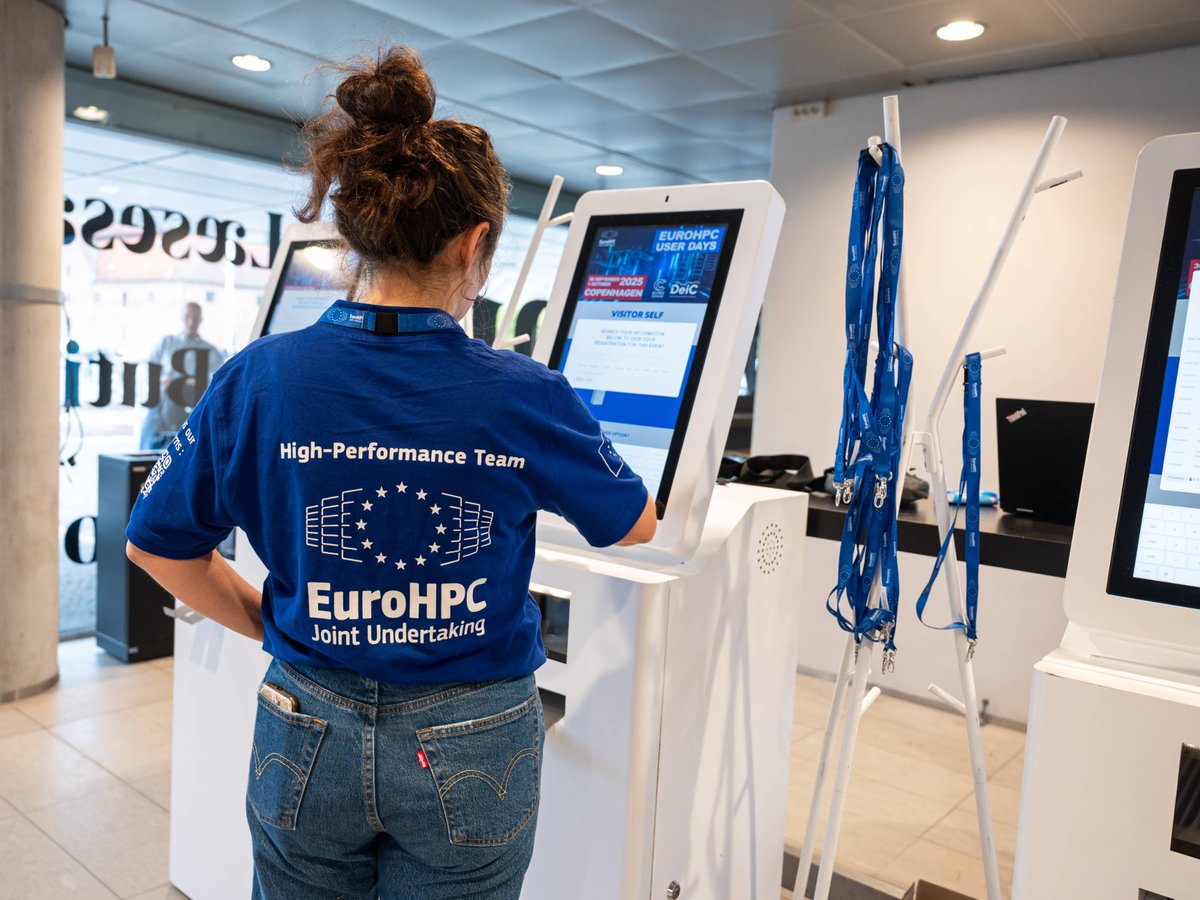
From #Brussels 🇪🇺 to #Dublin 🇮🇪: 4 editions, 1 growing #EuroHPC#users community!
Who has joined us since the first #EuroHPCUserDays in 2023? 👋
Now, #Dublin awaits! 📅 22–24 Sept | 🎤 All speakers confirmed | 📺 Plenaries web-streamed
Register soon! 🔗 https://t.co/6O4lbccmP7
In this week’s People of ACM, Russ Cox, who was the technical lead at the Go programming language for over a decade, gives us a behind-the-scenes look at the popular programming environment. Read the full interview here: https://t.co/z3SjGrCiin
#OTD in #ComputingHistory in 1981, IBM introduced its first personal computer, the IBM 5150.
Built by a team in Boca Raton, Florida, the IBM PC featured an Intel 8088 processor, 16 KB of RAM, and an open architecture that allowed users to add hardware and software from other companies. IBM’s decision to use off-the-shelf components and third-party software helped bring personal computing into the mainstream.
The IBM PC would go on to become a defining standard in personal computing, influencing the development of the PC industry for decades to come.
#IBMPC #PersonalComputing #ComputerHistory
For more computing history: https://t.co/dglmrCecUj
From Copenhagen to Dublin… the countdown to #EuroHPCUserDays2026 is on!
🔜 Join us on 22–24 Sept for plenaries, scientific tracks, networking and the latest in #HPC, #AI & #QuantumComputing.
Register now: https://t.co/6O4lbccmP7
#EU4Health funding is available to speed up the development of innovative therapeutics to treat viral diseases under pre-commercial procurement (PCP).
Deadline for the request to participate is 2 September, 16.00 (CEST).
🔗 https://t.co/YkDDrMht5S
Today, let’s remember Turing Award recipient Marvin Minsky, born #OTD in 1927. He received the award in 1969 for his central role in creating, shaping, promoting, and advancing the field of Artificial Intelligence.
At the time, AI was still a young and ambitious discipline. Minsky helped shape it through pioneering work that connected computing with the study of intelligence. In 1951, he developed SNARC, one of the first neural network simulators, which used a network of electronic components to model how neurons might learn and make decisions. His later research helped advance AI, neural networks, knowledge representation, cognitive psychology, and robotics, including his influential work on "frames," a method for representing knowledge and expectations.
For more:
https://t.co/JfDoEiC70F
#OTD in #ComputingHistory in 1944, IBM presented the Automatic Sequence Controlled Calculator (ASCC) to Harvard University. Today, many historians consider the machine, later known as the Harvard Mark I, one of the earliest large-scale automatic computers. At the time, however, the word "computer" usually referred to a person who performed mathematical calculations. As machines like the ASCC emerged, the term gradually came to describe the machines themselves.
IBM built the 51-foot-long electromechanical computer in partnership with Harvard under the direction of Howard Aiken. Nicknamed the "Giant Brain," it automatically performed long sequences of calculations for scientific, engineering, and military applications during World War II. The ASCC demonstrated the potential of automated computation and helped lay the groundwork for the programmable computers that followed.
For more computing history: https://t.co/KzKrrZn6ak