@kaulcsmc@drjohnm Seriously, if pre-specified subgroup analysis of RCT's are "treacherous", what should we call never-specified observational studies, which accounts for 90% of the medical literature? 😇
@RxRegA All this could have been prevented.. Ioannidis called Theranos out for lacking validity data for these tests back in 2015. https://t.co/Ab1Dha2J3s
@Sensible__Med@drjohnm Excellent John! A screening test should have very high sensitivity (>90%) bcos you are inviting people to take a test who have no symptoms whatsoever!
Seriously, here it is 30%!!!
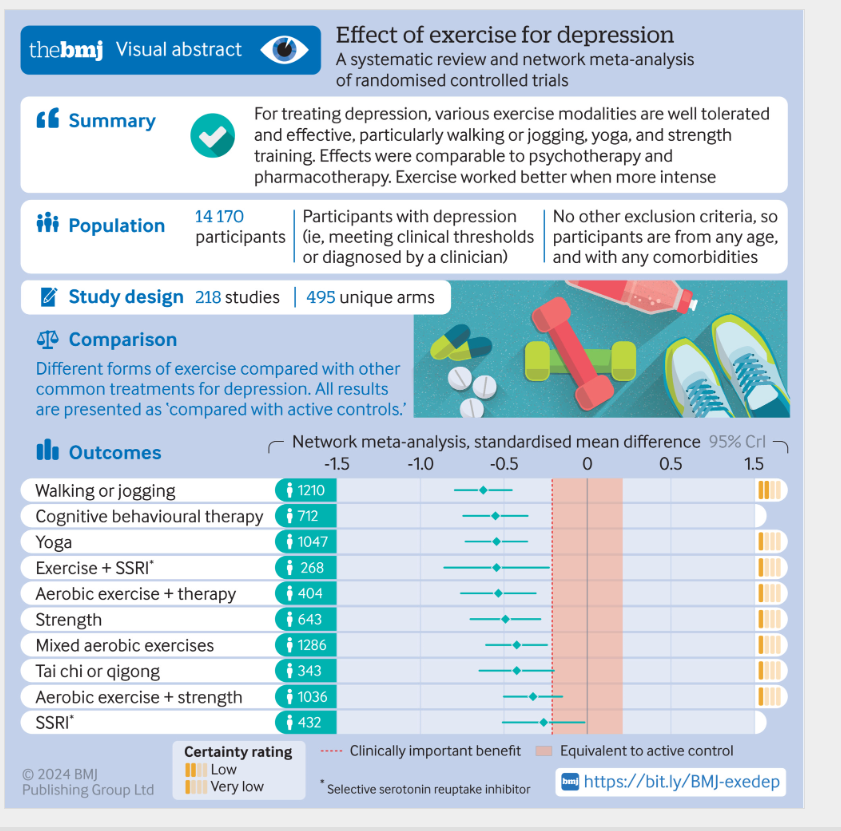
Amazing news for exercise science!
A few months ago, I wrote about a landmark trial showing that exercise reduces cancer recurrence and argued it should become standard cancer care.
Guess what? It’s happening! UPMC will now cover exercise oncology. Others might soon follow. 😇
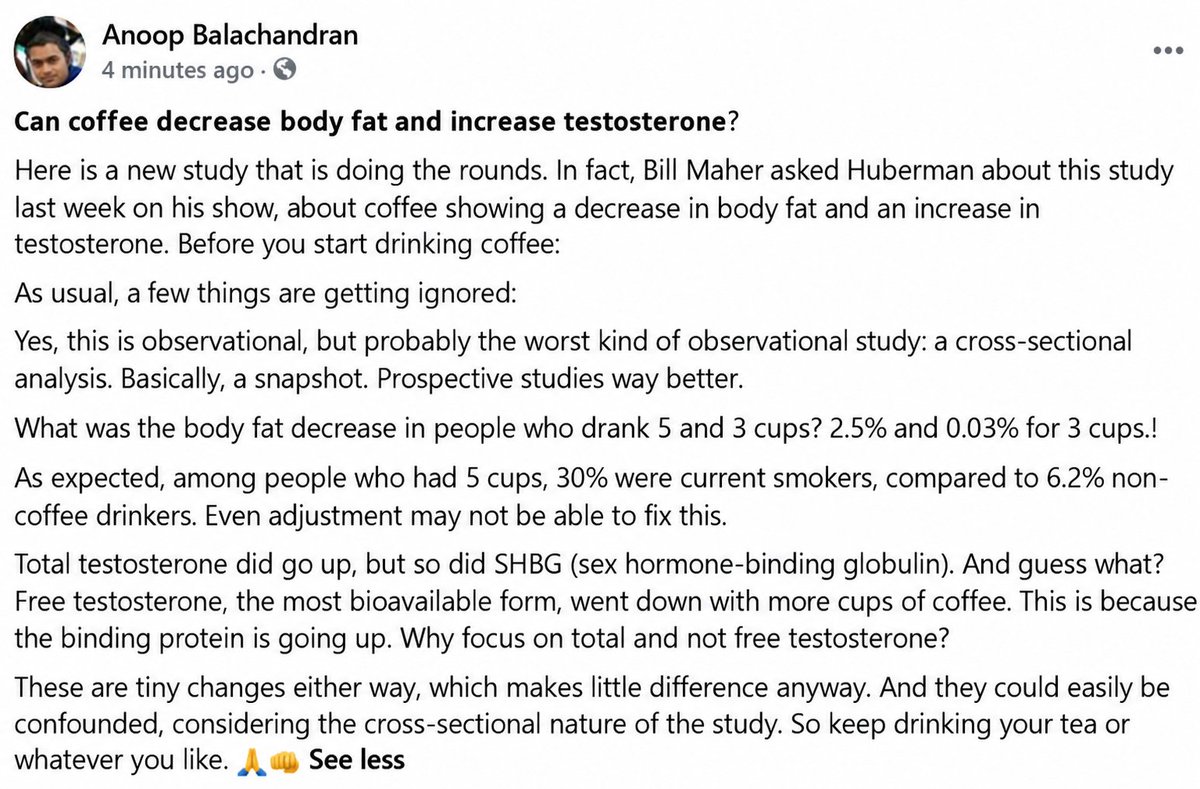
People who drank more coffee had less body fat, less visceral fat, and more lean mass than less-frequent or non-drinkers.
The biggest benefit was seen at 5 or more cups per day.
And for men, every extra cup per day was associated with a ~10 ng/dL higher total testosterone. Higher coffee intake was also associated with better glucose and insulin regulation in men.
This was an observational study, but mechanistic and experimental evidence actually supports coffee's benefits on metabolic and hormonal health. I'm willing to believe there's a real link here rather than draw a conclusion such as "coffee drinkers live healthier lives in general."