A promotional account for Exercise Medicine physicians to be included in Australia's public health system and MBS Chronic Disease Management item numbers/plans
This is a dedicated Sport & Exercise Medicine public hospital service in Australia https://t.co/2yIECRMeFi and it may be the only one. Australia needs this type of service in every public hospital!
For years I’ve argued that hamstring injuries more commonly occur in early stance than late swing. Majority of other experts favour the late swing theory. It’s hard though to watch the last of these angles and not see the jolt of the leg that occurs in early stance.
Surgeries Performed in Professional Australian Cricketers 2015–2024 | Indian Journal of Orthopaedics | Springer Nature Link Open Access article https://t.co/LSvHODkNrM
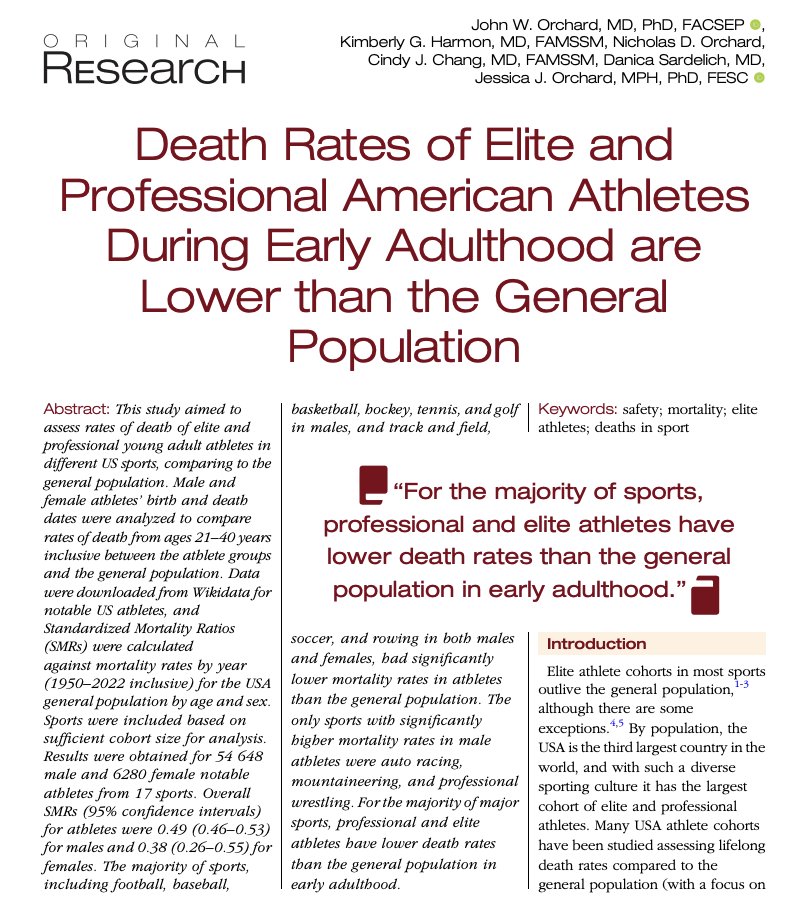
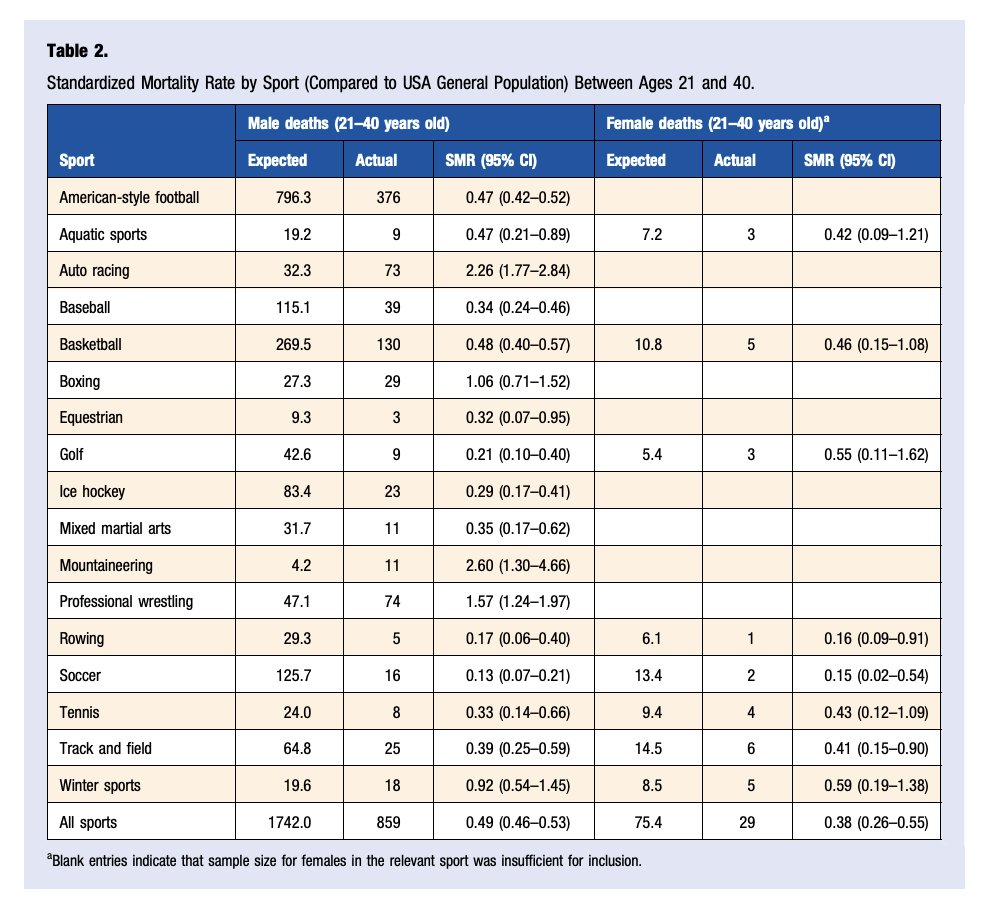
Elite and professional athletes live longer.
Compared to the general population, US elite/pro athletes have a 51% (men) and 62% (women) lower overall mortality rate between age 21 and 40.
Only autoracing, boxing, mountaineering, and pro wrestling had elevated mortality rates.
𝗖𝗹𝗲𝗮𝗿 𝘀𝗲𝘅 𝗱𝗶𝗳𝗳𝗲𝗿𝗲𝗻𝗰𝗲𝘀 𝗶𝗻 𝗘𝗖𝗚 𝗽𝗮𝘁𝘁𝗲𝗿𝗻𝘀 𝗼𝗳 𝗮𝘁𝗵𝗹𝗲𝘁𝗲𝘀 🚴
A large study finds clear sex differences in heart electrical signals among trained athletes – highlighting the need for sex-specific interpretation of cardiac screening to improve safety while reducing unnecessary concerns.
Research supported by Sydney Informatics Hub, a #USYD Core Research Facility.
𝗔𝗯𝗼𝘂𝘁 𝗦𝘆𝗱𝗻𝗲𝘆 𝗜𝗻𝗳𝗼𝗿𝗺𝗮𝘁𝗶𝗰𝘀 𝗛𝘂𝗯 ➡️ https://t.co/52VSEmCIMT
See paper in 𝘌𝘶𝘳𝘰𝘱𝘦𝘢𝘯 𝘑𝘰𝘶𝘳𝘯𝘢𝘭 𝘰𝘧 𝘗𝘳𝘦𝘷𝘦𝘯𝘵𝘪𝘷𝘦 𝘊𝘢𝘳𝘥𝘪𝘰𝘭𝘰𝘨𝘺 👉 https://t.co/S0P1rzJv0W
#SportsMedicine #HeartHealth #SexDifferences #AthleteWellness #CardiacScreening #HealthResearch #WomenInSports #MenInSports @syd_health@georgeinstitute@OregonTech@ArmyNaowaHosp@UWF@CityStGeorges
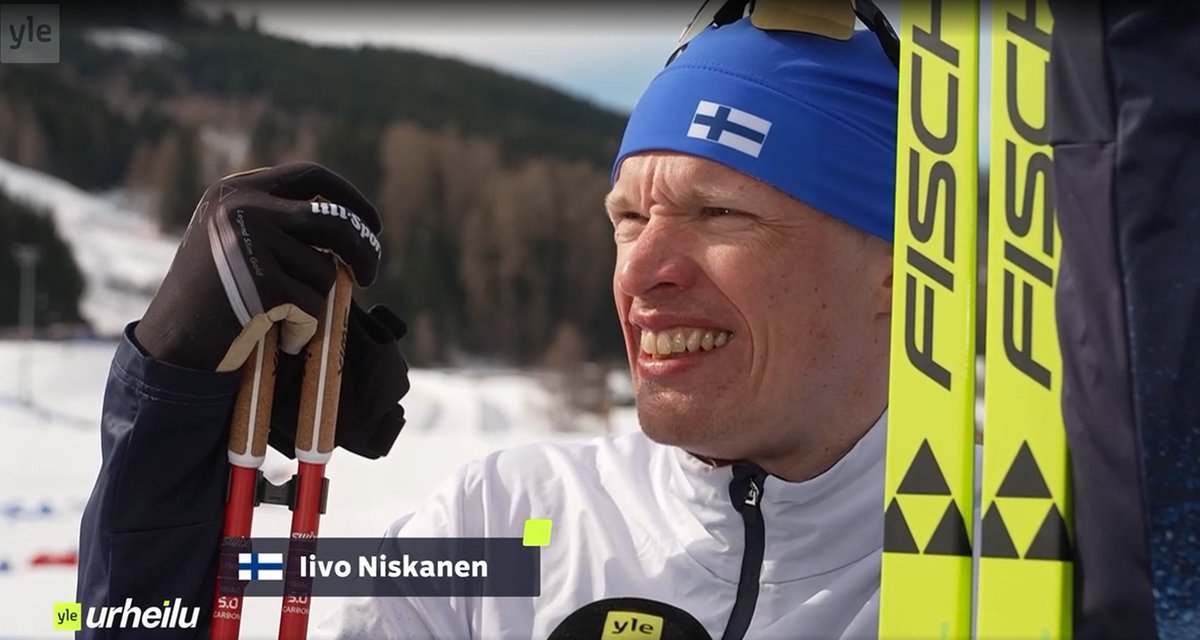
Iivo Niskanen: did not finish men's 50 km race due to flu. Never saw him wearing a mask (unlike at 2022 Olympic Games in Beijing, where he won men's 15 km. Won Olympic Gold in 50km in 2018.)
Rates of Self‐Reported Skin Cancer in Current and Retired Elite Australian Cricketers - Orchard - Australasian Journal of Dermatology - Wiley Online Library https://t.co/USPMmeRMU3
I was impressed with our book Cricket Sports Medicine getting 10K downloads after a few months, but then even more surprised to learn that my Podcast interview with @quietcordial at @CricketLibrary now has 27K listens on YouTube!
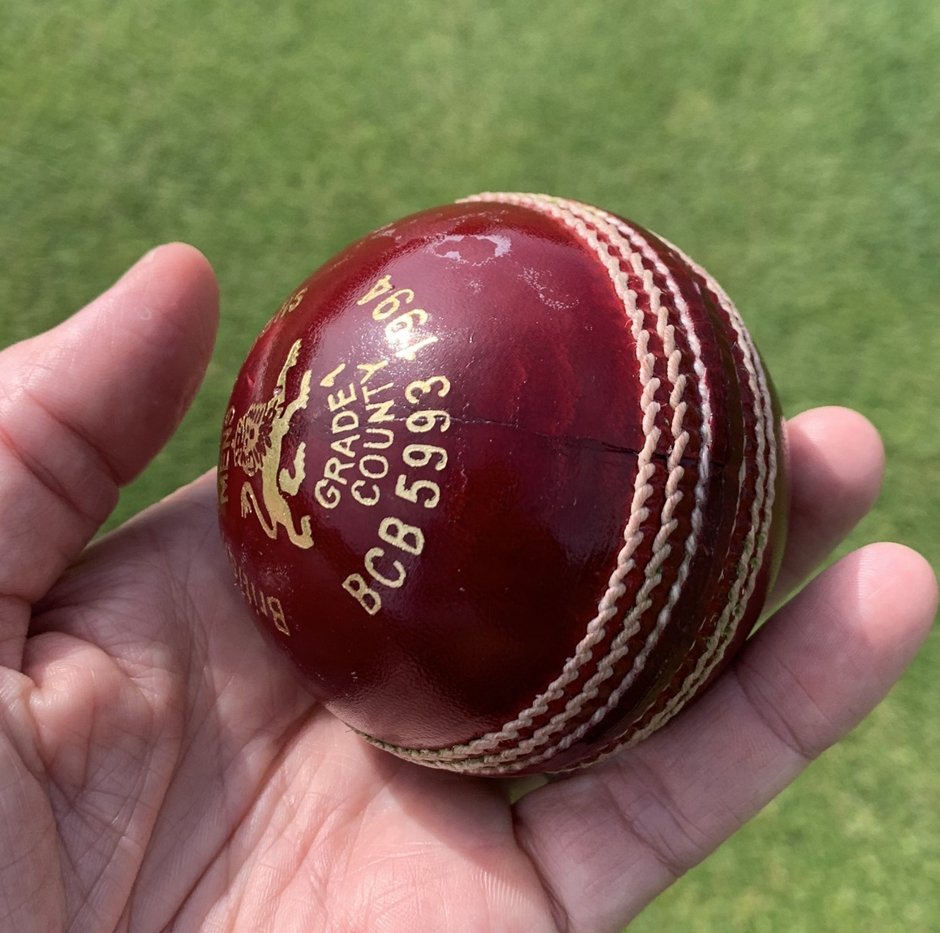
Cricket Sports Medicine - the first book of its kind covering cricket injuries such as lumbar stress fractures, injury surveillance, injury management and preparing teams for international competition, authors from Australia, UK, Sth Africa, India, Sri Lanka, West Indies, New Zealand and other countries
Ground size
Larger grounds—most notably in Australia—require players to run more, resulting in a higher incidence of hamstring and other muscle strains. New formats such as The Hundred, with fewer changeovers, appear to reduce injury rates through decreased running and shorter match duration.
Format differences
Cricket is played in three main formats: multi-day First-Class/Test cricket, 50-over matches, and T20. Shorter formats reduce bowling workloads—especially for pace bowlers—and consequently show lower tournament injury prevalence. However, the high intensity of T20 increases injury risk for batters and fielders due to frequent sprinting, diving, powerful hitting, and high-velocity throws. Emerging injuries such as intercostal tears from forceful swings and increased shoulder and hand injuries reflect this shift.
Scheduling and workload variability
Modern cricket features congested schedules and frequent switching between formats. Although today’s fast bowlers have lower total annual workloads than past generations, alternating between red-ball and white-ball demands is physically more challenging and likely contributes to injury risk. Specialisation by format may eventually reduce these problems.
If you liked this thread/overview of the book, please Retweet https://t.co/7YDtEKffqI
Summary of Chapter 3 – Influence of match conditions on injury rates in cricket
Cricket is uniquely influenced by environmental and pitch conditions, which shape playing style and injury risk. Unlike baseball and many other sports, ball–surface interaction varies dramatically in multi-day (red-ball) cricket, creating wide fluctuations in match demands. These fluctuations, along with the rise of shorter formats, influence injury patterns across roles and match types. https://t.co/UPg7WEYuoJ