Tesla investor & early Plaid owner ⚡️
Part of the team supporting Elon Musk & DOGE initiatives 🚀
Focused on online security, verification & scam prevention
The fact that you can just get in a @Tesla, input your destination, start FSD with a button on your screen, then have the car literally take you anywhere you need to go all by itself never gets old.
I don’t see myself ever owning another car other than a Tesla for this reason.
This has been my experience as well. I "drive" almost exclusively on FSD now, without incident, and it feels remarkable. I've told my soon-to-be 80-year-old father that his next car must have this technology for driving and navigation.
This is a fantastic article about @Tesla's FSD by The Detroit News:
"Determined to maintain their individual transportation independence, they are using Tesla’s hands-free FSD system as a driver assist. Though by no means exclusive to seniors in its ability to add another set of eyes to the road, FSD helps elderly drivers maintain a cocoon around their car as their confidence in reflexes and eyesight naturally deteriorate.
92-year-old Leonard Kraus uses Tesla FSD (Supervised) for 87% of his miles. He recommended Tesla FSD to his 95-year-old brother-in-law. “I don't think I would be driving without it.”
“It's as good a driver as I am,” said Dick Amacher, 78, a retired General Motors engineer from Rochester Hills who drives his Model Y and Model 3 on FSD 98% of the time. “Here's the thing, it will not go through a red light. It will not go through a stop sign. Every once in a while, I've driven through neighborhoods where stop signs were partially obscured by low hanging branches, for example. . . and (the Tesla) sees them before I do.”
Driving into Detroit, FSD exited the expressway near Wayne State. “All of a sudden the Tesla pulls over to the curb. I'm like: ‘what is going on?’” said the 78-year old. “Turns out there was an emergency vehicle coming from behind. FSD saw that it was an emergency vehicle before I did. It has vision in every direction simultaneously. A human being cannot replicate that.”
Full article: https://t.co/bn099dJ8li
Our goal is for no Tesla battery to end up in a landfill.
Across our US operations, we’re recovering more than 90% of key battery materials like nickel & cobalt from cells that we recycle
More details in our 2025 Impact Report https://t.co/6RS4myUvlm
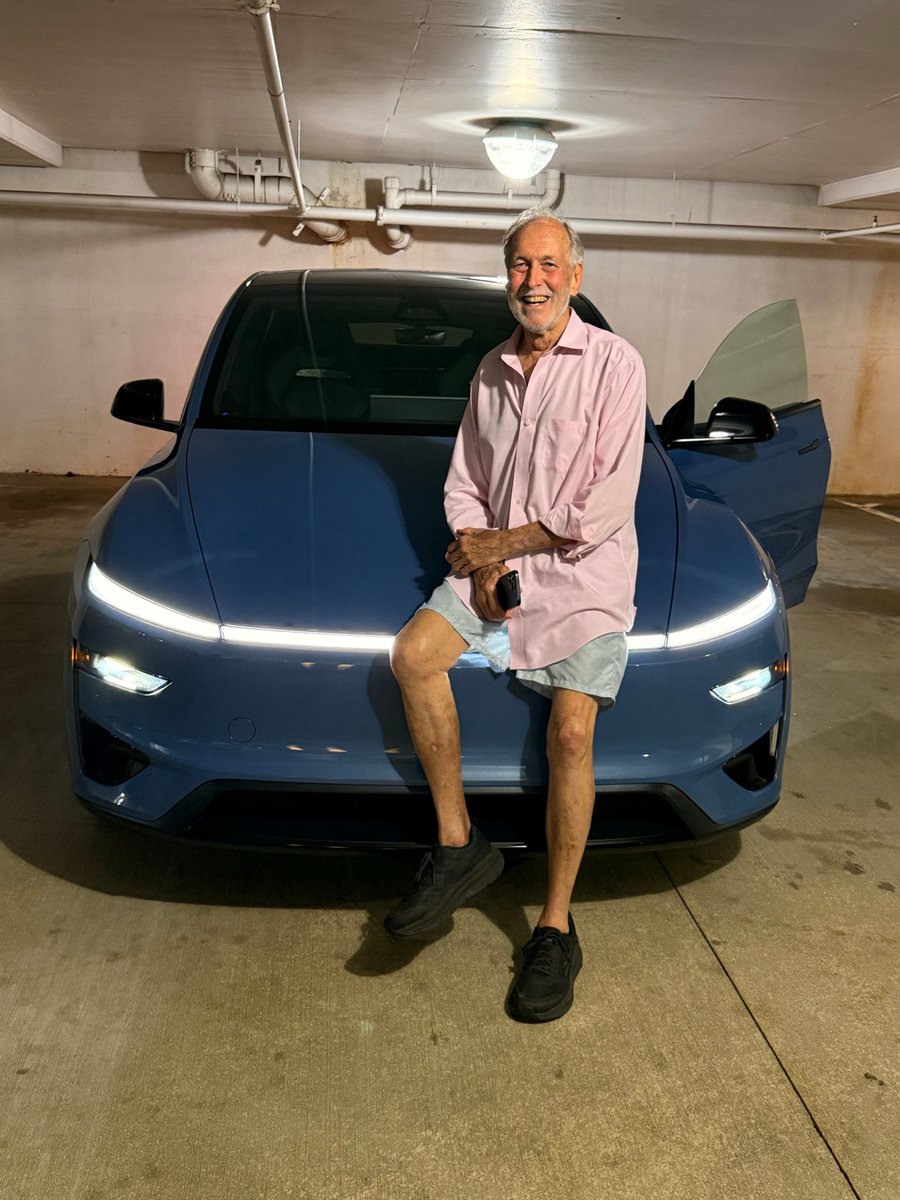
This is 80-year-old Ed from Atlanta. He just sold his $200k Mercedes S-Class and bought a brand new Frost Blue @Tesla Model Y Performance because he wanted FSD.
"I like the self-driving. It's really been great. I feel a lot safer."
My Tesla sees more than me.
I was confused when FSD started to slow down.
Nothing was in the road.
Then I realized the right pillar camera saw a baby deer running alongside me.
It slowed and braked until the deer ran across the road.
The deer and I both arrived home safely.
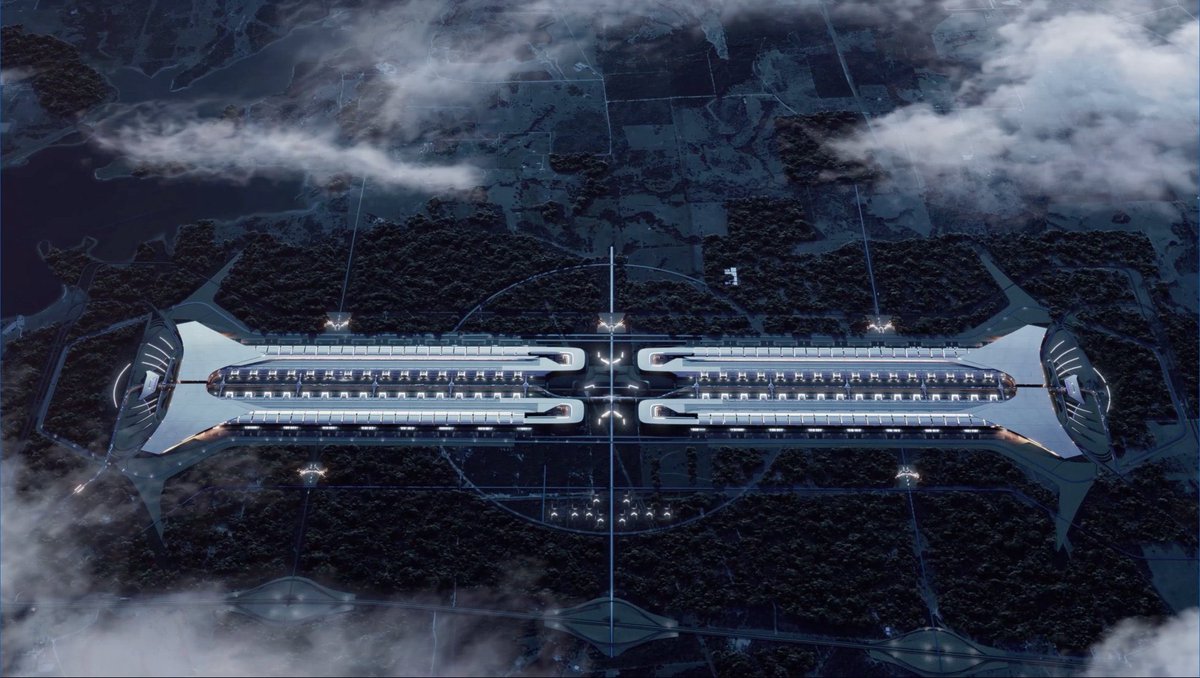
Terafab will be built in Grimes County, Texas
In April, we broke ground on our research fab on the North Campus of Giga Texas – the precursor to Terafab.
Both Tesla & SpaceX will need far more chips than current & future global production can supply.
This is why we're building the largest chip manufacturing facility ever, with the goal of producing over 1 terawatt of compute per year
The future is built in Texas
https://t.co/RQPNlAasdP
On January 15, 2025, Falcon 9 successfully deployed Firefly Aerospace’s Blue Ghost Mission 1 and ispace’s RESILIENCE lunar landers on a trajectory to the Moon from pad 39A in Florida.
For most of our missions, we plan a controlled deorbit of the Falcon second stage so it safely reenters over the ocean. For higher energy missions like those to a lunar transfer orbit, nearly all performance on the vehicle is devoted to successfully placing the payload in the intended orbit, and a controlled disposal maneuver is not always possible.
We actively work to be as responsible as possible with hardware left in space to ensure space safety, including for more complex missions. In this case, over time, solar activity and gravity led the second stage toward the Moon. Impacts like this are rare, but they can happen with objects in these types of orbits, and we worked with NASA on the optimal disposal solution.
Our focus remains on advancing reliable access to space while working toward even more sustainable operations with Starship in the future. As a fully reusable vehicle, Starship is designed to eliminate expendable upper stages entirely, reducing hardware left in orbit and enabling even more missions to the Moon, Mars, and beyond.