🌍 #EXPECT Hackathon in Hamburg is coming this fall!
Join researchers tackling real climate challenges using advanced data infrastructure: deep learning, downscaling & explainable AI.
👉 Register now! https://t.co/jUoZmwLFjC
⏰ Deadline: May 18th
#Climate#AI#Hackathon
📢 EXPECT is heading back to #EGU27!
Want to be part of the conversation? The call for abstracts is now open.
👉 Submit your research by by 12 January 2027: https://t.co/PdhtCUYMRt.
#Geoscience#ClimateScience#Research
🤖 Can machine learning help us understand what drives changes in European weather patterns?
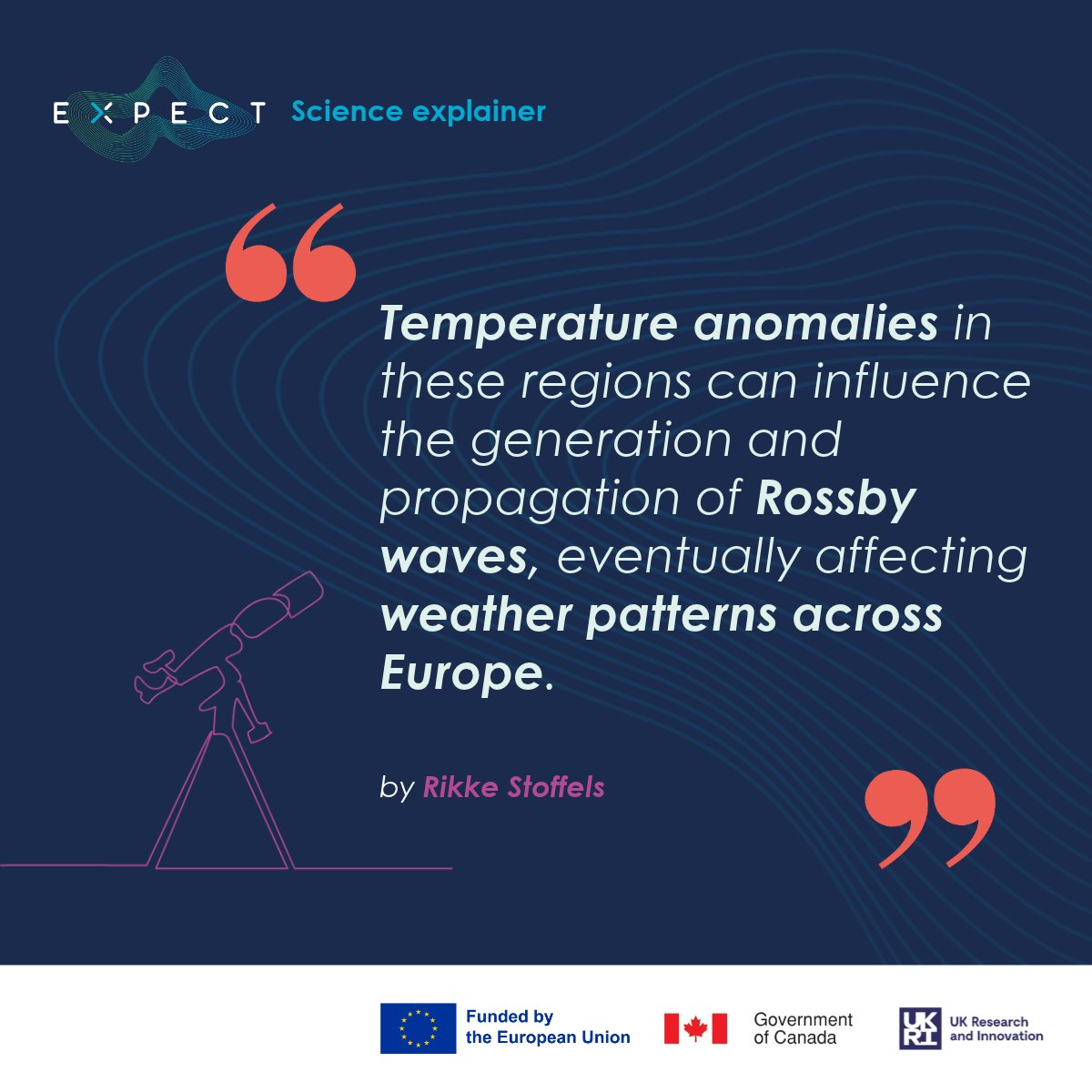
Within #EXPECT, researcher Rikke Stoffels is using data-driven approaches to study quasi-stationary Rossby waves.
Read more: https://t.co/jIY7dJSfWM
#ScienceExplainer
How are Rossby waves linked to climate extremes in Europe?
In our latest science explainer, Rikke Stoffels looks at how quasi-stationary Rossby waves behave and why understanding these mechanisms matters for climate projections.
👉 https://t.co/jIY7dJSfWM
#ScienceExplainer
🌡️ Was Europe’s summer of 2026 exceptional, or a glimpse of what lies ahead?
#EXPECT and @I4C_eu brought scientists and journalists together to discuss record heat, climate models and how local climate knowledge can help Europe prepare.
Thanks for joining!
Delighted to see Markus Donat, Scientific Coordinator of EXPECT, recognised among the world's top 2% of scientists in the #StanfordRanking!
We are proud to collaborate with him and to support research that helps strengthen climate resilience across Europe. 👏
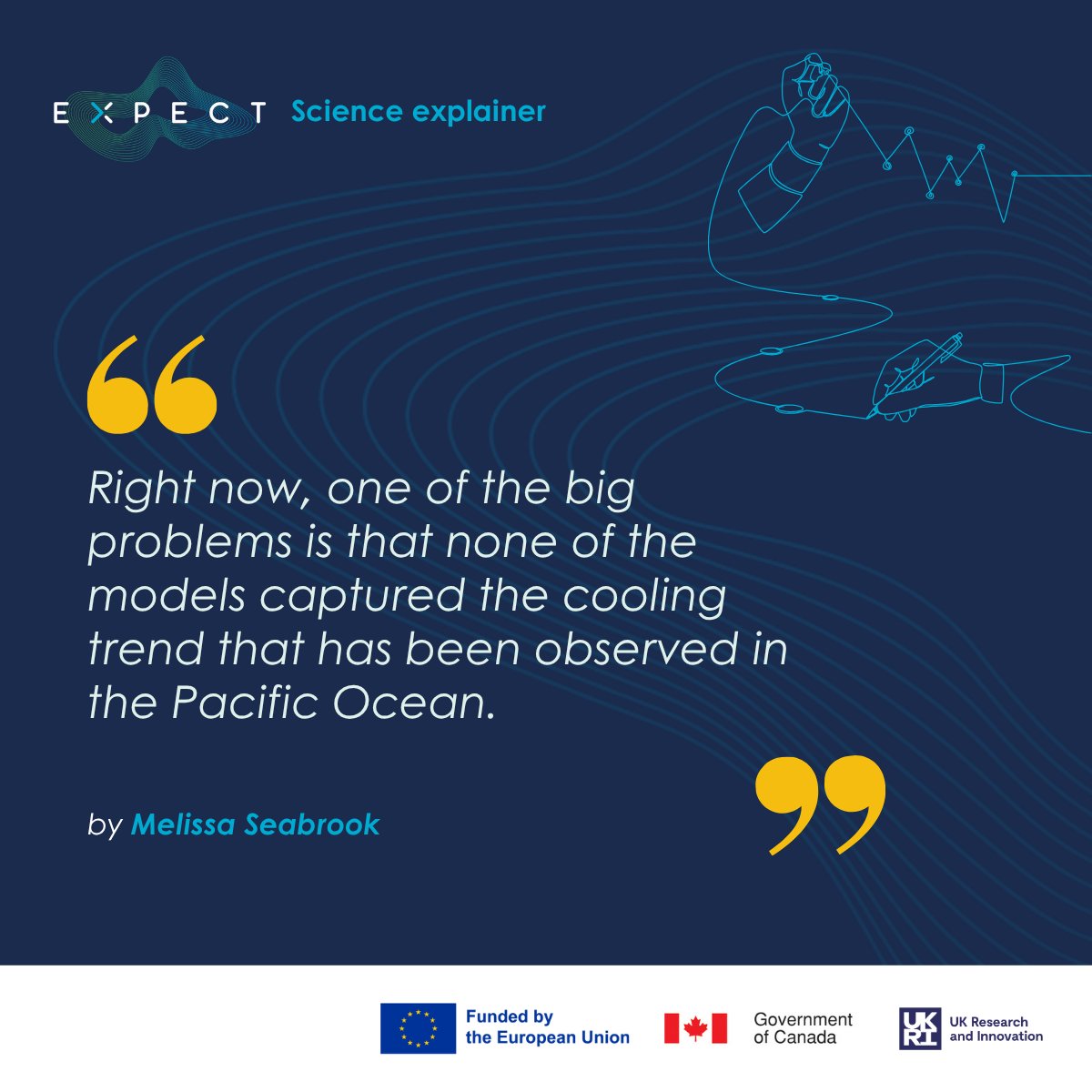
Observed cooling trends in parts of the Pacific have not been captured by many climate models.
In her Science Explainer, Melissa Seabrook investigates why and what these discrepancies reveal about atmospheric circulation 🌊.
Read more: https://t.co/wg7Gm1wYuP
3 days, 35 researchers, 4 challenges!
During our #Hackathon in Hamburg 🇩🇪, researchers explored heatwave circulation patterns, downscaled climate data and used explainable AI to uncover climate drivers, turning advanced data infrastructure into new insights.
#EXPECT
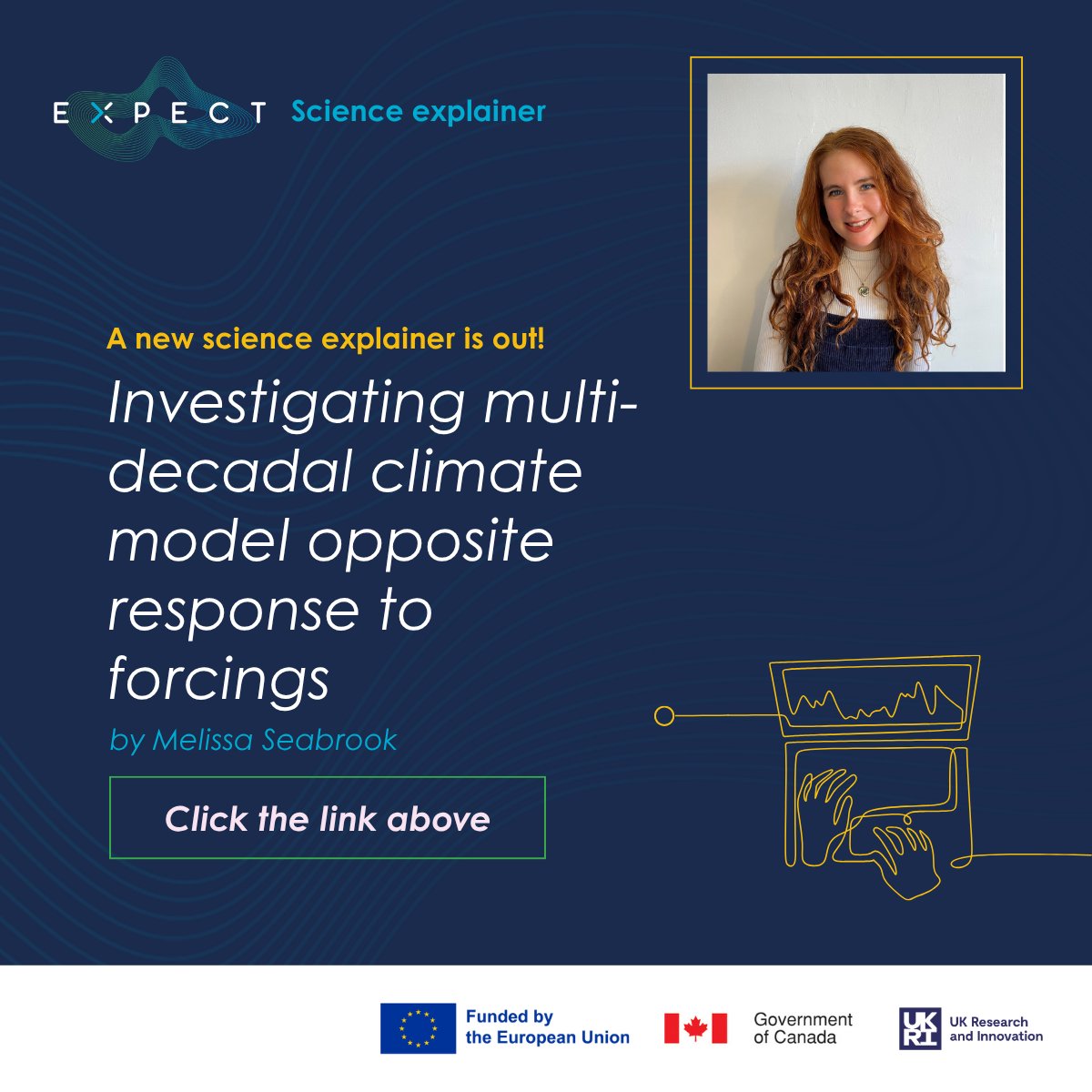
Why do climate models sometimes disagree? 🤔
In our latest Science Explainer, Melissa Seabrook explores how comparing different climate model responses helps scientists better understand the climate system and quantify uncertainty. 🔬
Read more: https://t.co/wg7Gm1wYuP
📰 New media spotlight for #EXPECT!
Pedro Roldán-Gómez (@BSC_CNS) featured in Süddeutsche Zeitung, explaining new research on why #Europe is warming faster than any other continent and how cleaner air may be influencing summer heat #extremes.
📣 Registrations are still open for our joint online press conference!
Are you a #journalist covering climate, science, or European affairs?
👉 Register your interest: https://t.co/9cxmCzSrPX 🗞️ Read the pitch: https://t.co/aoAT7P0KVF
📣 Registrations are still open for our joint online press conference!
Are you a #journalist covering climate, science, or European affairs?
👉 Register your interest: https://t.co/9j4FKkcY0P
🗞️ Read the pitch: https://t.co/4mm3oYqR46
@Expect_Project
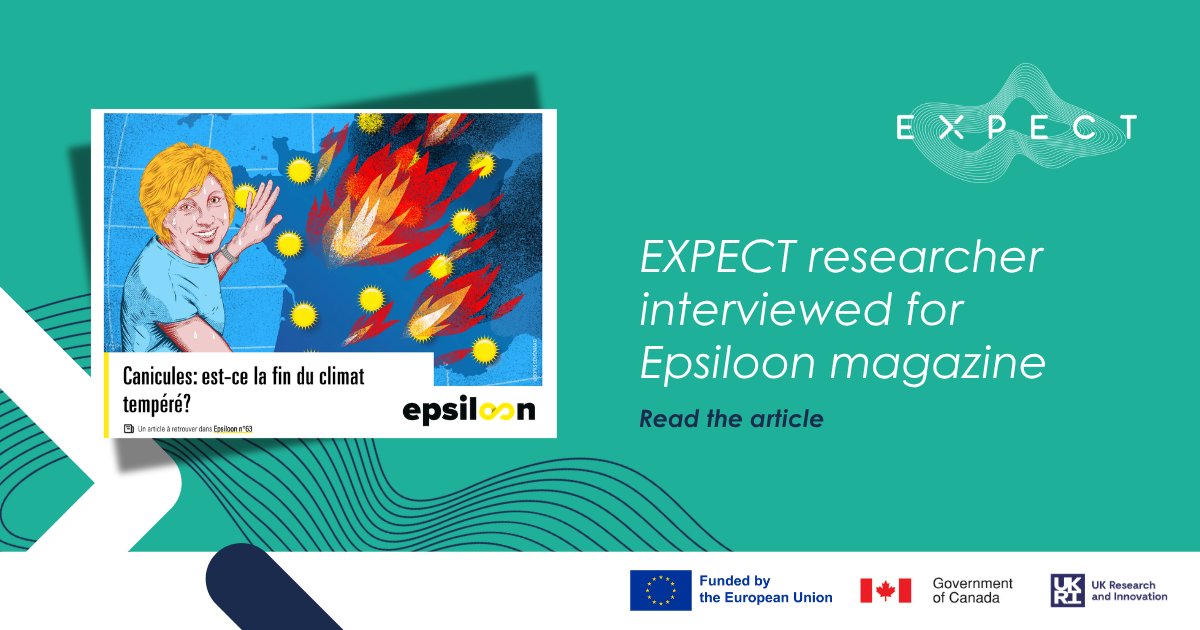
🌡️ Was summer 2026 a sign of a changing climate?
In a recent article for French science magazine Epsiloon, #EXPECT researcher Goratz Beobide-Arsuaga discusses Europe’s exceptional heatwaves and what they tell us about future trends.
👉 https://t.co/tOKVtrXioi
#ClimateScience
🌍 EXPECT is well represented at #S2S2D2026!
A large number of our researchers are in #Reading 🇬🇧 this week, presenting their work on climate prediction, extreme events, and machine learning.
🤝 Looking forward to a week of scientific exchange and new connections!
#EXPECT
📰 #EXPECT research featured in El Periódico!
The article highlights our study on how atmospheric circulation changes linked to reduced aerosol emissions may have contributed to faster European summer warming.
Read more: https://t.co/7KanikJkSz
#ClimateScience#HorizonEurope
A new study highlights how international research on air pollution and atmospheric particles has improved our understanding of climate change and informed IPCC assessments.
Read the full article 👉 https://t.co/LAsOpGMkat
#EXPECT#ClimateScience#AirQuality
New paper presents a major international effort to better understand how air pollution, land-use changes, wildfires, and atmospheric particles affect climate and air quality.
Read more 👉 https://t.co/JwEoXGPnoN
#EXPECT#ClimateScience#AirQuality
📊 New study shows how machine learning identifies a southerly circulation regime driving most Western European summer heatwaves and helps explaining recent warming and extremes.
👉 https://t.co/o3TtlSaqXL
🌊 New study on the Oct 2024 Valencia flood shows how extreme rainfall was amplified by warm Mediterranean & North Atlantic sea surface temperatures.
Model experiments highlight their key role in intensifying the event.
Read the paper 👉https://t.co/bv6bAWKsyc
📊 New study explores how giving greater weight to better-performing climate models can improve predictions for the coming decades, highlighting both the potential gains for climate forecasting and the limitations of model-weighting approaches.
👉 https://t.co/BoFg3KZz2R
Last week's heatwave in Europe reflects an accelerating trend, not an isolated event.
A new study shows that changes in atmospheric circulation, partly linked to declining aerosol emissions, have amplified summer warming since the 1980s.
👉 https://t.co/GlTraIJD0B
#EXPECT