Big announcement. Maya has secured 15Billion USD of RWA infrastructure projects for our FDI platform. A chance for everyone to own a stake in an oil refinery, solar plants, a power interconnection and water treatment facilities. All bankable, all secure, all liquid.
Join us tomorrow for a 🔟/🔟 call with @exploremaya_ - the team reimagining how nations run.
Maya is the governance OS explored by Barbados, Jordan, Zanzibar & Libya, built on TEN to unify data, enable real-time oversight, and power secure, transparent decision-making.
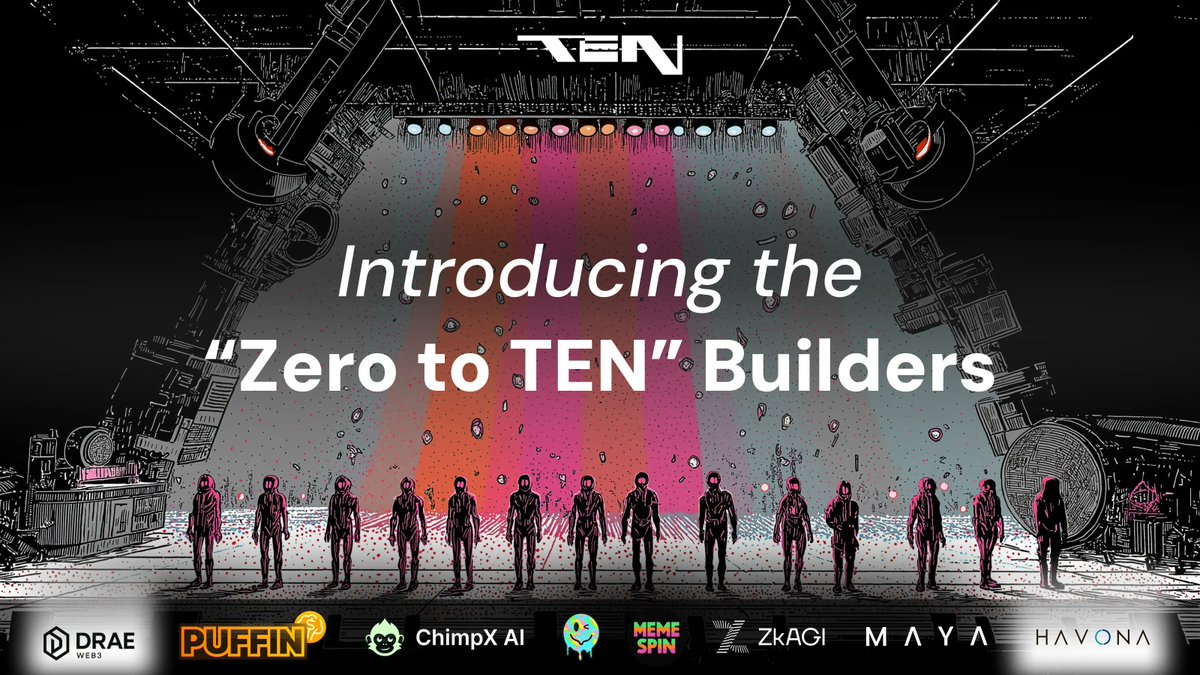
Unveiling the First Zero to TEN Cohort, Real builders, real breakthroughs.
The truth? These apps weren’t broken on old chains, they were impossible. Encrypted execution flipped the script, and @tenprotocol made them real.
🌍 @HavonaAi AI powered, fraud proof trade docs turning a $5T market on chain
🎮 @Puffin_V2E Web3 entertainment that’s addictive, verifiable, tied to real life
🏛️ @ExploreMaya_ A governance OS explored by nations for transparent, secure citizen engagement
💬 @DraeLabs Encrypted AI that turns vague commands into crystal clear actions
🤖 @zk_agi Secret AI agents trading and acting on chain with encrypted alpha
🎰 Memespin_io x @winksdotfun iGaming in your feed, provably fair with revenue sharing
🐒 @ChimpxAI One AI powered hub for encrypted cross chain DeFi without native gas
This is Zero to TEN. Impossible use cases are now live. Cohort One is only the beginning.
The future runs encrypted. The future runs on @tenprotocol 🔟/🔟
#ZeroToTEN #EncryptedFuture #TENProtocol #CookieSnaps #Web3Privacy
@ExploreMaya_
Governments run on outdated, fragmented systems: opaque, siloed, and disengaged.
Maya is the governance OS explored by Barbados, Jordan, and Libya - centralizing data, enabling real‑time oversight, and boosting transparency + citizen engagement.
Built on TEN: TEEs protect citizen data while blind compute powers secure decision‑making.
In the absence of leadership, new forces step in: decentralized communities, agile city governments, DAOs, digital collectives. But there is no shared protocol to unite them, recognise them and legitimise them alongside Nation States.
@ExploreMaya_
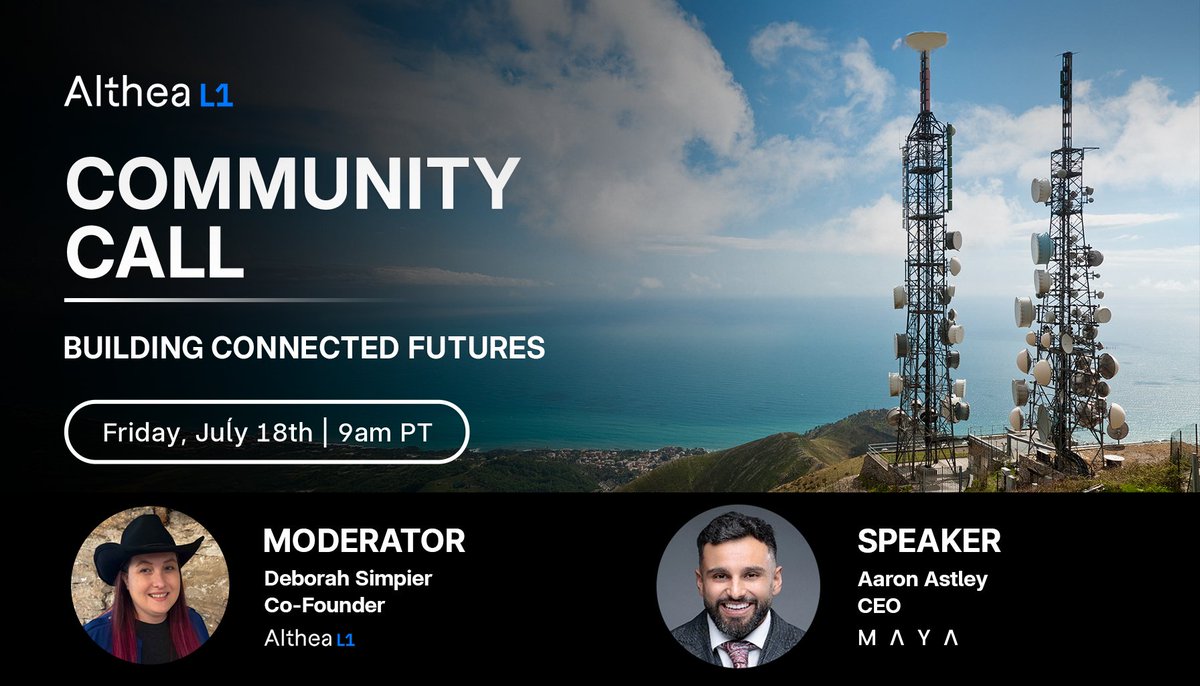
🌐 Building Connected Futures: Althea Community Call
Join us this Friday 📅 July 18th at 🕘 9AM PT with @AaronKez_, CEO at @ExploreMaya_!
Discover how Maya's digital ecosystem blends virtual and physical realities to drive innovation and solve global challenges
1/2
Brain drain doesn’t have to be final. Maya provides diaspora with direct access to investment opportunities in their homeland and tools to vote on priorities. Empowering global citizens to reconnect and drive national progress.
@ExploreMaya_
Why the Montevideo Convention Needs a 21st-Century Upgrade
The Montevideo Convention of 1933 is a cornerstone of international law, outlining the four criteria necessary for statehood: a permanent population, a defined territory, a functioning government, and the capacity to engage in international relations. While groundbreaking for its time, this framework was established in a pre-internet world — a world of rigid borders and physical infrastructure. Nearly a century later, these criteria feel increasingly outdated, particularly as the concept of governance evolves with the rise of network states and digital communities.
The Outdated Pursuit of Territorial Land
For traditional statehood, territorial land has always been a linchpin. Many emerging network states have sought to acquire physical land as a way of meeting Montevideo’s second criterion: defined territory. This desire stems from the belief that sovereignty — and the recognition that comes with it — still requires a tangible footprint. Yet, this pursuit is not only challenging but also fundamentally at odds with the decentralized ethos of network states.
Territorial borders were crucial in 1933, an era defined by physical trade routes, military security, and resource control. However, in today’s interconnected digital age, where commerce, culture, and collaboration transcend borders, does the idea of a defined physical territory still hold the same weight?
The New Sovereignty: Recognition Through Connection
If we are to redefine governance and the recognition of states, we must break free from the constraints of the Montevideo Convention. Sovereignty today should not hinge on borders or populations but on being recognized and listened to by a global community. This is where Maya offers a revolutionary framework.
Maya’s blockchain-based governance platform reimagines sovereignty as a function of connection, participation, and transparency. Through its liquid democracy model, Maya empowers individuals and communities to have their voices heard in governance processes. It is not about where you live or the land you claim — it is about the collective influence you wield and the ability to shape policies that matter to you.
Maya listens by design. Every user can propose initiatives, delegate votes, and engage in transparent decision-making. Policies are driven by data and consensus rather than the whims of bureaucracy. This creates a governance system where sovereignty is distributed among its participants, ensuring everyone has a stake in the process.
Virtual Borders: The New Defined Territory
The Montevideo Convention’s requirement for defined territory is not inherently outdated — it is the insistence that these borders must be physical that no longer makes sense. In the digital age, a “territory” can just as easily be virtual. For instance, Ethereum, as a decentralized network, operates as a defined, global “territory” governed by its protocols and community. It has no physical borders, yet its impact is vast and undeniable.
Maya builds on this concept, creating a governance framework where borders are networks, and participation is the currency of citizenship. Just as Ethereum unites users through its decentralized ledger, Maya connects individuals, organizations, and communities through its digital governance layer. These virtual borders are far more inclusive and scalable than their physical counterparts, enabling governance that transcends geography.
A Framework for the Future
The Montevideo Convention served its purpose in its time, but governance today requires a more adaptive and inclusive approach. Maya is that approach. It shifts the focus from land and population to recognition and participation, ensuring that sovereignty is no longer bound by antiquated criteria.
Maya’s system fosters a sense of belonging and empowerment in a world where physical borders are increasingly irrelevant. It enables communities to collaborate, innovate, and govern themselves without the limitations of territory or traditional bureaucracy.
The future of sovereignty is not about securing land; it is about securing influence, recognition, and a voice. Maya listens — and in listening, it redefines what it means to be sovereign.
@ExploreMaya_
What if a nation could access the world’s top talent and expertise without importing the GDP to sustain it?
That’s what Maya enables: global collaboration without borders, empowering nations to thrive through innovation networks. #Technocracy#FutureOfGovernance@ExploreMaya_
As the world becomes more tech-centric, governance must evolve. Maya’s Hive-Minds unite think-tanks, DAOs & companies to tackle R&D and policy challenges. Smarter solutions, leaner governments, lower taxes—welcome to the future of technocracy. @ExploreMaya_