GM CT
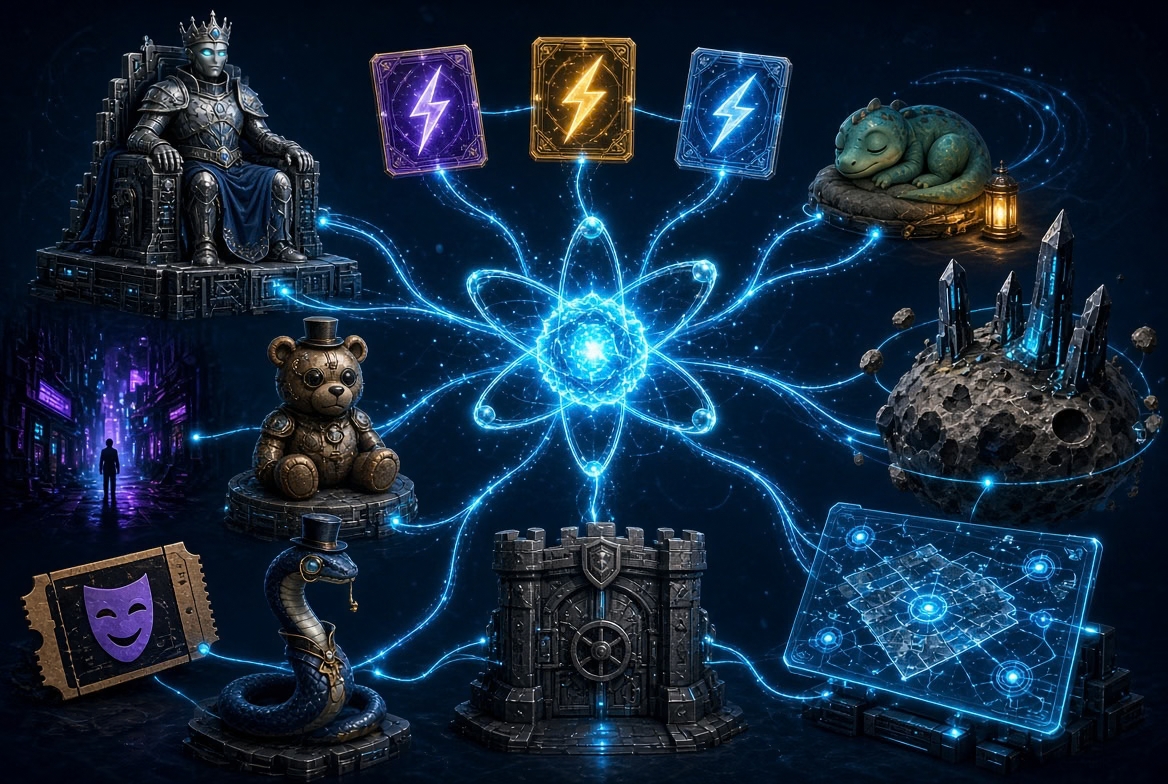
Nucleus is one profile with multiple live boards. Here’s what I’m currently watching:
@NucleusCodes S3 → $AURA for top 5,000
@0xCyberThrone → 8,888 free omnichain GTD
@zerufinance → $50K + Zerus spots
@sleepagotchi → Consumer AI + 500K+ users
@mdv_btc → ACCRETION
@ptsdshow → 3,333 Non-Fuddable Tickets
@AmericanFort_io → crypto payments by name
@Slippyclub → 300 GTD
@PlayOnMint → $50K $MNTD + MintABear GTD
@vangrid_io → $100K capture-grid campaign
Enrolled. One useful post a day. Not ten empty tags.
Let’s see what happens 🚀
Vangrid has raised $9M.
Thank you to our partners, supporters, and stakeholders for the conviction.
LLMs hit the text data wall. The next frontier is Physical AI and autonomous systems are starving for real-world spatial ground truth.
Satellites can't see sidewalks. Corporate fleets can't scale.
Vangrid turns 3 billion civilian smartphones into a decentralized perception grid.
Captured at the edge, verified onchain, delivered as ground truth for World Models and Sovereign Systems.
100K+ verified captures. Live bounty system. Real settlements on Base.
The grid is inevitable.
Giving an AI trading agent access to capital is one thing. Deciding how much responsibility it should have is another.
That distinction matters.
@AgenticsCredit connects an agent’s recorded trading performance to an Agentic Credit Score, with credit access subject to eligibility, venue support, and defined limits.
The interesting part isn’t simply whether an agent can receive credit. It’s how access can be structured around demonstrated performance instead of granting every agent the same level of freedom.
In an agent - driven economy, autonomy doesn’t have to mean unlimited authority.
Measured access, clear risk limits, and ongoing evaluation could be just as important as the intelligence behind the agent.
Capital allocation for AI agents is becoming a design problem of its own. 🤖
Weekend is here. Time to send it 😎🔥
THE WALL is coming to TERA.
There’s a TSLA crate sitting right on the edge. One way up. No easy route.
Grab your kart, hit the ramp, fly through the air and try to land that kickflip without eating dirt 😂
The goal? Get the crate home before the others do.
And TSLA isn’t your usual resource. It never backs a Land. You’ll only find it in the hardest spots to reach.
The city is already live. THE WALL is next.
Who’s ready to make some crazy jumps this weekend? 🏎️💨
🌐 https://t.co/mPaLRFiP3h
A useful 3D map doesn’t appear just because someone needs one.
Someone has to capture the environment, move through different viewpoints, and provide observations that can be turned into usable spatial data.
That’s the human side of what @vangrid_io is building.
Rather than relying entirely on a central team to collect every scene, Vangrid creates a model where specific capture tasks can be funded and fulfilled by contributors.
That opens an interesting possibility: people with smartphones can help supply spatial data for applications that need better views of the real world.
The challenge is making those contributions useful, verifiable, and worth the effort.
Because better spatial intelligence depends not only on the software processing the data, but also on how that data gets collected in the first place. 🌍
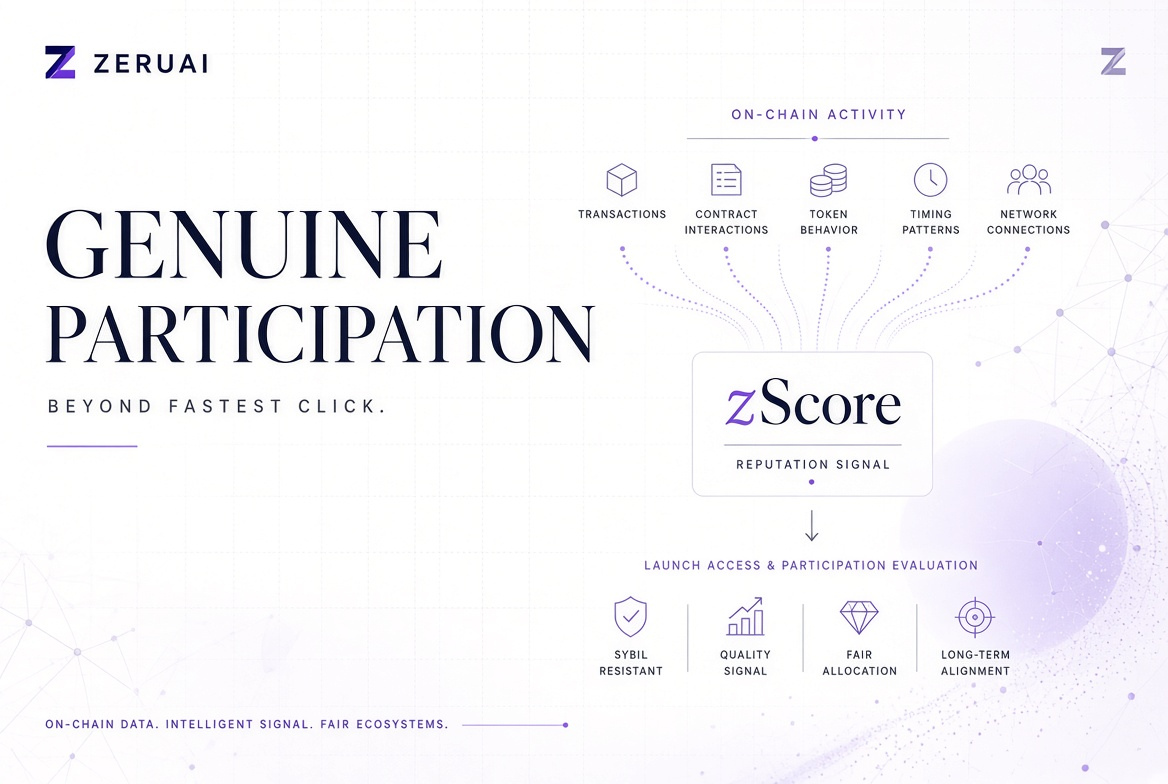
Getting into a promising launch shouldn’t be only about who can react fastest or create the most wallets.
Projects also need ways to distinguish genuine participation from activity designed purely to capture allocations.
That’s one use case worth exploring with @zerufinance and zScore.
By turning on-chain financial behaviour into a reputation signal, ZeruAI gives projects another input they can consider when evaluating participants or designing access rules.
It doesn’t mean a score should decide everything. Builders still need transparent criteria and fair allocation systems.
But combining wallet behaviour with other checks could help make launch participation more meaningful.
The bigger question is how Web3 can reward credible users without making access unnecessarily complicated. 👀
One thing I think more people should consider about crypto privacy is how much information a normal payment can reveal beyond the amount sent.
A payment can be legitimate and still expose more of your financial activity than you intended.
That’s why @AmericanFort_io’s approach with FortressName is interesting. It separates the name people use to reach you from the receiving address used for an individual payment.
The goal isn’t to make crypto complicated. It’s to give users more control over what gets connected publicly when money moves.
Privacy should feel like a practical part of sending and receiving, not an entirely separate activity.
That’s a useful direction for everyday crypto payments. 🔐