What if your calendar reminded you to make a wish every time you saw 11:11?
Build a beautiful Python Wish Calendar using calendar and rich — and highlight November 11 (11/11) as your special wish day!
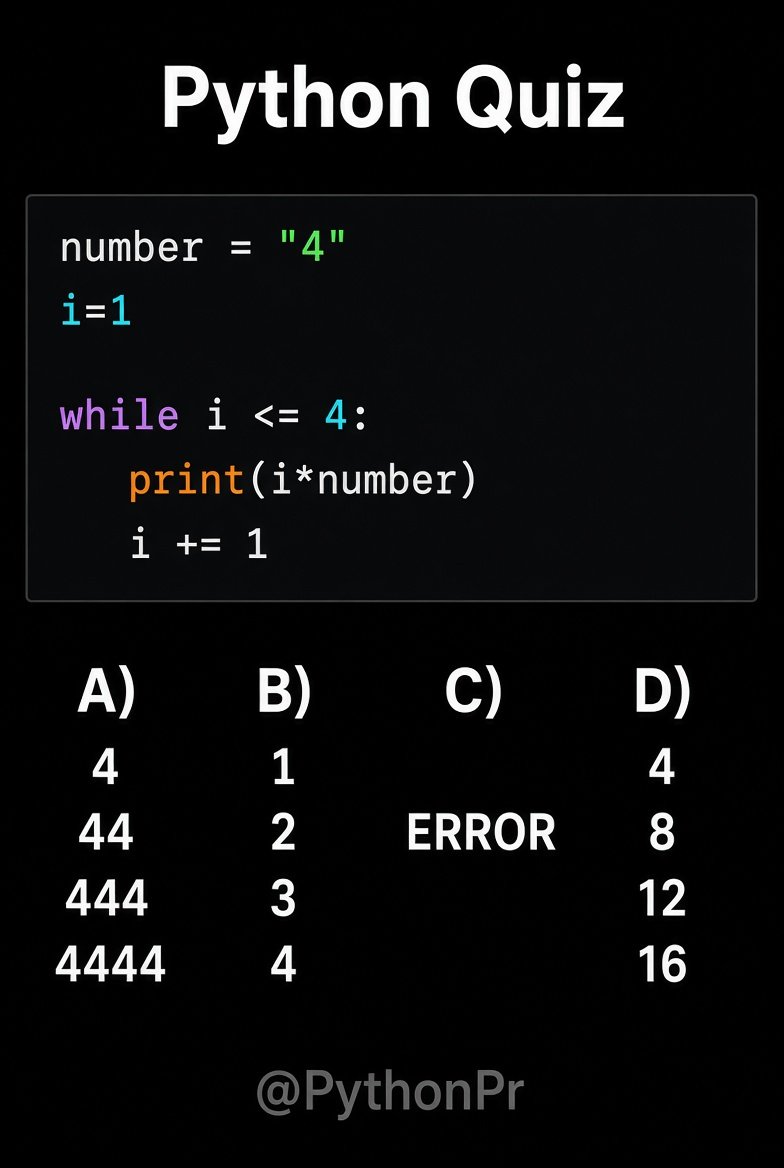
Books: This comprehensive guide features 100 carefully selected Python loop interview questions, designed to take you from beginner to advanced level.
https://t.co/Pt4tpdh1G1
تغريدة خطيرة من رايان دال، مبتكر Node.js،
يقول إن هندسة البرمجيات تحولت في وقت قصير جداً لكود مكتوب 100% بالذكاء الاصطناعي، والأغرب إن المبرمجين مكملين كأن ما صار شي.
وإن الذكاء الاصطناعي يكتب ++c أحسن منه، بس التأكد إن الكود يشتغل صح للحين مشكلة ما انحلت، ومع كذا صاروا يطلعون كمية أكبر بكثير وبجودة أعلى.
أعتقد في فرصة لشركة ريادية تسوي الجزء الناقص؛ وهو مراجعة الكود بشكل آلى وإنساني
@S6sny عندي خبر سيء :
حتى الData Structures والOOP ماهي أصعب شيء في البرمجة
فيه خوارزميات متقدمة وأعقد منها
فيه موضوع الTime Complexity لتحليل كفاءة الخوارزمية
فيه خوارزميات بمجالات جدا كثيرة مثل التشفير ، نظم التشغيل ، الرسومات والجرافيكس ، الشبكات
وبعضها مزعج الصراحة...
talked to a founder who just raised a series a. he spilled the secret.
you paste your website into Explee. it works out who needs the product and emails the right people.
i have been doing it manually forever.
ok. testing it: $30 free
https://t.co/zkIKz8K9ka
Google is using AI to design the very systems that run it. Partha Ranganathan, VP and engineering fellow at Google, explains how the company approaches AI infrastructure and how AI is being used in software development, including security and automatic bug fixing.
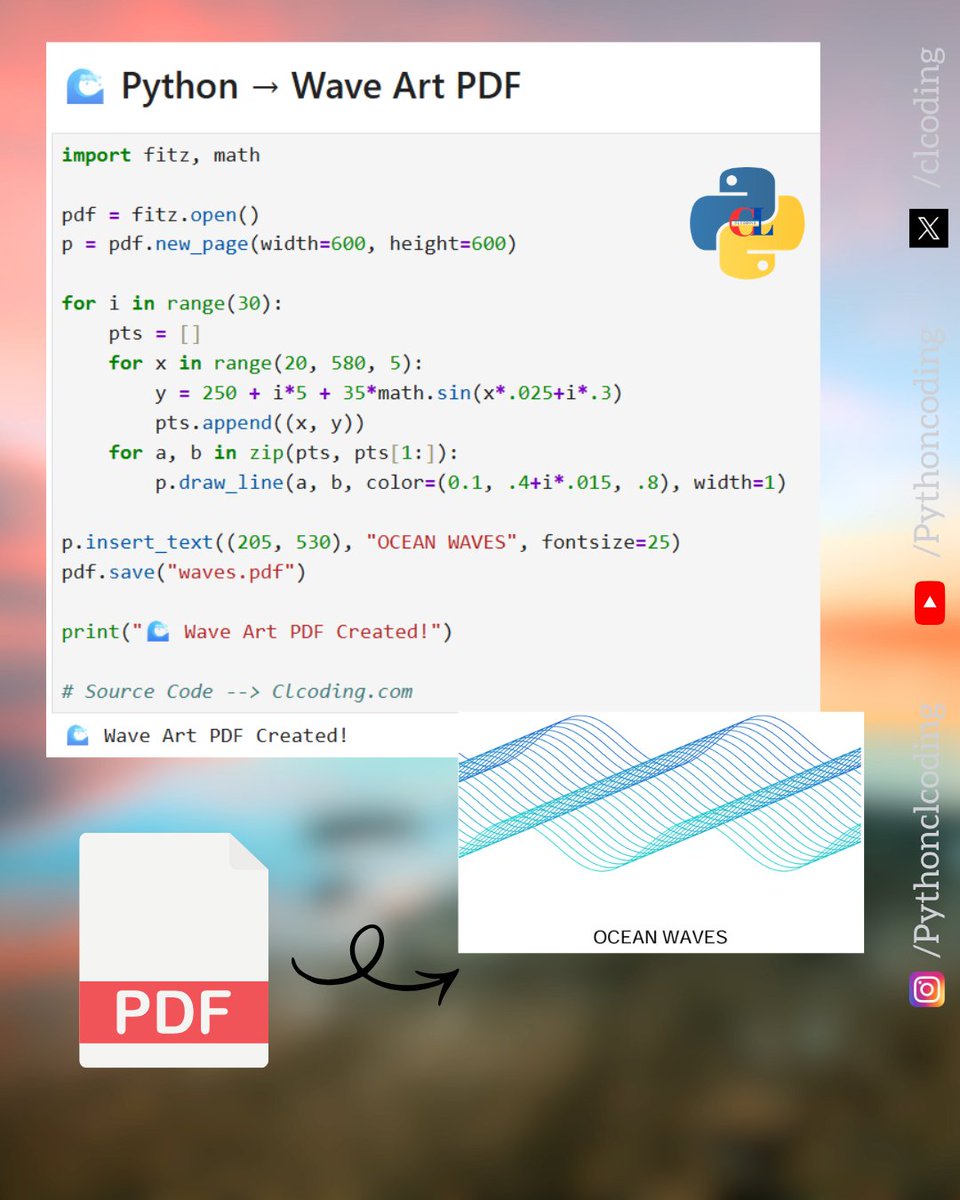
Create Beautiful Ocean Wave Art Using Python!
Did you know you can turn Python code into beautiful artistic designs and export them directly as a PDF?
With just a few lines of Python, you can:
🔹 Generate mathematical wave patterns using math.sin()
🔹 Create smooth curves using coordinate points
🔹 Draw custom graphics with PyMuPDF (fitz)
🔹 Add colors, text, and artistic elements
🔹 Export your creation as a PDF file
Books: 1000 Days Python Coding Challenges with Explanation
https://t.co/4lR4IbXq2J
Python Project: Build Your Own Two-Factor Authentication (2FA) Generator!
Ever wondered how authenticator apps generate time-based one-time passwords (TOTP)?
You can build your own Two-Factor Authentication Generator using Python with just two libraries.
Libraries Used
pyotp – Generates time-based one-time passwords.
qrcode – Creates QR codes for authenticator app setup.
What will this project do?
Generate a unique secret key.
Create a time-based one-time password (TOTP).
Generate a QR code that can be scanned using an authenticator app.
Display the current 6-digit OTP.
Install the required libraries:
%pip install pyotp qrcode
Why build this project?
This is a practical way to explore Python, authentication systems, cybersecurity, and cryptographic concepts.
You will also understand how applications add an extra layer of security beyond traditional passwords.
Take the challenge further:
Can you extend this project by adding OTP verification, password authentication, and a complete login system?
Related Free Course: IT Fundamentals for Cybersecurity Specialization
https://t.co/cOkCZzpTPK
🔖 Save this project and try building your own 2FA system with Python!
RAG vs CAG: Two Ways to Make LLMs Smarter!
How do you give an LLM access to relevant knowledge?
Two interesting approaches are Retrieval-Augmented Generation (RAG) and Cache-Augmented Generation (CAG).
But they solve the problem differently.
🔵 RAG (Retrieval-Augmented Generation)
Retrieves relevant information at query time.
Uses vector databases and similarity search.
Works well with large, dynamic, and frequently updated data.
Adds retrieval overhead and latency.
🟣 CAG (Cache-Augmented Generation)
Preloads knowledge into the context.
Uses a KV cache to speed up generation.
Avoids retrieval at query time.
Works best with smaller, relatively static datasets.
The key difference:
RAG retrieves knowledge when needed.
CAG prepares and caches knowledge in advance.
Which one should you choose?
Choose RAG when your knowledge base changes frequently.
Choose CAG when your knowledge is relatively stable and low latency is important.
Both approaches have their place in building efficient AI applications.
Understanding these architectures is essential for anyone working with LLMs, AI agents, and production-ready AI systems.
Save this comparison for your next AI project!
IBM RAG and Agentic AI Professional Certificate : https://t.co/YNzp0HtaVh
Mathematics of Deep Learning: An Introduction (Free PDF)
Want to understand the mathematics behind Deep Learning?
This textbook from De Gruyter provides an introduction to the mathematical foundations of deep learning.
333 Pages
Topics worth exploring:
Mathematical foundations of Deep Learning
Linear Algebra
Calculus and Optimization
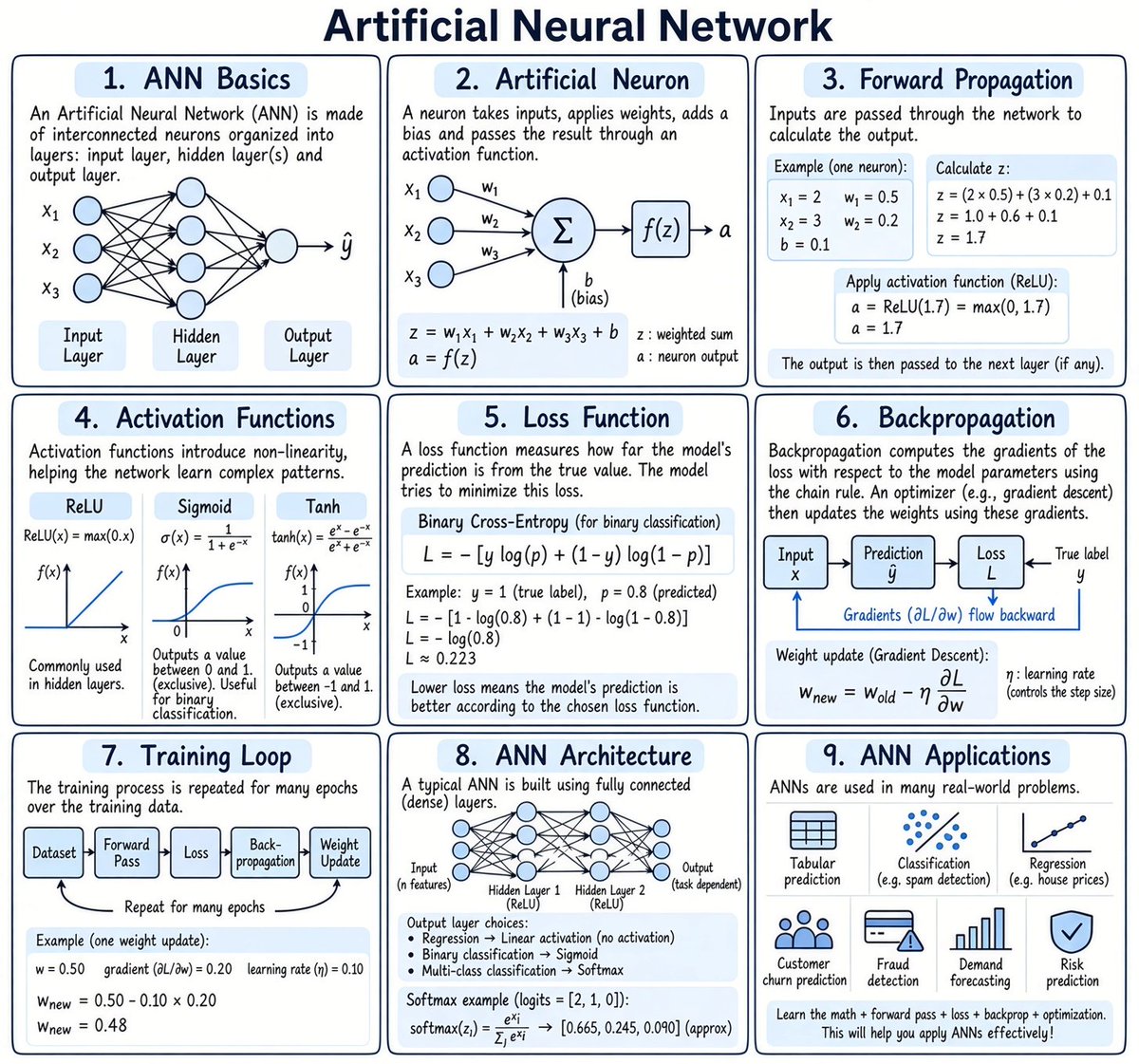
Neural Networks
Mathematical concepts behind Deep Learning algorithms
A useful resource for students, researchers, and AI/ML enthusiasts who want to strengthen their mathematical understanding.
Read and access the PDF:
https://t.co/NZVIGEKOPr
Your Laptop Battery, Monitored with Python!
Did you know Python can check your laptop's battery status?
Using the psutil library, you can monitor:
Current battery percentage
Whether your laptop is charging
Estimated remaining battery time
It's a simple yet practical example of how Python can interact with your computer's hardware and operating system.
Small Python projects like this are a great way to explore real-world programming.
Follow @clcoding for more interesting Python tricks, projects, and tutorials!
Books:
Unlock the full potential of Excel by harnessing the power of Python! “Automating Excel with Python” is a practical, hands-on guide designed for beginners and professionals alike who want to save time, reduce errors, and supercharge their spreadsheet workflows.
https://t.co/dPNecvHIbo