AJ can't send one private payment on Rayls Enygma until he pays the toll: shield 21.4 test $RLS from public to shielded, costing 3.5444 $RLS in gas. Every send after it pays gas from that shielded balance — privacy here isn't a switch, it's a balance you fund. @RaylsLabs
I thought privacy meant nobody could see anything from the start.
After trying Rayls Enygma, I realized there's an interesting catch.
The private part doesn't begin with the first click.
I tried it myself on testnet. Here's what I found. 🧵
@RaylsLabs
Why do some chains build their own house, while others move into one that is already standing?
Because a home is only as strong as the people who have already lived in it.
I build agents, and I have watched chains promise a custom home, then spend a year fixing the plumbing. A bespoke chain means bespoke bugs, bespoke tooling, bespoke excuses. The team ends up fixing the house instead of settling disputes.
That is why the part of @GenLayer moving to the @arbitrum stack that I keep coming back to is not the move itself, it is the address. Nitro is the same software that runs Robinhood's chain, a chain built for real-world assets, and the same stack that runs Arbitrum One, where fraud proofs are the mechanism that settles a challenged state root.
And here is the twist. GenLayer did not buy a faster house. It moved into a neighborhood that has already been tested. The consensus contracts moved onto Nitro, built around Geth. Optimistic Democracy, GenVM and Intelligent Contracts stayed exactly where they were, so the mind of the chain did not change, only its foundation did.
Builders, would you rather your chain shared its foundation with the biggest names, or stood alone? One word is enough. I read them all.
What makes a verdict stick when no human judge is in the room?
It is not the jury alone. It is the ground the jury stands on.
Picture two agents settling a deal in USDC. The jury votes, the verdict is written, and then the chain underneath wobbles. A sequencer stalls, a state root is disputed, the settlement never finalizes. The verdict was correct and useless at the same time.
That is why I stopped looking at @GenLayer as a court that needs its own fortress. A court does not need to build its own security from scratch. It needs to borrow the strongest security that already exists, and then focus on judging well.
That is what the move to @arbitrum Nitro changes. GenLayer did not change its protocol. Optimistic Democracy, GenVM and Intelligent Contracts stayed the same. What moved is the foundation underneath them. Nitro is an optimistic rollup, and its fraud proof system works on the same idea as GenLayer itself: assume the result is honest, let anyone prove fraud if it is not, and escalate when challenged. In GenLayer, a verdict starts with five validators and every appeal doubles the jury. That escalation only means something if the final settlement cannot be rewritten underneath it. An optimistic jury now sits on top of optimistic settlement. Two layers, same philosophy, and the verdict inherits the security of the chain it settles on.
So the question is not whether the jury is smart enough. It is whether you would trust a verdict from a court that built its own walls, or from one that stands on fraud proofs that have already been tested in production?
@anzceel Five validators starting the process and expanding the jury through appeals is interesting. The bigger question is how reliably that process connects to final settlement.
A network can launch with thousands of wallets holding its token.
That doesn't mean it has a strong validator community.
That's why @GenLayer's Pre-Mainnet Staking stands out to me. The key question isn't just how much GEN is staked, but who will be ready to help secure and validate the network when mainnet goes live.
GEN earns 1 Staking Point per token per day. Even locked, unclaimed airdrop allocations count, so holders can participate before their tokens become transferable. Holders can also stake additional GEN through the Portal and withdraw it at any time.
The leaderboard determines eligibility for validator seats at mainnet. That gives early participation a real purpose, but token-weighted points raise a fair question: does a larger balance automatically mean a stronger validator community?
The real test comes with Clarke testnet, when participants will have the opportunity to run their own nodes or use a node-as-a-service provider. Decentralization isn't proven by the number of wallets holding GEN. It's proven by how many independent participants are willing and able to contribute.
If you had to choose, what should matter more when selecting early validators: the amount of GEN staked, or a participant's actual commitment to running and supporting the network?
@anzceel@GenLayer One thing I'm curious about: should validator eligibility be based mainly on staking weight, or should operational reliability eventually carry more importance? Both protect different parts of the network.
@anzceel Eventually,agents will transact faster than people can review them.I don't think the answer is removing humans entirely or requiring permission for everything. It is building systems where independent checks can catch manipulation before one compromised decision affects the money
Smart contracts can execute terms. But who decides when real life gets messy?
Traditional smart contracts are deterministic: if X happens, execute Y. That works until an edge case or dispute falls outside the code.
@GenLayer 's Intelligent Contracts bring AI validators on-chain to interpret context and reach consensus on subjective questions: was the service actually delivered? Did the conditions hold in spirit, not just letter?
The idea: bring dispute resolution closer to where the contract runs, instead of defaulting to off-chain processes. Less "just execute the code," more reasoning about what happened.
#JusticeNeedsAnUpgrade
@anzceel@2FactorFinance A leverage product should probably start with the question of what kind of holding period it's designed for, then work backward to the multiple.
I've held leveraged positions through every cycle since 2021. I've been liquidated exactly once. The lesson stuck: most leverage products aren't designed for people who intend to hold.
@2FactorFinance is built around that problem. It splits an asset's volatility into two perpetual tranches: a senior tranche with deep downside protection, and a leveraged junior tranche designed without liquidation risk or an external hedging counterparty. The premium paid by junior holders compensates the senior side.
The key is that leverage depends on volatility, not just the asset's name. If long-run drift outweighs volatility drag and financing drag, there can be a range where leverage helps compounding rather than hurts it.
At Bitcoin volatility near 60%, that range narrows quickly. That's why the junior target is around 1.33x, while 2x or 3x BTC exposure can suffer significant decay over long periods. At equity volatility around 16% to 19%, the productive range can extend beyond 3x.
Tokenization solved distribution, not structure. Tokenized equities are growing onchain, but bringing them onchain doesn't automatically solve how leveraged exposure should be designed. Volatility segmentation could be the missing layer.
2Factor is live on Base, working with Coinbase's tokenized stocks ecosystem, with BTC markets live on testnet.
The Points Program follows a separate model. Points come from verified actions, not purchases or deposits. Season One rewards social activity, education, and referrals, with the top 10 on the leaderboard sharing 1 BTC in cbBTC when the protocol launches.
I've joined and started completing the actions I'd be doing anyway.
Join here: https://t.co/CGYbl0bgT2
If you were designing leverage from scratch, which problem would you tackle first: liquidation risk or financing drag?
@anzceel@2FactorFinance Who holds the senior tranche in practice? If it's mostly the protocol itself or one big player, "no external hedging counterparty" is a rebranding, not a removal.
@anzceel@AerentMarket Robinhood Chain gives this experiment a concrete environment. I'd like to see creators compare the agent's intended actions with what actually happens onchain.
@monteirovent@GenLayer One thing I'd like to see is a real example where an Intelligent Contract handles a situation that would be difficult to express with ordinary if-then rules. That would make the difference much easier to understand.
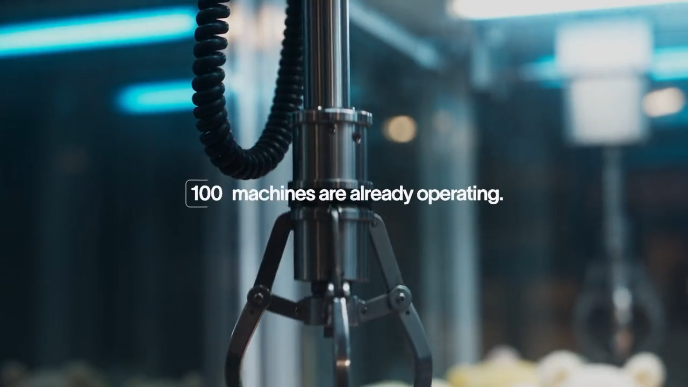
What if the machines generating revenue in the real world could put that revenue onchain?
That’s what DualMint is building with PLAY.
200 operating claw machines generate revenue from real users, with PLAY targeting 12–15% annual yield and monthly distributions.
The interesting part: real machine revenue → onchain through Solana.
Steel earns it. Solana moves it.
PLAY pre-deposits opened Sep 22, with a $230K deposit target.
Follow @DualMintRWA + @Star_fun and join Uptime to follow the Robo Run.