50 years ago today, the Medical Device Amendments were signed into law — giving @US_FDA authority to ensure the safety & effectiveness of medical devices.
The FDA authorized marketing of the DeepView AI System to detect deep burn tissue and flag specific skin areas unlikely to heal within 21 days. The DeepView AI System utilizes hardware and AI-driven software to analyze images obtained from the burn. https://t.co/p5rnK9NDWd
Today FDA approved the first-ever gene therapy for the treatment of genetic hearing loss under the National Priority Voucher Program.
✅6th approval under the National Priority Voucher Program
✅Approved 61 days after filing
https://t.co/Modecu7S50
The FDA’s AI stance in action!
The agency just cleared an AI ultrasound tool that estimates gestational age in under 2 minutes.
This is the model: support innovation that expands access and improves speed, while holding firm on safety and effectiveness.
The FDA's Home as a Health Care Hub Initiative launches the "READI-Home: Reducing Readmissions through Device Innovation for the Home” innovation challenge to accelerate patient access to at-home medical technologies aimed at reducing hospital readmission. https://t.co/qltFtPWux0
The @US_FDA continues to advance the use of Real-World Evidence (RWE) to support smarter, more efficient regulatory decision-making for medical devices.
Explore how RWE is driving real-world impact in our latest FDA Voices blog. https://t.co/eO9ctDl5Sr
Today, @US_FDA issued final guidance on collecting and submitting patient preference information, strengthening the agency’s commitment to patient engagement and advancing safe, effective medical devices. https://t.co/jOkYJPzwaj
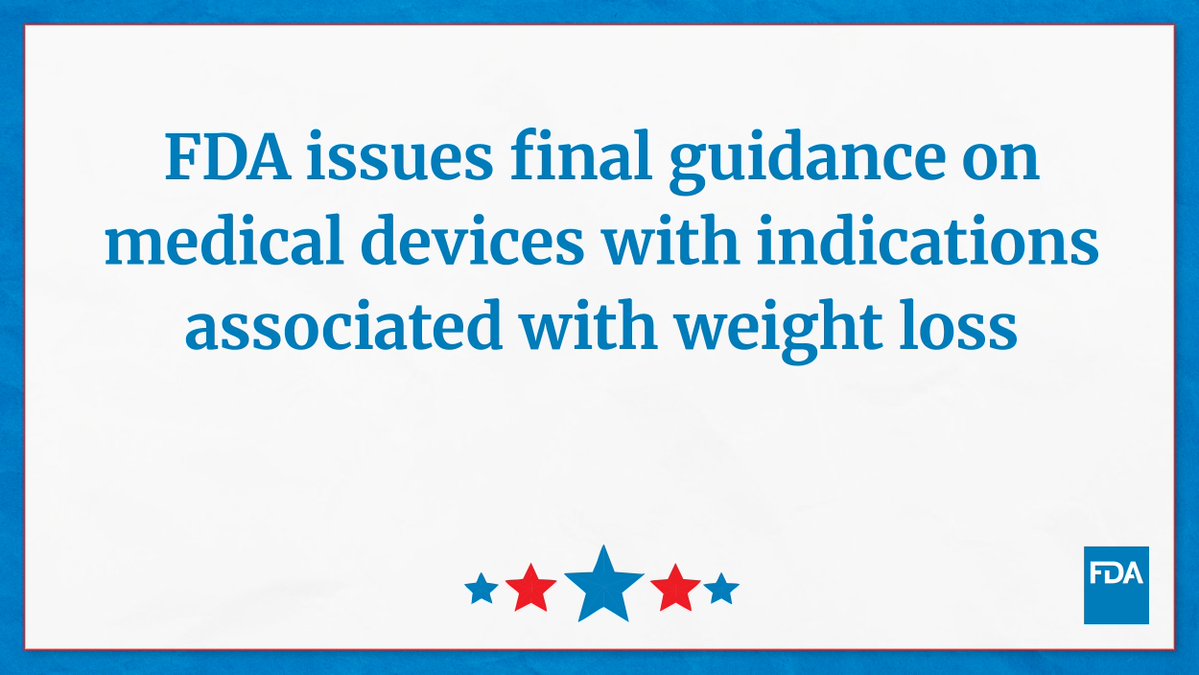
Today, FDA issued final guidance for medical devices with indications for use associated with weight loss as part of the FDA’s ongoing efforts to support the development of safe and effective medical devices that can improve health outcomes and reduce the burden of chronic disease in the U.S. https://t.co/pJ1xcpgwad
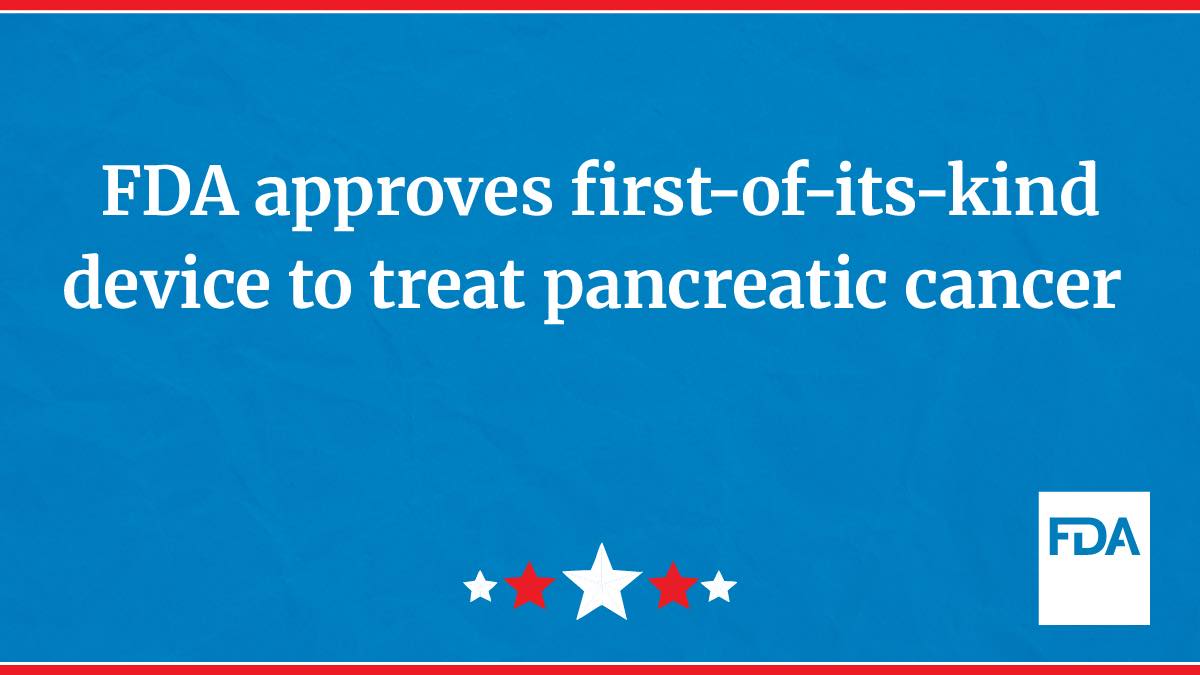
The FDA approved a first-of-its-kind device to treat locally advanced pancreatic cancer, reflecting the agency’s unwavering commitment to advancing safe and effective medical devices that address chronic diseases and improve the lives of Americans. https://t.co/XHDntiu83w
Anchored on the pillars of safety & innovation, the CDRH 2025 annual report highlights the Center’s resilience and sustained performance this past year. Check out CDRH’s 2025 Annual Report to learn more about their work to protect & promote public health: https://t.co/iqdcNVQoXs
Today, the FDA announced the Technology-Enabled Meaningful Patient Outcomes (TEMPO) for Digital Health Devices Pilot, a first-of-its-kind digital health pilot to expand access to chronic disease technologies. https://t.co/7kvzX5vJRi
The voluntary pilot is designed to promote access to certain digital health devices while safeguarding patient safety and marks a major step in the agency’s plan to support technology-enabled care, strengthen chronic disease management, and expand health care access for patients nationwide.
Reminder: submit written comments on generative AI-enabled digital mental health medical devices to docket number FDA-2025-N-2338 by Dec. 8 for review and consideration by the FDA. https://t.co/GzYFxyNyGm
The FDA Digital Health Advisory Committee will discuss generative AI-enabled digital mental health medical devices at its Nov. 6 virtual meeting. Learn how to submit written public comments on the meeting: https://t.co/ZWNG34rEyq
The FDA has posted materials for the virtual Digital Health Advisory Committee meeting on Nov. 6. Access the meeting materials and webcast link, and learn more about the meeting:
https://t.co/GzYFxyNyGm
The FDA announced a request for public comment by Dec. 1 on measuring and evaluating the performance of AI-enabled medical devices in the real-world. https://t.co/5QQS8EjGBb