Flight Deck Lessons
Senior airline captain. Author. Singer.
Stage Name : Captain Reza
Official website for download music
#Music#Singer#Politics#Art#Dance
@Denise10231976 I wrote those matters in my book FLIGHT DECK LESSONS that how could change them . in 300 chapters with critical questions , answering , suggestions and golden sentences in final each chapters. But my book never seen with political universities and etc.
THE DEMOCRACY QUESTION:
SDO HUMAN LIVES HAVE EQUAL VALUE — OR ONLY AMERICAN LIVES?
When a democratic legislature refuses to restrain the continuation of a war, it must answer a question far greater than party politics: whose lives does democracy exist to protect?
On November 19, 2026, the United States Senate rejected H.Con.Res.93, a War Powers Resolution intended to direct the removal of American armed forces from hostilities with Iran unless Congress authorized continued military involvement.
The vote was 48 in favor and 51 against. Three Republican senators — Susan Collins, Lisa Murkowski, and Rand Paul — supported the resolution. Democratic Senator John Fetterman opposed it.
This was not a direct vote declaring civilian deaths lawful, nor was it a judicial determination about war crimes. It was a vote concerning the authority to continue military involvement and Congress's responsibility to exercise oversight.
But that distinction does not eliminate the moral questions raised by the decision. It makes those questions even more important.
WHAT DOES DEMOCRACY MEAN WHEN OTHER PEOPLE ARE DYING?
A democratic government claims to represent the will of its people, protect human rights, uphold the rule of law, and defend human dignity.
But are these principles universal?
Or do they stop at the borders of the United States?
If American families deserve protection from war, do Iranian families deserve less?
If the death of an American child is considered a national tragedy, what should the death of an Iranian child be called?
If the destruction of an American home is unacceptable, why should the destruction of a home somewhere else in the world be treated as a lesser concern?
Are human rights universal principles, or privileges distributed according to nationality, political alliances, and strategic interests?
These are not questions about supporting one government against another. They are questions about the meaning of human equality.
DOES A LEGISLATIVE VOTE REMOVE POLITICAL RESPONSIBILITY?
The Senate was not asked to decide whether every military action was lawful or unlawful. It was asked to consider a measure intended to constrain the continuation of American military involvement.
By rejecting that measure, the Senate declined to use this particular legislative mechanism to compel withdrawal.
That decision deserves scrutiny.
When elected representatives know that military operations carry human costs, they cannot treat the consequences as someone else's problem. Oversight is not merely a constitutional procedure. It is also a moral responsibility.
A legislature cannot claim that its responsibility ends when it votes.
It must also confront the foreseeable consequences of the authority it leaves in place.
And if credible allegations of unlawful attacks or war crimes arise, they must be independently investigated. No government, military, or political alliance should receive immunity from scrutiny.
IS THIS A NEW FORM OF RACIAL HIERARCHY?
There is a dangerous question beneath this debate.
When the suffering of people in one country repeatedly receives less political urgency than the suffering of people in another, what explains that difference?
Is it strategic calculation? Nationalism? Political loyalty? A hierarchy of whose suffering matters?
It would be premature to label every senator who opposed this resolution a racist. Their individual motives cannot be established from a single vote.
But the broader question cannot be dismissed:
Can a political system claim to believe in the equality of human beings while accepting a world in which the value assigned to a human life appears to change with that person's nationality?
If the lives of people outside America's borders are treated as politically expendable, the result may resemble a new form of hierarchy — not necessarily declared in law, but reflected in political priorities.
That possibility deserves serious examination.
THE TEST OF A DEMOCRACY
Democracy is not tested only when a government protects its own citizens.
It is also tested when the people suffering are foreign, politically unpopular, culturally different, or citizens of a country described as an adversary.
It is easy to defend human rights when doing so carries no political cost.
The real test comes when defending those rights challenges military strategy, alliances, political power, or the decisions of one's own government.
The United States has constitutional institutions, elected representatives, courts, a free press, and a long tradition of public debate. Those institutions create opportunities for accountability. They also create responsibilities that cannot be avoided.
The Senate's vote does not prove that America rejects human equality. But it does raise serious questions about how its elected representatives weigh the human consequences of war.
And those questions deserve answers.
QUESTIONS THAT SHOULD NOT BE SILENCED
If democracy protects human dignity, why should the nationality of a victim affect the urgency of protecting them?
What responsibility do senators bear when they decline to restrict a president's military authority?
Should political alliances ever outweigh the obligation to investigate credible allegations of unlawful attacks?
If the deaths of foreign civilians are accepted as an unavoidable cost of policy, who decides that those lives are expendable?
Can a nation credibly defend universal human rights while applying different political standards to allies and adversaries?
And finally: if every human being is born with equal dignity, why should that equality become negotiable when war begins?
Democracy cannot be measured only by the rights a nation protects within its own borders. It must also be measured by the value it places on human lives beyond them.
A human life does not become less valuable because it was born on the other side of a border.
And no democratic institution should be exempt from answering for the consequences of its decisions.
THE WORLD IS WATCHING. HISTORY WILL ASK QUESTIONS.
@Denise10231976
#Trump #Politics #News #Senate #War #WarCriminals #racist #NoWar #StopWar #BreakingNews
@Denise10231976 New century need new ICC system . The 20 century organizations and rules not according in 21 century . Need to review rules and make new organizations .
CAPTAIN REZA — THE PRICE OF YOUR LIES
How much does a lie cost?
And who pays the price?
A powerful protest song confronting political deception, war, broken promises, and the human and economic cost of decisions made by those in power.
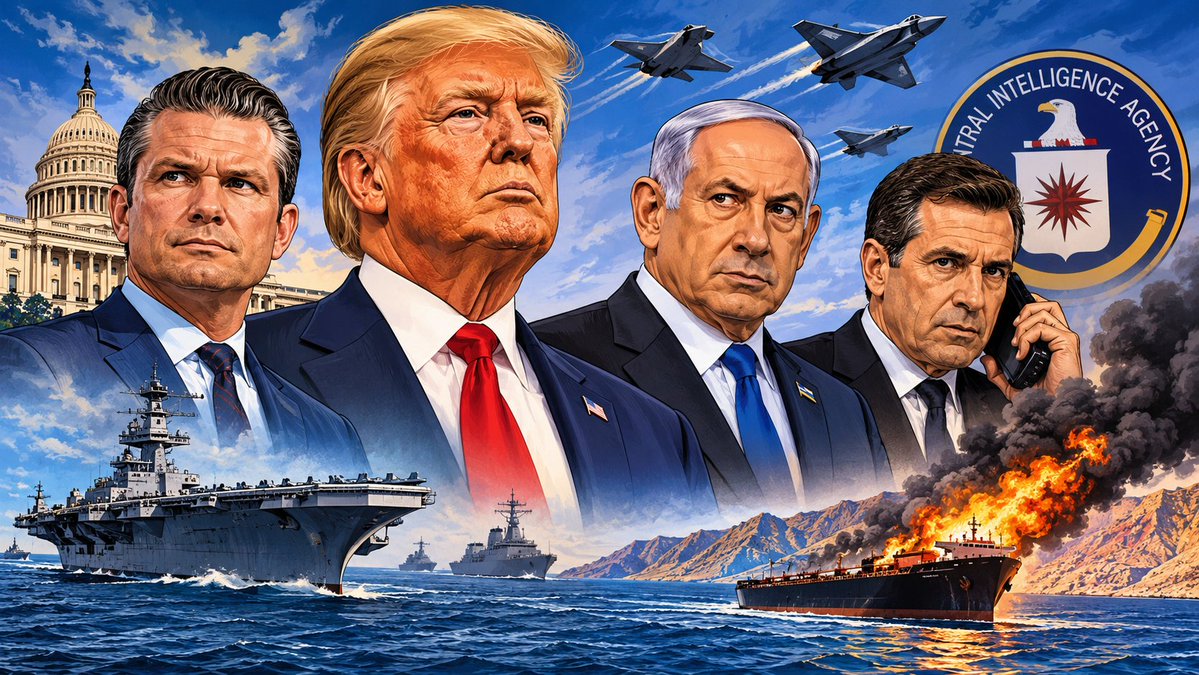
Addressing Donald Trump, Pete Hegseth, Marco Rubio, Admiral Brad Cooper, Benjamin Netanyahu, and IDF Chief of Staff Eyal Zamir, this song raises difficult questions about leadership, accountability, public money, and the price nations pay when political ambition takes priority over peace.
While leaders speak of strength and victory, ordinary people carry the consequences.
Public resources are spent, trust is damaged, lives are lost, and a nation's reputation can take generations to rebuild.
This is not a celebration of war. It is a demand for truth, responsibility, and accountability.
No leader is above history. No political promise should silence the people.
And no war should escape the questions that follow it.
**THE PRICE OF YOUR LIES — A protest song by CAPTAIN REZA.**
Listen. Question. Remember. **CAPTAIN REZA** Music for truth, freedom, and peace.
For Download music refer to my website
Link in my Bio page .
@Denise10231976
#Music #NewMusic #Dance #Art #CaptainReza #NowPlaying #Musictwt #Singers #Peace #Love #Leadership #MusicFair #NOWAR
WHO IS TELLING THE AMERICAN PEOPLE — AND THE WORLD — THE TRUTH?
The Mossad Chief’s #Washington Visit, the Events That Followed, the Strait of Hormuz, and the Growing Questions About #America’s Security
On November 13, 2026, according to a report by #Axios citing three sources familiar with the matter, Mossad Director Roman Gofman was in Washington for discussions with senior officials of the Trump administration about #Iran.
Gofman reportedly met CIA Director John Ratcliffe and was expected to travel to Miami for discussions with #WhiteHouse envoy #SteveWitkoff.
The reported visit took place as Israeli Prime Minister Benjamin #Netanyahu was pressing President Donald Trump to consider resuming military operations against Iran. According to the same report, Trump had so far favored maintaining #economic and naval pressure rather than immediately launching another military offensive.
This visit raises important questions about the direction of US policy toward Iran, the #intelligence assessments being exchanged between Washington and Tel Aviv, and the possibility of renewed military escalation.
But the questions do not end with the meeting itself.
In the days surrounding and following that visit, a series of serious incidents and disruptions attracted public attention in the United States and across the region.
Are these events connected? At present, there is no publicly established evidence proving that they are. Their timing alone cannot establish a relationship. Nevertheless, their individual circumstances, official explanations, and broader geopolitical context deserve careful examination.
1. A sequence of incidents that demands transparency
November 12 — Microsoft 365 disruption
A major Microsoft 365 service disruption began on November 12, affecting services used by businesses and organizations.
This incident is particularly important for establishing the chronology:
It began before the reported November 13 visit by the Mossad chief.
Microsoft's preliminary explanation attributed the disruption to a technical problem involving #network capacity changes and server behavior. The company indicated that it had not identified evidence connecting the incident to a cybersecurity attack.
This explanation should be considered on its own merits. The outage cannot reasonably be presented as an event that began after the Mossad chief's visit.
November 13 — Nationwide FAA ground stop
On November 13, the Federal Aviation Administration experienced a technical disruption that led to a nationwide ground stop.
According to the FAA's subsequent explanation, its legacy equipment became unstable when an unusually high volume of connection attempts flooded the FAA telecommunications network. The agency identified two potential locations associated with the excessive data traffic and said work was underway at one of those sites involving a new router.
The FAA stated that the disruption affected communications and radar-related systems across multiple air traffic control facilities. Flights were grounded as a precaution, and the agency said aircraft landed safely.
The FAA's explanation points to a technical and network-related failure. It has not publicly established that the incident was caused by a hostile cyber operation.
Nevertheless, a disruption affecting a critical national transportation system raises legitimate questions about infrastructure resilience, modernization, oversight, and the ability to maintain essential services during a crisis.
November 13 — Collision on the Mississippi River
On the same day, the tanker #AtlanticAsphalt collided with the passenger vessel #AmericanHeritage on the Lower #Mississippi River near #NewOrleans.
The National #Transportation Safety Board confirmed that the collision occurred on November 13 and opened an investigation.
Initial reporting indicated that the passenger vessel ended up on its side following the collision. The NTSB's investigation is ongoing, and the circumstances must be established through evidence rather than speculation.
This was a serious maritime accident. However, there is no publicly established evidence that it was connected to the FAA disruption, the Microsoft outage, the Mossad visit, or any foreign operation.
November 17 — #NSA internal network disruption
On November 17, reports emerged that #NSANet, the National Security Agency's classified internal communications network, had experienced a disruption.
According to reporting by Defense One and The Guardian, the incident affected internal workflows. The reports cited sources who said there was no immediate evidence of a cyberattack and that software upgrades or scheduled maintenance might have been involved.
The NSA subsequently described the incident as temporary degradation during scheduled routine maintenance and stated that mission-critical capabilities remained operational.
This is an important distinction: a disruption to an internal communications network is not, by itself, evidence that classified information was stolen or that an adversary penetrated the agency.
But the interruption of a network used within one of America's most important intelligence institutions naturally raises questions about technical resilience and continuity of operations.
2. The Strait of Hormuz: Open, controlled, or still dangerous?
While these incidents were unfolding, another major contradiction appeared in the public discussion of the war with Iran.
President Trump and Secretary of Defense Pete Hegseth have made strong statements about the destruction of Iran's military capabilities and the ability of American forces to control the strategic situation.
#Hegseth has described Iran's navy as destroyed, its air force as grounded, and its military-industrial capabilities as severely degraded. He has also stated that the United States has control over the Strait of Hormuz.
These are significant claims.
But what does control actually mean?
Does it mean that the Strait is legally and physically navigable?
Does it mean that commercial vessels can transit without being attacked?
Does it mean that shipping companies, insurers, and crews consider the route safe enough for normal commercial operations?
Or does it mean that American forces possess a military advantage without having eliminated Iran's ability to disrupt maritime traffic?
These are not interchangeable definitions.
A waterway can remain technically navigable while commercial traffic is severely restricted by attacks, mines, military threats, insurance costs, or the fear of further escalation.
On September 19, #CENTCOM Commander Admiral #BradCooper stated that US forces had supported the passage of more than one billion barrels of crude oil through the Strait of Hormuz over the preceding two months. He also referred to more than 2,000 commercial vessel transits supported by coordinated protection.
That was a statement about a particular period and a particular set of military-supported movements. It should not be confused with proof that commercial navigation has remained uninterrupted or that the Strait is currently operating under normal conditions.
The more recent picture is considerably more troubling.
Reuters reported on November 18 that shipping through the Strait had slowed dramatically over the weekend. According to Kpler tracking data, only five commodity vessels transited on Saturday, while none were registered for Sunday, compared with 31 during the previous weekend.
Reuters also reported that the tanker Tara Gas was struck by a projectile near Oman's Musandam Peninsula on November 16 and caught fire. Its crew abandoned the vessel and were evacuated by Omani authorities.
These incidents are not simply abstract military claims. They affect commercial operators, crews, energy supply chains, and the confidence of international shipping companies.
The distinction is therefore essential: military superiority is not the same as guaranteeing safe and normal commercial navigation.
3. If the Strait is secure, why does the oil market still reflect serious risk?
There is another question that deserves a factual answer.
If the Strait of Hormuz is fully secure, if commercial shipping is operating normally, and if the threat to energy exports has been eliminated, why does the market continue to price in substantial geopolitical risk?
It is important not to oversimplify the oil market. Prices are influenced by many factors, including inventories, production, demand forecasts, alternative export routes, shipping costs, insurance premiums, and expectations about future supply.
On November 18, Reuters reported that oil prices had actually fallen that day. Brent was reported at approximately $92.53 per barrel and US West Texas Intermediate at approximately $84.77.
The decline was associated in part with rising US crude inventories. At the same time, Reuters reported that ongoing US-Iran hostilities and disruption risks around Hormuz limited the fall.
That is the more meaningful point: oil prices can decline even while a major shipping route remains exposed to serious risks. A daily price movement does not prove that the underlying security problem has disappeared.
If the Strait is genuinely secure, the public deserves a clear explanation of the actual volume of commercial traffic, the number of vessels requiring military protection, the number of reported attacks, and the conditions under which shipping companies are willing to operate.
The question is not whether the price of oil must fall to a particular number. It is whether official claims about maritime security correspond to independently verifiable shipping conditions.
4. The tanker attacks and the difference between military claims and maritime reality
The reported attacks on vessels in and around the Strait of Hormuz raise a fundamental issue.
If Iran's navy has been destroyed, its air force has been neutralized, and its ability to threaten maritime traffic has been eliminated, how are commercial vessels still being exposed to attacks?
There are several possible explanations.
A conventional navy can suffer devastating losses while a state retains asymmetric capabilities, including missiles, drones, mines, coastal systems, or other means of disrupting shipping.
A military force can be substantially degraded without being rendered incapable of causing damage.
And a country can lose control of the conventional military balance while retaining the ability to impose significant economic costs on its adversaries.
These possibilities do not prove that Iran is responsible for every reported incident. Responsibility for each attack must be established through reliable investigation and evidence.
But they demonstrate why statements such as "the navy is destroyed" or "the Strait is under control" need precise definitions and supporting evidence.
The international public should not be asked to accept a political declaration of victory as a substitute for verified maritime security.
5. The alleged Iranian chemical weapon or dirty-bomb threat inside the United States
On November 16, CNN reported, citing seven US officials, that American intelligence had identified Iranian planning that could potentially involve a dirty bomb or chemical weapon targeting senior Trump administration officials in Washington.
The report also contained an important qualification: sources characterized the alleged planning as an effort to develop options, not evidence that an attack was imminent.
The White House spokesperson, Lauren Bis, stated that the administration was monitoring potential threats but that there were no credible threats to the American homeland at that time.
These distinctions matter.
The report was based on information attributed to unnamed officials. The alleged plan has not been publicly demonstrated through independently verifiable evidence. An intelligence assessment, an alleged plan, an operational capability, and an imminent attack are four different things.
Nevertheless, the report raises a question that cannot be ignored.
If Iran's military capabilities have been so comprehensively destroyed, and if its nuclear infrastructure has been declared obliterated, why are Americans now being warned about the possibility of an Iranian chemical or radiological attack on their own territory?
Could this be an assessment of residual asymmetric capabilities?
Could it be an intelligence warning about a potential retaliation scenario?
Could it reflect a change in the administration's threat assessment?
Or is the public being presented with a new justification for maintaining a state of emergency and preparing for another phase of confrontation?
These are questions, not established conclusions. The public deserves evidence and clear explanations.
6. The nuclear question: Was the program destroyed, or merely set back?
The nuclear issue is another central contradiction in the political narrative.
Following the US B-2 strikes against Iranian nuclear facilities in June 2025, President Trump declared that Iran's key nuclear enrichment facilities had been completely and totally obliterated.
Secretary of Defense Pete Hegseth also described the Iranian nuclear ambitions as obliterated.
But subsequent assessments and public statements have shown that the situation is more complicated than a simple declaration of total destruction.
https://t.co/rtn0GCem4F reported in June 2025 that the strikes had seriously damaged important Iranian nuclear facilities and set back the enrichment program, but that they had not completely eliminated Iran's nuclear capabilities.
The Congressional Research Service's October 2026 report also noted that members of Congress had questioned later military operations in light of the President's earlier declaration that Iran's nuclear facilities had been obliterated.
The distinction between destroying facilities, damaging infrastructure, removing enriched material, and permanently eliminating the technical knowledge and capability to rebuild a nuclear program is fundamental.
A bombing campaign can destroy buildings and equipment. It cannot automatically erase scientific knowledge, engineering expertise, or every possible pathway to reconstruction.
The public therefore needs to know what was actually destroyed, what survived, what was removed or secured, and what intelligence agencies currently assess about Iran's remaining nuclear capabilities.
If the nuclear threat was eliminated, why does it remain central to the justification for further military pressure?
If it was not eliminated, why was the public previously given such categorical assurances?
7. The central issue: A changing narrative and the burden of proof
The events described above do not establish that the Mossad chief's visit caused the subsequent incidents in the United States.
The Microsoft disruption began before the reported visit. The FAA has provided a technical explanation for its ground stop. The Mississippi River collision is under investigation by the NTSB. The NSA described its network disruption as temporary degradation during scheduled maintenance, while reporting indicated no immediate evidence of a cyberattack.
The tanker attacks in the Gulf region are a separate and serious maritime security issue. The allegations about a potential Iranian dirty-bomb or chemical attack are intelligence claims reported by the media, not publicly proven facts.
These distinctions must be respected.
But the larger political question remains.
The American public has heard declarations of decisive military success, the destruction of Iran's military capabilities, the elimination of its nuclear threat, and American control over the Strait of Hormuz.
At the same time, the public is seeing continuing maritime insecurity, disrupted shipping, renewed warnings about possible Iranian retaliation, and new intelligence allegations concerning threats inside the United States.
A government is entitled to defend its military decisions and protect sensitive intelligence. It is not entitled to expect the public to treat every political declaration as independently verified fact.
The burden of proof belongs to those making the claims.
A declaration of victory must be measured against the conditions on the ground, at sea, and in the air.
A declaration that a waterway is secure must be measured against actual shipping movements and the risks faced by civilian crews.
A declaration that a nuclear program has been destroyed must be measured against intelligence assessments and verifiable evidence.
And an allegation of a threat to the American homeland must be accompanied, to the greatest extent possible without compromising legitimate security needs, by a clear explanation of what is known, what is suspected, and what remains uncertain.
8. Questions that deserve answers
The American people, the international community, and every country affected by this conflict deserve answers to the following questions:
Why was the Mossad chief in Washington on November 13, and what intelligence or strategic proposals were discussed with the CIA Director and the White House envoy?
Was the purpose of the visit limited to intelligence coordination, or did it include discussions about restarting military operations against Iran?
What was the actual status of the US-Iran diplomatic and military arrangements at the time of that visit?
Why did the FAA experience a nationwide ground stop on November 13, and what did the final investigation establish about the network disruption?
What caused the Microsoft 365 disruption that began on November 12, and what did the company's final technical investigation establish?
What caused the November 17 NSANet disruption, and has the NSA provided a complete explanation of its scope and operational impact?
What were the precise causes of the Mississippi River collision, and what has the NTSB established through its investigation?
If the Strait of Hormuz is under effective American control, why did shipping traffic fall so dramatically, with only five commodity vessels recorded on Saturday and none on Sunday, according to the figures cited by Reuters?
How can the United States describe the Strait as secure while commercial vessels continue to face reported attacks and crews are forced to abandon burning ships?
What does "control of the Strait" actually mean: military dominance, the ability to clear mines, the ability to escort selected vessels, or the guarantee of safe passage for all commercial shipping?
How many vessels have been attacked, threatened, delayed, or diverted since the latest escalation, and how many have successfully transited under normal commercial conditions?
If Iran's conventional navy and air force have been destroyed or neutralized, what capabilities remain that allow it to threaten shipping and regional targets?
Why has the administration's public narrative shifted from declaring Iran's nuclear infrastructure obliterated to warning Americans about possible Iranian chemical or radiological threats?
What evidence supports the reported intelligence assessment concerning a possible dirty-bomb or chemical attack in Washington?
If the White House says there is no credible threat to the homeland, what exactly is the nature and reliability of the intelligence described in the media reports?
What is the current independent assessment of Iran's nuclear capabilities, including the status of its enriched uranium, surviving infrastructure, technical expertise, and ability to rebuild?
Why should the public accept categorical declarations of military victory when the security situation in the region remains unstable and the threat of further escalation continues?
Who is providing the American people with the complete picture: the political leadership, the military, the intelligence community, or independent investigators?
The final question
WHO IS TELLING THE AMERICAN PEOPLE — AND THE WORLD — THE TRUTH?
Is the United States witnessing the successful conclusion of a military campaign, or is it facing a prolonged confrontation whose consequences have not been fully explained to the public?
Is the Strait of Hormuz truly secure, or is military superiority being presented as something more comprehensive than the reality of commercial navigation?
Has Iran's military and nuclear capability been eliminated, or has it been severely damaged while significant risks remain?
And why does the public narrative continue to evolve from declarations of total victory to warnings of new and potentially serious threats?
This article does not claim that the Mossad visit, the American infrastructure disruptions, the maritime attacks, and the intelligence warnings are parts of one coordinated operation. No such connection has been publicly established.
But the absence of proven coordination does not remove the obligation to investigate, explain, and provide evidence.
The world does not need another declaration of victory.
It needs verifiable facts.
It needs transparency.
And above all, it needs leaders who understand that the credibility of a government is measured not by the strength of its statements, but by the truth of the evidence behind them.
The question is no longer simply who won the war.
The question is whether the public has been told what is really happening — and what may happen next.
@Denise10231976@elisatoffoli@JamieatHeart
#Trump #FAA #Asia #News #BreakingNews #USPolitics #USA #Israel #Musad #CIA #Kremlin #NationalSecurity #Geopolitics #PoliticalAnalysis #StraitofHormuz #Oil
YOU CHANGED MY RHYTHM - Captain Reza
A different rhythm. A different feeling. A whole new way to dance!
Introducing YOU CHANGED MY RHYTHM, an original track from CAPTAIN REZA's third album, LOVE WITHOUT LIMITS.
Blending smoky blues vocals, soulful electric guitar, deep grooves and the irresistible energy of Bandari rhythms, this song brings together two musical worlds in a fresh and exciting sound.
It's about that special person who walks into your life and changes everything — even the rhythm of your heart.
Turn up the volume, feel the groove, and get ready to dance!
🎵 TRACK: YOU CHANGED MY RHYTHM
🎤 ARTIST: CAPTAIN REZA
💿 ALBUM: LOVE WITHOUT LIMITS — ALBUM 3
🎸 STYLE: BLUES BANDARI
Two extended instrumental dance sections. One unforgettable rhythm.
If the music moves you, leave a comment and tell me what you think.
visit my website for download my music .
Link in Bio .
ARMISTIC section .
CAPTAIN REZA — MUSIC WITHOUT LIMITS.
@Denise10231976@JamieatHeart@elisatoffoli
#Music #NewMusic #NowPlaying #Dance #DanveMusic #Art #CaptainReza #Arnistuc #Love #LoveMusix #MusicBank #TrendMusic #Fun #TV #Movie #musicindustry
THE ILLUSION OF A LIMITED WAR
Iran, Israel, the United States, and the Risk of Losing Control of a Regional Conflict
November 16, 2026
1. The Mossad Director’s Washington Visit: A Significant Political Signal
On November 13, 2026, Mossad Director Roman Gofman travelled to Washington for discussions with senior officials in the Trump administration concerning the war with Iran. According to reports by The Jerusalem Post and The Times of Israel, Gofman met CIA Director John Ratcliffe and was expected to travel to Miami for discussions with US Special Envoy Steve Witkoff. The reports, citing sources familiar with the visit, came as Israeli Prime Minister Benjamin Netanyahu was pressing President Donald Trump to resume military operations against Iran.
The visit is politically significant, but its precise purpose and outcome have not been officially disclosed. Neither the Mossad nor the CIA publicly confirmed the reported agenda. It would therefore be premature to interpret the visit as proof that a decision to launch another attack had already been made.
Nevertheless, the timing deserves attention. The visit took place while Washington was publicly signalling hesitation, regional governments were urging restraint, and US military forces were maintaining the capacity to escalate.
The central question is whether Israel is seeking to persuade Washington that another military campaign is necessary, and whether the United States believes it can undertake such a campaign without triggering a much wider confrontation.
2. Washington’s Military Posture: Preparation Is Not the Same as a Decision
The US military presence in the region remains substantial. According to the Institute for National Security Studies’ assessment of November 8–15, two US aircraft carriers were operating in the CENTCOM area, supported by destroyers and other naval assets. A third carrier strike group, centred on the USS Theodore Roosevelt, was approaching the region.
There is, however, an important qualification: the third carrier may be intended to replace one of the two already deployed. Reuters reported that all three could remain in the region if required, but that the movement should not automatically be interpreted as proof of an imminent attack.
The United States also maintains a substantial aerial-refuelling network and regional air-defence capabilities. These deployments provide Washington with options, deterrence and operational flexibility. They do not, by themselves, demonstrate that the President has authorised a new major campaign.
The political signals are mixed.
On November 14, Reuters reported that President Donald Trump had told advisers he might refrain from further attacks if Iran and the Houthis avoided new provocations. Saudi Crown Prince Mohammed bin Salman and Turkish President Recep Tayyip Erdoğan had urged restraint. Secretary of State Marco Rubio had also argued that further military action was unnecessary given the pressure already being exerted on Iran.
At the same time, Israeli officials continued to press for renewed military action. Reuters also reported that US intelligence assessments suggested further strikes were unlikely to significantly change Iran’s negotiating position. The effectiveness of another attack on underground nuclear facilities was also uncertain.
This contradiction is at the heart of the present crisis: the military option remains available, but its strategic value and the consequences of using it remain disputed.
3. Bahrain and the Return of Direct Regional Pressure
The reported attacks involving Bahrain illustrate how easily a confrontation can expand beyond its original theatre.
On November 13, the Iranian Revolutionary Guard Corps claimed to have targeted a US early-warning radar in Bahrain. CENTCOM confirmed that two one-way attack drones had been launched towards Bahrain, but said both were intercepted and that there were no injuries or damage. Iran’s claim that the radar had been destroyed was not confirmed by the US military. Bahrain subsequently reported intercepting further aerial attacks.
The distinction matters: the reported interception of drones is not the same as confirmation that the claimed military target was successfully destroyed.
Yet the political consequences were already visible. Bahrain condemned the attacks, and regional governments expressed concern about the danger of further escalation. Qatar and other regional actors have warned about the consequences for diplomacy and regional security.
Iranian officials, meanwhile, have continued to issue increasingly forceful warnings. On November 15, Hassan Qashqavi, a spokesman for the Iranian parliament’s National Security Committee, said that any new attack would be met with a response that would not be limited or short-lived. He warned that even a brief attack could produce a response extending beyond a few days of counterstrikes.
His statement that “the enemy will start the war, but Iran will be the one to end it” is particularly important because it challenges the assumption that the side initiating military action will necessarily determine when the confrontation ends.
4. “An Eye for an Eye”: Iran’s Declared Response Doctrine
Iran has repeatedly used the principle of “an eye for an eye” to describe its intended response to attacks on its territory and strategic infrastructure.
In November, Iran’s Deputy President Esmaeil Saqab Esfahani warned that if Iranian oil facilities were attacked, an oil facility in a country whose territory was used to attack Iran could become a target. This warning was consistent with earlier Iranian diplomatic messages to Gulf governments.
In August, Reuters reported that Iranian officials had warned Saudi Arabia, Qatar and other regional states that a renewed US attack on Iran could lead to retaliation against oil facilities, power plants, water infrastructure, transport networks and other strategic assets across the Gulf.
These warnings should not be treated as proof that every threatened action will necessarily occur. But they establish that Tehran has publicly connected a potential attack on Iranian infrastructure with the possibility of wider regional consequences.
There is also a critical distinction between retaliation and proportional retaliation. Iran’s recent statements do not promise a response that will be identical in scale, location or duration to the original attack. Some officials have explicitly suggested that the response could be broader and longer-lasting.
This creates a strategic problem for Washington: a military operation may be designed to last a few days, but the opposing side may define the conflict as continuing until it considers its own conditions satisfied.
5. The Nuclear Question: Can Another Air Campaign Resolve It?
One of the central questions surrounding a possible new attack is whether it would achieve a meaningful and lasting result concerning Iran’s nuclear programme.
Previous strikes may damage facilities, infrastructure and technical capabilities. But destroying or damaging buildings does not automatically establish what happened to nuclear material, what remains accessible, what knowledge has survived, or whether future verification will be possible.
A military campaign can impose physical damage. It cannot, by itself, provide the transparency and verification that a durable non-proliferation arrangement requires.
Reuters reported on November 14 that US intelligence assessments did not expect renewed strikes to significantly change Iran’s negotiating demands. It also reported uncertainty about whether further attacks on underground nuclear facilities would be successful.
The International Atomic Energy Agency’s position is another important part of the problem. According to the November 8–15 INSS situation report, the IAEA said Iran was refusing to discuss inspections while it remained under the threat of attack.
This creates a possible strategic paradox: a new military operation could damage nuclear facilities while making independent verification more difficult. If the objective is to establish long-term confidence about the status of nuclear material and activities, military action alone cannot substitute for an inspection and verification framework.
The question is not simply whether a target can be struck. It is whether the political and technical problem that motivated the strike can actually be resolved afterwards.
6. What Happens If Iran’s Response Becomes Regional?
This is perhaps the most consequential risk in the entire confrontation.
If the United States and Israel attack Iranian infrastructure, and Iran responds by targeting strategic assets in regional countries, the conflict could move beyond the conventional definition of a bilateral or limited military confrontation.
The Strait of Hormuz is central to this danger. It is not merely a geographical feature or a military pressure point. It is a critical passage for international energy supplies and global trade.
A prolonged disruption could affect:
Crude oil and liquefied natural gas markets.
Refining, petrochemical production and industrial supply chains.
Maritime insurance premiums, shipping costs and delivery schedules.
Electricity generation and the cost of energy-intensive production.
Fertiliser, food transportation and agricultural costs.
Inflation, financial markets and the economic stability of energy-importing countries.
The economic consequences would not remain confined to the Gulf.
China, for example, is highly exposed to disruptions in the Strait of Hormuz. Research by the CSIS ChinaPower project notes that more than one-third of China's crude oil supply transits the strait each year. China has strategic reserves and diversified supply options, but it is not insulated from a prolonged disruption.
Other Asian economies, European energy importers and developing countries could face higher fuel and transport costs. Even countries that are not militarily involved could experience inflation, supply-chain interruptions and financial pressure.
The conflict has already demonstrated that these risks are not purely theoretical. The November 12 reporting by Nepal News described the disruption to energy flows through Hormuz and its effects on fuel and fertiliser prices. The longer the disruption continues, the more difficult it becomes to separate regional military developments from the global economic consequences.
A further danger is that attacks on energy infrastructure could create a cycle of retaliation. If one side damages an oil or gas facility, the other may respond against infrastructure elsewhere. Each new action could create pressure for another response, even when neither government initially intended to pursue a prolonged regional war.
7. Who Can Actually Prevent Such a War?
No single actor has complete control over every participant, but several governments and institutions possess meaningful influence.
The United States
President Trump has the most direct authority over whether the United States launches another major military campaign. Washington can choose to continue negotiations, impose conditions, maintain deterrence without initiating new strikes, or authorise further military action.
But the ability to initiate an operation is not the same as the ability to control every consequence. The US military can plan an operation; it cannot guarantee that Iran, regional governments or other armed actors will respond according to Washington’s preferred timetable.
Israel
The Israeli government has considerable influence over the political and security agenda surrounding Iran. Prime Minister Netanyahu can continue to press Washington for renewed military action or support a diplomatic approach.
The reported visit by Mossad Director Roman Gofman demonstrates the importance Israel attaches to direct coordination with senior US officials. However, the final American decision remains an American decision.
Iran
Iran’s supreme leadership and senior security institutions retain decisive influence over the nature and extent of any Iranian response. Tehran can choose to limit retaliation, pursue a diplomatic route, or expand its response across several regional dimensions.
Iran’s public warnings are intended to influence the calculations of Washington and regional governments. Whether those warnings become actual military decisions will depend on the circumstances of a future attack and the decisions made by Iran’s leadership.
Saudi Arabia, Qatar, Oman and Turkey
These states cannot dictate US or Iranian policy, but they have diplomatic channels and regional interests that give them an important role.
Reuters reported that Saudi Arabia and Turkey had urged Trump not to resume attacks. Saudi Arabia, Qatar and Oman have also supported renewed negotiations. Their concern is understandable: a wider confrontation could threaten energy infrastructure, shipping, investment, tourism and the economic development plans of Gulf states.
These governments may be among the most important intermediaries capable of communicating the consequences of escalation to Washington and Tehran.
China and Russia
China has major economic interests in regional stability and the uninterrupted movement of energy supplies. Russia also has diplomatic and strategic interests in the outcome of the confrontation.
The INSS report identified November 19 as a potential diplomatic decision point, when Trump was expected to raise Iran with Xi Jinping and Vladimir Putin in Shenzhen.
Neither country can guarantee an agreement, but both can influence the diplomatic environment and increase the political cost of an uncontrolled escalation.
The United Nations and the IAEA
The United Nations can provide diplomatic channels and international pressure for de-escalation. The IAEA can help address the nuclear question through inspection, monitoring and verification.
Neither institution can independently prevent a military decision by Washington, Jerusalem or Tehran. Their importance lies in creating a path away from military confrontation and towards verifiable arrangements.
8. Who Has Considered the Risks — and Who May Be Underestimating Them?
It would be inaccurate to suggest that all decision-makers are unaware of the dangers.
There is evidence that several actors have explicitly considered the possibility of a wider conflict.
Saudi Arabia and Turkey have urged Washington to avoid renewed attacks. Qatar, Oman and other regional governments have supported negotiations. US intelligence assessments, as reported by Reuters, have questioned whether further strikes would materially improve Washington’s negotiating position. Rubio has publicly argued that additional military action is unnecessary under current conditions.
The Israeli security establishment also appears to contain differing assessments. The INSS report says Israeli defence officials and the IDF assessed that there was no immediate or urgent requirement for another strike, even as Israeli political leaders continued pressing for a renewed campaign.
On the other side, the public messaging from the White House has emphasised American leverage, including its claims concerning control of the Strait of Hormuz and the deteriorating Iranian economy. Such statements may reflect a belief that economic pressure and military superiority can constrain Tehran’s choices.
The risk lies in assuming that the ability to inflict greater damage automatically provides the ability to control the opponent’s response.
There are at least three assumptions that deserve scrutiny:
That Iran will respond only against the specific military targets selected by Washington.
That regional governments can prevent their territories, infrastructure and economies from being affected, even if their territory or facilities become part of the confrontation.
That a military operation can be stopped at the moment Washington decides to stop it, regardless of what Iran or other regional actors do afterwards.
These are not established facts about the private beliefs of individual leaders. They are strategic assumptions that should be tested against Iran’s declared response doctrine, the geography of the Gulf, the vulnerability of energy and maritime infrastructure, and the experience of the conflict so far.
9. The Central Strategic Miscalculation
The most dangerous possibility is not simply that another attack takes place. It is that the United States and Iran enter the next phase of confrontation with fundamentally different definitions of what constitutes a limited conflict.
Washington may intend to conduct a short operation against selected targets, demonstrate military superiority, and then return to a position of diplomatic leverage.
Tehran may interpret the same operation as a new phase of war requiring a response that extends beyond the original targets, beyond the original timeframe and potentially beyond Iranian territory.
Israel may view renewed military action as an opportunity to address threats that it considers unresolved. Gulf governments may see the same action as a direct threat to their economic security. China and other energy-importing countries may see it as a threat to the stability of international trade.
The result could be a conflict in which every participant believes it is defending its own interests, while the combined actions of all participants produce an outcome that none of them can fully control.
Military superiority can determine the scale of damage a country is capable of inflicting. It does not necessarily determine how far a conflict will spread, how long it will last, or who will ultimately be able to bring it to an end.
The Questions That Remain
Who can prevent a war that may no longer remain confined to the intentions of the country that initiates it?
Who has the diplomatic, political and economic capacity to contain a conflict before it becomes a global economic crisis — and who would actually be willing to use that capacity?
If, contrary to President Trump’s expectations, Iran responds regionally, and control of the battlefield begins to slip beyond the United States and its allies, what happens next?
Which governments and intelligence institutions have seriously incorporated these risks into their assessments? And which decision-makers may be operating under the assumption that, after a US attack, nothing significant will happen beyond the targets Washington has selected?
Ultimately, the most important question may be this: If Washington can decide when a war begins, but cannot guarantee where it spreads or when it ends, who is truly controlling the escalation?
Sources and Further Reading
The Jerusalem Post — Mossad Director Gofman visits Washington, meets CIA director, November 13, 2026
The Times of Israel — Mossad chief in US for talks on Iran, November 13, 2026
Institute for National Security Studies — US Force Posture in the Middle East vis-à-vis Iran: November 8–15, 2026
Reuters — Trump may hold off on Iran attacks barring new provocations, November 14, 2026
Anadolu Agency — Iran warns response to any new attack will not be limited or short-lived, November 15, 2026
Reuters — Iran warns Gulf states over potential attacks on strategic infrastructure, August 6, 2026
CSIS China Power — How Is the Iran War Impacting China’s Economy?, April 30, 2026
Nepal News — Hormuz chokehold: How the West Asia war threatens Nepal’s economy, November 12, 2026
@Denise10231976@JamieatHeart@Lindairvin26958
$Iran #MiddleEast #Geopolitics #GlobalSecurity #EnergySecurity #StraitOfHormuz #WorldEconomy #Trump #UnitedStates #Israe #EnergySecurity #Geopolitics #RegionalWar #China #SaudiArabia #WarAndPeace #StrategicRisk #Qatar #Politics #News #NewstoDay #Explorer