What's the key difference between the current web and the one Polkadot is building?
Agency. Agency over your actions and your destiny.
The ability to decide for yourself instead of delegating your choices to a deliberate platform algorithm.
_ @Polkadot's products devnet is turning into a fishing net, even non-devs are getting hooked to build.
Over two weeks in and 200+ apps have been registered on the devnet.
🧵1/4
If it looks like an Amazon delivery and drives like an Amazon delivery, then it's an Amazon delivery, right? Not according to Amazon.
Big companies like Amazon have built a vast network of subcontractors who deliver their packages while shielding them from accountability.
It leaves our workers unprotected and our streets less safe. It's time for a change.
I'm proud to support the Delivery Protection Act to crack down on exploitative subcontracting and build an economy that works for everyone.
The Polkadot Products Devnet is getting more interesting.
NFT creation, collaborative art, music tools, verifiable games, retro gaming and ecosystem analytics are already live, with more experiments appearing as builders explore what the stack can do.
Worth spending some time clicking around.
Learn more at https://t.co/o8XSD3NJZR
Sending a message, handing off a file, publishing software, and retaining information over time are four different problems that need four different systems in a decentralized app.
On @Polkadot, they are all part of a unified, automated system.
Celerity moves small messages quickly. Levity handles asynchronous handoff of larger data. Bulletin publishes app bundles and shared content. Capacity creates a longer-term storage market.
One generic storage layer cannot do all of this well. The Product SDK means developers do not have to wire it together manually.
https://t.co/9r66Y0rkz9
Desarrolladores y no desarrolladores ya están construyendo en la Devnet de Polkadot Products.
+200 aplicaciones ya están indexadas sobre esta infraestructura web descentralizada, con casos de uso que van desde marketplaces y pagos hasta documentos colaborativos, juegos, música, NFTs y herramientas de descubrimiento.
Algunos ejemplos de aplicaciones que podemos encontrar:
1. TrueReviews permite descubrir y reseñar negocios reales listados a través de OpenStreetMap, explorando cómo la prueba de personhood verificada podría ayudar a habilitar una reseña por persona y por lugar.
https://t.co/4uuD5YoART
2. Open Docs permite crear documentos colaborativos y compartidos con puntos de guardado verificables.
Cada checkpoint puede comprobarse de manera independiente, dejando un registro transparente de cómo cambia un documento con el tiempo.
https://t.co/SYnZ47FA0L
3. Mercado es una demostración de marketplace desplegada en la Devnet de Polkadot Products que explora un caso de uso de comercio sobre la web descentralizada.
https://t.co/idT8n3tqjb
4.Proof of Take permite publicar opiniones, votar publicaciones y seguir una clasificación generada directamente desde un contrato.
Cada cuenta puede votar una vez por cada take.
https://t.co/fU5UO2HzUp
5. DropForge permite crear una colección NFT con una sola llamada a forge().
Cada colección se convierte en un contrato ERC-721 independiente, sin necesidad de build step, clave de despliegue ni imágenes alojadas externamente.
https://t.co/KLJoZYKs3d
6. PennyPixel permite contribuir a un lienzo compartido de 32×32 píxeles almacenado como estado de un contrato.
Cada sesión puede incluir múltiples cambios de píxeles utilizando una sola firma.
https://t.co/YTDtv9ThVQ
7. Radioactive Drums es una caja de ritmos de ocho voces y 16 pasos.
El audio se sintetiza localmente, los patrones se guardan en el navegador y el frontend se sirve desde Bulletin.
https://t.co/afQJHEQu7b
8. DW3 Labs Game Juega a un juego de plataformas cuya puntuación se recalcula dentro de un entorno de ejecución seguro de Acurast y se verifica en la cadena de bloques.
https://t.co/Jesob5AZIy
9. Game Boy Onchain permite explorar 20 juegos homebrew de Game Boy Color con licencia libre, emulados directamente en el navegador.
La biblioteca de juegos está incluida en la propia aplicación y sigue siendo configurable a través de Bulletin.
https://t.co/HAk6c8uHRv
10. DotMetrics es un índice en tiempo real y con buscador de aplicaciones .dot registradas.
Permite seguir la actividad de publicación, los datos de propiedad y las actualizaciones, leídos directamente desde Asset Hub mediante una RPC pública.
https://t.co/XKHsEreFh9
Explora más aplicaciones en la Devnet y comparte las tuyas en los comentarios 👇
Más proyectos de la comunidad serán destacados en próximas publicaciones.
"The ultimate measure of a man is not where he stands in moments of comfort & convenience, but where he stands at times of challenge & controversy.”
—Martin Luther King Ir
Novak refused Rafa’s apology. Rafa def him in Montreal ‘13 SF: 6-4,3-6,7-6 (7-2)
@RafaelNadal🐐👑🥇
#atp
¿Qué hace falta para convertir una idea en una aplicación en Polkadot?
En la imagen de esta publicación, @paritytech resume las distintas capas que componen el stack de Polkadot Products:
• Product SDK: ofrece APIs tipadas para interactuar con las cadenas, solicitar firmas y utilizar servicios como el almacenamiento.
• Levity: proporciona almacenamiento y distribución descentralizados, verificables y direccionados por contenido, con compatibilidad con IPFS.
• Identity: integra Proof of Personhood mediante HUMANITY y nombres legibles con dominios .dot.
• Hosting: reúne los tres entornos de Trinity: Polkadot App, Polkadot Desktop y Polkadot Web.
• Deploy: incluye herramientas como RevX y Playground CLI, con comandos para publicar el producto.
→ El resultado es una aplicación con dominio .dot, almacenada de forma descentralizada y sin necesidad de operar un servidor central propio.
Los productos creados con este stack pueden abrirse desde la Polkadot App, Polkadot Desktop o cualquier navegador mediante el gateway web.
En la Devnet, son accesibles usando una dirección como (nombre).dev-dot.li.
Todas estas capas son abiertas y componibles.
En lugar de reconstruir desde cero la identidad, el almacenamiento, el hosting o el despliegue, los desarrolladores pueden utilizar componentes compartidos y concentrarse en crear mejores productos para las personas.
¿Ya has explorado las apps desplegadas en el Polkadot Products Devnet?
Cada desarrollador que construye en el devnet puede dejar su build sin listar o publicarla en 'Browse'.
1. Abre https://t.co/4aYDjMPjH5
2. ¿Qué aplicación te está sonriendo? Sí, esa. Ábrela.
3. Algunas para probar: DotNS para registrar tu propio dominio .dot, Playground para construir una app de ejemplo en un entorno guiado o Mercado, un marketplace de prueba.
Compruébalo tú mismo.
Polkadot está ampliando su alcance, desde la infraestructura blockchain hacia un ecosistema completo de productos que integra:
• identidad
• pagos
• aplicaciones
• comunicación
• computación descentralizada
El siguiente paso es integrar todos estos componentes en un entorno útil, accesible y coherente para personas y desarrolladores.
Sigue la evolución de Polkadot Products mientras el ecosistema avanza de las demostraciones tecnológicas hacia aplicaciones reales.
Explora: https://t.co/lYMM4XqwQS
Aprende:: https://t.co/dx5P7tktgH
Maybe I'm about to say fuck it and walk away from all of this.
Maybe none of this deserved my time, my effort, my analysis.
But let me tell the whole story properly, because the pattern is years old, not weeks old.
Once upon a time, someone built a building and told everyone there was no landlord. "Centralization is not socially tenable long-term," he wrote, in 2018.
No authorities managing anything.
What's yours stays yours.
I moved in, with real money, like a lot of us.
First renovation: parachain auctions.
Lock your DOT for years, fund a handful of winners, hope for the best. Even friendly retrospectives now call it capital locked "without generating proportional ecosystem value."
One of DOT's three original jobs, gone, no funeral.
Then, for nearly six straight years, the supply just grew, no cap, about 10% a year, a permanent tax on everyone who did what they were told and held.
November 2025, Buenos Aires.
The community's flagship event, three days, the whole ecosystem flew in.
The founder didn't walk onto that stage.
He appeared as a hologram, projected live from Cascais, Portugal, to open his own community's biggest event of the year, announcing what got called the "Second Age of Polkadot."
Coverage summed up the theme as less physical presence, more meaningful presence.
Days later, he was in Buenos Aires in person, at a university, telling a reporter the energy there beat Europe's, floating a local office. The hologram was for the believers. The flight was for the university and the press.
Earlier that same year, someone had put a proposal on-chain: rebrand DOT to JAM entirely. The community voted. 94.9% said no. So the building kept its old sign, and the substance moved ahead anyway, no matching vote required.
Now the last few months, because this isn't only a June story.
Ten days ago, two staking referenda went live at once: validators reportedly earning roughly 85% more, nominators about 70% less, per the community thread that first flagged it, and nominators can no longer be slashed at all, confirmed. The cost figure behind the whole redesign, maybe $2,000 a month per node and by the community's own hosting-price comparison, several times what the open market charges for the same spec.
On the sister network, Kusama, the community has been openly warning itself about validators jacking commissions up to 50, 70, even 85% the moment nominators had fewer places left to move their stake.
Meanwhile, a claim I won't fully vouch for beyond what's public flagged something nobody has answered: a single entity, reported to be W3F or Parity-affiliated, backs a large enough share of the validator set that this exact reform quietly makes its own stake safer, and that entity helped write the proposal.
The foundation with the largest single pile of DOT it never had to buy, allocated early on and expanded since, has spent the last year quietly closing the community programs it didn't build, according to outside ecosystem analysis.
Decentralized Voices, paused.
Multiple bounties, shut down or not renewed. Governance and media support for the ecosystem, pulled back.
One platform that tracked Polkadot governance for five years and 1,700 referenda worked eight months unpaid, asked for a fraction of it back, and 99.8% of the vote said no while the foundation itself just sat that one out. One contributor summed up the pattern publicly: the foundation goes long stretches "not giving any direction," then arrives "just basically closing all the doors on everyone and not paying them for their work."
The foundation running the community's own app, meanwhile, has gone silent for months at a time on the one thing that would cost nothing to answer: where is it, sixteen months past a twelve-month promise, still no roadmap.
And through all of this the treasury itself, whatever discipline anyone claims about it now, is mostly still priced in DOT. DOT is down about 98% from its high and lost another 17% just last month. You don't have to spend a single token badly for the number to shrink. It shrinks on its own, every day, just by existing in dollars.
Then June, the Summit, and the whole cast said the quiet part out loud without meaning to. The architect argued with himself twice on the same stage, private money in one talk, sell the scarcest resource in a transparent stablecoin in the other, and when asked who actually pays for any of it, said "I believe the economy squares up." A guest economist called stablecoins "the curse that is going to keep on chasing us." Another guest, on shared infrastructure, said neutrality dies the moment the hub, the rulemaker, and the beneficiary are the same party, and nobody in the room turned that sentence toward home. A third guest said fully-doxed DAOs "led nowhere," while the institution running this one still hasn't answered a direct public question about where the money went.
And the loudest number in the whole ecosystem these days isn't people, it's phones. Hundreds of millions of check-ins from a project that, by its own documentation, mostly just pings "still here" every thirty minutes. The man who personally led $11M into that project last November is the same architect from both talks, and the same one who beamed himself in as light rather than fly to his own community's stage.
Eight years of the same move: promise no landlord, quietly become one, lose the one vote that would have made it official, carry on regardless, close the doors on whoever built the parts you didn't, and watch the number shrink on its own while everyone argues about spending discipline.
I don't know yet if this is the last one.
If it is, check every word above yourself.
That's the only part of the original promise I still believe in.
Managing wallets. Copying addresses. Protecting seed phrases. Switching networks. These are not features of Web3. They are symptoms of infrastructure leaking into the user experience.
@gavofyork presented Trinity at @Web3Summit. A unified Web3 user agent where identity, messaging, storage, notifications, and cryptographic operations work together rather than as disconnected tools.
In web2, browsers abstract away HTTP, TLS, and DNS. Most people have no idea those protocols exist, and they shouldn't have to. Trinity explores how decentralized infrastructure can disappear the same way into the background, where it belongs.
Web3 Summit 2026 was not about a single roadmap or a defining announcement.
It delivered something more useful: a shared understanding of where the pieces connect. Trinity. Playground. Humanity. Levity. Taken individually, each solves a different problem. Together, they describe a common direction.
An internet where the decentralized stack demands no more from developers than Web2 infrastructure does. Where users interact with applications, not protocols. Where the infrastructure is invisible by design.
https://t.co/v6outj8YjR
Polkadot was.
During the Spammening - a live stress test on @kusamanetwork - the infrastructure reached 143,000 TPS. Nearly six times the estimated peak throughput of Visa, using 23% of available cores.
Every chain in the ecosystem shares the security of the Relay Chain. Stablecoins move between chains natively via XCM with no wrapping, no third-party bridges, and no middleman risk.
https://t.co/Xxt4jSrXM1
For stablecoins to work at global scale, the infra needs to pass two tests.
1. The Coffee Test: a $5 transaction cannot cost $15 in fees. The infrastructure must keep costs at fractions of a cent, even when millions use the network simultaneously.
2. The Stress Test: during a usage spike or major event, the network cannot congest, crash, or price users out.
Most blockchain infrastructure was not designed with either in mind.
Madame Celeste Amarilla,
Vous êtes une femme méprisable et indigne de sa fonction.
Vous ne représentez pas le Paraguay, ce pays qui a transpiré la passion et l’honneur tout au long de la compétition. Par votre inconscience et votre racisme décomplexé, le monde entier a déjà oublié le parcours et l’effort historique que vos joueurs ont réalisés durant cette coupe du monde pour laisser place à une dame incompétente donnant la pire image possible de son pays.
Je ne laisserai jamais aux gens comme elle, la liberté de laisser propager leur haine et leur racisme à travers le monde.
Decentralized web hosting. Addressable sites via dotNS. Universal sign-in. Private payment rails. Message passing, hot storage, syncing and notifications - decentralized and uncensorable.
The building blocks of a fully integrated Web3 stack. Abstracted from the underlying chains. Built to work together as a cohesive whole.
@Web3Summit demonstrated a small part of it. The rest is in the pipeline.
@gavofyork touched on the direction in Polkadot 2030. The building blocks are there. They work. And privacy across payments, identity, and everything in between runs through all of it.
JAM is a collective computer - autonomous, decentralized, open to anyone including bots and AI for the age of code, sovereignty, and signals.
Architecturally it resembles early computers with two primary resources:
• CPU cores for processing
• Footprint for memory
Both are finite, shared across the network, and critical to how JAM operates at scale.
Most data lives in JAM's Data Lake - a large-scale distributed data availability facility. Footprint sits above that. Data held in RAM by every validator node simultaneously. Always present. Always available.
That property is what makes high-performance decentralized computation secure, not just fast.
https://t.co/xlmwnmWAev
Polkadot outlook by @gavofyork live at the Web3 Summit in Berlin.
Web3 is not a progression of Web2.
These are two opposite approaches. Web2 solved social scale first, while Web3 solved economic functionality.
Polkadot Trinity is being built right now.
We do the hard work in the background, so the product developers don’t have to.
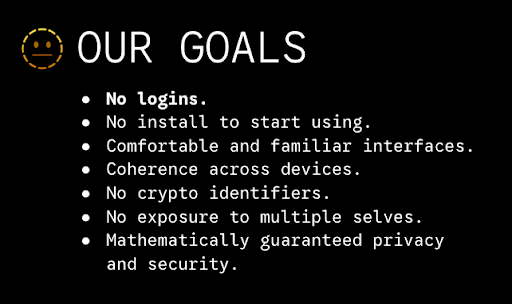
No logins. No install to start using. Comfortable and familiar interfaces. Coherence across devices. No crypto identifiers. No exposure to multiple selves. Mathematically guaranteed privacy and security.
Stay tuned.