Player Performance and Recruitment Analyst, Retired after selling my Sports Management Consultancy Business, Hibernian and NY Giants fan, living in New York
Fouled Every 12 Minutes: The Brutal Reality of Playing in Maradona’s Era
Playing in Maradona’s day was a different kind of war.
Diego Maradona did not just dominate World Cups. He survived them. Between 1982 and 1994 he was fouled 152 times in 21 matches — a foul every 12 minutes. No player since has come close.
Break it down and the numbers become almost absurd. In 1982 he was fouled 36 times in five games. In 1986 the figure rose to 53 in seven. In 1990 it was still 50 in seven. Even in the truncated 1994 tournament he managed 13 fouls in two appearances. Those three highest single-tournament totals — 53, 50 and 36 — all belong to him. The next name on the list is Ariel Ortega, fouled 33 times in one World Cup. The gap is not small.
The most infamous single afternoon came in 1982 against Italy. Claudio Gentile fouled Maradona 23 times in one match. Twenty-three. Maradona still produced moments of genius and Argentina still needed him. That was the era: defenders were allowed to kick, trip, hold and hack with far fewer consequences than today. Referees tolerated a level of physicality that would now produce red cards and lengthy bans.
Although stricter rules on tackling began to appear in the early 1990s, the real cultural shift — the widespread protection of creative players and the intolerance of systematic fouling — did not take hold until the 2000s. Maradona’s entire World Cup career sat firmly on the wrong side of that change.
Compare that with Lionel Messi. Across 34 World Cup appearances Messi has been fouled 94 times. The absolute numbers are lower and the frequency is gentler. Modern football protects its stars more carefully. Tactical structures are tighter, spaces are closed more systematically, and the ball is moved with greater collective control. Messi’s average distance in recent World Cup games sits around 8.2 km, of which he walks roughly 47 percent. Efficiency and positioning have replaced the constant high-intensity running of earlier decades.
Maradona’s 1986 campaign is the clearest illustration of the contrast. Contemporary estimates put him above 12 km per 90 minutes, much of it spent sprinting, pressing, and driving through contact. There was no GPS then, so the figure remains an informed guess, yet the footage supports it: constant accelerations, repeated dribbles past multiple opponents, and an almost relentless will to advance. The game itself was more chaotic and end-to-end, with less of the structured pressing and positional discipline that define elite football now.
The surface made everything harder. Many of Maradona’s decisive matches in 1986 were played at the Estadio Azteca in Mexico City. The pitch was notoriously bumpy and uneven, the grass inconsistent. At roughly 2,250 metres above sea level the thin air altered the flight of the ball and accelerated fatigue. Control, balance and recovery all became more demanding. Maradona still produced one of the greatest individual tournament performances in history on that surface, against that physical treatment.
The difference between the two eras is not simply one of talent. Maradona’s game was raw athleticism married to extraordinary willpower and technical brilliance under constant assault. Messi’s is tactical mastery, longevity and an ability to operate inside a more controlled, protective modern framework. Direct kilometre comparisons are imperfect — tracking technology, pitch quality, refereeing standards and tactical systems have all changed — but the foul counts are not. They are a matter of record.
Maradona played when the world’s best defenders were licensed to stop him by almost any means short of actual violence. He absorbed the punishment, kept running, kept dribbling, and kept deciding matches. That context does not diminish later greats. It simply underlines how much harder the path once was.
Personally, I thought it was a penalty.
Dragojević had both hands on Kerr, his eyes locked on the man rather than the ball, and he clearly restricted the jump. That combination ticks the boxes under the new guidance. Kerr’s hands on Dragojević looked secondary to me, the natural reaction of a player being pulled off balance, grabbing for stability rather than initiating a foul of his own. Officials are expected to separate active holding by the defender from reactive contact by the attacker trying to stay on his feet. Kerr’s contact falls into the second category and doesn’t cancel out the primary foul.
Was the hold sustained and forceful enough? From what I saw, yes. Dragojević wasn’t competing for the ball at any point and was actively stopping Kerr’s movement with both hands. Even with the high bar that still exists for these decisions, this one feels defensible and consistent with the tightened instructions for the season.
As for VAR getting involved, it can feel harsh against the “clear and obvious” threshold — but that’s the reality of these calls. Most VAR decisions still come down to an individual’s opinion, and this one is no different.
Rangers Weaknesses Hibs Can Exploit
Rangers under McInnes still look half-baked. The Dundee United draw exposed what Hibs need to punish at Ibrox.
Pace is a serious problem. This side is slow. When the back line steps up or gets dragged out, recovery is weak. Fernandez keeps getting caught high and can’t get back quickly enough, leaving big gaps in the channels — perfect for pace and directness.
Creativity vanishes when the game tightens. They can hog the ball and shoot, but lack players to unlock a packed defence. Too many safe passes, not enough players who can beat a man or deliver a killer ball. When the tempo drops they look blunt.
Defensively they remain messy: soft clearances, poor positioning and no urgency in the box. Combined with the recovery issues, they can be carved open on the break.
How Hibs should attack them
• Sit compact, soak pressure, then explode into the space behind full-backs and centre-backs.
• Run at Fernandez and his partner — force races they can’t win.
• Press hard, force hurried decisions and panic in possession.
• Starve them of space and make them create something special. They look short of that quality.
• Attack every set-piece and second ball. Punish any sloppy box defending.
Rangers still have individuals and home advantage, but they look slow, short of invention and soft in key moments. Hibs should not admire them. Get in their faces, hit the channels and expose the lack of pace and steel.
Hibs counter-attack strategy
Treat it as a transition game. Rangers are slow to recover and soft on turnovers. Exploit that ruthlessly.
Core approach
Sit in a compact mid- or low-block. Force them to over-commit. The moment possession is won, go vertical and fast — one or two passes maximum into the channels or in behind. Gray’s side has improved at generating shots from counters; lean into that. The shape already suits quick breaks through wing-backs and pacey forwards.
Key triggers
• Full-backs push high (especially the right).
• Fernandez or centre-backs step out or get dragged.
• Rangers lose the ball in the final third or wide areas.
• Loose clearances or heavy touches in midfield.
Player roles
• Boyle is the primary weapon — release him early into the channel between centre-back and full-back.
• Wing-backs must fly forward immediately on the turnover to stretch the defence.
• Central runners attack the space behind Fernandez. Force races Rangers can’t win.
• Midfield pivot plays simple, forward passes only.
Attacking routes
1. Channel balls targeting Fernandez’s slow recovery.
2. Overloads on the break — flood one side and overwhelm the recovering full-back.
3. Direct vertical balls if their midfield is high and disconnected.
4. Second-phase counters — stay aggressive even after half-clearances.
Mentality
Soak pressure in spells, but every turnover is a chance to hurt them. Rangers lack the recovery pace and defensive discipline for repeated high-intensity counters. Keep forcing foot races and chaos.
Hibs have the tools — Boyle’s pace, width and a growing threat in transition. Use it. Make Rangers pay every time they step up or lose the ball.
People are being far too harsh on Hearts. Do you know how much physical effort it takes to play in the Champions League, Europa League, and Conference League without progressing in any of them.
That isn't a failure. That is an elite, mathematically calculated continental speedrun that only an elite group of European giants have ever managed to do:
🇷🇸 FK Partizan
🇦🇩 UE Santa Coloma
🇱🇹 FK Panevėžys
🇫🇴 KÍ Klaksvík
🇬🇮 Lincoln Red Imps
have all been eliminated from the Champions League, Europa League, and Conference League in their first/only ties of each competition
KF Shkëndija’s Weaknesses for Hibernian to Exploit
1. Physical duels and defensive ruthlessness
This is the most important weakness. Pollozhani admitted his side lacks the physical edge needed in “football that involves physical clashes”.
How Hibs can exploit it
• Win the majority of 50/50s and second balls.
• Use the physicality of Nathan Lowe, Owen Elding, Josh Mulligan, and the centre-backs.
• Attack aggressively at set-pieces and from crosses.
• Force Shkëndija into repeated aerial and ground duels in their own box.
Players to target
• The centre-backs (Imran Fetai, Drilon Islami, Anes Meljichi) – less dominant physically than typical Scottish centre-halves.
2. Playing out from the back under pressure
Shkëndija try to build from the back, but their coach linked this approach directly to the soft goals they conceded.
How Hibs can exploit it
• High, aggressive press from the first whistle (Boyle, Elding, Lowe).
• Force turnovers in the final third or just outside the box.
• Press the double pivot so the centre-backs have fewer safe options.
• Look for mistakes when the goalkeeper or centre-backs are closed down quickly.
This is one of the highest-percentage ways for Hibs to create clear chances.
3. Soft goals conceded
Pollozhani was particularly unhappy that the three goals against Bravo came “far too easily”. This suggests poor concentration, weak marking, and a lack of defensive intensity in key moments.
How Hibs can exploit it
• Sustained pressure and repeated attacks.
• Quick combinations and third-man runs that force defensive errors.
• Attack the near post and far post from crosses and set-pieces.
• Keep the intensity high for 90 minutes so concentration drops.
4. Wide areas and full-backs
Shkëndija’s full-backs (Aleksandër Trumçi on the right and Ronaldo Webster on the left) push high to support the attack. This creates space in behind.
Right side of Shkëndija’s defence (Hibs’ left attack)
• Target Trumçi. Play early balls in behind when he advances.
• Use underlaps and overlaps involving the left wing-back or inverted winger.
Left side of Shkëndija’s defence (Hibs’ right attack)
• Isolate Webster and force him into 1v1 defensive situations.
5. Through the middle
The double pivot and No.10 (Endrit Krasniqi) can be bypassed with quick, vertical play.
How Hibs can exploit it
• Fast combinations between Chaiwa, Mulligan, and the forwards.
• Third-man runs that pull the defensive midfielders out of position.
• Vertical passes into the feet of Lowe or Elding when the midfield is stretched.
6. Aerial threat and set-pieces
Given their admitted lack of physicality in duels, Shkëndija are likely to struggle against Hibs’ height and aggression at set-pieces.
How Hibs can exploit it
• Flood the box from corners and free-kicks.
• Use Lowe, Kerr, O’Hora, and Elding to attack the ball.
• Look for second-ball opportunities after the first clearance.
• Deliver early and deep crosses rather than always waiting for the perfect moment.
7. Long balls and transitions
Shkëndija’s open style and high full-backs leave space in behind.
How Hibs can exploit it
• Direct long balls over the top for the pace of Martin Boyle and Owen Elding.
• Quick counters the moment Shkëndija lose the ball in advanced areas.
• Switch the play quickly to isolate the far-side full-back.
Overall approach for Hibs
Hibs should look to make the game physical, intense, and high-tempo from the first minute. Press the build-up hard, dominate the aerial duels, attack the spaces behind the full-backs, and keep flooding the box at set-pieces. Shkëndija create chances themselves, but their own coach has confirmed they are vulnerable defensively when forced into physical battles and when pressured while trying to play out.
This combination of intensity, physicality, and direct threat in behind should give Hibs multiple clear routes to goal.
@longbangers Josh Campbell needs to get out of Hibs and fast.
His career is being wasted right as he’s entering his prime. His productivity per minute is elite: the goal and assist rates rank among the best in the league.
Motherwell’s key weaknesses for Hibernian to exploit
1. New defensive partnerships and lack of cohesion
The centre-back pairing of Martin Moormann and Jake Girdwood-Reich is brand new. Reports from their first competitive games noted they “almost got caught out on a couple of occasions” and that the partnership “clearly needs a little work.”
How Hibs can exploit it
• Force them into 1v1 duels and isolate one centre-back.
• Use movement and third-man runs to create confusion between the two.
• Target the spaces between them with runners from midfield or wide areas.
Players to target specifically
• Jake Girdwood-Reich – still adapting to Scottish football and the intensity.
• Martin Moormann – solid but new to the league and the system.
2. Playing out from the back under pressure
Motherwell insist on playing short from the goalkeeper (Alex Paulsen). In their European games there were already “hairy moments” caused by a lack of understanding between new teammates. One short pass from Girdwood-Reich almost led to a goal.
How Hibs can exploit it
• High, aggressive press from the front (Boyle, Elding, Lowe).
• Force turnovers in dangerous areas.
• Press the double pivot (Priestman / Booth / Fadinger) so the centre-backs have fewer safe options.
This is one of the biggest potential sources of goals for Hibs.
3. Aerial weakness and set-pieces
Historical data on Motherwell shows they have been weak in aerial duels. Even under the previous regime they were not dominant in the air. With new centre-backs still bedding in, this remains a vulnerability.
How Hibs can exploit it
• Flood the box from corners and free-kicks.
• Use the height and physicality of Nathan Lowe, Owen Elding, and any tall centre-backs (Kerr, O’Hora, etc)
• Attack the near post and far post with well-timed runs.
• Look for second balls after the first clearance.
4. Wide areas and full-backs
Tom Sparrow (right) and Dylan Williams (left) are attacking full-backs. When they push high, space opens up behind them.
Right side of Motherwell’s defence (Hibs’ left attack)
• Target Sparrow. When he advances, play early balls in behind for Boyle or a wing-back.
• Use underlaps and overlaps to create 2v1 situations.
Left side of Motherwell’s defence (Hibs’ right attack)
• Target Dylan Williams (new signing). He is energetic but still adapting.
• Isolate him with Martin Boyle or Felix Passlack.
5. Through the middle
The midfield has quality (Fadinger, Priestman), but the defensive midfield screen can be bypassed with quick combinations and third-man runs.
How Hibs can exploit it
• Use Miguel Chaiwa and Josh Mulligan to receive between the lines.
• Quick one-twos involving Boyle, Elding, and Lowe.
• Vertical passes into the feet of the strikers when Motherwell’s midfield is stretched.
6. Long balls and transitions
Motherwell’s high defensive line (especially when they try to play out) can be vulnerable to balls over the top.
How Hibs can exploit it
• Direct long balls over the top for the pace of Martin Boyle and Owen Elding.
• Look for the second ball after a long diagonal.
• Counter-attack quickly when Motherwell lose the ball high up the pitch.
Summary – Highest-priority targets for Hibs
1. Press the build-up hard – especially the new centre-back pairing and goalkeeper.
2. Attack aerially at set-pieces and from crosses.
3. Exploit the spaces behind the full-backs when they push high.
4. Use pace in behind the high line (Boyle and Elding).
5. Target the lack of understanding between Moormann and Girdwood-Reich with movement and combinations.
Motherwell will still be well-organised and dangerous on the counter, but the combination of new players, early-season cohesion issues, and a commitment to playing out from the back gives Hibs clear, concrete ways to create chances and score.
Shkëndija Attacking Breakdown (under Artim Pollozhani)
Shkëndija under Artim Pollozhani play an open, proactive, chance-creating style. Shkëndija default shape is a 4-2-3-1 that can morph into a 4-3-3. and prioritise width, short combinations, one-twos, switches of play, and vertical runs. Full-backs push high, wingers look to beat full-backs 1v1 or cut inside, and the central attackers interchange positions to create confusion.
Phase-by-Phase Attacking Patterns
1. Build-up (from the back)
Shkëndija prefer short, patient construction. Centre-backs (Fetai + Meljichi) and the deepest midfielder (Islami/Rafa) circulate the ball. They often form a temporary back three with one full-back tucking in.
Typical sequence:
• Amzai to Fetai / Meljichi
• Short pass to Zejnullai or Islami
• Switch to the opposite full-back (Trumçi or Dimoski) who is already high
• Or a progressive pass into Krasniqi between the lines
They deliberately invite pressure then look for the free man in midfield.
2. Progression through midfield
Zejnullai and Krasniqi are central to progression. Zejnullai drops or drifts to receive, then plays one-twos or vertical passes. Krasniqi finds pockets between the opposition midfield and defence.
Common patterns:
• Zejnullai receives, one-two with Krasniqi, ball out to Tamba or Kryeziu
• Diagonal switch from left to right (or vice versa) to isolate Tamba 1v1
• Full-back underlap/overlap: Trumçi pushes high on the right while Tamba cuts inside; Dimoski does the same on the left with Kryeziu
3. Final-third movements and combinations
This is where they become most dangerous and fluid. The front three interchange constantly.
Typical right-sided attack (Tamba-focused):
• Tamba stays wide or starts wide then drives inside
• Trumçi overlaps or underlaps
• Krasniqi makes a late run into the box or plays the killer ball
• Ibraimi / Ndzengue makes a near-post or far-post run
• Zejnullai arrives late at the edge of the box
Typical left-sided attack (Kryeziu-focused):
• Kryeziu receives wide or half-space
• Dimoski provides the overlap
• Krasniqi or Zejnullai combine centrally
• Striker (Ibraimi) drops deep to link, then spins in behind
Central overloads / interchanges:
• Ibraimi drops between the lines, pulls a centre-back out
• Tamba or Kryeziu cuts inside into the space
• Krasniqi arrives late
• One-twos and third-man runs are frequent
They look for 4-on-2 or 3-on-1 breaks in transition, as noted by Pollozhani after the Bravo games.
Motherwell Attacking Breakdown (under Alfred Johansson)
Motherwell attack with a possession-based, constructive style that prioritises intensity, tempo, and playing out from the back. Johansson has kept the core principles from the previous regime while adding more directness and crossing when teams sit deep.
Base formation in attack: Flexible 4-3-3 (can look like a 4-2-3-1 when Fadinger pushes higher).
Phase 1: Build-up from the back
Motherwell almost always play short from goalkeeper Alex Paulsen.
Typical pattern:
1. Paulsen plays short to one of the centre-backs (Jake Girdwood-Reich or Martin Moormann).
2. The full-backs (Tom Sparrow on the right, Dylan Williams on the left) push high and wide to stretch the pitch.
3. One of the deeper midfielders (Mikey Booth or Oscar Priestman) drops between or alongside the centre-backs to create a temporary back three or diamond.
4. Lukas Fadinger (the most creative midfielder) positions himself higher, acting as the link between defence and attack.
Goal of this phase: Invite the opposition press, then play through or around it with quick one-touch combinations.
Phase 2: Progression through midfield
Once past the first press, Motherwell look for central overloads and half-space combinations.
Key movements:
• Fadinger drifts into the right half-space or sits as a free No.8/No.10.
• Priestman or Booth provide the secure pivot and recycle possession.
• Wide attackers Willy Vogt (right) and Ibrahim Said (left) stay high and wide initially, then make diagonal runs inside.
• Regan Charles-Cook (central forward) drops slightly to link play or makes runs in behind.
Common passing sequences:
• Centre-back → dropping midfielder → Fadinger → wide attacker
• Full-back → Fadinger → underlapping full-back or inverted wide player
• Quick third-man runs involving Said or Vogt
Phase 3: Final third attacking patterns
Motherwell use three main methods once they reach the final third:
1. Wide overloads + crosses (especially against low blocks)
• Sparrow or Williams advances.
• Vogt or Said holds width.
• The opposite full-back or a midfielder underlaps or arrives late at the back post.
• Heavy use of crosses (seen clearly in the HB Tórshavn games).
2. Central combinations and cut-backs
• Fadinger or Charles-Cook receives between the lines.
• Said or Vogt makes an underlapping or diagonal run.
• Ball is played into the box for a cut-back to the arriving midfielder (Fadinger is particularly dangerous here).
3. Direct runs and individual quality
• Willy Vogt – uses pace and flair to drive at defenders.
• Ibrahim Said – drops deep then spins in behind, or receives on the half-turn.
• Regan Charles-Cook – can finish from distance or combine quickly.
sequence example (right-side attack)
Here’s a typical attacking sequence described step-by-step:
Step 1 – Build-up
Paulsen → Moormann → Girdwood-Reich
Sparrow pushes high, Booth drops in.
Step 2 – Progression
Girdwood-Reich → Priestman → Fadinger (who has drifted into the right half-space).
Step 3 – Final third
Fadinger plays wide to Vogt.
Sparrow underlaps inside Vogt.
Vogt either:
• Plays the underlap to Sparrow for a cross, or
• Cuts inside and shoots/combines with Charles-Cook.
Step 4 – Box arrival
Charles-Cook attacks the near post.
Said arrives late at the far post.
Fadinger or Booth arrives on the edge of the box for a cut-back or second ball.
Summary of Motherwell’s attacking identity
• Patient but purposeful build-up from the back
• Preference for playing through the middle and half-spaces
• Willingness to flood the box with crosses when teams sit deep
• Constant movement and rotation between Fadinger, the wide attackers, and the full-backs
• High intensity and quick transitions once the ball is won high up the pitch
This style creates a lot of controlled pressure and second-ball opportunities, which is why they can sustain long attacking spells against deeper defences.
Hibernian vs Motherwell
Both clubs open their league season after progressing through the early rounds of the Conference League. Hibs ended last term in fifth, just short of automatic European qualification through the league table, while Motherwell finished fourth and earned a European place on merit. Recent meetings have favoured the visitors: Motherwell are unbeaten in the last four clashes with Hibs, including a 1-0 win at Easter Road in May.
Motherwell’s approach under Alfred Johansson
Alfred Johansson took over in June after Jens Berthel Askou left for Toulouse. The Swedish coach has stressed continuity with the possession-based, constructive football that served Motherwell well last season, while adding greater intensity, quicker tempo, confident build-up from the back, deep attacking runs, and a willingness to play more directly or counter-press when the moment suits. Early European matches showed a 4-3-3 that could morph into a 4-2-3-1 shape depending on the game state.
Expected formation: 4-3-3 or a flexible 4-2-3-1 hybrid.
Likely starting XI: Paulsen; Sparrow, Girdwood-Reich, Moormann, Williams; Booth, Fadinger, Priestman; Vogt, Charles-Cook, Said.
Lukas Fadinger has already found the net twice this season and, together with Oscar Priestman, forms the midfield core. The front line relies on pace and direct running from the wide areas and through the middle.
New faces at Fir Park
Johansson has brought in several players who fit the preferred style:
• Alex Paulsen (goalkeeper, on loan from Bournemouth) – comfortable with the ball at his feet and capable of starting attacks.
• Martin Moormann (centre-back, from Blau-Weiß Linz) – experienced Austrian defender who adds organisation and physical presence.
• Jake Girdwood-Reich (centre-back, from St. Louis City) – athletic, progressive centre-half suited to a modern high line.
• Dylan Williams (full-back/utility, from Burton Albion) – energetic and versatile option on either flank.
• Willy Vogt (forward, from AC Bellinzona) – quick, skilful attacker expected to stretch defences and create chances.
These additions replace several important departures from last season while the midfield spine of Fadinger and Priestman provides continuity.
How Hibs should approach the game
Motherwell will try to dominate the ball, build patiently, press with energy, and break quickly when possession is won. Hibs need to disrupt that rhythm.
Key principles for David Gray’s side
• Press high and aggressively to force mistakes in Motherwell’s build-up.
• Stay compact when defending deeper and spring forward rapidly on turnovers, using the speed of Boyle and Elding plus the physical presence of Lowe.
• Win second balls and make the most of set-pieces.
• Target any early-season uncertainty in Motherwell’s new central defensive pairing.
• Keep the game stretched with width and underlaps rather than sitting deep and inviting sustained pressure with an aggressive shape that prioritises intensity from the first minute.
Suggested shape and personnel:
I still think we should play a 4-2-3-1 formation
My XI
Sallinger
Obita, Kerr, O’Hora, Passlack
Mulligan, Chaiwa
Elding, Campbell, Boyle
Lowe
Hibs should aim to score first, force Motherwell to chase the game, and feed off the home atmosphere and the confidence gained from their European recovery.
Prediction
Hibernian 2-1 Motherwell
Home advantage, European momentum, and the ability to match Motherwell’s intensity should give Hibs the edge in a competitive, open contest.
Hibernian vs KF Shkëndija
What Hibs are walking into
Shkëndija are no soft touch. Multiple domestic titles, regular European travellers, and they already knocked out decent teams in recent seasons. Their coach has been open about the two things that keep him awake: they create chances but don’t finish enough of them, and they give goals away too cheaply. They also struggle in pure physical battles.
Expect a side that wants to keep the ball, play out from the back when they can, and spring forward quickly when the opportunity appears. At Easter Road they will probably sit a bit deeper than they do at home and look to punish any switch-off on the counter or from set-pieces. Hibs’ intensity last Thursday will have been noted; if Gray’s players start slowly again, Shkëndija have the quality to make life uncomfortable.
How Shkëndija usually line up and play
Their default shape is a 4-2-3-1 that can morph into a 4-3-3. Full-backs push on, the double pivot sits, and the front four rotate positions constantly. They like short combinations through the middle, switches of play out wide, and the odd long diagonal into the channels. Wingers are happy to isolate full-backs and go at them.
When the game is open they can dominate possession. When they have to defend they drop into a mid-block and wait. The soft underbelly is the space behind the full-backs and the occasional lack of bite in the middle of the park.
Dangerous players
• Fabrice Tamba – sharp, direct, already on the scoresheet in Europe this summer.
• Fahd Ndzengue – the main centre-forward threat; mobile and clinical when the service is good.
• Endrit Krasniqi – the creative spark, set-piece taker, and the man who makes things happen between the lines.
• Arbin Zejnullai – energetic midfielder who covers ground and progresses the ball.
• Besart Ibraimi – the old head and captain; still dangerous coming off the bench or in big moments.
Keep an eye on Almir Kryeziu out wide and the full-back Aleksandër Trumçi, who joins attacks regularly.
How Hibs should approach it
The template is already written: the high-tempo, front-foot performance that dismantled Malisheva at Easter Road. Press early, force turnovers high up the pitch, and use the width of the wing-backs to stretch Shkëndija’s back four.
Do not sit off and invite them onto you. Their coach has admitted they are vulnerable when the physical contest is intense and when they are forced into rushed clearances. Win the second balls, flood the box, and make set-pieces count – Boyle’s delivery remains a major weapon.
Out of possession stay compact enough that counters are shut down quickly. One soft goal and the second leg becomes a completely different proposition.
Suggested shape and personnel
Stick close to what worked last week
Possible starting XI (3-4-2-1 / fluid 3-4-1-2)
Sallinger
O’Hora – Kerr – Obita
Passlack – Mulligan – Chaiwa – Cadden (or Mayor)
Elding – Boyle
Lowe
Gray has the option to slide into a more conventional 4-2-3-1 if he wants extra midfield control. Newell or Campbell can come in for legs in the middle, Klidjé offers a different type of presence up front. The non-negotiables are the same as Thursday: early intensity, Boyle free to create and score, and a defence that does not switch off after the hour mark.
A clean, professional home win – something like 2-0 or 3-1 – would put Hibs in the driving seat for the return. Anything less and they will be travelling to North Macedonia with work still to do. The tools are there; it is simply a question of matching the level they showed against Malisheva and staying switched on for the full 90.
Malisheva is a good match to have tonight as it’s virtually a carbon copy of what our setup should be for the Motherwell game on Sunday, last season Motherwell played an asymmetric 4-2-2-2 formation,
Motherwell’s new manager Alfred Johansson is expected to play a progressive, high-intensity style built around a 4-3-3. He wants tempo, constructive build-up from the back, and quick combinations. This means Motherwell will likely have a midfield three and look to dominate central areas while playing with energy and width, so again Hibs should be looking at playing a 4-2-3-1 formation
The majority of what’s wrong at Hibs is down to the analysts, it’s their job to analyse opponents and find weaknesses, also to see what’s not working during a game and finding a solution to advise David Gray at halftime, I don’t get to see the players but from what I’ve seen of both teams this is what I would advise
Hibs should set up in a 4-2-3-1 against Malisheva.
The main reason is midfield numbers. Malisheva are comfortable playing through the centre with short combinations and rotations. A standard 3-4-2-1 or 3-5-2 often leaves Hibs with only two central midfielders, which can be easily overloaded. The 4-2-3-1 gives Hibs a double pivot plus a No.10, creating a midfield three that can match Malisheva, disrupt their passing patterns, and compete more effectively for second balls. It also provides natural width through the full-backs and wide attackers.
Hibs must start with high intensity and force Malisheva onto the back foot from the first whistle. In the first leg the build-up was too slow and predictable. Malisheva were able to press effectively, force Hibs into a U-shape, and control the tempo. That cannot happen again at Easter Road. Hibs need to mix quicker vertical passes with switches of play and get the ball into dangerous areas much earlier.
When Malisheva have possession, the 4-2-3-1 should drop into a compact 4-4-2 or 4-5-1 mid-block.
Staying organised and tight will make it far harder for Malisheva to play their short combinations and find the gaps between the lines. The priority is to force them wide and then defend the box aggressively.
In possession the full-backs should push high to stretch the pitch and create overloads. The left and right attacking midfielders can either hold the width to open up central spaces or cut inside to support the striker, depending on how Malisheva defend.
The double pivot is vital. The two central midfielders must stay connected at all times. If one pushes too high while the other drops deep, it leaves a large gap in midfield that Malisheva are good at exploiting on the counter-attack. Keeping that partnership solid will help Hibs control the game and protect the defence.
Overall the 4-2-3-1 gives Hibs the structure to dominate the middle of the park, stretch the pitch, and still remain solid when they lose the ball, exactly what is needed to overturn the deficit at Easter Road.
Didn’t think I’d see Malik Nabers involved in the first day of training camp but great to see him back,
Got a good feeling about this season with John Harbaugh
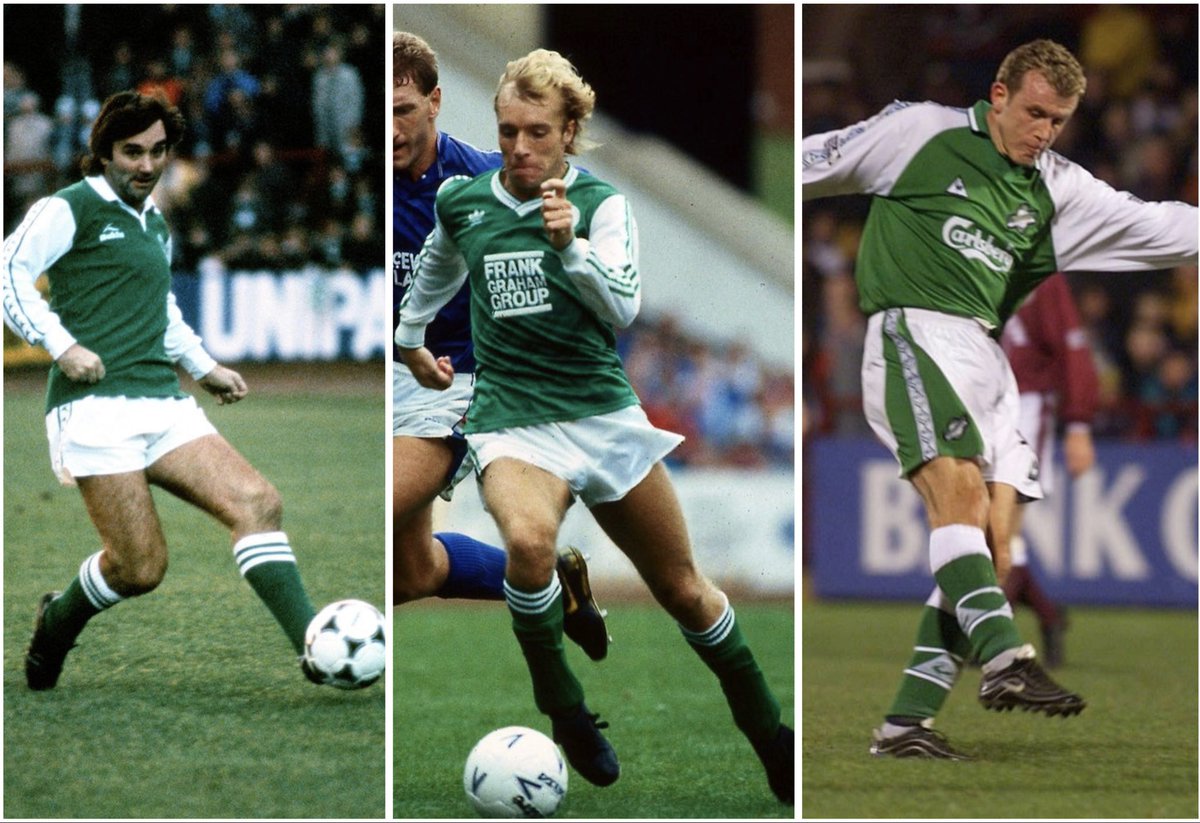
Watched There’s Only One Sauzee yesterday and got me wondering if we’ll ever see a statement signing like these again, I’m lucky enough to have watch 3 big signings play for us, George Best, Steve Archibald and Franck Sauzee and I can remember the buzz among Hibs fans for all 3
Another player from an amazing Chelsea academy is Reggie Walsh, Impressed with how composed under pressure Reggie is, he’s always looking to get on the ball, very rarely gives the ball away and his weight and timing of a pass is exceptional,