Bridging the gap between research and practice in effective reading instruction as a community initiative of The Academy for the Science of Instruction.
Are you curious about the real impact of explicit instruction in the classroom?
This article explores the research and explains why clear, direct teaching methods help students succeed.
https://t.co/MzutjNdpid
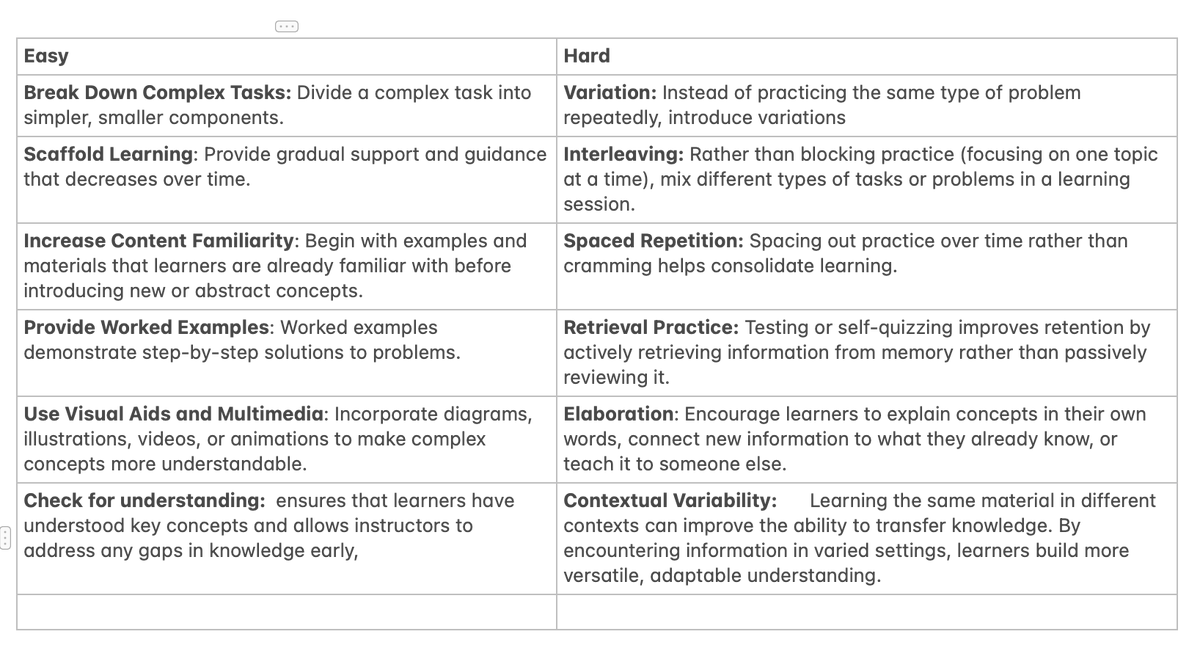
So to learn anything effectively, the process needs to be paradoxically both easy and hard. Like everything else, Shakespeare had a handle on this hundreds of years before everyone else. As Duke Senior says in As You Like It: "Sweet are the uses of adversity."
Absolutely fantastic news! 🎉Independent research confirming the powerful impact of @ReadingDoctor on letter sound knowledge-a huge win for educators, parents & kids. Programs like this unlock potential at school & home. Excited to see more as the research is published!
The largest ever scientific study on ReadingDoctor® shows that:
“Children who used ReadingDoctor® made strong improvements in their letter-sound knowledge. The program had a large positive effect on learning, beyond natural development over time.”
The research team from @Flinders, assisted by a grant from the @Channel7 Children’s Research Foundation, examined ReadingDoctor® Online letter-sound activities with Australian children aged 4–7 years across schools and home settings.
In addition to strong improvements in letter-sound knowledge for children using the program, researchers also found that:
➭ Children who completed more activities tended to make greater progress
➭ Children who started further behind often made the biggest improvements
➭ The program worked similarly well at school and at home
It was conducted independently (other than tech support and providing access, ReadingDoctor® was not involved). The study was recently presented at the @DyslexiaSPELD conference in Perth. We look forward to sharing more information once the research is formally reviewed and published.
You can read about this study and other independently conducted studies investigating ReadingDoctor® here:
https://t.co/Rlqo7PCSMj
Read more about the program here:
https://t.co/sqNZ992Bb1
Schools and parents can try the program for free here:
https://t.co/oERZjF7U8z
@FIVEfromFIVE@auspeld@LD_Australia@CodeReadNetwork@Flinders@Ch7Adelaide@PCSnow1604@tserry2504
Want practical tips to support Autistic students and students with ADHD? Explore evidence based teaching strategies in the latest AERO discussion paper !
🆕 Our new discussion paper, Teaching practices to support Autistic students and students with ADHD, is available now. Read the paper: https://t.co/zLCIKIicSr
Image: iStock/SolStock
What Education Can Learn From Trusted Professions
Doug Carnine examines What is Required to Make Education an Evidence-Aligned Profession?
https://t.co/A11J3iSvrI
New edition of Nomanis out now!
Issue 20, Autumn 2026
This issue of Nomanis, dives into the world of educational research and the process of translating evidence-based research into instructional practice.
https://t.co/pdOHl56GPd
Have you seen the The Reading League’s Compass? 🧭
It’s an excellent guide to navigating the science of reading 📚
A curated collections of frameworks, practical tools, articles, policies & success stories – all grounded in science.🧬
https://t.co/GoKpOLiwTp @reading_league
The Reading Pledge here https://t.co/JwhJMqMdVd
Let’s support initiatives like the Reading Pledge & work together to break the cycle of illiteracy in Australia. Because literacy is not just a skill—it's a right.
#ReadingPledge#EducationForAll#EndIlliteracy#AustraliaReads
📚 Did you know that there is a long term solution to the 1 in 3 Australian adults that are functionally illiterate? This alarming reality affects not just individuals but our society & economy as a whole. Link in comments
@ConversationEDU@LD_Australia
https://t.co/v8gjW8oSAh
📚 The Reading Pledge is a roadmap to help fix the 1 in 3 Australian adults are functionally illiterate. By committing to this pledge, schools & policymakers can help ensure every child gain the literacy skill they need to thrive in education and beyond.
https://t.co/JwhJMqMdVd
Trauma increases cognitive load for students, making learning harder. Teachers can help by breaking tasks down and offering emotional support. Read this insightful issue of the Snow Report to find out more @PCSnow1604@berrystreet
https://t.co/TAZX2istWZ
Flash cards and pop quizzes are effective tools for retrieval. What other instructional tools and techniques help students remember what they’ve learned, and how can teachers put these to use? @natwexler@Doug_Lemov@dylanwiliam
https://t.co/JVW0xl6PtP
Flash cards and pop quizzes are effective tools for retrieval. What other instructional tools and techniques help students remember what they’ve learned, and how can teachers put these to use? @natwexler@Doug_Lemov@dylanwiliam
https://t.co/JVW0xl6PtP
Boost your Tier 3 interventions! 🌟 Join @LD_Australia online course to deliver high-impact, evidence-based support for students with learning difficulties.
🗓️ May 12, 19 & 26 | 7-8:30pm AEST
📊 Data-driven strategies + real case studies
Register now 👉 https://t.co/3x5TcAAhDh
📝 Attention teachers! Understanding the nuances between rehearsal and retrieval practice can significantly boost your teaching effectiveness. Learn how you can apply these strategies in your classroom practice: https://t.co/j5beHTxtNy
📚✨ #TeachingTips#RetrievalPractice
Think behavioural optometry or Irlen lenses can fix reading problems? Kerry Hempenstall’s article explains why these lack strong evidence and may delay proven help.
For a clear, research-based perspective, read the full @DyslexiaIDA article here: https://t.co/VFVrTmZt1f
A cohort of ideologically-driven academics opposed to the idea that evidence should inform teachers’ practice pose a threat to the progress Australian schools have made over the last five years, AERO’s CEO has warned.
https://t.co/Ob9iY3QBQJ