« On parle beaucoup d’utiliser l’IA, mais il faut déterminer le type de technologie, comment on l’utilise, et pour quel type d’entreprise. C’est important pour la productivité et pour les politiques publiques qui peuvent être ciblées sur différents acteurs et typologies d’entreprises. » selon @FLCalv@OCDE_fr pour la session @banquedefrance
conçue par @de_bandt Directeur de la recherche @banquedefrance
et modérée par @JCBricongne
🔴Ne manquez pas le live en direct du @lecese sur https://t.co/uhKhvUQYvt
#printempsdeleco
Who uses AI agents?
How do agents impact output?
How might agents change work patterns?
New working paper studies usage + impacts of coding agents (1/n)
We need more papers like this one which examines how AI agents & humans work together
Current agents were fast, but not strong enough to do tasks on their own & approached problems from too much of a programing mindset. But combining human & AI resulted in gains in performance
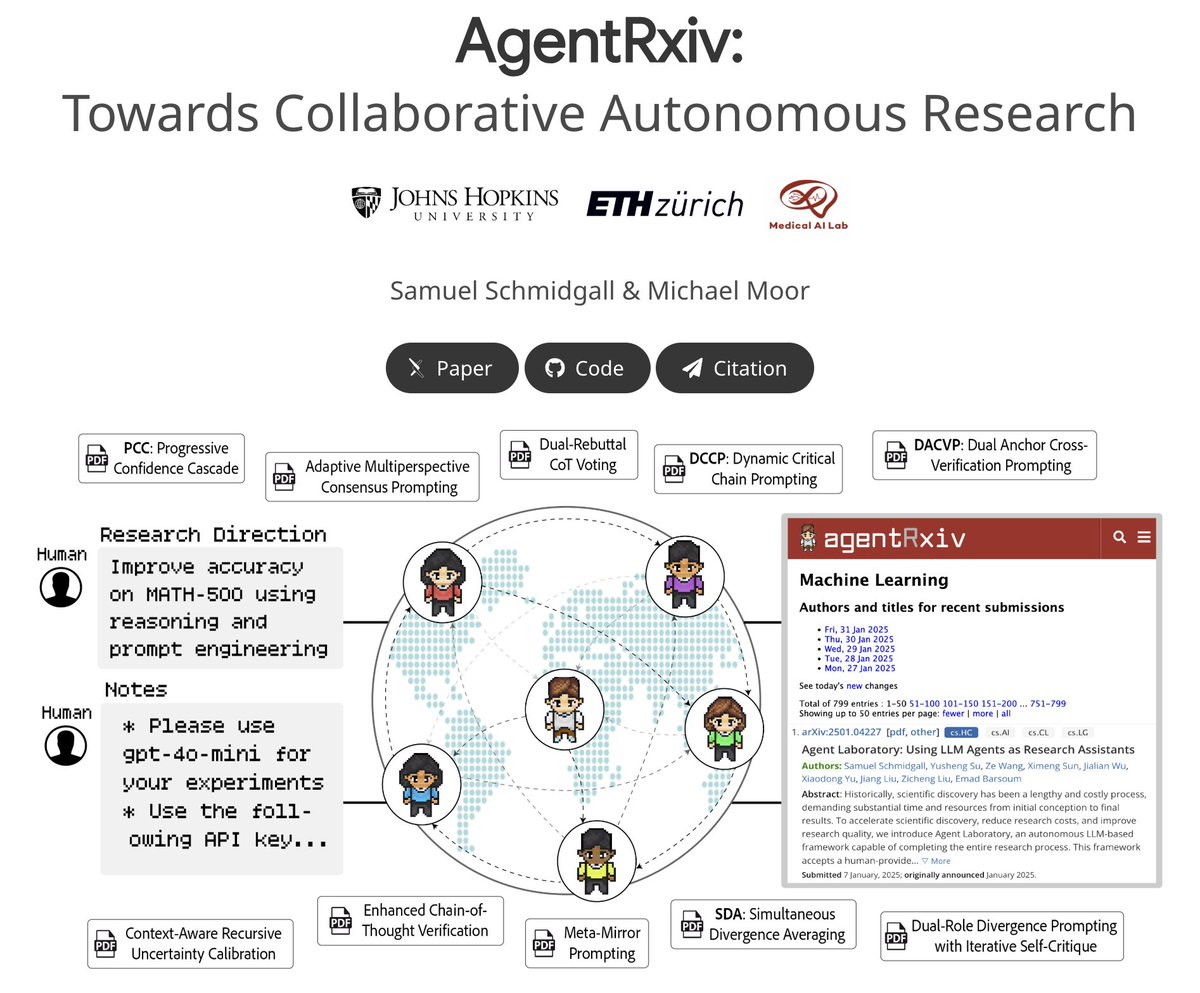
🚀🌐Introducing AgentRxiv: a framework where autonomous research agents can upload, retrieve, and build on each other’s research.
AgentRxiv takes your research direction and progressively outputs research, building on its previous work with each new paper!
🧵
(1/11)
How do AI agents change markets? We speculate on this topic in our new article for the NBER “Economics of Transformative AI” volume with @gilirusak, @BenSManning, @AndreyFradkin, and @johnjhorton:
“The Coasean Singularity? Demand, Supply, and Market Design with AI Agents”
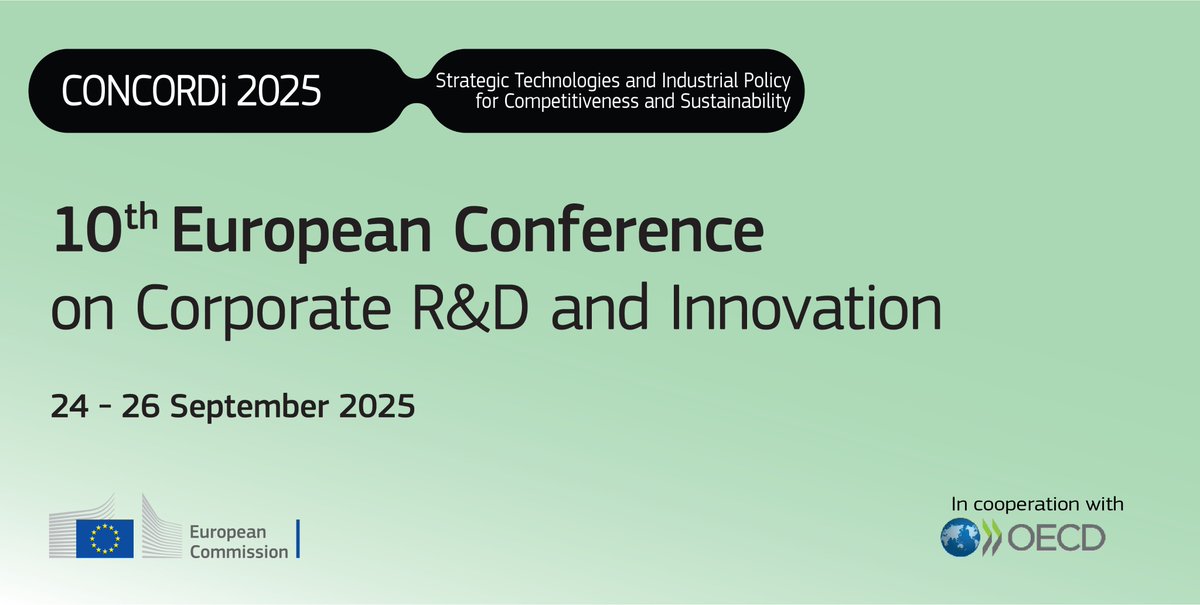
Tune in today to the European Conference on Corporate R&D and Innovation!
Academics, policymakers & industry experts will discuss how corporate innovation drives competitiveness, sustainability and resilience in today's world.
🎥Watch live from 14:30 https://t.co/uuM3NtRmYf
Economists must take seriously the transformative implications of AI for the economy:
-economic growth
-science and innovation
-inequality
-concentration of power
-geo-economics
-information and knowledge flows
-catastrophic risk
-new measures of well-being and
-transition dynamics.
This paper, with @professor_ajay and @akorinek, proposes a research agenda.
Live from Palo Alto! "The Economics of Transformative AI" @nberpubs workshop. I will be trying to live tweet (mega jet lagged--flew from HKG--, so I really hope I can keep it up) the papers presented. Watch this thread
Here is the fantastic line up
https://t.co/w10NL1HgKF
How to build AI agents for research, from simple data retrieval to deep research systems and showing how to create these tools using natural language instructions, from @akorinek https://t.co/AmcspbiYEC
Interestingly, an economics paper that came out in 2023 predicting which jobs would overlap most with AI turned out to be right.
A new Microsoft study of actual AI use by workers (more on that in another post) found a 90% correlation between real world overlap & the predictions.
This is the first (small) controlled study I have seen of GenAI on industrial quality control.
Here, engineers commissioning new trains took part in an experiment using a GPT-3.5 powered troubleshooting system. Those who used the chatbot had significant increases in work quality
Does #GenerativeAI meet the criteria of a general-purpose technology, like electricity or the steam engine? Some signs suggest it might, but as #GenAI fuels innovation, major productivity gains will depend on policy, investment & skills: https://t.co/Za7OdY7D0d
#AIpolicy#OECDAI
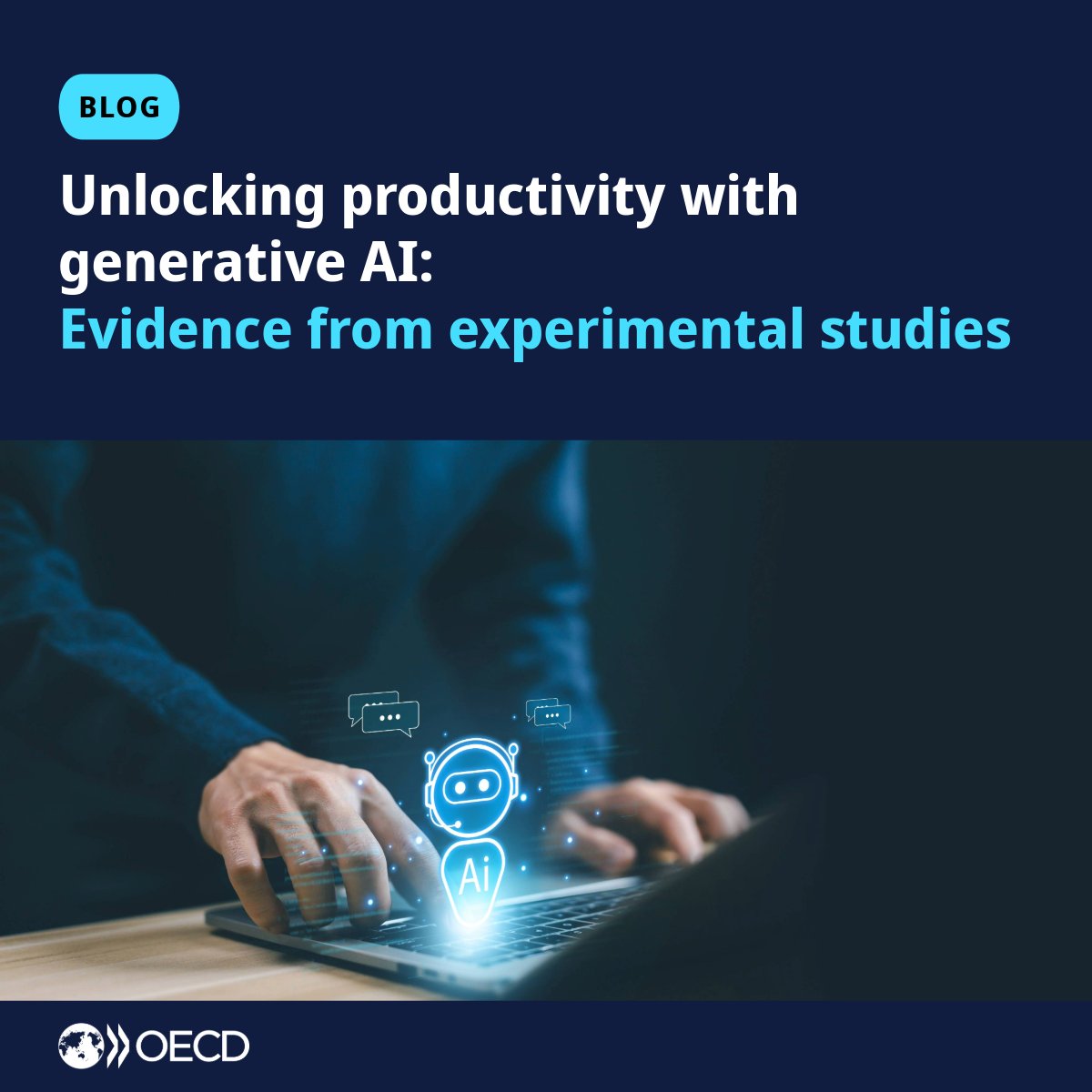
#GenerativeAI has the potential to transform work, boost #productivity, foster innovation and stimulate entrepreneurship — but its effects vary. In our blog, we explore key findings of recent experimental studies on its potential impacts: https://t.co/Ztf2TYZNJ8 | #OECDAI
An effective approach to leverage the potential of generative AI appears to be through #human-AI collaborations that consider both #context and users’ expertise, with AI serving as a #complement rather than a substitute for human capabilities.
A new paper from MIT Sloan postdoctoral associate Loaiza and professor Roberto Rigobon finds that work that's dependent on human characteristics such as empathy, judgment, and hope is less likely to be replaced by AI.
Learn more: https://t.co/D5C8pl8CGB