Lettrice universitaria di madrelingua francese Università La Sapienza Traduttrice-Interprete FR/IT/EN + IT/FR/EN, Socia certificata AITI- FIT+ Albo Tribunale
"Avec les années, on apprend que les mensonges mènent à l'abandon, et que la solitude, au fond, n'est pas une si mauvaise compagne. On comprend que les déceptions ouvrent les yeux, mais ferment le cœur. Les années nous apprennent à ne plus faire confiance, à réaliser qu'il existe des personnes qui ne sont pas ce qu'elles prétendent être, que celui qui t'a trompé une fois te trompera encore, car les gens ne changent pas, ils apprennent simplement à mentir mieux.
Avec le temps, on apprend que la solitude est un luxe, qu'il n'y a rien de plus précieux que de ne dépendre de personne, pour que personne ne te blesse, ne te juge, ni ne te mente."
Harrison Ford
In 1984, workers digging foundations for I.M. Pei's glass pyramid hit something unexpected: the walls of a medieval fortress that had been buried for 400 years.
King Philippe Auguste built the Louvre in 1190. Not as a palace. Not as a museum. As a military stronghold, designed to defend Paris from the west — specifically from English forces pressing in from Normandy. It was a square fortress roughly 256 feet (78 meters) by 236 feet (72 meters), ringed by ten towers and a water-filled moat. At its center stood the Grosse Tour (Big Tower), a circular keep nearly 100 feet (30 meters) tall with walls 14 feet (4.25 meters) thick at the base.
For three centuries, the Grosse Tour held the royal treasury, the archives, and the arsenal. In 1527, François I had it demolished. He wanted more light, more space, a Renaissance palace instead of a dark fortress. Workers tore it down to ground level — and then stopped. Nobody bothered to dig out the foundations.
The walls beneath the courtyard stayed there, untouched, for another 450 years.
The excavations ran from 1984 to 1985. Archaeologists uncovered the fortress foundations, the base of the Grosse Tour, sections of the original moats, pottery, weapons, and a parade helmet decorated with fleur-de-lis, identified as belonging to Charles VI, found shattered in pieces at the bottom of the keep well.
Today, visitors can walk directly through the former moats, circling the base of a tower that was demolished before Shakespeare wrote a single play. The medieval section sits in the Sully wing, beneath the same courtyard where the pyramid now stands.
This image is AI-generated. It imagines what it might look like to see the fortress ruins and the pyramid together from above. That vantage point does not exist. The ruins are underground, accessed by staircase inside the museum.
Have you visited the medieval section?
Dai un'occhiata al mio Bold Profile: https://t.co/wqthSjLVr9 Crea il tuo su https://t.co/IFvEpsa3iF per mettere in mostra i tuoi traguardi professionali e farti trovare dai recruiter per nuove opportunità.
Good meeting. We discussed a lot one on one. Hoping for results on everything we covered. Protecting lives of our people. Full and unconditional ceasefire. Reliable and lasting peace that will prevent another war from breaking out. Very symbolic meeting that has potential to become historic, if we achieve joint results. Thank you @POTUS.
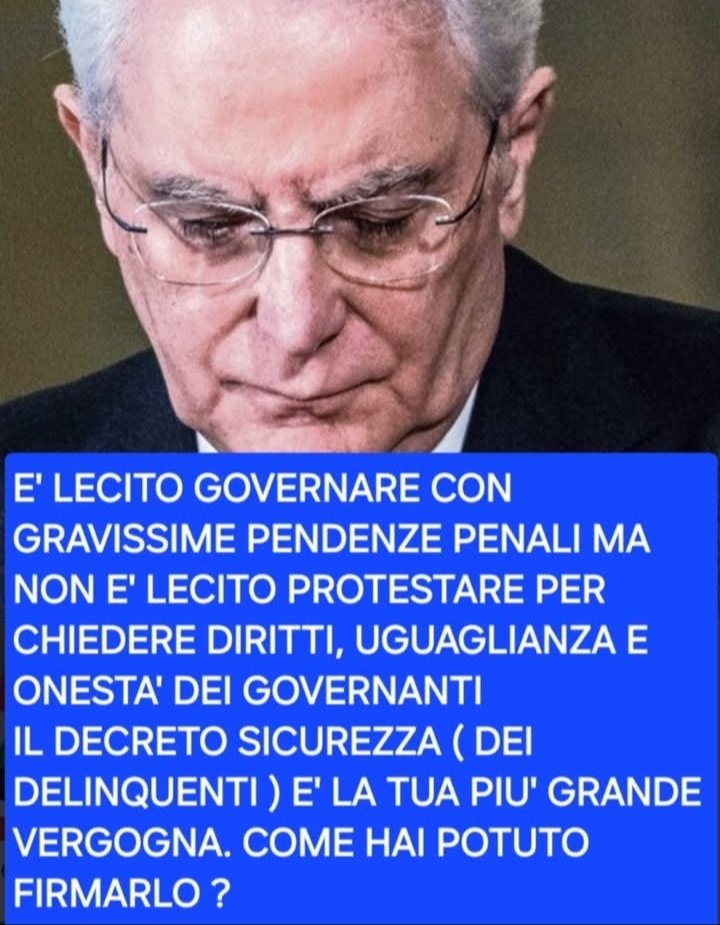
Il governo in cui il più pulito ha la ROGNA, silenzia PER LEGGE ogni forma di protesta.Sergio Mattarella ha firmato il decreto sicurezza approvato venerdì scorso dal Consiglio dei ministri.
Grazie Mattarella per questo SFREGIO a quel che restava di una Repubblica antifascisti.
230 tonnellate di pietra sollevate nel cielo di Ravenna nel 520 d.C. senza gru moderne. Sembra impossibile, eppure esiste ancora oggi.
La cupola del Mausoleo di Teodorico è un gigantesco monolite di pietra d'Istria, tagliato e trasportato in un unico blocco. Per rendere l'idea: pesa quanto un Boeing 747 vuoto, tutto in un singolo pezzo di roccia.
Ma il vero mistero è come abbiano fatto a sollevarla fino a 10 metri d'altezza in un'epoca senza motori o tecnologia avanzata. Pensate un attimo: oggi utilizzeremmo enormi gru e macchinari sofisticati.
Gli studiosi ancora dibattono sulle tecniche utilizzate. Alcune teorie suggeriscono l'uso di enormi rampe di terra, progressivamente rimosse dopo il posizionamento. Altri ipotizzano sistemi ingegnosi di argani e leve, moltiplicando la forza umana.
Ciò che rende tutto ancora più straordinario è la precisione del posizionamento. Quell'enorme peso doveva essere collocato perfettamente, senza la minima possibilità di "aggiustamenti" successivi.
Forse non sapremo mai esattamente come abbiano realizzato questa impresa, ma possiamo ancora ammirare il risultato del loro straordinario ingegno.