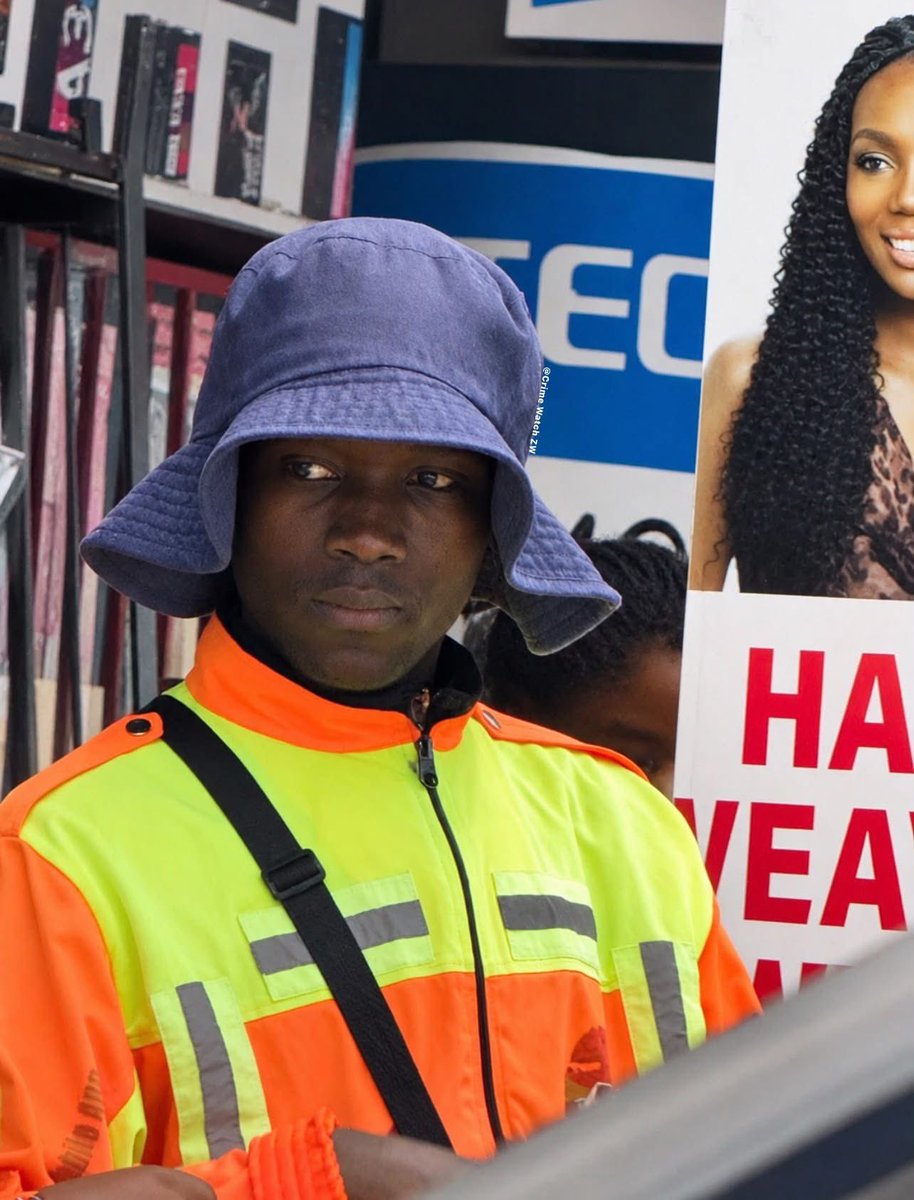
Hie crime watch. Today something disturbing and worrisome happened in the cbd and I just decided to give others a heads up.
I got into cbd with my hubby, I remained in the car as he went to look for the parking Marshall. He requested for 2hrs and he said he had no change for $10 so he then bought an hour instead as he had a dollar.
Marshall aisa receipt yedu and my hubby rushed to were he was going. The parking we bought was going to expire na 12:54 , those guys vano clamper were doing rounds up and down at 12:36 parking marshal came as if to check time on our receipt abva abvisa chi receipt chiya akaisa mu pocket and went apo twas all in my eyes, he didn't know mumota masara munhu, I just opened the door and started screaming for him to come back with my receipt, I couldn't run to him as I had a baby mumota.
I think because of the noise I made it forced him to come back, ndikati kowabvisirei receipt yangu hanzi haisi pressure hee still mu system inenge irimo bla bla bla ndikati wangu vano clamper avatarise mu system anga atombobva to check my time, tanetsana and told him to put back my receipt abva aisa apo vano clamper vavarimudhuze waiting to strike. That's the guy wacho who did that.
@CityParkingHre
Bible Studies on a variety of the more difficult and controversial Bible subjects Trinity, Once saved always saved, Sabbath, Grace and the Law death, hell, rapture and the 8th Day
You plug in your newly designed PCB and… nothing. - Don't panic!
We’ve all been there. You spend weeks routing traces in CAD, perfecting your BOM, and waiting for the boards to arrive.
You solder the components, flip the
power switch, and you’re met with total silence, zero current draw, or worse—the dreaded "pop."
The instinctive reaction is to start frantically poking components with a soldering iron or rewriting firmware. Resist the urge!
Troubleshooting isn't a guessing game; it's an exercise in logic. When hardware fails, a disciplined, systematic framework is your best friend.
Here is a 5-step approach to safely debug a non-functional board and find the root cause:
1. The "Pre-Flight" Visual Inspection
Before applying power, grab a microscope or magnifying glass. Look for invisible solder bridges between fine-pitch pins, check the orientation of polarized components (IC Pin 1 markers), and look for dull, grainy cold solder joints or misplaced SMD parts.
2. The Safe Power-Up & Current Analysis
Never plug straight into a raw power source. Use a laboratory power supply with current limiting enabled. Dial it down to a conservative level.
* Near-zero current draw? You’ve got an open circuit (blown fuse, broken track, dry joint).
* Current hitting the limit immediately? Shut it down—you have a short.
3. Validating the Power Rails
If it's powered but dead, check the infrastructure. Move methodically from the power input connector down through your regulators (LDOs/Buck converters). Use an oscilloscope to check for high-frequency ripple, which indicates unstable regulators.
4. Signal Tracing & Logic Verification
Once power is stable, trace the signal path.
* For Digital/Processor boards: Verify the "keep-alive" checklist—Is the crystal oscillator clock running? Is the MCU being held in a reset state? Are your boot/enable pins tied correctly?
* For Analog boards: Trace the linear signal path sequentially to see exactly where the signal drops off.
5. Beware of Hidden Failure Modes
Still stuck? Look for the invisible culprits - it’s very easy for some hidden design flaws to creep through:
* Floating digital inputs acting as antennas and causing erratic behaviour.
* Misunderstood datasheet specifications regarding absolute maximum ratings.
The Final Takeaway: Every failed PCB is a free lesson. Document your findings in a design journal. By shifting from a culture of "hoping it works" to a systematic debugging routine, you build the experience that defines a great hardware engineer.
What is your go-to trick when a new board won't power up? Let me know in the comments!
For more information, check out my website - see the link below.👇
#HardwareEngineering #PCBDesign #Electronics #ElectricalEngineering #EmbeddedSystems #ProductDesign #EngineeringLife #electronicsnotes
Dear professors,
You chart our course through vast oceans of knowledge, guide us toward the peaks of innovation, and support us as we grow in Tsinghua and beyond. Let’s turn the spotlight toward your efforts this Superhero Day!
A Harvard professor spent 40 years inside the human brain studying how language works. Wrote 9 books. Taught thousands of students.
And he still thinks most people have no idea why their writing fails.
Steven Pinker stood in front of a room and asked one question. Why is almost all writing academic, corporate, government, even most things you read online so painfully bad to get through?
The room expected him to say laziness. Lack of practice. Poor education.
He said none of those things.
He called it the Curse of Knowledge. And once he explained it, I couldn't unsee it anywhere.
Here's how it works. The moment you understand something deeply, something breaks inside you. You lose access to what it felt like before you knew it. The confusion you once had disappears so completely that you can no longer imagine anyone else feeling it. Your blind spots don't feel like blind spots anymore. They feel like obvious starting points.
He told a story about a molecular biologist presenting at a TED event in front of 400 people. Brilliant man. Spent years on his research. Walked on stage and immediately started speaking in technical language without ever once explaining what problem he was trying to solve or why a single person in that room should care about it. People glazed over within two minutes. He finished his talk having no idea what had just happened. He thought he'd done well.
That is the curse in its purest form. It doesn't announce itself. It disguises itself as competence.
Then Pinker said the thing that stopped me cold.
Bad writing is not about intelligence. It is not about effort. It is a failure of empathy. A writer who cannot imagine what it feels like to not know what they know will always lose their reader. Every time. No exceptions.
His solution was not a writing technique. It was a person.
He gave his drafts to his mother. She was educated, well-read, deeply intelligent. But she was not a cognitive scientist. She had no stake in his field. When she hit a sentence and her eyes slowed down, when she read a paragraph and looked up slightly confused, he didn't think she'd missed something. He went back and fixed the writing. Not her. The writing.
That reframe alone is worth more than most writing advice combined.
Then he moved to the thing almost every writer gets completely wrong.
Words are not the point. Words are just a vehicle. What your reader actually walks away with is not the sentence you wrote. It is the image, the feeling, the physical thing that sentence was supposed to create inside their mind. If no image forms, nothing was communicated. The words passed through and left nothing behind.
He asked his audience what a paradigm looks like. What a framework feels like. What color a concept is.
Total silence.
Because abstractions are invisible. They produce no picture, no texture, no sensation. They are placeholders that feel like meaning but deliver none.
The writers who survived two hundred years did it because they had no choice but to be concrete. There was no jargon to retreat into. So instead of writing about aggression they wrote about the spirit of the hawk tearing into flesh. The reader felt it before they understood it. That is the only writing that actually works.
The last thing he said was about brevity. And he defined it in a way I had never heard before.
Brevity is not a low word count. Brevity is the discipline of cutting every single word that asks something of your reader without giving something back. Every unnecessary word is a small tax. Enough small taxes and the reader stops paying.
He has carried three words with him for forty years. Omit needless words. He said that line does something almost no piece of advice manages to do. It demonstrates what it teaches. It is itself an example of the principle it describes.
The best writing he ever produced came under an 800-word limit an editor refused to negotiate. The pressure of that constraint cut everything that was hiding inside the extra space. It always worked. Without fail.
The Curse of Knowledge will not go away because you are aware of it. Awareness is not enough. The only move that actually works is finding someone outside your world, handing them what you wrote, and watching their face while they read it.
Not reading it for them. Watching them.
The moment their face shows even a flicker of confusion, you have found exactly where your writing failed.
That is the whole masterclass.
@Life_truthway That is not what the bible says. According to the Bible, we don't have souls, but rather we are souls. The spirit (breath of life) and the body (formed from dust) became a living soul.
Genesis 2:7.
The ideal that we have souls is a false theory propagated by Satan.
FASCINATING HISTORY
Manresa is a residential suburb located in the eastern part of Harare, Zimbabwe, near areas like Mabvuku and Tafara. It is characterized as a developing low- to medium-density neighborhood with a mix of residential and commercial properties, including gated complexes and serviced plots ready for building.
The suburb's history is tied to colonial land allocations in what was then Rhodesia. Like many Harare suburbs, it originated from the subdivision of larger farms established in the late 19th and early 20th centuries following the arrival of the Pioneer Column in 1890.
Specifically, Manresa developed from Manresa Farm, a property owned by the Jesuits (Society of Jesus), a Catholic religious order with a long presence in Zimbabwe dating back to the colonial era. The Jesuits received extensive land grants from the British South Africa Company as rewards for their support during the colonial conquest, including areas around Harare such as Chishawasha Farm (northeast of the city). Manresa Farm, located near Tafara, appears to be one such holding, and it has been involved in post-independence land disputes, including illegal settlements in the early 2000s where occupants resisted eviction.
The naming of the suburb derives from the farm's name, which the Jesuits chose in honor of Manresa, a historic town in Catalonia, Spain. This Spanish Manresa is significant in Jesuit tradition because it is where St. Ignatius of Loyola, the founder of the Jesuits, underwent a profound spiritual experience in 1522–1523 and composed his "Spiritual Exercises," a key text for the Jesuits worldwide often name their institutions, retreat centers, and properties "Manresa" to commemorate this heritage, as seen in places like England, Canada, and Ireland. In Zimbabwe, the Jesuit Manresa Development Board has been involved in servicing and developing the area into residential stands, reflecting the order's ongoing role in land management and community projects.
Told the church to pray for him, or they might hear the following year he had died in a plane crash. The church thought it was one of his usual sermons, the following year he died in a plane crash 💔🤦🏽♂️
BREASTMILK
She thought she was studying milk.
What she uncovered was a conversation.
In 2008, evolutionary anthropologist Katie Hinde was working in a primate research lab in California, analyzing breast milk from rhesus macaque mothers. She had hundreds of samples and thousands of data points. Everything looked ordinary—until one pattern refused to go away.
Mothers raising sons produced milk richer in fat and protein.
Mothers raising daughters produced a larger volume with different nutrient balances.
It was consistent. Repeatable. And deeply uncomfortable for the scientific consensus.
Colleagues suggested error. Noise. Statistical coincidence.
But Katie trusted the data.
And the data pointed to a radical idea.
Milk is not just nutrition.
It is information.
For decades, biology treated breast milk as simple fuel. Calories in. Growth out. But if milk were only calories, why would it change depending on the sex of the baby?
Katie kept digging.
Across more than 250 mothers and over 700 sampling events, the story grew more complex. Younger, first-time mothers produced milk with fewer calories but significantly higher levels of cortisol—the stress hormone.
The babies who drank it grew faster.
They were also more alert, more cautious, more anxious.
Milk wasn’t just building bodies.
It was shaping behavior.
Then came the discovery that changed everything.
When a baby nurses, microscopic amounts of saliva flow back into the breast. That saliva carries biological signals about the infant’s immune system. If the baby is getting sick, the mother’s body detects it.
Within hours, the milk changes.
White blood cells surge.
Macrophages multiply.
Targeted antibodies appear.
When the baby recovers, the milk returns to baseline.
This was not coincidence.
It was call and response.
A biological dialogue refined over millions of years. Invisible—until someone thought to listen.
As Katie reviewed existing research, she noticed something unsettling. There were twice as many scientific studies on erectile dysfunction as on breast milk composition.
The first food every human consumes.
The substance that shaped our species.
Largely ignored.
So she did something bold.
She launched a blog with a deliberately provocative name: Mammals Suck Milk.
It exploded. Over a million readers in its first year. Parents. Doctors. Scientists. People asking questions research had skipped.
The discoveries kept coming.
Milk changes by time of day.
Foremilk differs from hindmilk.
Human milk contains over 200 oligosaccharides babies can’t digest—because they exist to feed beneficial gut bacteria.
Every mother’s milk is biologically unique.
In 2017, Katie brought this work to a TED stage. In 2020, it reached a global audience through Netflix’s Babies. Today, at Arizona State University’s Comparative Lactation Lab, she continues reshaping how medicine understands infant development, neonatal care, formula design, and public health.
The implications are staggering.
Milk has been evolving for more than 200 million years—longer than dinosaurs walked the Earth. What we once dismissed as simple nourishment is one of the most sophisticated communication systems biology has ever produced.
Katie Hinde didn’t just study milk.
She revealed that nourishment is intelligence.
A living, responsive system shaping who we become before we ever speak.
All because one scientist refused to accept that half the story was “measurement error.”
Sometimes the biggest revolutions begin by listening to what everyone else ignores.
Let's start 2026 like this:
This link has CV templates, SOP, Research proposals, Visa Interviews, Reference letters, IELTS, TOEFL, GMAT, GRE, and Emails to Prof:
Link: https://t.co/YeQjaW4OHr
RT and tag your friends.
What Determines the Colour of an LED
The colour of an LED is obviously is a major element of any LED specification because certain colours are more applicable to some situations rather than others.
LEDS tend to provide what is effectively a single colour. In fact the light emission extends over a relatively narrow light spectrum.
The colour emitted by an LED is specified in terms of its peak wavelength (lpk) - i.e. the wavelength which has the peak light output. This is measured in nanometers (nm).
The colour of the LED, i.e. the peak wavelength of the emission from the LED governed mainly by the material used for the LED and also by the chip fabrication process. Variations in the process can tailor the peak wavelength variations up to figures of around ±10nm.
When choosing colours within the overall LED specification, it is worth remembering that the human eye is most sensitive to hue or colour variations around the yellow / orange area of the spectrum, i.e. between about 560 to 600 nm.
Even slight process variations can cause small colour variations that can be quite noticeable if orange LEDs are chosen and sit next to each other on a front panel. This may affect the choice of colour, or position of LEDs if this could be a problem.
More information in the link in the comment.
#LED #LEDcolour #LEDcolor #electroniccomponents
There is a pastor in Lagos, Ikeja. I want to highlight the curriculum of his entire sermon series to his church this year—a relatively new church:
The origin and reliability of the Bible
Is the Bible true?
Introduction to canonization
The doctrine of God
How to study the Bible
The incommunicable attributes of God
The aseity of God
The self-sufficiency of God
The doctrine of the Trinity explained
Jesus in the Old Testament
The incommunicable attributes of God II
The significance of Christology
The need for the atonement
Resurrection power
God’s perspective on work
The ascended life
The lens of the cross
How the Spirit leads
The doctrine of the laying on of hands
The Spirit of Pentecost
Anyone even moderately familiar with theology will immediately recognize the significance of this outline.
This pastor labored intentionally to root his flock in systematic theology, delivered alongside the charismata, the Spirit, and the letter. Knowing God, and also understanding Him.
I have a bias for ministers who labor diligently in the Scriptures. Those are the ones I honor. Blessed be God for the members of his church.
This minister ensured that he not only taught them the Word, but also taught them how to think systematically about it.
Now this flock has a year-round foundation that not even he himself can easily manipulate. By God’s grace, the church is now solid, and any other doctrine can be safely laid upon this foundation.
The name of the church is Burning Heart Ministries, and the pastor is Pastor Elvis Okhifo (@ElvisOkhifo).
Man of God, well done, and thank you for your labor in the Lord. Both in lifestyle and in doctrine, you have been faithful.
May the Lord continue to strengthen and help you. In Jesus’ name, amen.
God bless you, sir.
List of YouTube Documentaries to Watch
1. Money Rituals: Africa’s Deadliest Taboo —BBC News Africa
2. Uncovering the Toxic Culture of Surgeons —ABC News In-depth
3. Genetic Gamble: GM Foods Under Fire — Moconomy
4. Inside the Wellness Industry Contriversial —Vice News
5. In the Hands of Cocaine Mafia —DW Documentary
#MarriageIsHard#MarriageNeedsWorkEveryday#Communication#FinancesInMarriage#Intimacy
1)
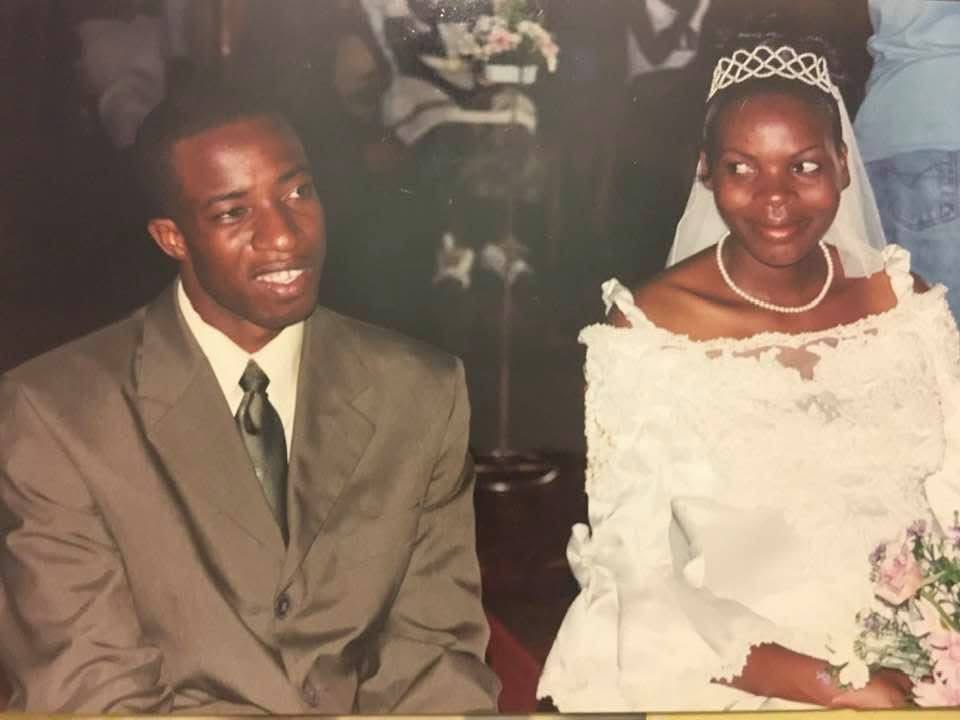
Yesterday morning I saw a tweet about a lady who waited for the right person until she was around 29 and had a child and shortly after that she divorced. I have been married since 8 September 2001, essentially you get married the day the father of the girl confesses so with his own mouth. At the conclusion of our lobola ceremony (roora day) in my in-laws’ lounge in Unit K, Chitungwiza my father in law, my father in law is a fair man, if you see us talking you will think we are long time buddies anyway he said to my wife in the presence of everyone, Betty (from Elizabeth zita rake rekuseenzesa 🤣) from today onwards I am no longer your father, he is now your father (pointing at me). I didn’t understand what that meant until years later.
A Shona marriage like many other similar cultures including how the Holy Bible describes the Union of marriages, it is not a marriage of equality. The wife submits to the husband, the wife is the helper and your most important advisor. In almost everything the wife has an opinion and her opinion is valued, even for someone self employed like myself I value my wife’s opinion even when it’s not sought, our destiny is tied together. When I was growing up, I learnt that in a family, money belonged to everyone regardless who had brought that money. My late dad was a policeman, when he got paid the money was essentially controlled by my mum and dad would get an allowance when he went to the bar. My mum would pay the important accounts.
I remember on month ends we would start at OK furniture in Kwekwe next to Chrome Center for account payments next Sales House and Edgars Account payments. She would buy groceries mainly from OK, TM and Narans Stores and we would end up at Wimpy not far from the mosque on the Mbizo road turnoff. My mum had a serious garden at both Amaveni Police and later at Mbizo Policd Camp, she made serious money from rugare vegetables and okra. Even after my dad passed on, every month end I accompanied my mum to TM and Food Giants supermarket in Marondera. When I got married, I earned much more than my wife and a year later I became a manager and started earning even much more. The principle I was raised under guided me, money in the house belongs to everyone in the house.
By the time we got married, I was the breadwinner at home, all my young siblings and my mother depended on me. My two youngest brothers were still in high school. My eldest sister had just completed A’ Level. I had took her back to O’Level and to A’Level after her failed marriage, I looked after my nephew. I had started my first side hustle of raising broiler chicken at home, I had realised long back that a salary is never enough. My girlfriend helped to sell the broiler meat to her friends as well. When my wife moved with me in Avondale on the 10th of September 2001, I had been staying with my youngest sister who was a first year at the nearby University of Zimbabwe.
We just combined our salaries and raised our big family, my in laws never demanded monthly keep from us, we helped were we could. Within 4 years I weaned off my siblings. As I became a senior manager I earned more, my wife knew exactly how much I earned and vice versa. We have never fully agreed on how to spend the money but we knew how much money is there every month. I think the reason why people don’t want to disclose how much they earn individually is because your spending will be controlled. Each person has a different money dial, I don’t mind spending money on cars, travelling, buying music, books and going to running events, my wife complains about it but I don’t hide it. I remember five years ago when I financed my Toyota Hilux Legend 50, she said to me, you mean the instalment of R10 000 a month 😳😳 Now a decent car now needs R20 000 a month 😢
In a marriage you go through problems dzimwe nguva munongotsamwisana, I don’t think it’s good to
Modern App Replacements 🤯
1. 📖 Instead of Wikipedia – Grokipedia
2. 🎬 Instead of Netflix – Plex
3. 🎵 Instead of Spotify – Demus Music
4. 🎨 Instead of Canva Pro – Photopea
5. 📺 Instead of YouTube – Odysee
6. 🎥 Instead of TikTok – Clapper
7. 🤖 Instead of ChatGPT Plus – Poe
8. ☁️ Instead of Google Drive – Terabox
9. 📞 Instead of Zoom – Jitsi Meet
10. 🖼️ Instead of Pinterest – Pixabay
11. 🖌️ Instead of Adobe Photoshop – GIMP
12. ✏️ Instead of Adobe Illustrator – Inkscape
13. 📧 Instead of Gmail – Proton Mail
14. 🗺️ Instead of Google Maps – Organic Maps
15. 💾 Instead of Dropbox – MEGA
16. 💬 Instead of Slack – Discord
17. 📋 Instead of Trello – ClickUp
18. 🧠 Instead of Notion – Obsidian
19. 🌐 Instead of Reddit – Lemmy
20. 📸 Instead of Instagram – Pixelfed
21. 🔒 Instead of WhatsApp – Signal
22. 🦁 Instead of Google Chrome – Brave
23. 🦊 Instead of Safari – Firefox
24. 📚 Instead of Kindle – Libby
25. 🎧 Instead of Audible – LibriVox
26. 📷 Instead of Shutterstock – Pexels
27. 🔍 Instead of Google Search – DuckDuckGo
28. 📝 Instead of Evernote – Joplin
29. 📅 Instead of Calendly – Cal. com
30. 🚀 Instead of WeTransfer – Send Anywhere
31. 🔐 Instead of LastPass – Bitwarden
32. ✍️ Instead of Medium – Substack
33. 🎓 Instead of Udemy – Coursera
34. 💡 Instead of Quora – Stack Exchange
35. 💸 Instead of PayPal – Wise
36. 🖼️ Instead of Google Photos – Ente Photos
37. 🧩 Instead of Microsoft Teams – Mattermost
38. ☁️ Instead of iCloud – pCloud
39. 🎞️ Instead of IMDb – TMDB
40. 🎼 Instead of Apple Music – SoundCloud
41. 📊 Instead of Google Analytics – Matomo
42. 🧑���� Instead of GitHub – GitLab
43. 🗂️ Instead of WinRAR – 7-Zip
44. 📹 Instead of Loom – OBS Studio
45. 🖥️ Instead of TeamViewer – AnyDesk
46. 🛒 Instead of Shopify – WooCommerce
47. 📰 Instead of Google News – Feedly
48. 🧾 Instead of QuickBooks – Wave
49. 🧑🎨 Instead of Figma – Penpot
50. 📄 Instead of Microsoft Office – LibreOffice
Note: These are alternative tools, not direct upgrades or downgrades. Each app serves different needs, pricing models, and audiences. The “best” option depends on your use case, features you need, and personal preference.
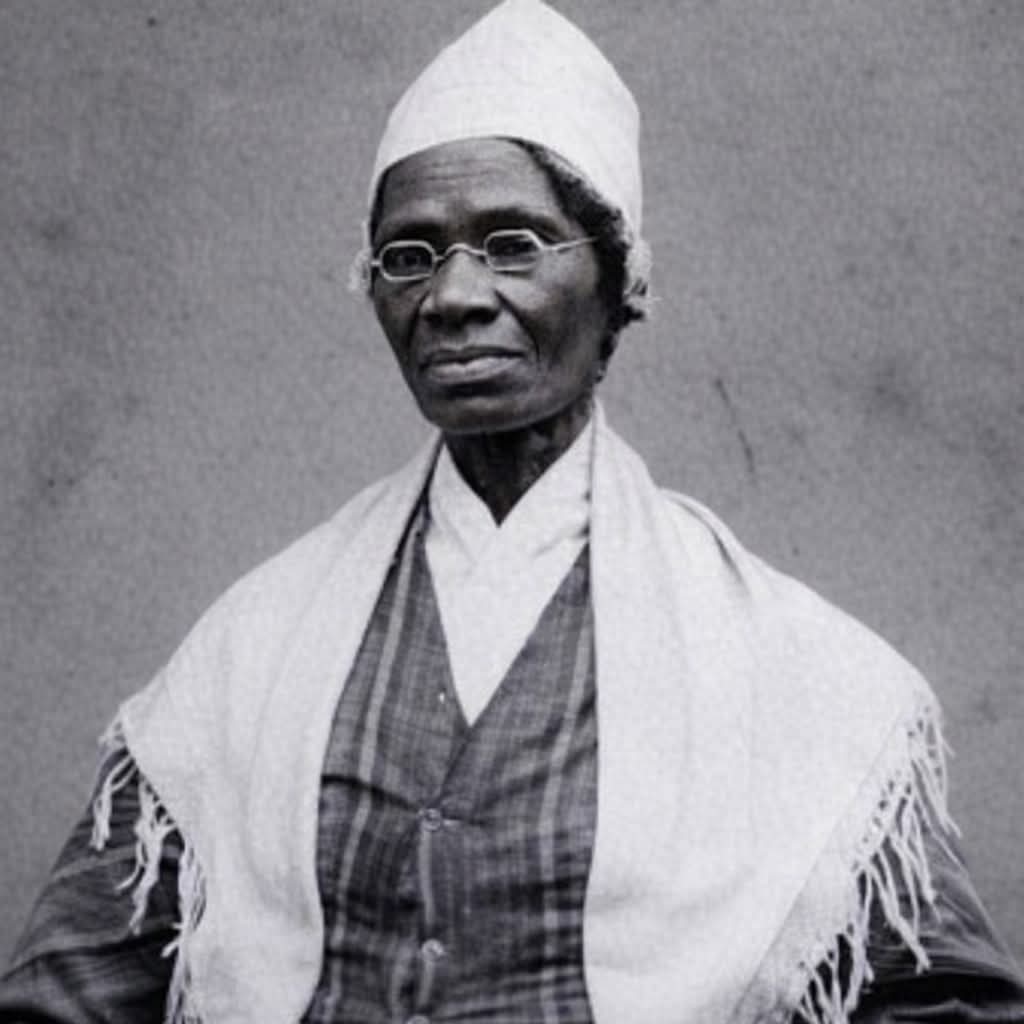
She couldn’t read.
She couldn’t write.
But in 1828, she walked into a courtroom and destroyed a white man’s case.
Her name was Isabella.
History would know her as Sojourner Truth.
Ulster County, New York. 1797.
Isabella was born enslaved—not in the South, but in New York, where slavery was fully legal.
She spoke Dutch before English. Enslaved people were forbidden to learn to read. Knowledge was power, and power was denied.
By nine, she had been sold twice.
By thirteen, sold again.
Each sale meant violence, loss, and erasure.
At eighteen, she was forced into marriage. She had five children. She loved them fiercely.
But the law said they weren’t hers.
In 1826, New York passed a law promising the end of slavery on July 4, 1827. Her enslaver, John Dumont, made her a deal: work harder, and he’d free her early.
She did.
He broke his promise.
Before dawn, with her infant daughter in her arms, Isabella walked away. No money. No plan. Just faith.
She found refuge with Isaac and Maria Van Wagenen, Quakers who opposed slavery. When Dumont came to reclaim her, Isaac paid $20 to secure her legal freedom.
At 29, Isabella was free.
Then she learned the truth.
Dumont had illegally sold her five-year-old son, Peter, to an enslaver in Alabama—violating New York law.
Everyone expected her to accept it.
She didn’t.
An illiterate Black woman—recently enslaved—sued a white man.
In 1828.
She couldn’t read the documents.
She couldn’t sign her name.
But she spoke.
She named the law. She named the crime. She named her child.
The judge ruled in her favor.
Isabella became the first Black woman in American history to win a court case against a white man.
When Peter returned, his body was scarred—but he was alive. He was home.
She had done the impossible.
For years, she worked as a servant and preached wherever she could. Her voice carried weight. Her presence commanded silence.
Then, in 1843, at 46 years old, she chose a new name:
Sojourner Truth.
Sojourner—because she would walk.
Truth—because she would speak.
With 25 cents in her pocket, she set out across America. She memorized Scripture by listening. She spoke without notes. Her words were raw, direct, unshakable.
In 1851, at the Women’s Rights Convention in Akron, Ohio, some white women wanted her removed. “This is about women,” they said.
Sojourner stood.
What mattered wasn’t the dialect later added by others. What mattered was the message:
Black women are women.
Strength does not erase womanhood—it proves it.
She spent the next three decades fighting—recruiting Black soldiers during the Civil War, challenging segregation on streetcars, lobbying Congress, confronting racism and sexism wherever she found it.
She never learned to read.
Yet she dictated her autobiography.
She debated politicians.
She met presidents.
Sojourner Truth died in 1883, at 86. Poor. Landless. Unbroken.
Over a thousand people attended her funeral.
She freed herself.
She beat the courts.
She spoke when silence was safer.
Born enslaved.
Died free.
Illiterate—but unstoppable.
Sojourner Truth didn’t wait for permission.
She walked.
And the world changed.
That’s the truth.