Norway wins the most medals at the Winter Olympics, with a population of just 5.6 million. People say it’s because Norway is a winter wonderland, but they’re also elite at triathlon, beach volleyball, cycling, and as the world is now seeing, soccer.
A big part of their success is how they treat youth sports—and it’s the opposite of what we do in the US and Canada. Here’s what we can learn from Norway:
1. Scorekeeping:
In the US: Youth sports tend to be hyper competitive even at early ages. Leagues almost always keep score.
In Norway: Scorekeeping isn’t even allowed until age 13.
Removing winners and losers keeps the focus on the process not outcomes. It keeps kids engaged longer because it minimizes pressure (and tears) and maximizes fun, learning, and growth. The goal isn’t to win a third grade championship. It’s to love sport and keep playing.
2. Trophies:
In the US: If you give everyone a trophy, you’re creating snowflakes who will never gain a competitive edge.
In Norway: Whenever trophies are awarded, they are handed out to everyone.
If getting a trophy makes young kids feel good, we should give them trophies. Maybe they’ll come back and play again next year!!
As for the creation of snowflakes with no competitive edge—Norway’s athletes are tough as nails and all they do is win.
3. Prioritizing Fun:
In the US: Far too often, the goal is to win.
In Norway: The national philosophy is “joy of sport.”
Youth sports in the US are driven by adults, ego, and money. Youth sports in Norway are driven by fun.
Only half of kids in the US participate in sports. The number one reason they drop out: because they aren’t having fun anymore. In Norway, 93% of kids participate in youth sports. Fun is the foremost goal.
4. Playing Multiple Sports:
In the US: There’s pressure to specialize early and play your best sport year round.
In Norway: Try as many sports as you can before specializing as late as college.
Norway encourages kids to try all types of sport. This reduces injury and burnout and increases all-around athleticism. It also helps promotes match quality, or finding the sport you are best suited for as your body develops, which is impossible if you commit to a single sport too early.
5. Affordability
In the US: There is increasingly a pay-to-play model with high fees for leagues, equipment, and travel. This excludes many kids from playing.
In Norway: It’s a national priority to keep youth sports affordable and therefore accessible for all.
Kids aren’t priced out, which creates opportunities for everyone to participate (and develop into athletes), regardless of their parents’ income level.
Norway’s sporting success isn’t just speculation or a nice story. A large body of research supports their approach:
• Studies show athletes who specialize later in life have a significantly higher chance of becoming elite.
• Soccer players whose motivation is primarily internal (versus external) have more than a 3x better chance of making it to an elite level.
• The number one predictor of whether or not kids stay in sport is are they having fun.
• Parents connect winning to having fun whereas kids say having fun is about being with their friends and learning.
We could learn a lot from Norway:
In the US, 70% of kids drop out of youth sports by age 13. This not only diminishes an elite-athlete pipeline, but it also destroys an opportunity for healthy habits and all the character lessons kids can learn from sport.
In Norway, lifelong participation in sport is the norm. The goal isn’t to have the best 9U team. It’s to develop the best athletes. Those are two very different things. And Norway has the medals to prove it.
The older I get, the more I realize making memories with family, a solid fitness routine, a job you don't hate, a group chat of great friends, annual traditions, and a productive hobby will lead to a very happy life.
There are at least 4 types of wealth:
- Financial wealth (money)
- Social wealth (status)
- Time wealth (freedom)
- Physical wealth (health)
Be wary of jobs that lure you in with 1 and 2, but rob you of 3 and 4.
@EricCrossMLB@JonPgh@DynastyHalp
Trade Help: 26 player Keeper League
Bobby Witt + Sal Stewart OR Crews
for
Gunnar, Roman and 2nd pick in FYPD
thoughts…
I’m in love with this sentence:
“The degree to which a person can grow is directly proportional to the amount of truth he can accept about himself without running away.”
Schools alone can’t bear the culture of children lost in pointless phone surfing. But for 8 hours a day, 200 days a year they can provide a healthy environment where children can learn and socialise without that impediment.
Life rarely changes in a positive way without an increase in responsibility.
That can mean taking ownership of your health or committing to a relationship or starting a business.
Whatever it is, if you want the trajectory to change, the amount of responsibility usually has to change.
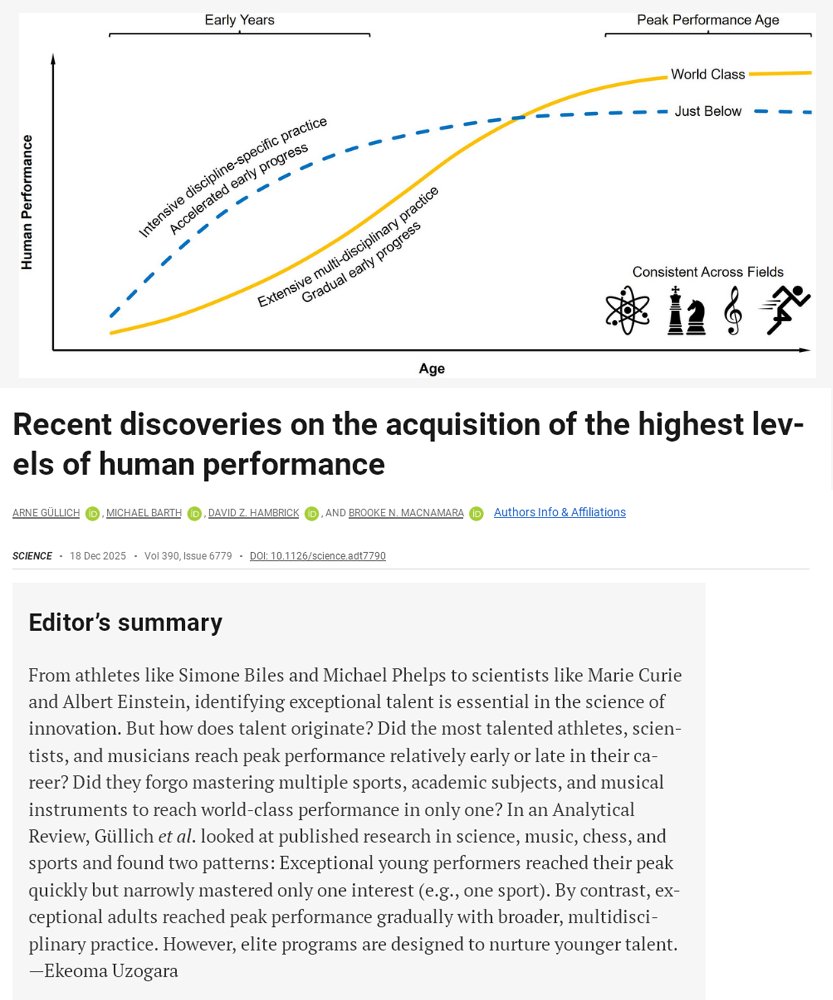
Early specialization is overrated. Generalists excel over time.
Data on >34k stars in sports, music, science, and chess: Focusing on a single field predicts a faster rise, but cross-training foreshadows a higher peak.
The most successful adults start off as well-rounded kids.
The biggest generator of long-term results is learning to do things when you don’t feel like doing them.
If you let excuses or emotions drive behavior, you’re cheating your future self.
Put aside the excuses and start doing what you need to do.
“Sheep don’t bring their owners grass to prove to them how much they’ve eaten, they digest it inwardly and outwardly bring forth milk and wool. So don’t make a show of your philosophical learning to the uninitiated, show them by your actions what you have absorbed.”
— Epictetus