FRNT Financial is pleased to announce that its wholly-owned subsidiary, FRNT Financial UK Limited has been granted authorization by the Financial Conduct Authority to operate in the UK. This is a major development in the firm's international expansion that broadens FRNT's global regulatory footprint and allows the firm to continue to satisfy the growing needs of regulated institutional investors operating at the intersection of traditional regulated finance, digital assets and other innovative industries.
https://t.co/MIPIxrCoNe
FRNT Financial, Secure Digital Markets, ChainMyne and Satstreet now provide access to CAD Digital (CADD).
Together, these firms support a broad range of institutional and high-volume digital asset activity across trading, liquidity and settlement in Canada.
Expanding access through established OTC desks and trading platforms is a key step in increasing the availability of Canadian dollar liquidity across digital asset markets.
FRNT CEO @StephOFRNT spoke to Bloomberg after the US Senate Banking Committee advanced the Clarity Act, a key piece of crypto legislation.
“In terms of the rules against stablecoins, we believe the devil remains in the details,” said Stephane Ouellette, chief executive officer and co-founder of FRNT Financial Inc. “How that shakes out will be an intense battle among lobbyist and is absolutely the next phase of this story, now that the framework for regulation has been passed.”
https://t.co/9BDGRacEFJ
Today, FRNT Financial announced a Strategic Alternatives Review - I wanted to add some additional context.
As per the press release, $FRNT has seen several approaches over the last few quarters on primarily a basis of M&A or Strategic Investment. As we were working those, ultimately not-consummated transactions, we have been quieter than usual with investors. This announcement allows us to discuss the nature of those deals and the many options FRNT has to scale its business through Capital Markets strategies going forward.
Another point I would like to address, that seems to be a source of confusion for some investors. FRNT Financial has 0 debt, 0 forward liabilities and over 95% of the assets on our balance sheet are current and liquid. I highly suggest all interested parties have a review of our balance sheet and feel free to reach out for any clarifications.
While FRNT is a pioneer in institutional services in digital assets and has clearly been 'early.' The market has never moved more in our direction. With developments like tokenized equities/credit on the near-term horizon, blockchain-based payments seeing unprecedented growth in the institutional landscape and an increasingly friendly regulatory environment. In spite of the tough charts around this industry, we strongly believe it is time to scale and go after this fast-growing pie. Further, we have a Global regulatory structure, including FCA registration, that allows us to attack all such relevant opportunities.
We're extremely excited to be working together with our partners Joseph Gunnar on a qualifying transaction, or ultimately a decision to continue to go it alone.
For any details, on the state of the company, the opportunity or a transaction, please feel free to reach out to me, someone at FRNT Financial or J Gunnar. We're working as hard as ever to provide the best service for Institutional Clients in the digital asset landscape.
All the best to our clients, investors and partners - we thank you for your trust and support as always.
Stéphane
FRNT Financial has announced that its board of directors has initiated a formal review of strategic alternatives intended to maximize shareholder value.
https://t.co/kX7GQyWHTl
From today's '24 Hrs in Crypto:'
Circle (NYSE: CRCL) raised USD 222M in a presale of the ARC token ‘at a [USD 3B] fully diluted network valuation’- We discuss the Arc network, a blockchain designed for stablecoins & regulated capital markets
Read the full note & subscribe: https://t.co/1EWYXwQIqf
Circle revealed the USD 222M raise, which included placements from a16z crypto, Apollo Funds, ARK Invest, BlackRock (NYSE:BLK) and Bullish (NYSE: BLSH), among others, as part of its Q1 2026 financial results. The Arc network was initially revealed in August 2025 along with features including USDC as native gas for predictable dollar-denominated fees, a built-in institutional-grade FX engine with 24/7 on-chain settlement, opt-in privacy for selectively shielded balances and transactions, among others. The ARC token is described as a ‘native coordination asset’ designed to support governance, validator security, and network operations across the chain.
According to CNBC, ‘[a]s a 25% stakeholder in Arc’s initial supply of 10 billion tokens, Circle can participate in operating validator infrastructure, generating new fee revenue and earning staking income.’ The bulk of the supply, 60%, is set aside for builders, users, and contributors to the Arc network, with the final 15% held in a long-term reserve.
In an interview with CNBC, Circle CEO Jeremy Allaire also emphasized the AI overlap with the Arc network. He said AI agents ‘will be conducting the work of the real economy’ and ‘need to run on these new networks, like what we’re building with Arc’, adding that he expects ‘tens of billions of these’ agents to eventually emerge.
For incumbent networks like Ethereum or Solana, stablecoins, tokenization, and other traditional capital deployments on blockchain have been a key bull thesis. Proponents of these blockchains believe that the institution-led adoption of blockchains will bring new users and capital into networks’ ecosystems. Ethereum has emerged as the focal point of ongoing traditional financial blockchain adoption: Ethereum hosts just over half of the stablecoin market along with half of tokenized real-world assets. For example, Tether’s USD 2.77B XAUt, likely one of the most successful examples of real-world asset tokenization, is almost exclusively hosted by Ethereum.
Takeaway: The proliferation of stablecoins over the past year has also been characterized by the launch of several stablecoin-focused networks. Besides Arc, examples also include the Plasma network, which included Bitfinex and Tether CEO Paolo Ardoino among investors, and the Stripe and Paradigm ‘incubated’ Tempo blockchain. In this context, incumbent networks will face significant competition as solutions such as Arc increase in maturity. At the same time, Arc’s development underscores that the stablecoin sub-sector continues to be a focal point of innovation within the crypto ecosystem.
From today's '24 Hrs in Crypto:'
Last week, Tether released its Q1 2026 ‘Attestation Report’ - We provide key highlights from the report & review select USDt-related narratives
Read & subscribe to the full note: https://t.co/SBfqL6GeZl
As of March 31, 2026 USDt is circulation stood at USD 183B, with total reserves at USD 191.77B: According to the report, as of the covered period, ‘excess reserves increased to a record USD 8.23B’ while the firm recorded USD ~1.04B in net profit. Tether has often been characterized as one of the most profitable companies per employee; according to February reporting from the FT, Tether employed ~300 people at the time, with plans to add 150 individuals over the next 18 months. According to Tether’s Q4 2025 ‘Attestation Report,’ the firm ‘delivered net profits exceeding [USD 10B]’ that year.
The make-up of USDt’s reserves & ‘America’s financial ally in the Age of Stablecoins:’ USDt’s total reserves are composed of 73.64% ‘Cash & Cash Equivalents & Other Short-Term Deposits,’ while gold and BTC accounted for 10.34% and 3.45%, respectively. This represents a record high for gold’s share in USDt’s reserves, increasing from 9.05% in Q4 2025 and 4.46% in Q1 2025. The ‘Cash & Cash Equivalents & Other Short-Term Deposits’ category has decreased from 84.05% over the past two years. Nevertheless, as Tether points out, ‘[t]his positions Tether as the 17th largest holder of US Treasuries globally, underscoring its role as a major conduit for international dollar demand.’ At the start of the month, Tether CEO Paolo Ardoino shared a chart with the following text: ‘Tether is a top 10 buyer of US Treasuries in last 2 years; Buying more than Taiwan, Israel, and the UAE; Mitigating 45% of the [USD 133B] sold by China.’ A presentation of key USDt stats be Tether describes the stablecoin as ‘America’s financial ally in the Age of Stablecoins’ and explains that ‘[w]hile some nations challenge dollar supremacy, [USDt] expands it—powering global trade, payroll, remittances, dollar saving accounts and more.’ The page adds that [USDt] is reinforcing the dollar as the world’s reserve currency.’ BTC’s share in the reserves has also seen a decrease, falling from 4.87% over the past two years.
USDt achieved a record high market cap, just under USD 190B, at the end of April: Tether has attributed growing demand for ‘dollar liquidity across emerging markets, payments, and digital asset trading’ as driving the stablecoins’s market cap growth. We have frequently pointed out that Google search volumes for ‘usdt’ are highest in jurisdictions where traditional access to US dollars is strained. According to statistics shared by Ardoino, USDt facilitated 6.3B transfers in 2025. Of those 6.3B transfers, 57% were under USD 100. This underscores USDt’s popularity among for day-to-day transactions and payments, vs. large institutional movements of capital in crypto trading. Having said that, the majority of crypto trading continues to take place against USDt. According to Tether, USDt accounts for 64% of centralized venue spot trading and 29% of DeFi spot volumes.
Tether’s strategic significance: As the positioning of Tether as ‘America’s financial ally’ suggests, under the Trump administration, Tether has begun to enjoy a newfound importance for the US government. Whereas previously stablecoins in general were viewed with scepticism by prior administrations, in 2026, stablecoins are being pitched as a new source of demand for US debt.
From this AM's '24 Hrs in Crypto:'
Yesterday, BTC received two notable endorsements: the Czech Central Bank (CNB) Governor supported the idea of holding BTC as part of national reserves & Paul Tudor Jones described the asset as ‘unequivocally the best inflation hedge that there is — more than gold’
Read the full note & subscribe: https://t.co/NsEAB4pdby
Czech Central Bank governor Aleš Michl was speaking at the 2026 Conference in Las Vegas. On Michl’s initiative, in November of last year the CNB revealed it had launched ‘a test portfolio of digital assets.’ The test portfolio is comprised of USD 1M worth of digital assets, including BTC, a USD stablecoin and a tokenized deposit. Michl explained the portfolio ‘does not form part of the international reserves’ and that it would allow the CNB to ‘gain knowledge and practical experience’ in regards to digital assets. In addition to revealing the ‘test portfolio,’ the CNB published a comprehensive report on BTC and digital assets. The report explored topics such as BTC’s scarcity, resistance to ‘seizure and freezing’ and its ‘intrinsic value.’
In Las Vegas, Michl revealed that a CNB model portfolio found that a 1% allocation to BTC results in ‘expected return[s]’ increasing while ‘overall risk stays about the same.’ Michl argued this is because BTC has ‘low long-term correlation with many traditional assets’ and can therefore improve a broader reserve portfolio through diversification. He framed the exercise as part of preparing the CNB for the future.
In parallel, in an interview published yesterday, Jones reiterated his highly bullish stance on BTC. He argued that BTC provides a better inflation hedge than gold because the token is finite: ‘There is only so much [BTC] that can be mined. Gold’s supply increases every year by a couple of percent. [BTC] has a finite supply, it is decentralized, and in that sense it has the greatest scarcity value of anything.’ Jones’ May 2020 essay, ‘The Great Monetary Inflation,’ in which he argued that ‘in a world that craves new safe assets, there may be a growing role for [BTC]’ is considered a seminal endorsement of the asset. The view that BTC acted as a hedge against economic uncertainty was a considerably more taboo position five years ago. Strategy (NASDAQ: MSTR), for context, made its first BTC acquisition some three months following the essay.
Takeaway: Jones’ endorsement of BTC in 2020 took place with the asset trading for USD ~10,000. It brought the idea of BTC as a safe haven asset to new investors who may have previously overlooked the asset. His renewed support for BTC, particularly his emphasis on its absolute scarcity, a longstanding pillar of the asset’s bull case, is likely to once again bring its core selling points to a new audience. Michl’s endorsement of the asset, as the Governor of a significant central bank, may have a similar effect. His position could prompt broader consideration of BTC among other central banks and help reduce the degree of taboo still associated with the asset in official monetary circles.
From today's '24 Hrs in Crypto:'
The aggregate crypto market cap, excluding excluding BTC, USDt & USDC, has appreciated by ~20% since early February - We examine the datapoint in this AM’s note
Read the full note & subcribe: https://t.co/JHJO3FwGGA
The ex-BTC, ex-USDt & USDC market cap is down ~50% since achieving a record high in December 2024: This limited version of the crypto market cap is currently USD 855.63B and achieved a record high of USD 1.71T at the end of 2024. The record high was achieved on the back of President Trump’s election victory. We have previously remarked that risk appetite in crypto did not recover, to-date, since December 2024.
BTC has outperformed the limited crypto market cap: On February 6, which marked a local bottom in crypto, BTC fell to just above USD 60,000; the ex-BTC, ex-USDt & USDC market cap dropped to USD 715.64B. Since, BTC and the limited market cap have seen ~26% and ~20% recoveries, respectively. BTC is now down ~40% from its October 2025 high, compared to ~50% for the limited market cap.
The limited crypto market cap remains characterized by an abundance of questionable assets: At the moment, https://t.co/lwQsbNN0MF tracks a total of 49.64M digital assets. This metric has significantly expanded since late 2024. In September 2024, the site tracked 1.86M digital assets, representing an enormous jump to-date. Among these are assets with highly questionable market caps. For instance, at the moment, ~4% of the limited market cap is composed of the USD 34.69B memecoin sub-sector. These include the USD 16.73B memecoin DOGE, currently the 9th largest cryptocurrency by market cap. BCH, for instance, has a market cap of USD 8.94B and is the 12th largest digital asset. BCH was pitched as a payments-focused cryptocurrency and split from Bitcoin in 2017 to prioritize faster, cheaper on-chain transactions through larger block sizes. That thesis has since been significantly challenged by the rise of stablecoins and the development of BTC layer-2 networks such as Lightning. A 2024 report from Forbes titled ‘Rise Of Crypto’s Billion Dollar Zombies,’ highlighted 50 networks with market caps in excess of USD 1B ‘despite many having few users.’ These networks include Cardano (ADA) which has a market cap of USD 8.88B but has failed to participate in virtually every recent crypto bull narrative: the network hosts a paltry USD 48.86M in stablecoins and 131.28M in DeFi total value locked (TVL). Cardano hosts negligible real-world asset tokenization as well.
The Kelp DAO hack highlights the complexity of digital asset & blockchain adoption: The crypto space has seen a spate of security incidents recently. April alone saw USD ~600M lost in the Drift Protocol and Kelp DAO Hacks, among other security incidents. These incidents underscore that blockchain and digital asset adoption by incumbent financial institutions is highly complex and involves novel security challenges.
From today's '24 Hrs in Crypto:'
In the latest crypto security incident, the Litecoin (LTC) network suffered a denial-of-service attack over the weekend - We examine the incident & discuss LTC in this AM’s note
Read the full note & subscribe: https://t.co/LUeZTXXCBE
What happened? The weekend security incident caused a 13-block chain reorganization that reversed roughly 32 minutes of activity. According to public reporting, the attack combined two elements: a consensus bug that allowed an invalid transaction to slip through, and a denial-of-service attack aimed at miners who were operating updated software that would have caught the invalid transaction. This appears to have created a window in which miners running the older version of the software produced a chain containing invalid transactions, while miners that had installed the fix were temporarily taken offline. Once the denial-of-service pressure eased, the valid chain reasserted itself and the network reorganized to the valid chain, reversing the invalid activity. The Litecoin Foundation has not disclosed how much LTC was involved in the invalid transactions.
What is Litecoin? With a market cap of USD 4.27B, LTC is the 22nd largest cryptocurrency. Launched in 2011, Litecoin is one of the earliest cryptocurrency networks, created as a faster, lighter version of BTC, designed to enable low-cost, peer-to-peer digital payments. Some 15 years since LTC’s launch, its pitch to investors is likely much less clear compared to its inception. BTC has developed layer-2 solutions for low-cost peer-to-peer payments. Stablecoins have also emerged as a new payment method beyond just crypto while offering the relative price stability of the US dollar. Moreover, as the aforementioned security incident suggests, LTC is subject to significant technical risks. In this context, despite its seniority in the crypto world, LTC belongs to a cohort of digital assets with highly questionable market caps. While LTC has seen an ~81% correction from its 2021 record of USD 23.17B, the asset does continue to underscore the persistence of questionable market caps in the crypto space.
Crypto investors have proven willing to overlook technical risks: In 2020, we described how ETH Classic, which had a market cap of USD ~1B at the time, had suffered a spate of ‘51% attacks.’ The exploit, which involves gaining control of at least 50% of a network’s hash power, essentially means a blockchain stops acting as a record of truth. We wrote at the time, ‘it is nothing short of shocking that the price has not declined further in ETC.’ This observation has held true for a plethora of assets and security incidents. LTC, for instance, saw no discernible price reaction to the weekend’s event. Moreover, given the limited attention the event received on social media, and the lack of a DeFi ecosystem built on Litecoin, it’s unclear if the attack will garner in-depth analysis like the Kelp DAO exploit. This raises the prospect that Litecoin holders will never fully get a full picture of the incident nor its potential for occurring again in the future.
The crypto space remains characterized by novel security challenges: Recent weeks have seen several unique security incidents in the crypto space. Just the month, beyond the Kelp DAO incident, the Drift Protocol suffered a USD 286M hack and a fake Ledger Live app on Apple’s App Store resulted in the loss of USD 9.5M worth of assets. The LTC attack, whose extent remains unclear, is the latest incident this month underscoring the persistent novel security challenges in the crypto space.
From today's '24 Hrs in Crypto:'
This week, Uzbekistan announced tax-free zone for digital asset mining, underscoring the global nature of crypto adoption
Read the full note & subscribe:
Via a decree signed by President Shavkat Mirziyoyev, the Uzbek government has established the ‘Besqala Mining Valley’ in the autonomous republic of Karakalpakstan. Under the initiative, registered local legal entities will be allowed to conduct mining using renewable energy, hydrogen power, and, where approved, the national power grid. Residents will be exempt from taxes and fees on mining-related income until January 1, 2035. However, those involved in mining will pay 1% of monthly mining income to the zone’s directorate. Crypto generated through mining may be sold through domestic exchanges, foreign platforms, or direct contracts, although proceeds must be transferred to bank accounts in Uzbekistan. The policy is described as being designed to attract investment, support job creation, and make use of underdeveloped or stranded energy resources.
Uzbekistan’s efforts to bolster crypto-related economic activity is not isolated among nations often overlooked by global financial markets. In December, for example, we discussed Bhutan and Kyrgyzstan launching government-backed tokenized gold products. According to its website, Bhutan’s TER token is backed by 91 kg of gold, worth ~USD 13.75M. Kyrgyzstan’s USDKG token is backed by USD 50.3M worth of gold, according to its website. In January, Tether CEO Paolo Ardoino, in a discussion on the company’s gold ambitions with Bloomberg, stated that countries accumulating gold will eventually launch tokenized gold products.
These gold-related efforts are part of a wider digital asset strategy in each country. Bhutan, for instance, began mining BTC in 2019. The country currently holds 3,524 BTC worth USD 275M. The country held as much as 13,000 BTC in 2024. Kyrgyzstan also has a history of crypto-related efforts; last year the country launched ‘a national stablecoin and a central bank digital currency in partnership with cryptocurrency exchange Binance.’ Changpeng Zhao, the founder of Binance, was appointed as an adviser on digital assets to the country’s president in May. The stablecoin, dubbed the KGS token, has a market cap of USD 6.21M at the moment and trades on numerous exchanges, including Binance and HTX. Via the ‘Binance Earn’ program, users can deposit KGST and earn a promotional yield of up to 12% APR on the first 100,000 KGST (USD ~1,144) subscribed.
Takeaway: The combined GDP of the three nations described in this note is USD ~135.46B. While these countries are tiny slices of the global economy, their embrace of digital assets underscores several points. Digital asset adoption is hardly confined to the US or the west. Moreover, via crypto, these countries are able to participate in new capital markets in a manner that would have been difficult to achieve via legacy systems.
From today's '24 Hrs in Crypto:'
USDt has achieved a new all-time high market cap of USD 188.53B - We discuss the milestone from several angles in this AM’s note
Read more & subscribe: https://t.co/UWJI2YmkVk
USDt has earned the trust of the crypto space: USDt continues to act as a linchpin within the crypto space. The stablecoin accounts for ~69% of the USD 274.84B ‘fiat stablecoin’ market cap. The majority of crypto trading also occurs against USDt. For instance, over the past year, cumulative trading volume on Coinbase’s BTC/USD market stands at USD 270.15B. This is compared to a cumulative one-year trading volume of USDt 666.71B on Binance BTC/USDt market. According to analytics from Tether, over the past 30 days, USDt has accounted for 63% of centralized venue spot volume. The stablecoin’s dominance is DeFi is less pronounced, where it accounts for 30% of spot volume over the past 30 days.
What is driving USDt’s growth? According to data from Tether, the stablecoin had 573M users in Q1 2026. This metric has increased by 35% year-over-year. Tether attributes demand for USDt to emerging markets. In a statement accompanying its Q4 2025 ‘Attestation Report,’ the company notes: ‘Momentum accelerated sharply in the second half of the year, when approximately [USD 30B] was issued amid a surge in demand for dollar liquidity across emerging markets, payments, and digital asset trading.’ In April 2024, Tether CEO Paolo Ardoino explained that ‘[i]n the last few years we have seen the usage of USDt going from pure cryptocurrency trading to being basically the most used digital dollar in the world. Ardoino added that, ‘Almost the entire user base is [in] emerging markets,’ pointing to countries like Turkey, Vietnam, Brazil, Argentina and the African continent. Last year, Ardoino posted on X data that indicates USDt ‘accounting for 80% of sub-[USD 1,000] stablecoin wallets.’
Ethereum & TRON account for 51% and 45% of USDt’s market cap, respectively: A common characteristic of stablecoins is their distribution across several blockchains. In total, USDt is available across 13 blockchains. Ethereum and TRON, however, account for the vast majority of USDt. However, TRON accounts for the majority daily transfer volume of USDt. According to data from Tether, over the past 30 days, the average daily transfer volume of USDt on TRON is USD 17.60B, compared to USD 7.81B on Ethereum. This suggests that TRON is the preferred network for day-to-day USDt transfers.
USDt’s reserves: Unlike USDC, which is ‘backed 100% by highly liquid cash and cash-equivalent assets,’ ‘Cash & Cash Equivalents & Other Short-Term Deposits’ represent 76.31% of USDt’s reserves according to its latest report. Additionally, gold and BTC account for 9.05% and 4.37% of the asset’s reserves. USDt is not aimed at the US market and falls largely outside the intended scope of the Genius Act, which limits reserves to cash, insured deposits, short-dated US Treasuries, Treasury-backed overnight repo, and qualifying government money market funds. Nevertheless, in its Q4 2025 Market Report, Tether points out the firm is the ‘18th largest holder of US Treasuries. If the firm was a country, its US Treasury holding would place it ‘ahead of Saudi Arabia and Germany.’
From today's '24 Hrs in Crypto:'
Yesterday, New York Attorney General Letitia James sued Coinbase (NASDAQ: COIN) & Gemini (NASDAQ: GEMI) ‘for illegally running gambling operations in New York through their so-called “prediction market” platforms’
Read the full note & subscribe: https://t.co/EqtJiYPKL2
According to a statement from Attorney General James – who has previously overseen high profile legal scrutiny of crypto businesses such as Tether and Bitfinex in 2019 – ‘Coinbase and Gemini offer users the ability to bet on events, including sports, entertainment, and elections, in violation of New York laws.’ According to an investigation, these prediction markets ��constitute illegal, unlicensed gambling operations.’ Attorney General Jame is seeking ‘court orders requiring Coinbase and Gemini to pay fines, forfeit illegal profits, and pay restitution to customers.’
In response to the lawsuit, Coinbase’s Chief Legal Officer Paul Grewal revealed that the exchange’s legal team has ‘removed’ the case to federal court. This move was motivated by the view that CFTC-registered prediction markets are governed by federal law, which, according to Coinbase, should preempt New York’s state gambling rules.
Since President Trump took office in January of last year, federal regulators have implemented a wide-ranging regulatory rapprochement with the crypto space. These have included the dismissals of high profile proceedings, such as those involving Binance, which were dropped in May. However, some state-level scrutiny under the Trump administration has continued. Beyond the aforementioned Coinbase and Gemini lawsuit, state-level scrutiny of the crypto space has included a USD 200M New York settlement with Galaxy (NASDAQ: GLXY) in March of last year. The settlement was related to alleged manipulation of the LUNA token. Additional examples include the California Department of Financial fining Unchained and Nexo USD 200,000 and 500,000, respectively, in 2026 over violations related to crypto-backed lending.
Takeaway: Attorney General James has been a prominent political opponent of President Trump. She has also overseen numerous cases against crypto businesses in the past. Having said that, the Coinbase and Gemini lawsuit underscores that there remain angles by which actors which are politically unaligned with the Trump administration can scrutinize crypto platforms. The lawsuits also highlight the political dimension of crypto regulation in the US. This dimension may receive additional attention as US mid-term elections in November approach.
From today's '24 Hrs in Crypto:'
On Saturday, an exploit of Kelp DAO saw USD ~290M worth of rsETH stolen & subsequently used as collateral to borrow funds on DeFi lending venues, causing warped market dynamics across decentralized finance
Read the full note & subscribe: https://t.co/XputPNHcSj
What happened? rsETH is Kelp DAO’s liquid restaking token that represents staked ETH. It allows users to earn staking rewards while deploying the token across DeFi. Heading into the weekend, rsETH, which is widely integrated across the DeFi lending ecosystem as collateral, had a market cap of USD ~1.65B. Specifically, the hack targeted a Kelp DAO bridge, which is provided by LayerZero and used for transferring rsETH between Ethereum mainnet and over 20 other blockchains. The funds held on this bridge backed rsETh tokens across different blockchains. The ill-gotten rsETH, ~18% of the token’s supply, was then deposited across DeFi lending platforms, where the hackers borrowed uncompromised assets, leaving venues with bad debt. A range of DeFi venues began freezing rsETH related activity.
USD ~11.52B in crypto leaves DeFi lending: As news of the exploit emerged, users began a mass withdrawal of funds from a range of DeFi lending venues. According to DeFiLlama, Aave, the largest DeFi lending protocol, saw its total value locked (TVL) drop from USD 26.40B to 17.95B over the weekend. Overall, DeFi lending TVL dropped from USD 53.40B ahead of the exploit to 41.87B. On lending protocols, borrow rates are often the function of utilization, i.e. the proportion of deposited assets that are borrowed. As users withdrew stablecoins from Aave, driving the utilization rate up, USDt and USDC borrow rates jumped up to ~14% from a prior ~3% and remain at these levels. Overall, users withdrew USDt ~1.7B and USDC 1.8B from Aave. With the two stablecoins utilization rates now 100%, meaning all deposited funds are borrowed, users are unable to withdraw these funds.
Unlike overall DeFi TVL, lending TVL reached a record high in 2025: Overall DeFi TVL, the measure of the value of crypto deployed in the sub-sector, reached a record high of USD ~177B in 2021. The metric reached a cycle-high of USD ~169B in October of last year. TVL related specifically to DeFi lending, on the other hand, has followed a different pattern. In October, DeFi lending TVL reached a record high of USD ~90B, according to DeFillama data. At the time, USD ~51B of loans were active. With crypto’s late 2025 unwind, DeFi lending TVL saw a substantial reduction while these markets continued to function normally throughout this downturn.
DeFi remains rife with security risks: Earlier this month, Solana-based decentralized perp venue Drift Protocol suffered a breach worth USD 286M. The breach was attributed to a ‘North Korean state-affiliated group also tracked as AppleJeus or Citrine Sleet.’ LayerZero has attributed the latest incident to ‘to a highly-sophisticated state actor, likely DPRK’s Lazarus Group…’ According to blockchain analytics and forensics firm Chainalysis, North Korean-linked hackers stole USD 2B worth of crypto in 2025. Thus far in 2026, crypto hacks in 2026 have reportedly resulted in losses of USD 771.8M.
From today's '24 Hrs in Crypto:'
A plethora of recent headlines underscore the ongoing institutional adoption of digital asset space - However, data that suggests 65.9% of BTC is owned by individuals underscores the earliness of this institutional interest
Read the full note & subscribe: https://t.co/5Bupcchwe0
In an interview with Bloomberg last week, Morgan Stanley’s (NYSE: MS) head of digital assets, Amy Oldenburg, said the bank’s recent BTC ETF (NYSEARCA: MSBT) debut was ‘the best first day of trade for any of our ETFs since we started the ETF product line.’ Oldenburg noted this ‘speaks to the demand that’s still out there for the bitcoin ETF.’ Since launching on April 8, MSBT has accumulated USD 120M worth of BTC. Morgan Stanley’s ETF launch comes over two years following the launch of spot BTC ETFs in the US. These have been described as an overwhelming success, setting numerous records, with BlackRock’s (NYSE: BLK) IBIT described as the firm’s ‘most profitable product..’
Morgan Stanley’s launch of a BTC ETF, with the bank having announced SOL and ETH products as well, is only one of several highly notable institutional adoption headlines recently. This week, Gold Sachs (NYSE: GS) filed for a BTC ETF designed to generate monthly income by selling options, giving more cautious investors yield while limiting their upside during rallies. Bloomberg covered the filing in an article titled, ‘Goldman’s Bitcoin ETF Push Signals Wall Street Taming of Crypto.’ Beyond ETFs, yesterday Charles Schwab (NYSE: SCHW) announced the limited roll-out of BTC and ETH spot trading. Additionally, in an interview with the WSJ yesterday, Michael Blaugrund, vice president of strategic initiatives at Intercontinental Exchange (NYSE: ICE), described foreseeing a ‘highly probable future’ where blockchains emerged as a significant venue for NYSE’s core operations. These include trading, clearing, settlement, capital formation and data distribution. In March, ICE invested USD ~200M in crypto exchange OKX valuing the exchange at USD 25B. Finally, last month, Kraken’s parent company, Payward, announced it had partnered with Nasdaq (NASDAQ: NDAQ) to ‘build an equities transformation gateway that connects tokenized equity capital markets with decentralized blockchain networks.’
Against the backdrop of a heavy stream of such headlines, BTC’s ownership remains heavily skewed towards individuals. Research from Bitwise suggests 65.9% of BTC ownership remains concentrated among individuals.
Takeaway: The institutional embrace of digital assets has been a core element of crypto’s long-term bull thesis. The headlines discussed in this note suggest that this bull thesis is playing out. Having said that, the data point that most BTC remain under the control of individuals, many of them early adopters who discovered the asset at a time when the current headlines were only a distant thesis, underscore that this institutional adoption is only in its earliest innings.
From today's '24 Hrs in Crypto:'
At the start of March, Binance recorded a record high in the proportion of USDt’s & USDC’s market cap held by the exchange since it began publishing ‘proof reserves’ in November 2022
Subscribe & read the full note: https://t.co/Nquat5zq4B
In March, Binance held 30.10% of the combined market cap of USDt and USDC, or USD 55.30B. While this metric has held relatively stable since, in October, on the day BTC achieved a record high, this proportion stood at 20.85%. Binance’s accumulation of the two leading stablecoins since late 2025 was largely driven due to the unwind of crypto since, with users selling digital assets for stablecoins on Binance, which does not support any major fiat currencies, i.e. is crypto only. There are, however, several notable conclusions that can be gleaned from these data points:
Binance remains key in the proliferation of blockchain-based dollars: Stablecoins have been pitched as a new source of demand for US debt by the Trump administration. In this context, Binance, which had previously been under significant regulatory scrutiny virtually since its inception, with founder Changpeng Zhao serving a four month prison sentence in 2024, is now highly aligned with core US national interests. Binance, which is highly embedded in emerging markets, where fiat currency debasement is often acute, serves as a key gateway for US dollar exposure. We’ve previously described how USDt trading volumes against the Turkish lira are magnitudes times greater than those for BTC on Binance.
BNB Chain holds USD 17.45B worth of stablecoins according to data from DeFiLlama: This places BNB Chain as third in terms of the value of stablecoins it hosts, behind Ethereum and TRON. Among major networks (Ethereum, TRON, Solana) BNB Chain has seen the largest expansion of the stablecoin market cap it hosts over the past year, 146%. This gives BNB Chain a similar strategic significance as the exchange in regards to facilitating access to stablecoins.
Binance BNB token, which doubles as an exchange token & native asset on the BNB Chain, reached a record high market of USD 180B in October: The BNB token achieved a record high market cap in October, the same month that Zhao was pardoned by President Trump. This all-time high also took place following the SEC dismissing its lawsuit against Binance in May 2025. Considering the extent of regulatory scrutiny faced by Binance directly, and indirectly via complexities associated with offering trading in tokens whose security status was previously unclear, the exchange has benefited significantly from the recent regulatory reprieve in the US. The BNB token employs a dual burn mechanism: a quarterly auto-burn that reduces supply based on price and chain activity, and a real-time burn that destroys a portion of gas fees from transactions on the BNB Smart Chain. Holding BNB offers numerous additional advantages; holders qualify for airdrops, are charged reduced trading fees, and can stake their BNB. The token has seen a ~54% correction since achieving the record high.
From this AM's '24 Hrs in Crypto:'
Some six months since achieving a record high in October 2025, BTC continues to enjoy a number of bullish catalysts - We review BTC’s tailwinds in this AM’s note
Read the full note & subscribe: https://t.co/8ihhJLvWgw
We’ve been repetitive stressing that ongoing global conditions are what many early BTC adopters foresaw when investing in the asset. Economic uncertainty, global fiat currency debasement, a breakdown in international relations, all are a bulls-eye for the BTC investment thesis. However, for much of BTC’s history, the view that the asset acted as a safe haven or hedge against uncertainty was widely viewed as a relatively esoteric opinion among many traditional market participants. Over the past two years, approximately, this view has been brought to a continuously broader audience. BlackRock (NYSE: BLK) CEO Larry Fink, for example, in December, explained, ‘[y]ou own Bitcoin because you’re frightened of your physical security. You own it because you’re frightened of your financial security.’ The Morgan Stanley (NYSE: MS) BTC ETF (NYSEARCA: MSBT) ‘product profile’ notes that BTC ‘[m]ay offer potential diversification benefits in environments characterized by inflation or currency debasement.’
While BTC’s core thesis continues to be brought to a wider and more mainstream audience, digital asset adoption has hardly been confined to western, developed markets. In an article that received significant attention, last week the FT reported that Iran plans to demand payment in BTC for ships transiting the Strait of Hormuz. Hamid Hosseini, a spokesperson for Iran’s Oil, Gas and Petrochemical Products Exporters’ Union, told the FT: ‘Once the email arrives and Iran completes its assessment, vessels are given a few seconds to pay in bitcoin, ensuring they can’t be traced or confiscated due to sanctions.’ The statement, coming from arguably the most politically unaligned nation with the US at the moment, which too has taken great lengths to embrace crypto, is a notable endorsement of BTC’s non-sovereign and neutral nature.
In parallel to the global nature of digital asset adoption, the BTC hash rate has expanded in parallel. This expanding hash rate is increasingly diverse in terms of geography, jurisdictions, and the actors involved in mining. According to Hashrate Index’s ‘Global Hashrate Heatmap,’ the US accounts for the most BTC computing power, 37.52%, followed by Russia (16.42%) and China (11.73%). Additional notable hash rate contributors are: Paraguay (4.03%), Ethiopia (2.58%), Oman (3.00%), and UAE (3.10%). The distribution of BTC’s growing hash rate among highly diverse and unaligned nations further contributes to the asset’s non-sovereign and neutral nature.
Takeaway: BTC is characterized by long-term adoption and short-term volatility. In the short term, the asset is subject to considerations such as liquidity or risk appetite. In the long-term, however, the asset is subject to a steady stream of headlines underscoring its adoption. For longtime BTC proponents, global conditions are highly conducive to the asset’s adoption, and these actors remain committed to its long-term outlook.
From this AM's '24 Hrs in Crypto:'
According to its website, BTC layer-2 network Liquid hosts USD 4.2B in a variety of different assets - BTC’s role in advanced blockchain applications, like tokenization, is often overlooked
Subscribe & read the full note: https://t.co/jx3lyF1WlM
Liquid is a BTC layer-2 network developed by Blockstream and launched in 2018. Liquid is designed to enable faster and more confidential transactions for institutions and exchanges. The network employs a ‘federated model,’ where a group of trusted functionaries validate transactions and manage the network’s peg-in and peg-out process between BTC and Liquid Bitcoin (L-BTC). The Lightning Network interacts with the BTC blockchain by locking BTC into payment channels via on-chain transactions and later settling balances back on the base layer. BTC serves as the final settlement and enforcement layer, with the goal of ensuring Liquid-based activity remains secure and verifiable.
According to Liquid’s website, the USD 4.2B includes USD 645M in Blockstream Mining Note 2, a security that provides investors with exposure to BTC mining revenues generated by Blockstream. Additional tokenized products include USD 2.1B in ‘Mifiel Promissory Notes,’ ‘electronic debt instruments issued and signed via Mifiel, a Mexican electronic signature platform for legally binding digital contracts.’ In addition, Liquid hosts USD 97M worth of Tether USDt and 4,316 BTC, worth USD 307M.
Beyond Liquid, Lightning is another notable BTC layer-2 network. In December, Lightning achieved a record high amount of BTC deployed on the network, 5,901. In February, Lightning Labs, a firm focused on building software infrastructure for the Lightning Network, released an open-source toolkit enabling AI agents to operate directly on the network. Expanding BTC’s programmability beyond the main layer has been a long-time theme among many of the asset's proponents. Last month, for example, Tether invested in Ark Labs, the team behind Arkade, described as ‘a programmable execution layer for Bitcoin.’ In an announcement, Tether wrote that its ‘investment will also help accelerate the development of stablecoin infrastructure on Bitcoin.’
Takeaway: Advanced blockchain applications such as stablecoins or tokenized securities have been a major bull catalyst for the broader crypto market for several years. This narrative, however, has been mostly associated with networks such as Ethereum or Solana. The breadth of tokenized products on Liquid, however, underscores that BTC’s potential to host advanced blockchain applications is often overlooked. As Tether’s recent investment in Ark Labs suggests, efforts to develop financial applications on top of the BTC network remain ongoing.
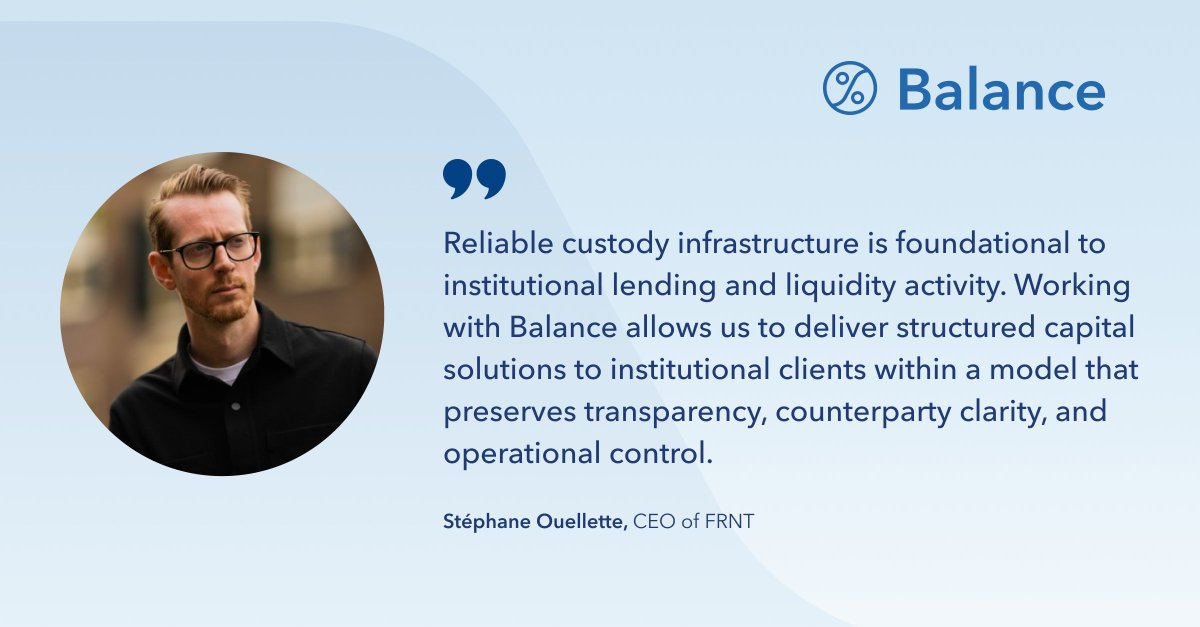
.@FRNT_Financial 🤝 @balance_canada
Our integration of FRNT into our platform makes their liquidity and lending services available to our institutional clients.
Read more: https://t.co/nfQtlLmY0u
From today's '24 Hrs in Crypto:
The aggregate crypto market cap currently stands at USD 2.52T, down ~42% from its October 2025 all-time high - In this AM’s note, we review select crypto market dynamics
Subscribe & read the full note: https://t.co/jMNETPmoxb
Short term volatility vs. long-term adoption: For long-time crypto proponents, many of the dynamics they envisioned years ago are playing out in practice. These dynamics include the adoption of blockchains as infrastructure for traditional capital along with the recognition of BTC’s safe haven qualities by incumbent financial institutions. Despite an array of long-term catalysts, in the short term BTC, and the broader crypto space, remain subject to significant volatility. Prior crypto pull-backs have been characterized by institutions halting their crypto adoption efforts. The most pronounced example is CBOE suspending BTC futures in March 2019. However, the current crypto market drawdown has not interrupted institutional adoption of digital assets, with a steady stream of headlines underscoring this point over the past six months.
Morgan Stanley (NYSE: MS) set to launch BTC ETF: Last week, filing revealed the bank’s planned BTC ETF will have the lowest fee among its cohorts, 14 basis points. Morgan Stanley, which will become the first bank to offer a BTC ETF, has ‘16k advisors managing [USD 6T] in assets,’ as Bloomberg’s s ETF specialist Eric Balchunas pointed out last week. Balchunas, sharing a NYSE listing notice for the ETF, estimated that the product could begin trading as early as today. Morgan Stanley’s BTC ETF, which is part of a larger digital asset strategy which also includes SOL and ETH ETFs and plans for a crypto wallet, underscores the above point. Digital asset adoption has significant inertia. Additionally, this institutional adoption is in its early innings. For example, Vanguard Group, ‘the world’s second-largest asset manager,’ only began offering clients access to crypto ETFs and mutual funds four months ago.
BTC’s drawdown remains more modest compared to prior cycles: Peak-to-trough, BTC’s drawdown from 2025’s record price to 2026 lows stands at ~52%. By comparison, the 2021 cycle saw a ~78% drawdown while the 2017 cycle saw BTC fall by ~84%. In this context, as things currently stand, BTC’s 2026 unwind is of lesser magnitude compared to historical precedent. A significant contributor to this dampened unwind has been the propensity for ‘HODLing’ among BTC ETF investors: since reaching a record high of 1.36M BTC held by the ETFs in October, this balance has only declined by ~5% to-date. This is compared to a significantly greater reduction in BTC prices over the past six months. As we noted in the prior point, access to BTC via ETFs is still being built out.
USDt’s market cap is ~2% below its 2025 high of USD 187B: In the prior cycle, USDt’s market cap also saw a significant drawdown compared to its all-time high. The largest stablecoin saw its market cap decline from USD 83B to USD 65B in 2022. This was attributed to capital leaving the crypto space. In 2026, USDt’s market cap drawdown also remains modest compared to the prior cycle.





![FRNT_Financial's tweet photo. From today's '24 Hrs in Crypto:'
Circle (NYSE: CRCL) raised USD 222M in a presale of the ARC token ‘at a [USD 3B] fully diluted network valuation’- We discuss the Arc network, a blockchain designed for stablecoins & regulated capital markets
Read the full note & subscribe: https://t.co/1EWYXwQIqf
Circle revealed the USD 222M raise, which included placements from a16z crypto, Apollo Funds, ARK Invest, BlackRock (NYSE:BLK) and Bullish (NYSE: BLSH), among others, as part of its Q1 2026 financial results. The Arc network was initially revealed in August 2025 along with features including USDC as native gas for predictable dollar-denominated fees, a built-in institutional-grade FX engine with 24/7 on-chain settlement, opt-in privacy for selectively shielded balances and transactions, among others. The ARC token is described as a ‘native coordination asset’ designed to support governance, validator security, and network operations across the chain.
According to CNBC, ‘[a]s a 25% stakeholder in Arc’s initial supply of 10 billion tokens, Circle can participate in operating validator infrastructure, generating new fee revenue and earning staking income.’ The bulk of the supply, 60%, is set aside for builders, users, and contributors to the Arc network, with the final 15% held in a long-term reserve.
In an interview with CNBC, Circle CEO Jeremy Allaire also emphasized the AI overlap with the Arc network. He said AI agents ‘will be conducting the work of the real economy’ and ‘need to run on these new networks, like what we’re building with Arc’, adding that he expects ‘tens of billions of these’ agents to eventually emerge.
For incumbent networks like Ethereum or Solana, stablecoins, tokenization, and other traditional capital deployments on blockchain have been a key bull thesis. Proponents of these blockchains believe that the institution-led adoption of blockchains will bring new users and capital into networks’ ecosystems. Ethereum has emerged as the focal point of ongoing traditional financial blockchain adoption: Ethereum hosts just over half of the stablecoin market along with half of tokenized real-world assets. For example, Tether’s USD 2.77B XAUt, likely one of the most successful examples of real-world asset tokenization, is almost exclusively hosted by Ethereum.
Takeaway: The proliferation of stablecoins over the past year has also been characterized by the launch of several stablecoin-focused networks. Besides Arc, examples also include the Plasma network, which included Bitfinex and Tether CEO Paolo Ardoino among investors, and the Stripe and Paradigm ‘incubated’ Tempo blockchain. In this context, incumbent networks will face significant competition as solutions such as Arc increase in maturity. At the same time, Arc’s development underscores that the stablecoin sub-sector continues to be a focal point of innovation within the crypto ecosystem.](https://pbs.twimg.com/media/HICrCCXWQAE8X-x.jpg)