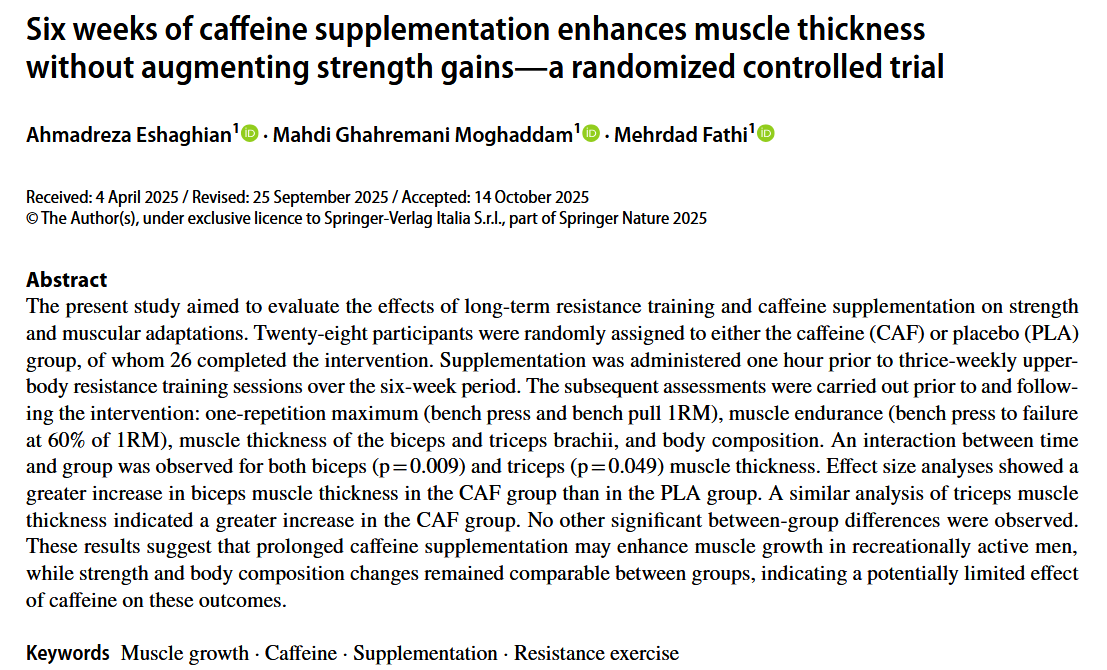
Progressive overload does not “cause” muscle growth. Mechanical tension does
Train hard enough—close to failure—to recruit high-threshold motor units and create the stimulus for hypertrophy
Progression is often the result of adaptation, not the root cause
https://t.co/rO0TnOigIR
Una de las cosas que más me gusta del tema de las IAs es poder hacer de manera muy fácil recursos educativos para mis hijas.
La mayor tiene examen trimestral de mates, pues tengo un html al que voy añadiendo funcionalidades para que además del trabajo a mano pueda practicar jugando.
https://t.co/f5znu1ehN8
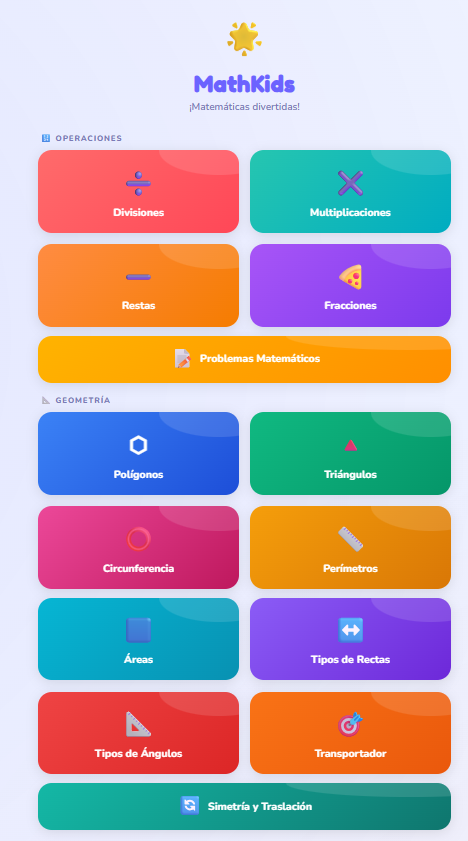
Operaciones:
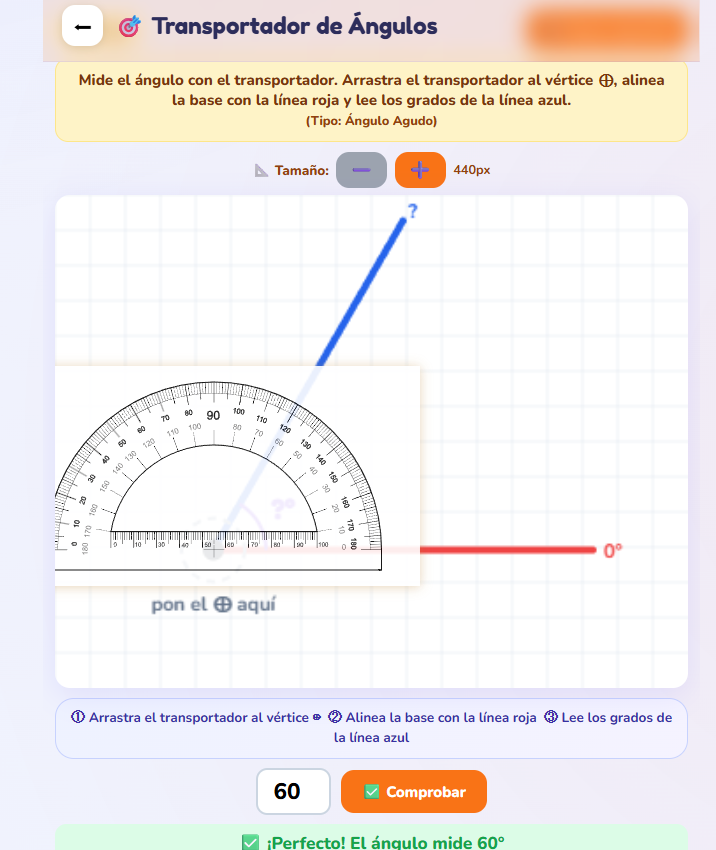
1. Divisiones. Ya divide por varias cifras, decimales y números periódicos.
2. Multiplicaciones varias cifras
3. Restas con llevadas (esta la metí para la pequeña y metodo EGB)
4. Trabajo con fracciones
5. Problemas donde aplicar todas las operaciones
Geometria:
1. Identificación de polígonos
2. Tipos de triángulos
3. Elementos de la circ. (Radio, diamétro, cuerda, etc)
4. Cálculo de Perímetro
5. Áreas a partir de cuadrados
6. Identificación de tipos de rectas
7. Idem con ángulos
8. Transportador de ángulos (imagen 2)
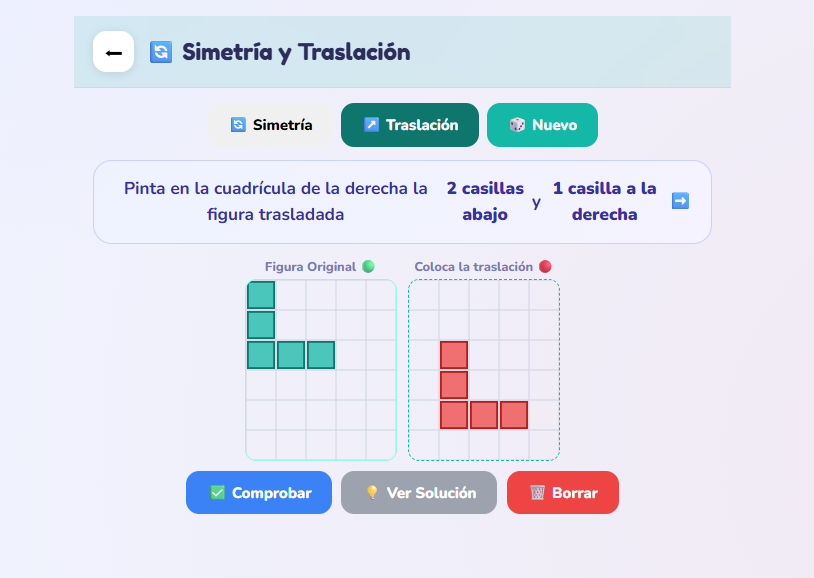
9. Traslación y simetria (imagen 3)
A common bodybuilding strategy is to perform a single-joint exercise for a given muscle group immediately before a multi-joint exercise that targets the same muscle group. The rationale is that pre-fatiguing the target muscle may allow it to receive greater stimulation during the subsequent compound movement before fatigue in assisting muscles limits the set.
For example, during the squat the spinal erectors often become the limiting factor, fatiguing before the quadriceps. By first performing leg extensions to pre-fatigue the quads, the quadriceps may be pushed closer to their limit during the squat before the erectors fatigue and terminate the set.
Our recently published study put this theory to the test. We randomized 41 resistance-trained individuals to perform either a pre-exhaust protocol (leg extension → squat and leg curl → RDL) or a traditional straight-set protocol using the same exercises over 8 weeks.
Results showed similar improvements in strength and muscle power between groups. Interestingly, hypertrophy was slightly greater with the traditional protocol, possibly due to the substantially higher volume load accumulated during traditional training. On the other hand, the pre-exhaust approach was more time-efficient, reducing workout duration by about 36%.
Bottom line: Contrary to popular belief, pre-exhaust training does not enhance muscle growth and may even slightly compromise results. It’s a good reminder that what seems logical in theory doesn’t always translate into better outcomes in practice. 💪
https://t.co/bEzG25zUG9
¿La creatina realmente “construye músculo”?
¿La proteína deja de funcionar a partir de cierta dosis?
¿El HMB sirve o es marketing?
Nueva revisión (46 ensayos con US/MRI) pone orden🧵👇
A veces en primaria tenemos la sensación de que el aprendizaje "resbala".
El cerebro necesita conectar lo nuevo con lo viejo. Si no hay "puente", la información se pierde.
Hoy comparto la rutina "3-2-1 Puente" para ayudar a que no pase
Hilo visual 👇 #ClaustroVirtual#Maestros
"These data suggest strength outcomes are comparable when taking sets to either a self-reported 4–6 RIR or 1–3 RIR, while training that includes sets to momentary failure may result in slightly inferior outcomes (i.e., 0–3 and 0 RIR)."
By Robinson, Z., Macarilla, C., Juber, M., Cerminaro, R., Benitez, B., Pelland, J., Remmert, J., John, T., Hinson, S., Dinh, S., Elkins, E., Canteri, L., Meehan, C., Helms, E., & Zourdos, M. (2025).
🔗Read the full text article for FREE⬇️
https://t.co/y1mIt9ZYhq
Publicada la nueva guía de recomendaciones de uso de medios digitales para la comunidad educativa dentro del Plan de Seguridad y Confianza digital de la Consejería de Educación de Castilla y León
https://t.co/c4wElXZAD9
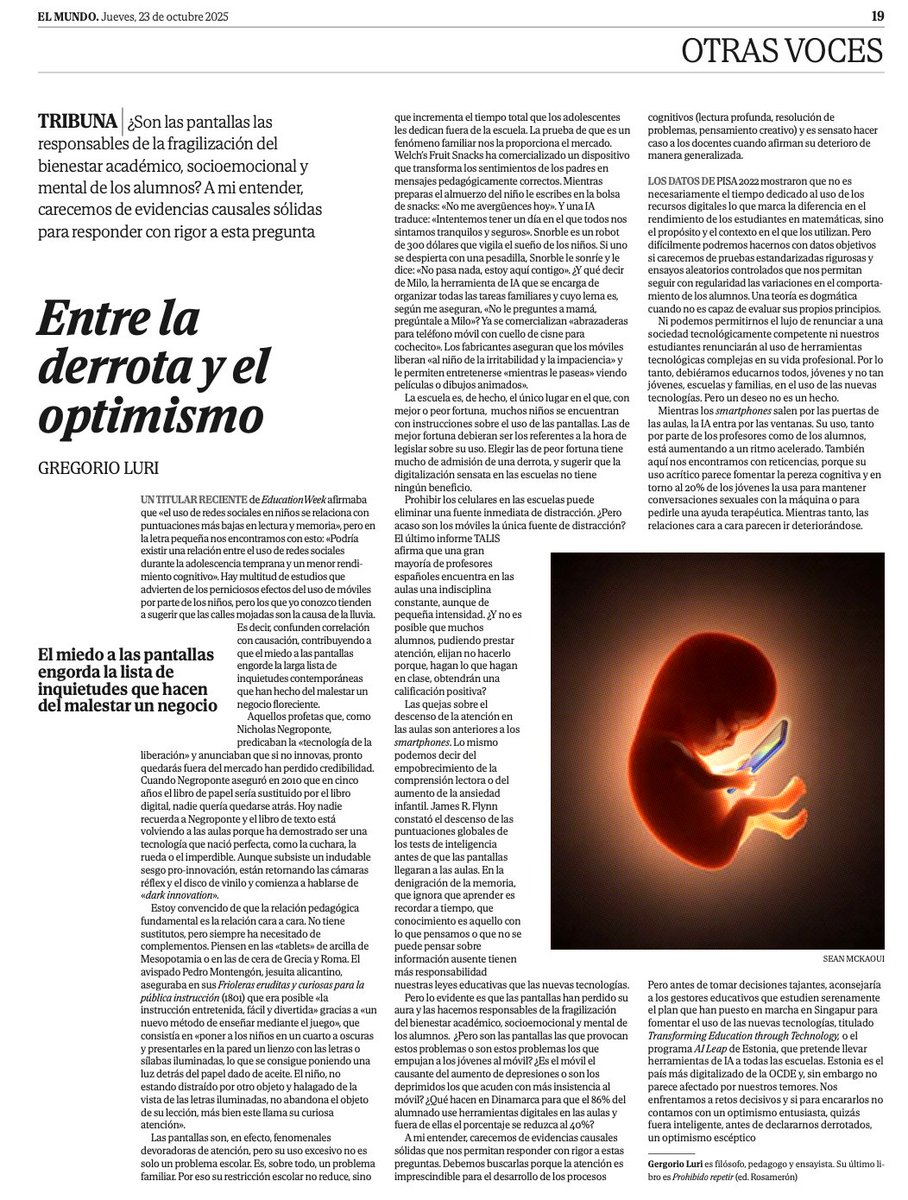
Lean porque no tiene desperdicio:
"Aprender es recordar a tiempo",
"el conocimiento es aquello con lo que pensamos",
"mientras los smartphone salen por la puerta de las aulas, la IA entra por las ventanas"
(FIN)
En resumen: lo digital no destruiría nuestra capacidad atencional, sino que más bien genera ciertos hábitos que nos acostumbran a necesitar más estímulos, más rápido y más intensos. Cuando no los tenemos, lo analógico podría parecer demasiado lento y "elegimos" no atender.
En la nueva entrada del blog, os propongo ideas y reflexiones para crear un buen clima de aula desde el primer día. La puedes leer aquí: https://t.co/wwwrfDMPLv
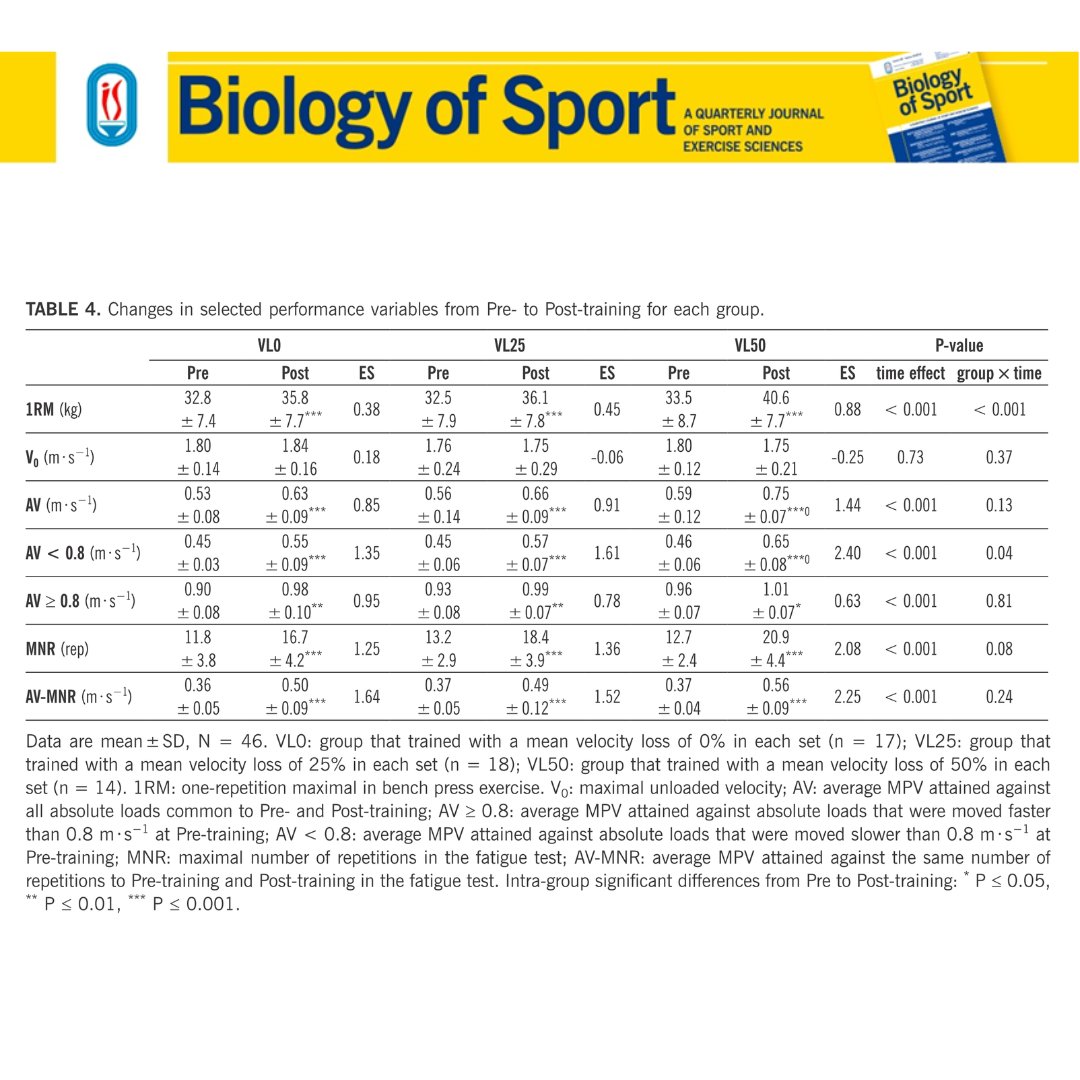
🏋️♀️ Velocity loss thresholds matter!
Rodiles-Guerrero et al.: In 8 wks bench press, VL50 ↑1RM +7.1 kg & muscle size, VL25 improved neuromuscular power, VL0 gave smaller gains. Greater VL thresholds = more positive effects on heavy loads & hypertrophy.
🔓 https://t.co/ybAeqmh1dk