We are workers, doctors, nurses, teachers, small biz owners, +community leaders who support repealing the rebate of NYS’s .05% stock transfer tax to Wall Street
#Great! Key NY publisher Tom Allen (City+State) has just endorsed the NYS STT Rebate Repeal! Like Gov Higgins in 1905, he dees this as a conservative crisis-solving tiny price for Wall St to pay to #SaveNYS https://t.co/MKAXDg3KDa
#TaxJustice “$600 and a slice of cake!” BTW, hot off press:the cumulative value of the ($.05/$100) NYS stock transfer tax (#STT) rebated to Wall St investors since 1981 (in $2020): $427.9 billion!!! $55,982/hh! (Note: median hh net worth=$97,000.) #ClassWar @FTTNYS
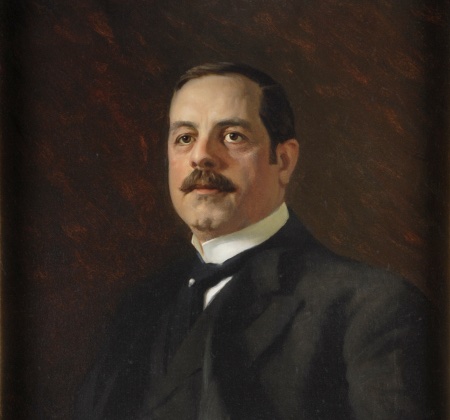
#STTFAQ Higgins’s 04/19/1905 NYS STT signing speech. The tiny tax - $.02/$100 - was a pragmatic attempt to get revenue. While he called WallSt fears exaggerated, he promised that if it didn’t work it could be quickly undone (unlike other taxes.) Similar logic applies now.
#STTFAQ#KeyIssues 6. “When the STT was first proposed as a solution to a NYS budget crisis in 1905, how did Wall Street + the NY Times react? Did their fears+ threats prove correct?”
NO. See this thread.
#STTFAQ Republican Gov Frank W. Higgins, 1905. Protege of Teddy Roosevelt. He’d seen a tiny federal STT work wonders in 1898- 1900, when it was used to finance the Spanish-American War.
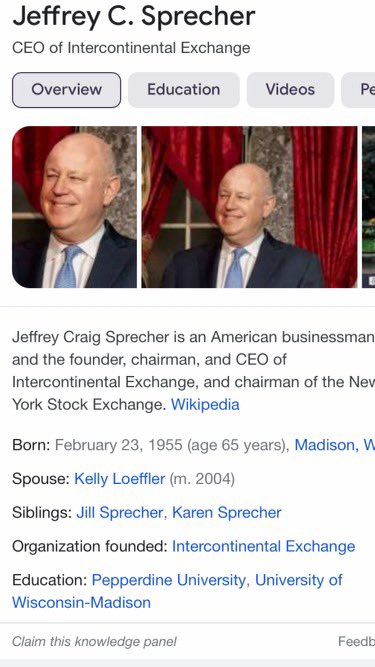
...Jeff Craig Sprecher, Chair of the New York Stock Exchange!...I’m sure he knew nothing whatsoever abt Sen Loeffler’s unusually perspicacious Purdue Pharma trades! But the SEC may want to ask. #LoefflerSprecherNYSE@FTTNYS
#STTFAQ#KeyIssues #6. Progressive R Gov. Frank Higgins, a protege of Teddy Roosevelt, proposed the first version of the STT in 2/1905 as a practical way of solving NYS’s deep budget crisis.
#STTFAQ#KeyIssues 5. “If the STT was so successful, why was it put on ice in 1978-81 by Gov. Hugh Carey? Was this because the tax had made Wall St non-competitive?
NOPE. See this thread.
#STTFAQ#KeyIssues 4. “Gov. Cuomo recently said it would cost $300 mm a year to administer the stock transfer tax. Is that right? Is that a lot?”
NO and NO. See this thread.
#STTFAQ#KeyIssues 3. Could the STT be avoided by moving computers or trading floors to NJ (or Chi..London..etc.) Can investors avoid STT by moving out of NY?
NO. “Nexus” for tax purposes doesn’t depend on wherefacilities, brokers, or investors are located. See this thread.
#STTFAQ#KeyIssues 2. “Would the key NY stock exchanges (NASDQ + NYSE) up +move to New Jersey if the STT rebate were repealed?”
NO. They would actually be MORE LIKELY THAN EVER TO STAY. See this thread for the details.
#STTFAQ#KeyIssues#PensionFunds 1G. B4 taking anti-STT rhetoric by (Wall St-crony) asset managers seriously, NYS funds shld examine their recent performance. Eg, NYSTR managed to lose $2.7b (-2.03%) on publicly traded equities, 2018-20. Such losses dwarf the costs of an STT.
#STTFAQ#KeyIssues 1. Would pension funds be harmed if we repealed the rebate of the NYS STT to Wall State?
NO. They would be HELPED. See this thread for the details.
#STTFAQ#KeyIssues#PensionFunds 1F. NYS union pension funds should also celebrate the fact that by quickly + easily raising more than $12 billion a year, thousands of public sector union jobs + tens of $mms in health benefits will be preserved.
#STTFAQ#KeyIssues#PensionFunds 1E. As longer-term investors, pension funds should also welcome the STT as a tax on unproductive “casino-like” high frequency trading, speculation, + front-running. It will make markets fairer+ more efficient.
#STTFAQ#KeyIssues#PensionFunds 1D. Pension funds also invest heavily in NYS + local gov bonds. They should welcome a progressive STT on Wall St that help reduce NYS’s debt service - now $7 billion per year — and improves its bond ratings.
#STTFAQ#KeyIssues#PensionFunds 1C. Compared w other management+ legal fees + commissions that pension funds now pay to Wall St, the STT is minimal. For example, the $120.5 billion NYS Teachers Fund incurs fees of $300 mm a yr. The STT rebate repeal would cost it <$16 mm.
#STTFAQ#KeyIssues#PensionFunds 1B. Compared to the tax revenue raised, the incremental cost of the $.05 per $100 of trades STT is miniscule —in the case of the NYS Teachers Retirement Fund, for example, less than .013% per year of assets + .1% of the tax revenue raised.