v1.3 quoting for high-mix, low-volume contract manufacturing.
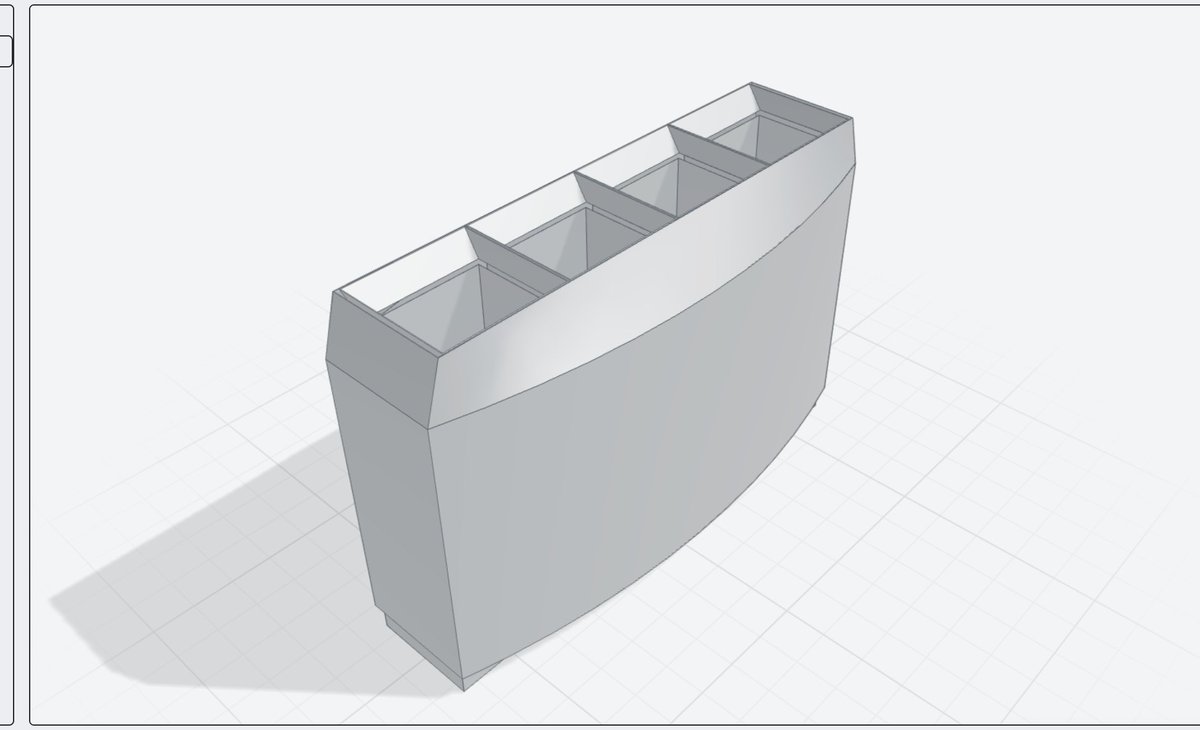
Detailed product descriptions and technical drawings are useful. But can we go from a rough sketch to-CAD to a real manufactured product?
We upload the sketch and the CAD Agent interprets most of the product, then asks a small number of clarifying questions where needed.
Given each factory’s specific context (machinery, labor capabilities, available stock, and purchasing rules) it understands what should be fabricated, what should be bought, what is already in stock, and how everything fits together.
It then generates production-ready .dxf files for CNC laser cutting.
Lead time and process time are estimated for each manufacturing step, then validated against what actually happens on the factory floor. Most of that feedback loop is automatic. some manual input is still needed.
Every completed job improves future time estimates and builds a more accurate model of how that specific factory actually operates.
Turning a custom assembly request into an agreed, manufacturable, commercially understood order is slow and dependent on experts and the factory still may not know whether that order made money.
Glad to see people resonating with this. "Routes" or "lanes" and multiple specialized manufacturer collaboration makes perfect sense to me. That way you can actually start creating specific processes with detail and cheaper. And also agree on digitalization is first step but ultimately there are multiple parts in assembly that you can optimize. So, making new ways that optimize how we manipulate physical materials in faster ways is the way to go.
Similar to what @EdwardMehr is doing with forming sheets of metal.
https://t.co/v5ividB0gc
This is an exciting future. A Cambrian explosion of new designs, enabled by a relatively small set of scaled, agent-friendly manufacturing businesses.
Under the hood, the buildout is less hyped and sexy. It requires manufacturers that can crank out parts, and that's very much NOT an AI play. At least, not yet.
Manufacturing processes must be highly productized and scalable, so that APIs can provide first-principles DFM that matches reality. When parts are ordered, they have to just flow.
We need dozens of productized manufacturing "lanes." Today, OSH Cut and a few other newer manufactures provide sheet metal in this productized way. But we need probably a dozen additional lanes for different types of CNC machining, tolerance requirements, mold creation, textiles, plastics, etc.
This isn't going to be created by some new AI venture, it'll be a bunch of factories operated by people. It's machine maintenance, capacity management, training, hiring, customer support, risk management, marketing, shipping. It's a decades-long grind.
The AI-friendly API layer is a tiny and comparatively easy component of what makes the whole engine function.
So if you believe that what I've described is possible and likely, the best way to participate is not to write yet another API broker catalog. It's to identify a productizeable manufacturing service that doesn't exist yet, build it, serve people directly, tie in APIs, and participate in the coming boom.
Of course. Many things need to flow seamlessly especially from the supplier side.
So if you are a mfg company I recommend digitizing, Have a clear conceptual modeling, and well understood cost structures.
A design is only part of the job. Manufacturers still need to answer: Can we build it? What will it cost? How long will it take and is it profitable?
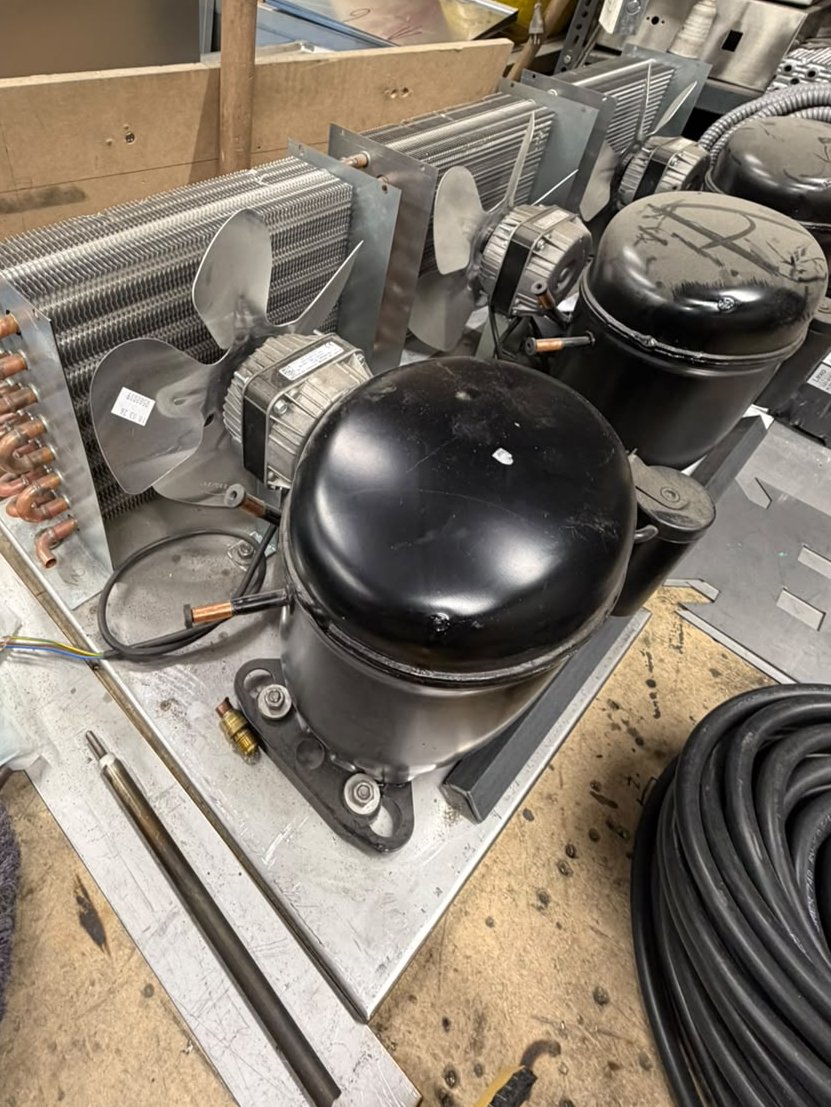
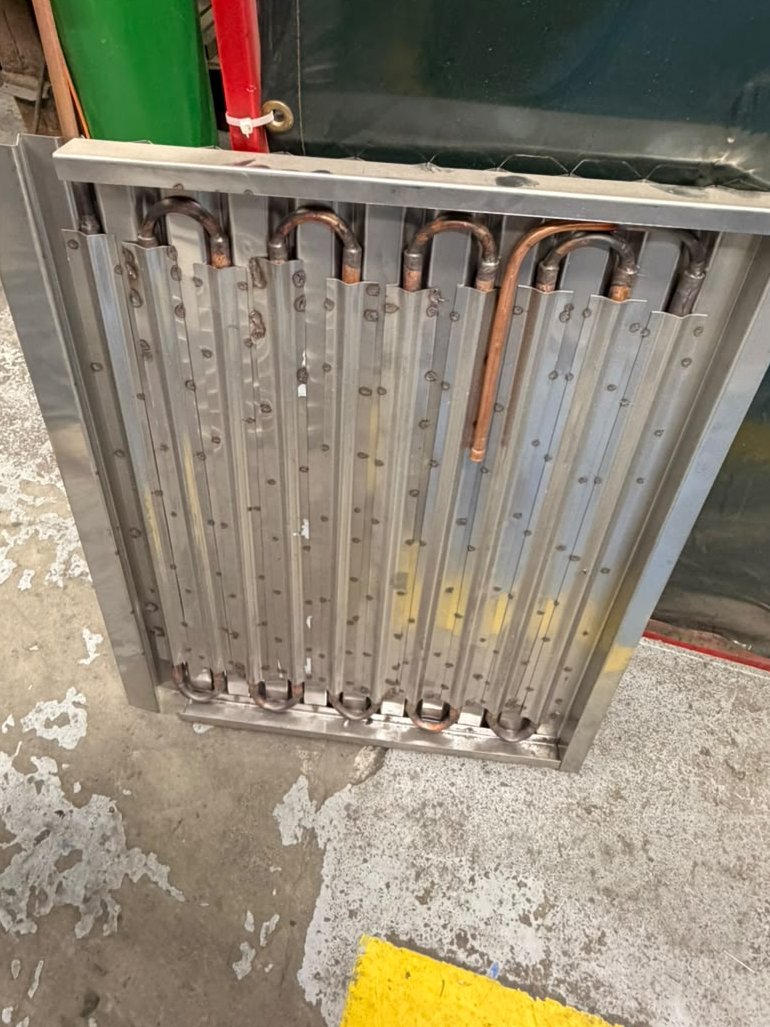
Those answers get harder when an assembly combines sheet metal, motors, wiring, cooling components, and insulation.
I’m building a factory-aware design service that helps manufacturers and buyers work through those decisions together.
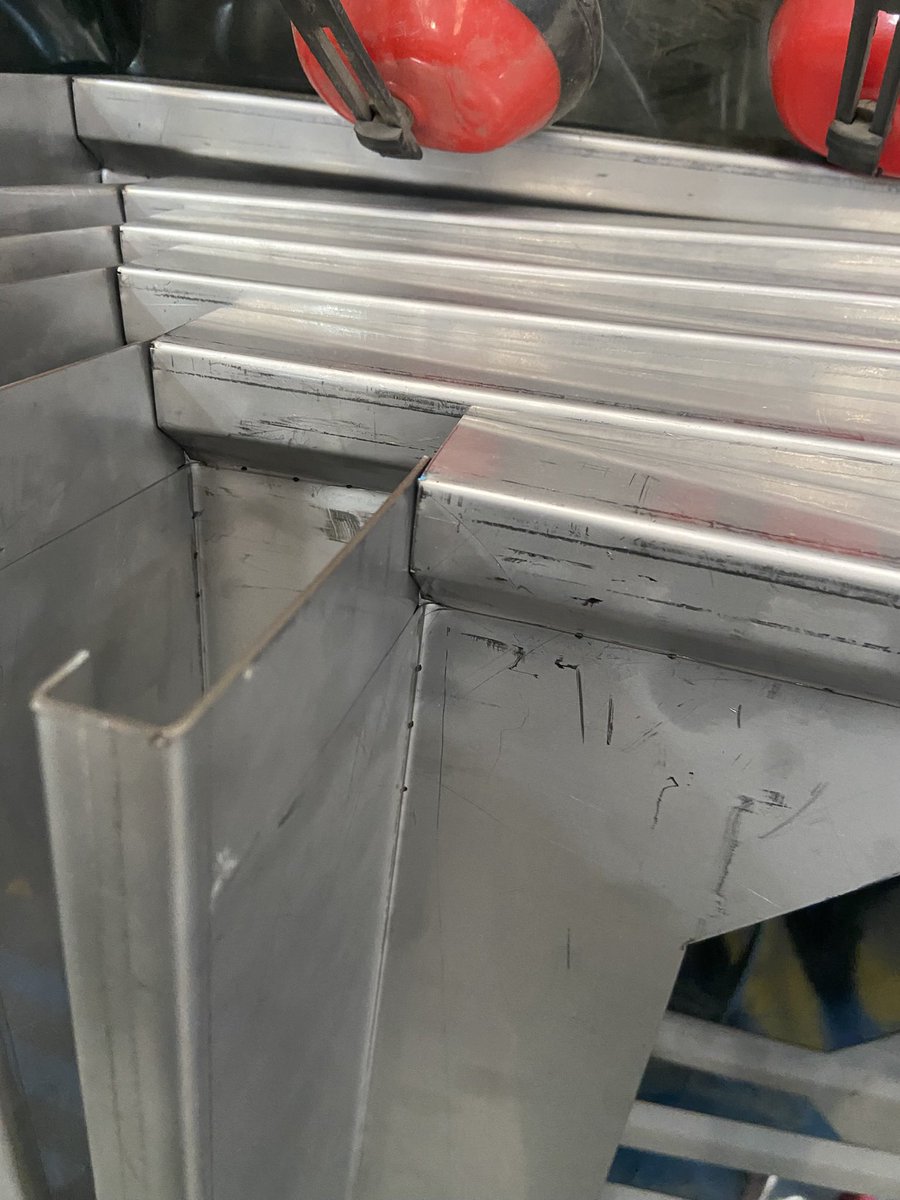
Manufacturers can revise a design around their actual capabilities: choosing materials and components, deciding how parts are cut, bent, and joined, and identifying work that needs an external supplier.
Buyers can see the proposed revision and understand the tradeoffs in design, estimated cost, and lead time before committing.
The important part: each accepted revision captures how the factory builds. That knowledge can inform the next design and quotation instead of starting from scratch.
The goal is a shorter path from “this is what I want” to a product the factory can make and a job that makes economic sense.
Data cleaning
Data discovery
Data generation quick
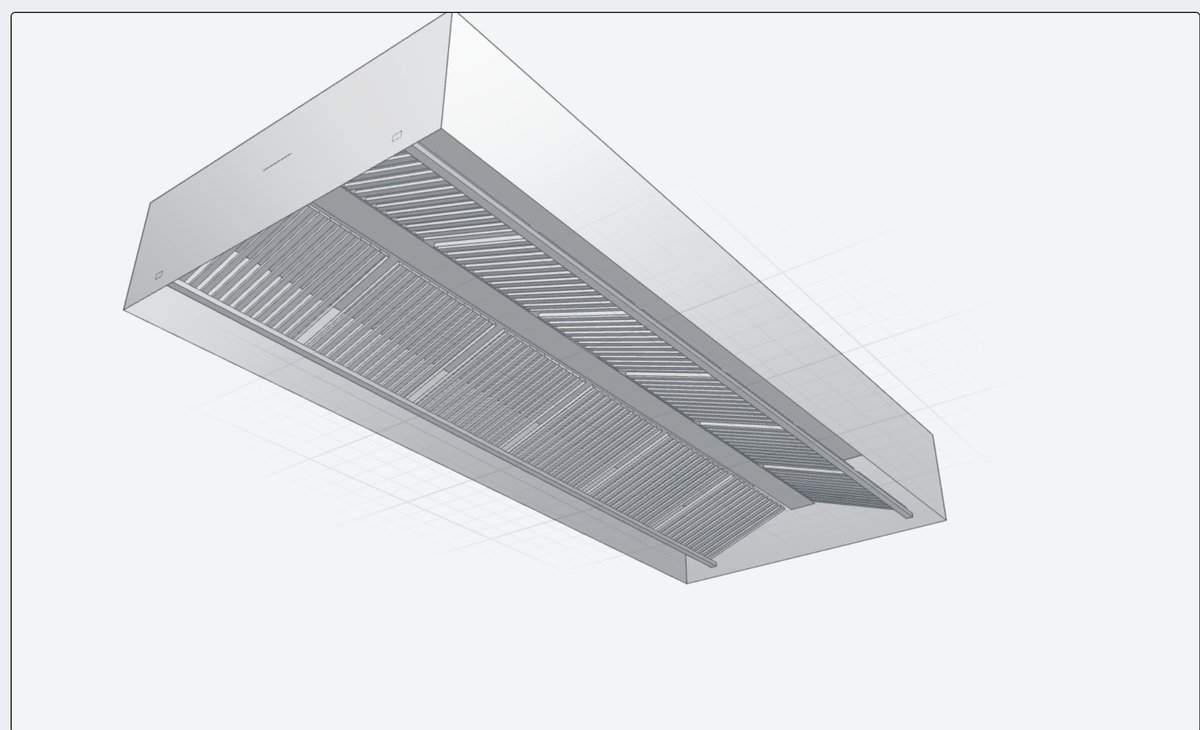
Sheet metal cuts, foldings and connections
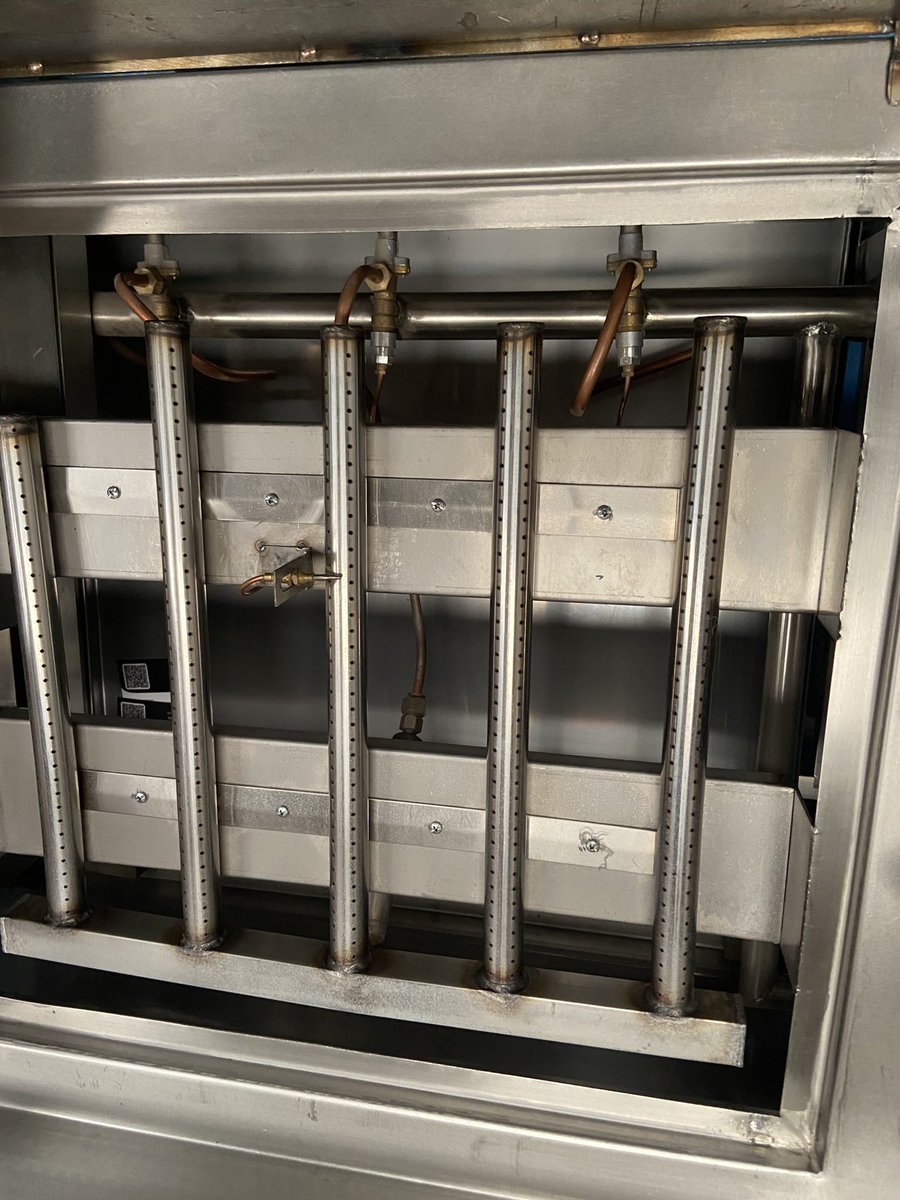
Parts assemblies, valves, gas, electricity, prototypes
Plastics
Stainless Steel
Steel is iron + carbon, usually something like 98.00-99.98% iron and 0.02-2.00% carbon.
Stainless steel is that, plus at least 10% chromium. Someone realised that if you add chromium to steel the steel is nice and shiny and it remains shiny because it forms an oxide layer that isolates the iron from atmospheric O2… thereafter it does not rust.
some extra slightly more complicated stuff, firstly there are 3 main types of steel..
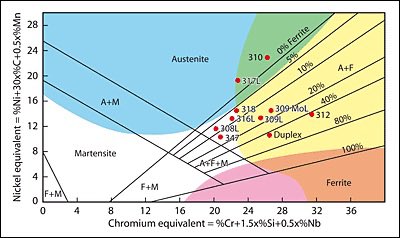
• Autenite (the blue zone)
• Martensite (the white zone)
• Ferrite (the pink zone)
Each of these is a different crystal structure, Ferrite is Body Centric Cubic, Austenite is Face Centric Cubic and Martensite is a Body Centric Tetragonal.
FCC has more space to hold additional atoms than BCC does, so the Austenite edge is where a lot of alloy recipes cluster.
Stainless Steel is also a steel alloy with 3 elements. Iron + Nickel + Chromium
Stainless is usually >8% nickel and >16% chromium.
It’s also known as 3 series, which makes this all easy to remember.
The 3 types overlap like a Venn diagram to create A+M, F+M and A+F.
Now you can get as complicated as you like with alloys, and some applications you might add molybdenum too. But the chart below shows where the different commercial grades sit.
As move towards an economy with giant vertically integrated companies, the need for commercial grades changes a little (liability stays on one balance sheet) and we might see some more unusual things being used.
But here is the phase diagram for stainless steel, it’s basically a map of crystal structures. Crystals are important and understand them better has a lot of hidden benefits.
I agree on the main point. Although US & Defense is just one demand part of the slice. The same thing shows up worldwide across commercial manufacturing.
Multiple physical industries, real economic surplus, and a lot of capital already moving. Technology and digitalization can contribute value. Design iteration still decides cost and revenue in most of them, so the knowledge that has to move is design, process, and mfg production.
Collaboration point is great. Getting to a finished product means several layers of manufacturing have to talk to each other, not just quote and ship. I’ve seen that firsthand: when those layers actually co-engineer, the part gets cheaper and more repeatable.
That said im actively engaging with more partnerships. It still requires me very much inside the loop though, as the layer for DFM at each factory is very unique.
Working towards letting users handle the whole thing by themselves, as that is the future I foresee for this.
Im planning on releasing a good case study from a couple real samples in the next few weeks.
Update on CAD design iteration platform for high mix low-volume sheet metal assemblies.
Been working really hard these past weeks with real buyer and supplier interactions. Assisting on iterative interactions, DFM, & transactions. Its not perfect but its actively improving.
I can better define the service i'm doing.
1. We reduce the time between a physical problem being discovered and an approved, manufacturable correction returning to production.
2. Get from an incomplete product idea to a factory-qualified, priced and deliverable assembly with every revision preserving what was agreed and improving the production definition.
- Measuring labour is extremely important and correctly identifying hidden cost structure is key.
- Build quality and relationships as are important.
- Build quality can be optimized for cheaper costs, until now it has never been this clear. Being able to see cost tradeoffs is really valuable.
- That points toward high-value, high-iteration fabricated assemblies with repeat production potential, partly for arbitrary one-offs and not for commodity parts.
For me. Since August 2026 frontier models are just mindblowing. At this point if I can't do something its because I haven't modeled the problem the right way in my head and have nnot given the AI the context it needs.
Big responsability for all of us. Great things are coming if we do this right.
It’s incredible to see how a simple building decisions like for example buying a larger sheet of metal instead of welding two smaller ones together can change lead-time predictions, capacity planning, bottleneck management, delivery promises, and costs.
Ultimately, decisions like this help define the set of manufacturing “routes” a factory is good at and where it should place its bets.
This information was always there, but scattered across people’s experience, drawings, machines, materials, and past jobs. We’ve never had such broad access to rich physical information at this level of detail and scale.
I think this is also changing our mental models of how we think about things and manufacturing: how we describe physical things, the events involved in building them, and the purpose behind each decision. A product is no longer only its geometry or BOM, it can be understood as a sequence of choices, constraints, resources, and consequences backed by data.
Ofc, this doesn’t mean decisions become automatic. Relationships, brand exposure, risk, loss-leader strategies, and many other factors still matter. But firms can make narrow cost decisions while seeing their broader operational and commercial consequences. and make better informed bets about which work to pursue.
Being able to witness short term decisions change in the real world, while using the same information to support longer term planning through a service I’m building, feels truly defining. It’s exciting to see how much more clearly we can now describe and reason about the physical world.
Lets try it out for sheet-metal assemblies. I actually got a great idea on what to build. I can provide the real finished equipment build, actual times and difficulty per process, real cost, and test if it actually works.
see an example made before here (simple workbench):
https://t.co/9hGzMb9ZML
im constantly running this with real orders and more complex assemblies. we could do one with an electromechanical assembly - electrical, refrigeration, plumbing, or control components.
v1.3 quoting for high-mix, low-volume contract manufacturing.
Detailed product descriptions and technical drawings are useful. But can we go from a rough sketch to-CAD to a real manufactured product?
We upload the sketch and the CAD Agent interprets most of the product, then asks a small number of clarifying questions where needed.
Given each factory’s specific context (machinery, labor capabilities, available stock, and purchasing rules) it understands what should be fabricated, what should be bought, what is already in stock, and how everything fits together.
It then generates production-ready .dxf files for CNC laser cutting.
Lead time and process time are estimated for each manufacturing step, then validated against what actually happens on the factory floor. Most of that feedback loop is automatic. some manual input is still needed.
Every completed job improves future time estimates and builds a more accurate model of how that specific factory actually operates.