they changed the algorithm to show you posts from your beloved moots and now i'm getting 3k likes on every post again. turns out that everyone is my beloved moot. yes, YOU, my dear.
If I met you on the street, and you showed me your profile picture, I'd say "oohh" and hug you
Real brains follow Dale's principle: a neuron can either excite its neighbors or suppress them, but never both. Standard deep learning ignores this and uses backpropagation.
In our new paper, Diffusing Blame, we fix this disconnect. By introducing a routing method that broadcasts error signals directly to the hidden layers, we can train networks made of dedicated positive and negative neurons to strictly obey Dale's principle, all without relying on backprop!
This method works surprisingly well on image recognition tasks despite the strict biological constraints. We also achieved competitive, backprop-free reinforcement learning on complex locomotion tasks and the open-ended Craftax environment.
It is neat to see that representation learning remains possible even when we force deep learning to play by the rules of real neurons.
for many people, a job is the best way to have regular focused interviews, and achieve some level of "flow", which is a highly enjoyable state
heavily distracted states (scrolling social media/otherwise) are often highly uncomfortable
if you've done much meditation you can see this sort of thing play out
There are like only three design patterns you need to use 80% to make stuff good and fast and elegant
Make it a lookup (hashmap)
Split it up into smaller pieces (sharding)
Combine it into one large piece (map reduce)
The ideas that people are coming up with: "hey I was wondering if we could reapply the same Monte Carlo graph approach used for Alpha go on optimizing pcb circuits and optimize the training loop by writing custom GPU kernels both for the environment and for the training"
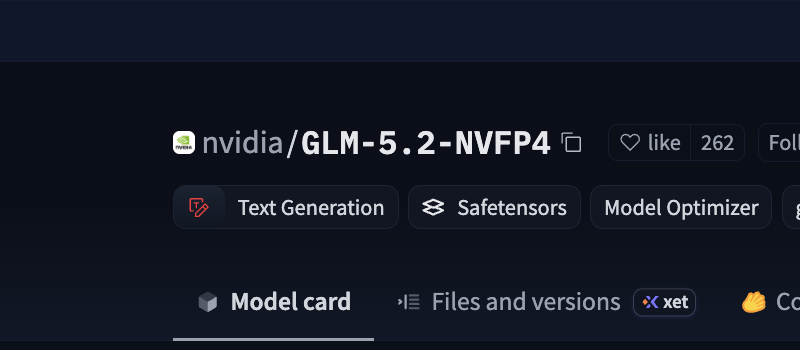
it took 1 intern 3 months of continuous work, but eventually, a quantization method that beat every other algo in the market, including @nvidia's official modelopt
to explain why this matters, i ask for exactly 69 seconds of your attention (275 words @ avg reading speed of 238 wpm):
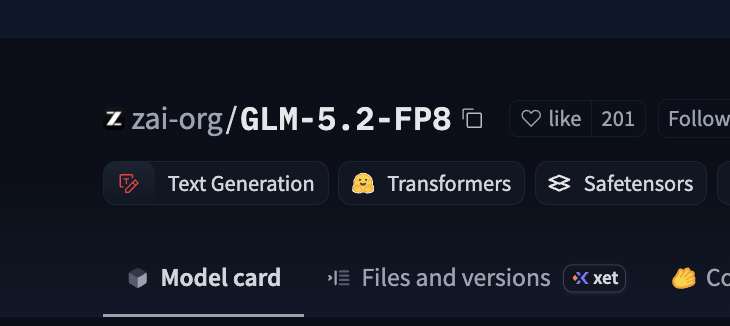
frontier models (like glm52) are huge (~0.8T params). as released, each parameter takes 2 bytes (bf16), so overall size is about 1.6 tb
a b200 has 180gb of memory. a node of 8 gives you 1.44 tb, barely fits weights, much less activations / kv cache
must quantize the model (reduce the size of each individual parameters) to serve. fp8 quantization means each parameter takes 1 byte (fits in 0.8 tb), fp4 takes 1/2 a byte (fits in 0.4 tb)
cutting the model to a quarter its original size is necessary for it to run a) cheap b) fast, and every lab serving models does this.
but, quantization lobotomizes the model if not done correctly (this is why you see people complain about @AnthropicAI nerfing claude or @OpenAI nerfing codex)
there are currently several algorithms (like Nvidia's official model-opt) that attempt to figure how to quantize a model with the least amount of damage.
they find the redundant layers that can be slashed, and sensitive/important layers that need to stay in full-precision.
these algo's have two drawbacks:
1) they take a long time to run
2) they quite often result in a sub-optimal configuration
for the past 3 months, a research (and, as always, waterloo) intern on our model perf team (@the_joshua_hill) came up with a new quant algorithm.
it consistently finds the optimal configuration:
a) in less time than SOTA
b) with more aggressive quant than SOTA
c) scoring higher on benchmarks than SOTA
achieving just one of the above is a feat on its own.
all three...excited for the paper to come out this week
My dad set a very high bar for me when it comes to love.
On my mom’s death bed, her last words to him were:
“No woman has ever been loved more than you loved me.”
I try every day to make sure my fiancé’s last words to me will be something similar when the time comes.
The idea of "AI employees" feels so short-sighted to me - both disrespectful to humans and a complete misunderstanding of what these tools can do and how to best put them to work
You may as well start adding Excel spreadsheets to your org chart
“But can you attract top tier talent?”
The question should really be how good are you at identifying talented people who are less recognizable and arbitrage the labor market.
@analogalok There is a lot of more to models vs just running them. It’s a hello world kind of task
Ihmo training very small model from scratch teaches you even more
90% of "AI developers" just download pre packaged GGUF files from Hugging Face, hit run, and call it a day.
The top 10% know how to pull the raw safetensors, run the math, and quantize massive models into Q4_K_M themselves.
If you think llama.cpp can only execute models, you’re missing the best part of the open source ecosystem. It’s a high performance optimization suite. Manually stripping 69% of the VRAM footprint off a brand new model architecture is where real infrastructure value is made.
If you want to actually master local inference and deploy models like Google’s massive Gemma 4 12B it on consumer NVIDIA hardware using llama.cpp, you need to learn this pipeline. Let's build it.
I just took the raw 22.7 GB Gemma 4 baseline and manually compressed it down to a 7.02 GB Q4_K_M GGUF artifact using llama.cpp. That is a 69% reduction in footprint.
No quality loss. No VRAM bottlenecks. Just native, hardware accelerated C++ inference running a full 2,50,000 token context window on a dual NVIDIA Tesla T4 setup.
Stop melting your VRAM on unoptimized weights and stop relying on other people's pipelines. Own your stack.
I mapped this entire architecture from dynamic binary fetching to raw quantization and real time GPU streaming into a single, bulletproof notebook.
Notebook link is in the comments below.
Bookmark this blueprint for your next deployment and tell me which quantization works best for your workflow and model.