Mietitkö oppilaiden tai jälkikasvun kanssa, mitä #tekoäly'stä pitäisi opettaa?
Ota käyttöön tuore Tekoälyopas. Pipsa Havula antaa jo ensimmäisessä luvussa rautaisannoksen. Koko opas ilmaiseksi sivuillamme, ketjussa maistiainen ensimmäisestä luvusta.
https://t.co/GrA0sEjZtm
1/ Tiedote❗️Faktabaari ja @CheckFirstHQ tarkkailevat ensi vuoden presidentinvaaleja ja Euroopan parlamentin vaaleja täysin uudenlaisella tavalla: seuraamalla sosiaalista mediaa ja sen suosittelualgoritmeja. Siis mitä?🤔 @EUCrossOver
A huge thanks to @EMIF_Fund for trusting us on monitoring #disinformation ahead of the 2024 presidential and #EU elections in #Finland 🇫🇮. We will deploy 11 new monitoring points in the country, analysing disinformation narratives with @Faktabaari https://t.co/hszhb9nKT9
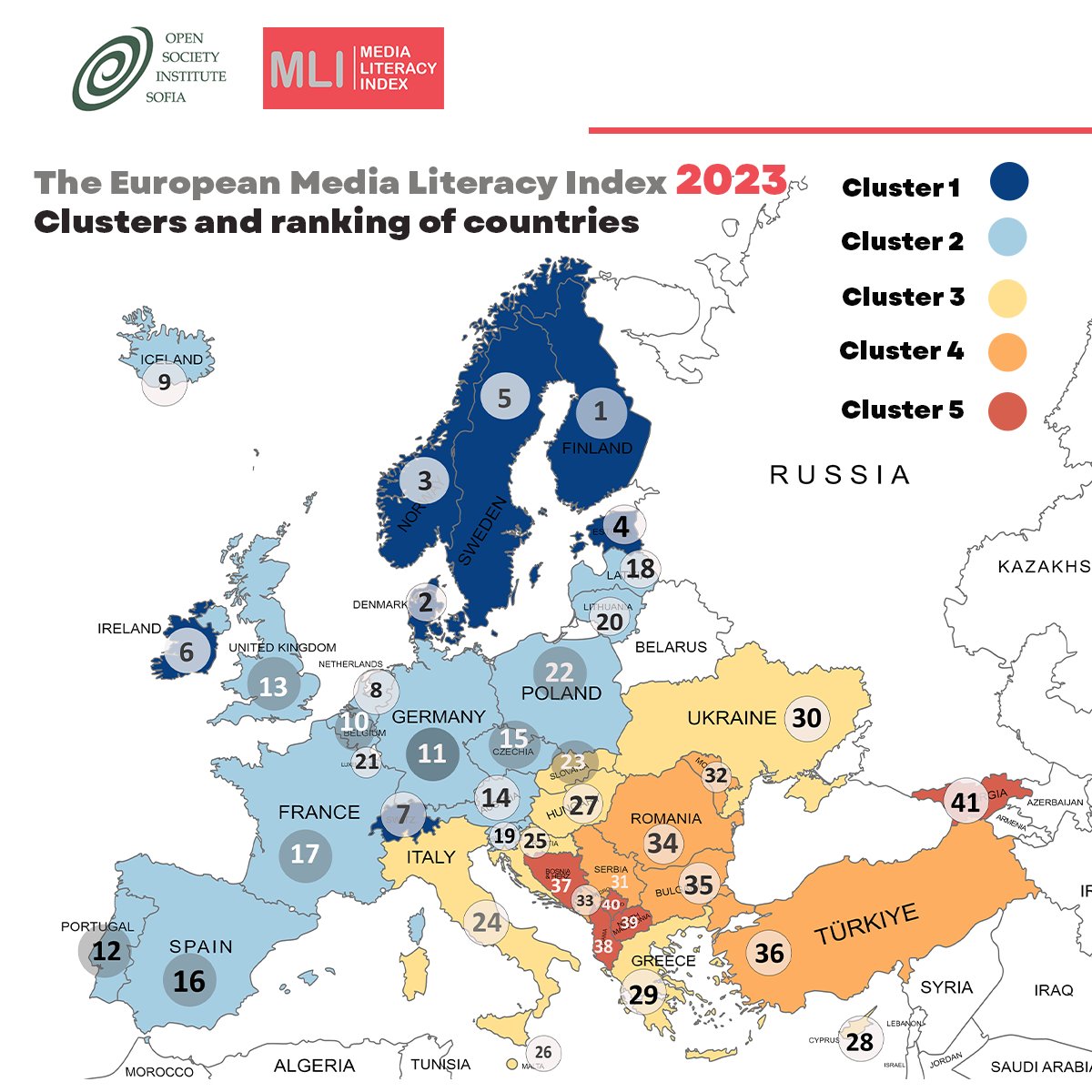
European Media Literacy Index 2023 is an instrument for assessing and ranking societies in their potential for resilience in the face of the #post-truth, #disinformation, and #misinformation (e.g. “fake news”) phenomena.
Learn more ➡️https://t.co/uqG0FMLnre
@marinlessenski
We are pioneers of a completely new quality of information warfare. No textbooks or trainings have ever prepared us for this. The biggest information challenge of this war is not enemy disinformation, but the need for the entire society to switch to a wartime information regime..
"Humans cannot distinguish between tweets generated by GPT-3 and written by real Twitter users. Starting from our results, we reflect on the dangers of AI for disinformation and on how information campaigns can be improved to benefit global health." https://t.co/VME9HZXOko
Ugh.
ChatGPT generates 'convincing' fake scientific article https://t.co/SynJCDMxov via @medical_xpress
Heightens "need to prioritize the reproducibility and visibility of scientific works, as they serve as essential safeguards against the flourishing of fraudulent research."
The results of studies show that fact-checks are effective at reducing people’s misperceptions. However, these positive effects on belief accuracy come at a cost: users exposed to political fact-checks trust news less and perceive the media as more biased.."
”Extant research is evaluated on the questions of why (some) people are (more) susceptible to misinformation, how misinformation spreads in online social networks, and which interventions can help to boost psychological immunity to misinformation”
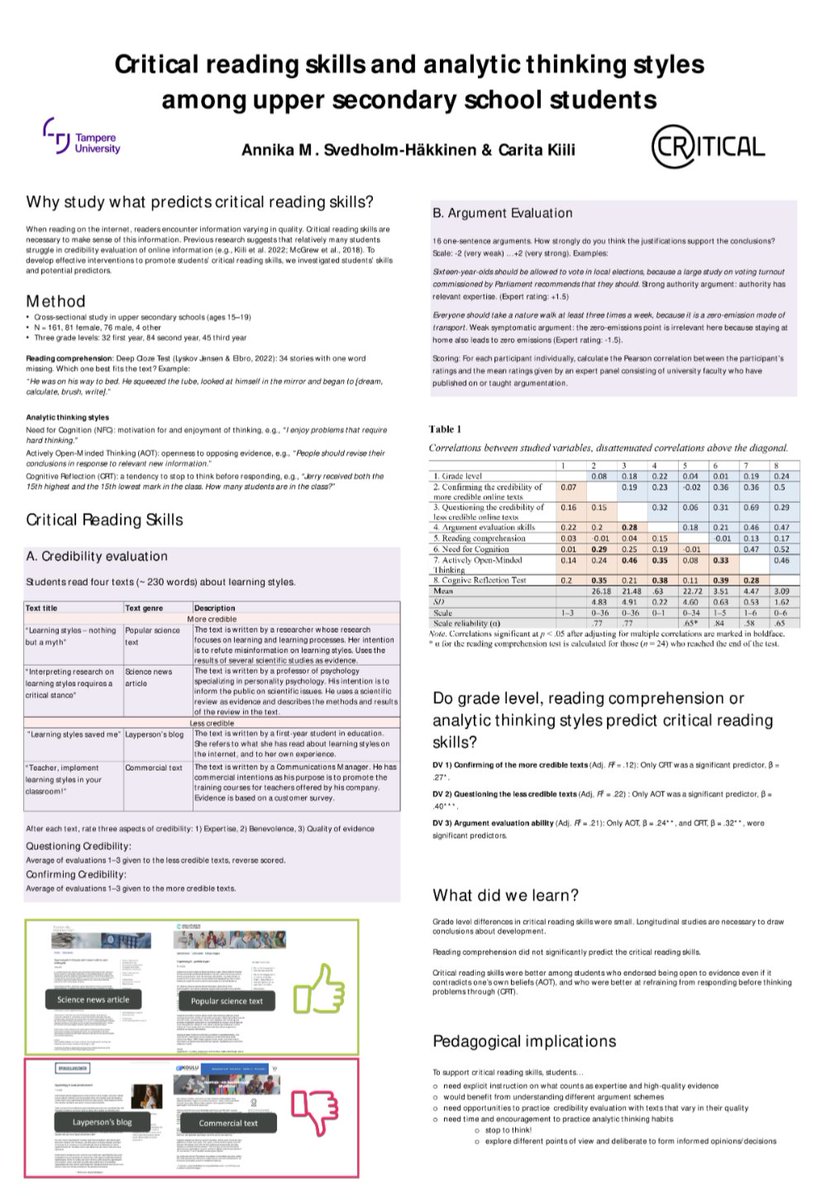
I was attending first time to the annual meeting of
@TextDiscourse. What a great experience! If you missed the poster by @AnnikaS_H and me, check it here: https://t.co/5z3KWeXD9Y
@EduCritical@Akatemia_STN @TampereUni_EDU
”In every country, participants with a more analytic cognitive style and stronger accuracy-related motivations were better at discerning truth from falsehood; valuing democracy was also associated with greater truth discernment”
Social media platforms seem to have forgotten all the lessons they learned on content moderation – or were never committed to it in the first place. This timeline from @mmfa demonstrates the shift:
https://t.co/ws8VXlYvxM
How can digital platforms and countries tackle online mis- & disinformation and hate speech?
@antonioguterres puts forward proposals for a Code of Conduct in his new report. https://t.co/atXRvwOwXv
Nordic countries fare well in an analysis of countries resistant to fake news, while Georgia performed the worst. Finland Most Resistant to ‘Fake News,’ Report Finds https://t.co/kG8PPF6t69